Lies, Damn Lies, and Exercise

Steve Blair and his many studies at the Cooper Clinic have found that fatt individuals who exercise regularly have roughly the same health profile as lower weight people who exercise, and a better profile than thin people who don’t exercise.

For many people “exercise” is a dirty word because it’s been a punishment, a horrible experience (hello dodgeball in Jr. High Gym), and/or the only reason they’ve ever exercised is a failed attempt to try to change the size and shape of their bodies, or because they think that they have to do it “exactly right” to get the benefit.

Many people look to “fitness professionals” to help them, but there are plenty of people who claim to be fitness experts without any training or certification at all (Jillian Michaels, for example, in addition to lawsuits for weight loss supplements, has had her credentials called into question by a fitness specialist in the LA Times) and they can say anything that they want. I can’t tell you the number of fitness infomercials I’ve come across that have made me want to laugh and cry with their obvious lack of knowledge about the human body.

I’ve been an AFAA certified fitness professional (the same body that now certifies Jillian Michaels). and while I did not maintain my certification I will say that I personally would never trust a “fitness” professional who said any of the following:

“work your lower abs”

This one drives me crazy because it shows a shocking disregard for human anatomy.  There is simply no.  such.  thing.  Your rectus abdominus is a single muscle responsible for flexion of the torso. This is the one they mean when they talk about your non-existant lower abs.  The entire rectus abdominus fires every time you flex your torso.  Your internal and external obliques are responsible for lateral flexion (side bends) Your transverse abdominus compresses the abdomen and stabilizes the vertabrae, and your erector spinea extends the trunk. Say it with me:  there is no such thing as lower abs.

“[Abdominal exercise of the moment] will give you a flat stomach/6-pack”

We have to stop buying into this.  The shape of your stomach is a combination of the muscle below and fat and skin above. There is no exercise that will target and change the shape of your stomach.  The ability to have a “6 pack”, which is just the ability to have visible abdominal muscles, is the product of being genetically able to have/maintain low enough body fat for the definition of those muscles to be visible (which includes the ability to maintain the low body fat necessary and where you might hold your fat), and then doing whatever it takes for you to have/maintain that.  There is a really great blog about it here (trigger warning:  the comments are not so body positive)

“Lifting lighter weights with more repetitions will help you tone without bulking up”

Sweet merciful Zeuss can we please stop saying this.  This myth is FRIGHTENINGLY pervasive and completely wrong. First of all, I wish that strength goals could be tied to how strong we want to be (ie:  how heavy is the grand kid who you want to pick up?) and not some kind of “ideal body shape” but that’s another blog.  Lifting a 2 pound weight a hundred times is basically a waste of time and energy, unless you are lifting it fast enough to get some kind of cardio benefit.  You are either over-taxing the muscle enough to make it stronger, or you are not. The resulting muscle shape is a product of genetics.  Truly “bulking up” is a product of genetics, a serious weight routine, diet, supplementation, and for some people even steroid use [Big thanks to reader Suzanne who pointed out that my original phrasing made it sound like I thought supplementation and steroid use were the same thing]. I often wonder if people would be happier if they spent less time worrying about having a visible bicep and focus instead on what they want their body to be able to do.

“Working your [thigh muscles, upper arms, stomach etc.) will melt the fat around them.”

This one just makes me giggle while realizing that way too many weight loss ads use the term “melt the fat away”.  If you are a fitness professional, you have to have a wanton disregard for the workings of the human body to espouse this particular belief.  No, Virginia, moving a part of the body does not create heat that “melts” the fat around the muscles.

If you want to be healthier you might first consider that health has many facets:  behaviors, genetics, stress, environment, access.  Obviously not all of these are under our control and no amount of healthy behaviors can guarantee health.  So my suggestion, which of course you can take or leave, is to consider choosing movement you like and then do it several times per week and see how you feel.  If you have more specific goals or want to get more technical than that then do some research and buyer beware, because people say some crazy things.

Good Fatty Conundrum

The seedling for this post came from this post, whose seedling was my previous post.  Weee, fun for everyone!

I say seedling because the author of that post, which I really liked by the way, has a different definition of “good fatty” than I do, and despite the semantic difference it really got me thinking.

To me a “Good Fatty” is a fat person who is viewed (by the faction of our society who have decided that they are Judgey McJudgersons of health) as taking “appropriate steps” to lose weight or, at the very least, “struggling” with their weight, thereby earning a modicum of very contingent respect from someone who would otherwise be a fat hater.

If you read this blog regularly you know that I support and respect other people’s decisions about their bodies and health just as I require respect for my decisions.  This is not about bashing people who have chosen weight loss.  The “Good Fatty” title as I understand it is not a self-identity, but rather a conferred title indicating that the the fat person is behaving as the fat hater thinks they should.

There was a comment on my post about all of the fat hatred that was spewed at me from some fitness forums:

…we are not really “fat hating”, in fact, if we see someone who asks for help how to lose weight etc we will cheer them on etc and help…

This is classic “Good Fatty” language.  What this person is really saying is:  You deserve the abuse and bullying that you are receiving because you won’t do what I think you should.  You are a bad fatty.  If you just behave in ways that make me happy, then I will declare you a good fatty and I will stop abusing you.  However, if you tell me that you eat healthy and exercise but you don’t achieve the body size I expect, I’ll call you a liar to your face and turn the abuse faucet right back on.

This is where my Good Fatty conundrum comes in:

If my blog gets a message about health out there I hope is it that health is not the same as weight.  It is multi-dimensional and there are some aspects within our control and some aspects outside of our control, and that if you want to be healthy then focusing on healthy habits rather than the size of your body is a completely legitimate option.

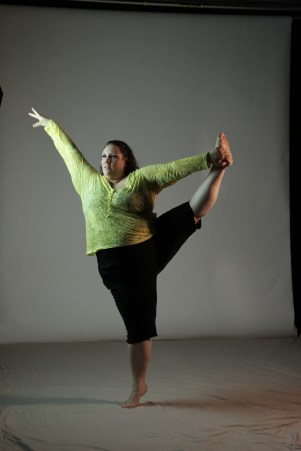
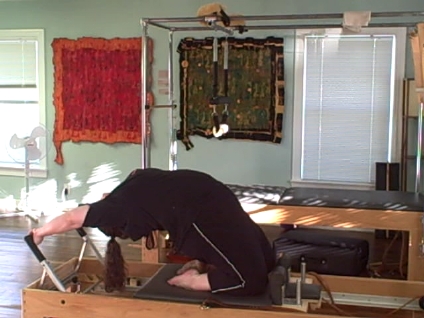
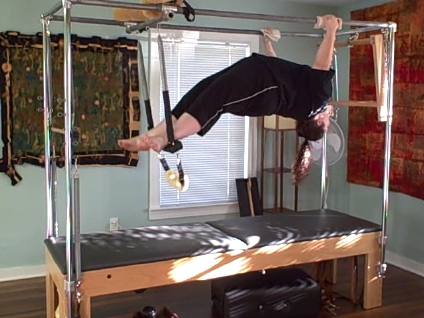
My conundrum is that I also write about the life that I choose as an athlete/dancer.  I try to be clear that my lifestyle is driven by my dancing –  I workout far more than is necessary for just maintaining health –  but I think sometimes people get confused and think that I’m trying to prove I’m a “good fatty” or that I’m trying to say that I think people should choose the same thing that I do, or that I think I’m better than people who make different choices. That’s definitely not what I’m about.

The truth is that I don’t write for people who want to tell me that they think I’m a liar, or that I can’t possibly be healthy, or that I’m a Bad Fatty.  I don’t write to try to convince anyone of anything.   I write what I think is true and I hope that I reach people who have been let down by the weight loss industry that lies to people so that they can make  60 Billion Dollars a year with a product that only succeeds in weight loss only 5% of the time and often actually DECREASES people’s health as they yo-yo diet and destroy their metabolisms. I write for people who get stigmatized by a society that confuses weight and health and has turned fat people into everything from metaphors to scapegoats.  I write for people who want to be hear a different voice, new ideas, or be supported int their choices about their own bodies.

People may try to label us as good fatties, bad fatties, or whatever they want. They may try to convince us that we must gain their approval in order to avoid their abuse.  I think that we always have the option to decide that we aren’t Tinkerbell and we don’t need anyone’s applause to live, opt out of the labeling system for ourselves and each other, and demand (and give) human respect that is not contingent on anyone’s weight, or the choices they make for their bodies and their health,  even if they aren’t what we would choose.

Any Diet But This One

When I say that my eating philosophy is to first and foremost listen to my body which leads to a diet with a variety of foods in reasonable amounts and everything in moderation, people tell me that it’s obviously not healthy to eat that way since I’m not thin and that I should choose one of these options instead:

  • Drink two thin chocolate beverages that contain laxatives, eat one meal a day that is low fat and low carb
  • Eat reconstituted soy protein five times a day and one meal of low fat protein and green vegetables
  • Eat a certain number of calories regardless of where they come from
  • Eat a bacon double cheeseburger but hold the tomato and the bun
  • Take pills whose label suggests that I “wear dark pants and bring an extra pair to work”
  • Eat an extremely limited low calorie diet 6 days a week, binge on the 7th day
  • Eat breakfast cereal 4 times a day, eat a meal of lean proteins and low carbs for dinner
  • Eat a ton of cabbage soup and on Tuesday eat as many bananas as I want but nothing else

I think that the main difference between my diet and all the others is that people make money selling those other diets and mine is what I think we would come to if we weren’t being inundated with messages from the people making sixty billion dollars a year selling us snake oil.

Let’s look at some of the history of the industry to see how we feel about their trustworthiness:

Ephedra

To me this is the quintessential story of how the diet industry works:

Ephedra was used in diet supplements to help speed the metabolism. In 1997 concerns started to build over serious side effects. That lead to the proposed ban by the FDA on products containing 8mg or more and stricter labeling at lower doses including the disclosure of the known health risks which included heart attack, stroke and death.

Instead, the Ephedra Education Council was created by the supplement industry to lobby against the restrictions.  They bankrolled a “scientific review” by a private consulting firm which found that Ephedra was safe.  They used this report and their deep pockets to lobby against the labeling requirements.  They also attempted to stop a study confirming the wide discrepancies between the label and actual amount of Ephedra in supplements from being published.

Metabolife – the manufacturer of the best selling brand of Ephedra supplement – kept 14,000 complaints about adverse effects from the FDA and spent over $4 million lobbying against state-specific legislation in Texas.  Meanwhile on the National Stage Senator Orrin Hatch questioned the scientific basis for the FDA’s proposal (because his degree in history and background working in the Mormon church really qualifies him for this).  Oh wait, turns out he forgot to tell anyone that his son was working for a firm hired to lobby both Congress and the FDA on behalf of Ephedra, and that the same five pharmaceutical companies and their industry trade association that paid his son’s lobby firm also donated $172,500 to a charitable foundation that the \Senator had started.  Oops.  In 2000 Business Week reported that that the FDAs regulation efforts were “beaten down by deep-pocketed industry lobbying” and the FDA withdrew the proposed labeling changes and restrictions.

When professional baseball player Steve Bechler died and the medical examiner reported that Ephedra toxicity played a “significant role” the FDA re-opened its case to regulate Ephedra. Senator Orrin Hatch participated in what Time Magazine called a “dazzling display of hypocrisy” when he said “it has been obvious to even the most casual observer that problems exist”, and then declared FDA regulation of Ephedra “long overdue.”  Finally in 2004 after over 15,000 complaints and a number of deaths, the FDA  issued a final rule banning the sale of Ephedra-containing dietary supplements.

The question of if anyone should be allowed to lobbying the government agency  that is in charge of our health and safety is a whole ‘nother blog.

Fen-Phen

Diet pill marketed by Wyeth.  In 1994 Fred Wilson, a Wyeth official, indicated concerns about fenfluramine’s labeling because it showed only four cases of pulmonary hypertension when a total of 41 had been observed, however action was not taken until 1996.  In 1995 the same company introduced Redux in the hopes that there would be fewer side effects.  Leo Lutwak, the FDA’s medical officer insisted that the drug contain a black box warning of pulmonary hypertension risks and refused to approve the drug without it.  So under pressure from lobbyists the FDA management moved the drug off Lutwak’s desk and assigned it to someone else who approved it with no black box warning for marketing in 1996.  In the end 300,000 claims were settled including some posthumously because pulmonary hypertension can be fatal.

The Snackwells Effect

Ah the non-fat craze.  After we decided that “the problem” was not, in fact, sugar, but before we decided that “the problem” was carbs, I mean meat, wait make that gluten, we were sure that fat was the scourge of our society.  Companies started to make everything low fat and fat free and the Snackwells Effect refers to the subsequent finding that  people consumed more calories of low fat and fat free foods than they did of full fat foods. It’s also worth noting that many of these foods were much higher in sugar than their full-fat counterparts.   I don’t actually think either of those is the worst thing about the low fat craze.  I think the worst thing is that it encouraged the widespread chemicalization of food and the belief that eating food chock full of chemicals but with a lower fat content was somehow nutritionally better than eating whole foods.  I think that’s crazy but we’ve talked about that before.

Olestra/Olean

I’m giving this part of the low-fat/fat-free crazy special attention.  Olean is a fat substitute that appeared in a number of Proctor and Gamble products, perhaps most notably “WOW” potato chips.  And by that they meant “WOW  these chips have a health warning label but people are still buying them!”.  In fact, the bag that these puppies came in legally had to say that they “may cause abdominal cramping, loose stools and inhibit the absorption of vitamins and other nutrients”.  This is somehow healthier than potatoes and oil?  Products with Olean are still available.

So if you’re still wondering why I don’t jump on the new bandwagons and take Alli (a diet pill whose label suggests that users  bring a extra pair of pants with them to deal with unexpected anal leakage), or give up gluten because it’s the diet demon of the day, or whatever the hell diet Oprah is schilling right now, then suffice it to say that I don’t trust these people for reasons that I hope are now obvious.  Even if their suggestions made any kind of sense I’d still be wary.  Luckily my Health at Every Size/Intuitive Eating plan makes WAY more sense to me than anything else out there so it was an easy choice to skip putting my life on the line for a pill that may only be on the market to keep a Senator’s son employed with a high-paying lobbying firm.

Some Perspective on Swimsuit Season

If you were reading the blog last year you’ve already seen this one but as I hear more and more people bemoaning swimsuit season I thought it was worth repeating.  (Also, Golda Poretsky who inspired the post and I are doing a workshop in NYC on the 21st that I’m super excited about! Check here for details)

Do you know Golda Poretsky?  You should.  She is a very cool woman doing great work in the Body Positive Community. Her site is Body Love Wellness and I highly recommend it.

Yesterday she tweeted;  “Rec’d a link to “How Not To Look Fat In A Swimsuit”. Wld ♥ to see “How Not To Obsess Abt Looking Fat In A Swimsuit & F-ing Enjoy Yourself”

Well Golda, your wish is my command!

Seriously, let’s talk about this.  It seems that almost every woman I know, of any size, starts to have panic attacks the first time she sees swimsuits out on the floor of her favorite store;  their pesky cheerfulness belying their greater purpose of  prodding us into going on insane cabbage soup diets and considering a move to Alaska.

Let me preface this by saying that I don’t personally spend much time at lakes, rivers, oceans, pools or water parks.  It has nothing to do with my size or how I feel about wearing a bathing suit.  I am half Irish and half German so my skin can only achieve two colors:  translucent and lobster.  I’ve tried every sunscreen in the world and nothing works.  But don’t cry for me Argentina, I don’t really enjoy being in the sun so it all works out.  I’m a chlorinated, heated water, ambient temperature controlled, indoor pool kind of girl – I’m not high maintenance, I’m highly maintained.

That being said, I will strut around my gym in a bathing suit with no worries.  Here are a few reasons why:

1.  It’s my BODY.  I live with it 100% of the time.  It does awesome things for me like breathing, and walking, and swimming and I decided long ago that I am not going to allow anyone to convince me to hate or be ashamed of  something that I am with 100% of the time for the rest of my life.  I get to choose how I feel about my body – nobody else can make me feel good or bad, it’s on me.

2.  Because it’s a pool and when you go to the pool, you wear a swimsuit. It’s not for vanity – it’s practical.  The last time I was at the gym ready to make use of the pool there was a “thin to average size” (probably a size 8 or 10)  woman in a large t-shirt with a towel wrapped around her legs and all the way to her ankles.  She scooted to the edge of the pool and, in a move that I can only describe as ninja-esque, threw the towel behind her as she jumped into the water as fast as she could whilst grabbing a kickboard off the side.  But her Crouching Tiger Hidden Swimwear moves could not mask the fact that she was wearing control top pantyhose under her suit.  She looked at me and said “Nobody should have to see these legs without hose on”.  Before I could reply, she realized that her shirt was caught on the side railing, then her pantyhose got caught on her kickboard.  While I swam laps she spent most of the time dealing with being in the water with a giant shirt and pantyhose.  I am simply not willing to put up with that kind of inconvenience, or  have my technique interrupted by a ginormous swatch of cloth which, when it is wet, hides nothing anyway; and pantyhose which I will not wear under any circumstances in the world, ever.

3.  I do not care if people are offended by my body.  People are allowed to be offended by whatever they want and it’s really none of my business.  I’m offended by people who I perceive to be too easily offended, but it turns out nobody gives a damn which is as it should be.  It is my BODY, if we all treated each other with basic human respect it would be impossible to be offended by someone else’s body.  The very idea is ludicrous to me. Regardless, it is not my job to protect people’s delicate sensibilities – there are at least three alternate cardinal directions in which they can look if they don’t want to look at me, they are free to choose one.

4.  Hypocrisy is an ugly thing.  It always seems like the same group of people who are  telling me that I should lose weight and are subsequently  offended by my body in a swimsuit.  While I would prefer that they just shut up, I insist that they choose – you can’t complain about my weight and then complain about what I do to stay fit.

5. It is maddening to me that the diet industry makes 60 BILLION dollars a year convincing women to hate themselves.  They create fear and uncertainty by saying things like “Swimsuit season is just around the corner, are you ready to wear a swimsuit?”  Well, let’s see here…  Swimsuit?  Check.  Body to put it on?  Check.  Yup, I’m all set thanks.  Plus I think I’ll keep my money you bloodsucking leeches.

6.  People can see me.  So they know how big I am whether I’m in a swimsuit, or jeans and a t-shirt.  If they are shocked at my size in a swimsuit, they should have been paying better attention.  That’s just a big sack of not-my-problem.

I realize that my swimsuit preferences are not everyone’s which is awesome.  Not everyone, regardless of size, is comfortable with how much skin a swimsuit shows.  Here are some more ideas  to help you stop obsessing and start having fun in the sun (or the oh-so-flattering incandescent glow of the overhead lights at the gym).

1. Alternative Swimsuits.  These are often created for women who want to keep to specific religious clothing guidelines or who just want a more modest look.  I did a quick Google search and found http://www.modestkini.com/.  I’m not affiliated with them at all so I make no guarantees, but it will give you an idea of what’s out there (and some of their plus size swimwear is actually modeled by plus-sized women.  Woot!)

2.  Fabulous Cover ups:  If there’s a particular part of your body that you prefer to keep covered for whatever reason, an (aptly-named) cover-up might be just the thing.  Here are some examples (again, no affiliation, check out the vendors before you buy!)

3.  Safety in numbers.  Go with a group of people who make you feel good about yourself and focus on the fun and not on any body insecurities you might have.  Think about how fantastic your body feels when you are swimming, or going down a water slide, or splashing in the waves.

4.  Reality check.  One of my favorite quotes is by Mark Twain “I’ve had thousands of problems in my life, most of which never actually happened”  When I’m worrying about something I try to remember that I am wasting energy on something that is not actually part of reality.  So instead I…

5.  …Expect the best, plan for the worst.  Think about what your true fears are about going out in a swimsuit.  Write them down and then create a plan to deal with each of them.  Are you afraid people will say something mean to you?  Create some scripting and practice it until you feel comfortable (you might check out my “How Dare You” post). Afraid of chaffing?  Hie thee to Google and read up on the various lotions, powders etc. that can help with that, or look into swimsuits that can help. Worried people will talk about you behind your back?  Maybe get over that – I actually think that’s the best possible outcome because frankly I don’t want to hear it anyway.

In the end of course it’s your choice.  For my part,  I’m not willing to allow my options for fun, activity, movement etc. to be controlled by what other people might think or say.  If my own fears or insecurities are getting in the way I try to find a way over (modest swimsuit), under (cover up), or through (F this, I’m wearing a two-piece) the fear and insecurity because I’ve found that very often the pure joy lies just on the other side.

Respect, Refrigerator Perry and Me

I’ve had a lot of people comment about the way I’ve handled this week’s onslaught of fat hatred.  I was actually thinking about that tonight as I  followed a link to one of the forums that generated the bullying, abusive comments and I read the following quote:

“I researched her and believe that she is very active and extremely accomplished both physically and otherwise,  but she doesn’t seem to understand that being fat cancels that all out.  If she is fat she will never have any credibility, and nobody will ever care what she says and that’s how it should be. She needs to get that being fat means she doesn’t matter.”

This is really more plain stupidity than I want to address directly, but here’s what popped into my mind:

I recently read that a study by the University of North Carolina showed 56% of NFL players are “obese”.  (Based on BMI which we know is a crap measurement but that’s what we use nowadays until we decide to abandon lazy medicine for the actual pursuit of health).

The average NFL Salary is almost a million dollars a year.

William “Refrigerator” Perry was an NFL player.  He stood 6’2 and weighed 382 pounds, his body mass index was 49.4.

I am a competitive dancer.  At 5’4 and 284 pounds my body mass index is 48.7.

The Fridge was flexible:

I am flexible:

He trained

I train

He had functional strength

I have functional strength

He was an admitted alcoholic who would sometimes drink 2 cases of beer a night and vodka by the gallon, and he paid no attention to healthy eating and nearly died because of it.  His behavior was rewarded:  He was revered as an athlete, paid millions of dollars, and made into an action figure.  Being fat certainly didn’t cancel out his accomplishments.

I practice Health at Every Size, eat reasonably, workout and dance very regularly, never started drinking and am in perfect health.

I got called a “Fucking Fatass” over 150 times in the last two days. Twenty three people said they wanted me to die, and one person said that they wanted to punch me over and over and watch me die.  Perfect strangers called me a “Fat Cunt”, “Fat Fuck”, “Stupid Fuck” and told me  “I hate everything about you.”

But I got off easier than the Fridge.  Everyone loved him and he apparently hated himself so much that he nearly killed himself through sheer neglect of his health.  Apparently there are people who hate me but I love myself, take care of myself, and enjoy perfect health.

The moral of this whole story for me is that I get to choose how I feel about myself and how I treat myself.  I am, in fact,  THE ONLY person in charge of this.  So, it follows that what other people think or say about me doesn’t affect how I feel about myself or how I treat myself unless I allow it to.

To be clear, I expect my decisions about my health to be respected and I think a really good place to start with that is by respecting the decisions of others. If you choose to hate yourself or your body because of how other people treat you, or if you choose to neglect your health because you want to rebel against society or you just don’t feel like it, or for whatever reason, you can absolutely do that.  It doesn’t hurt, disrespect, or negate anyone else’s choice and so I  respect your decision.

I’ve made my choice and once I sorted out how I will choose  to feel about myself and treat myself, the rest is about living openly and honestly and demanding and fighting for the basic human respect that I deserve and require.  More difficult than it sounds to be sure but but much easier, in my experience, if I start by respecting myself.

The World the Diet Culture Built

A couple of my posts got linked to on forums for body building and fitness (forums, I will point out, that I could easily have been legitimately a part of).  I have now received over 260 comments (none of which I approved) including the following (WARNING:  these may be triggering – skip the bullet points if you want to skip the comments and preserve your faith in humanity without the need for a big bottle of brain bleach):

  • Fat people should all be killed. Fact. Deal with it, stretchmarks.
  • Sorry fattcakes [sic], fat is unhealthy no matter how much you can do.
  • I hope you know people, deep inside, laugh at you dancing.
  • You look like a beached whale that grew legs.
  • 23 commenters (with different e-mail and ip addresses) said “fucking fatty, I hope you die”
  • One person said “I want to punch you over and over in your fat stomack [sic] and watch you die landwhale”
  • While I’ve been typing this I got a comment that said: “If your doctor killed you it would’ve been a good thing, it would have improved the gene pool. Kidding of course, there is no way any man would ever fuck you” (I can tell them that last claim is false.  Turns out that boys – and girls – DO make passes at girls with fat asses.)

You know, there’s an Ani Difranco song that I love called  Willing to Fight (entire song and lyrics below).  She sings:

Tell me who’s your boogey man

And that’s who I will be

You don’t have to like me for who I am

But we’ll see what you’re made of

By what you make of me

My first reaction to the comments was:  Are these people happy with who they are?  Would they be proud for their moms, or their kids, to see what they said to me?  Would they say it to my face, without the anonymity of the internet?  How does the person who wants to punch me in the stomach and watch me die act in real life?  Does this person have a fat brother, sister, mother?  Do they want to punch them in the stomach and watch them die?  If we met on the street should I actually fear for my life?  Why are these people so angry?  Why isn’t it enough to live the way that they think is right rather than saying that they want people who disagree with them to die.

But as stranger after stranger called me names and said that they wanted me to die or that they personally wanted to kill me, I started to get angry at a culture that makes this seem reasonable.  We live in a culture that’s gone beyond a fascination with thinness to a vocal, socially acceptable, hatred of fat, and this culture spends a tremendous amount of time, energy and money justifying fat hatred. Most often for profit, but it’s not just the diet industry that creates a culture of hate.  Good intentions are not enough and I believe that we need to hold the people who contribute to a culture of hatred accountable.

Doctors who were paid by diet companies successfully had the definition of a healthy weight lowered and then recommended their funding diet companies’ products to ‘solve” the new health “problem” that their definition change created. Those doctors are part of a culture of hate.

Allergan (maker of the lap band) funded a study with deplorable research methods that said that fat people cost businesses $70 Billion a year.  They are using that study to convince insurance companies that it’s cheaper to pay for lap band surgeries than employ fat people.  But every major news outlet ran the story without saying anything about the limitations of the study, and most didn’t mention who funded it. I assume because articles about fatties attract readers which attracts advertisers which makes them money.  Regardless of why they ran with the story, those news organizations are part of a culture of hate.

By the way Allergan is also the same company who ran a contest where the prize was a major abdominal surgery, a side effect of which is death. One of the provisions of the contest was that you could give the surgery to a friend. Allergan is most definitely part of a culture of hate.

Michelle Obama may have good intentions but she is encouraging fat hatred starting in elementary school.  Her war on childhood obesity amounts to a war on obese children and runs completely in opposition to her anti-bullying message.  Michelle Obama is helping to create a culture of hate.

And it’s not just companies, it’s individuals, people I know. DK is a Ph.D. Social Psychologist and she and I spent hours and hours talking about health and self esteem.  She and I nearly wrote a book together about self-esteem in fact.  We were so excited about talking about health instead of weight and talking about Health at Every Size.  Instead, she committed herself full-time to a pyramid scheme that sells weight loss products, calls herself a “certified health coach”, posts studies to her Facebook that she has more than enough training to debunk as poor research, and spends her days trying to make people terrified of being fat so that she can sell them her shakes and bars. DK is part of a culture of hate

As far as I’m concerned, every single person – regardless of intention – who encourages thinness under the guise of encouraging health is part of a culture of hate, bullying and intimidation wherein a complete stranger feels comfortable saying that he/she wants to punch someone in the stomach and watch them die because they are fat. Are you telling people that they have to lose weight to be healthy (or attractive, or deserving of respect)?  Do you participate in negative body talk about other people?   Do you make judgments about the health, abilities, or intelligence of people based on their size?  Then I’m talking to directly to you.

This is not the best we can do.  Together we can create a society that values health.  Actual health.  That focuses on giving people the best options for health:  affordable, accessible healthy food; affordable movement options that people can enjoy without the threat of stigma; an opportunity to love and appreciate our bodies while we decide what we want to do with them, an awareness that health comes in a variety of body shapes and sizes, and a world that has respect for our choices when it comes to our own health.  If you believe that health and thinness are the same thing then you are free to pursue a thin body but there is no reason for you not to respect someone else’s belief in Health at Every Size and there is no reason to create a culture of hate against people because they don’t think the same thing that you do.  To paraphrase Larry Kramer, one of my personal life heroes, “Our culture declares us to be unequal, which means, in this culture, that our enemy is you. You treat us like crumbs. You hate us. And sadly, we let you.”

We can do better.

The upside (I always like to have an upside) is that 3000 views have been directed to my site by these boards which is great for my stats.  Only 268 of them have left negative comments so far which is actually less than 10%, and I got 8 new subscribers so maybe I found more like-minded people and maybe, just maybe, I gave some people the opportunity to consider a new point of view.

Most importantly, I get to walk around knowing that I am part of a culture of health:  I am proud of my actions and what I write, I say what I believe under my own name – not anonymously with a fake e-mail address, I have way more than 263 comments from people who have been positively affected by my work,  I will sleep soundly tonight damn proud of the big fat life I lead.

The windows of my soul
are made of one way glass
don’t bother looking into my eyes
if there’s something you want to know,
just ask
I got a dead bolt stroll
where I’m going is clear
I won’t wait for you to wonder
I’ll just tell you why I’m here

’cause I know the biggest crime
is just to throw up your hands
say this has nothing to do with me
I just want to live as comfortably as I can
you got to look outside your eyes
you got to think outside your brain
you got to walk outside you life
to where the neighborhood changes

tell me who’s your boogieman
that’s who I will be
you don’t have to like me for who I am
but we’ll see what you’re made of
by what you make of me

I think that it’s absurd
that you think I
am the derelict daughter
I fight fire with words
words are hotter than flames
words are wetter than water

I got friends all over this country
I got friends in other countries too
I got friends I haven’t met yet
I got friends I never knew
I got lovers whose eyes
I’ve only seen at a glance
I got strangers for great grandchildren
I got strangers for ancestors

I was a long time coming
I’ll be a long time gone
you’ve got your whole life to do something
and that’s not very long
so why don’t you give me a call
when you’re willing to fight
for what you think is real
for what you think is right

Dancing Fat Girls Make Good

Edit – It’s now a bit sad for me to read this post.  I left the Cabaret because unfortunately I found it unprofessional and embarrassing (for example, at a show during our performance our director – who was supposed to be singing the song that we were dancing to – announced “I’m sorry y’all, I just burped”  into the microphone.)  But just because something isn’t for me doesn’t mean that it’s wrong and of course I wish them all the best.

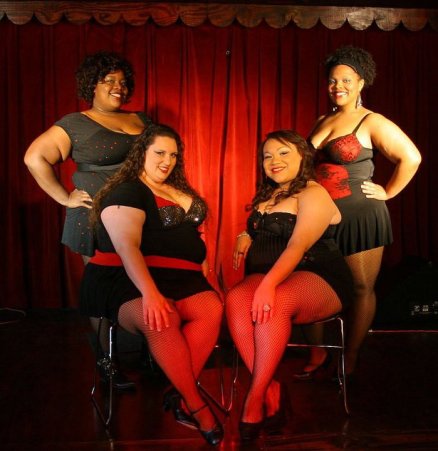
I told you a while ago about Fat Bottom Cabaret.  We are now up and running.  We debuted at Emo’s at a SXSWi event.  It was crazy – a packed house.  I do the choreography for the group and I had forgotten how difficult it is to debut choreography.  It’s like showing people your baby, knowing that they might

1.  Think it’s ugly

2.  Have no problem telling you that loudly and publicly

3.  Throw fruit at it.

Also, we were the only cabaret performers –  everyone else was burlesque.  That meant that we were the only women on stage (beside the fabulous Mojo Queens singers!) who were not getting down to panties and pasties.  So on top of the anxiety of debuting as a performer and a choreographer, and the fact that the stage was carpeted which meant that we had to change our choreography when we got there,  I also had the unsettling opportunity to be simultaneously worried that people would feel that we were wearing too little, or be disappointed that we were wearing too much. Did I mention that I’m a worrier.

Skip to the end:  One of the absolute biggest rounds of applause of the night.  People asked to take their picture with us, people chased us down to tell us how good we were, people  told us that we inspired them, we got interviewed for the news.  It went great.  We’ve done several other gigs since then and always received a great reception. It has been amazing so far and I feel that the world of burlesque – which is populated by women (and some men) of all shapes and sizes – has afforded us the opportunity to be appreciated for our beauty and praised for our talent.  I continue to feel incredibly lucky to have a chance to be in a group with such talented, awesome women.

We will be putting on our own show in June (I’ll keep you posted!) and our awesome leader Nikki has sent in our application to the New Orleans Burlesque Fest for which we were required to complete two videos – I’ve shared them below.  Fair warning, if you work with me, know my in real life, or if you happen to be my Mom and you think it might be uncomfortable to watch me shake it in a miniskirt and fishnets then feel free to skip these videos.  Otherwise, enjoy and I hope to see you in New Orleans in September!  (For some reason a bit of the right side  of the video gets cut off in the embedded version so if you want to see the full thing just double click to open it in full screen.)

This is the number we did at SXSW (and it’s my favorite of our numbers so far):

This is the first piece that we ever put together:

Stop Saying Skinnyfat – You Sound Like an Idiot

If you haven’t heard this let me fill you in:  “Skinnyfat”  is a term used to describe people who are thin but not healthy – they may lack muscle tone, be sedentary, have poor eating habits, be genetically unhealthy etc.

Another term that I’ve heard bantered about (on ABC News among other places) is “normal weight obese” – which means the same thing.

I’m curious, as a healthy fat woman should I be offended because nobody calls me “fatskinny”?

This one makes my [healthy fat person] blood boil with rage.

We didn’t need to coin the terms  “skinnyfat”  or “normal weight obese” because we already have a word for the condition of being thin and unhealthy:  “unhealthy”.

I almost can’t believe that so many people have made so much money purposefully confusing the concepts of weight and health that these terms have been accepted into our lexicon.

A barely thinking person who spends 20 seconds on this will realize how ridiculous it is.  It’s an utter contradiction of terms based entirely on an erroneous conflation of weight and health.

This is an incredibly simple concept:

There are healthy and unhealthy people of every shape and size.

If someone is skinny and unhealthy that DOES NOT make them fat. (It’s such a big, hot, steaming pile of “duh” that I can’t even believe I just had to type that.)

By the same token, someone who is fat and healthy is not skinny. (Oh look, a giant bowl of No-Shit-Sherlock Flakes.)

There is weight and there is health.  They are two different things with completely different sets of measurements.  We DO have the technology to measure health – it’s not even that difficult or expensive so if this was actually about people’s health then right this very minute we as a society could stop the sheer medical laziness of substituting weight for health and start accurately assessing people’s level of health (in case you missed it, the operative word here is HEALTH).  And if a patient wanted to get healthier the doctor would prescribe healthy habits rather than just telling that person to do whatever they have to do to be skinny (but not, god forbid, skinnyfat).

Just to recap: there’s no such thing as skinny people who are fat or “normal weight” people who are obese.  I’m going to put it out there and say that using these terms is so stupid that it should cause the speaker instant and intense physical pain. For the love of all that’s logical, intelligent, not to mention grammatically and physiologically correct, let’s stop this nonsense right now.

Sick, Fat, and Dreading the Doctor

I almost never get sick and when I do it usually lasts a day.  I only get sick enough to need medical attention about once every five years.

Last week was the perfect storm – no sleep, tons of stress, really hard workouts, not eating enough food.  Monday I started to really not feel well.  I did what I had to do (meetings, workout, dance lesson etc.) and then went home to try to feel better. But I didn’t.  By  Wednesday afternoon my tonsils had swollen to the point where it was difficult to breathe and impossible to swallow and they hurt non-stop.  Thursday I felt like grim death.  By Friday morning I hadn’t eaten anything in over 36 hours and I was in constant pain.

I can hear what you’re thinking:  GO TO THE DOCTOR YOU MORON!!!!

It seems reasonable but there are a couple of snags.  First I don’t have insurance – I’m too fat to qualify.  I’ve already discussed the issues of health care access for fat people.   Luckily I can afford to pay out of pocket which brings us to reason number 2, the real reason for my hesitation: The horrible treatment that I am likely to face in the doctor’s office (both statistically and through personal experience).

Because I am involved in fat activism, I “know too much”.  I know, for example, that in research from Yale University  more than half of the 620 primary care doctors questioned for one study felt comfortable describing obese patients as “awkward, unattractive, ugly, and unlikely to comply with treatment” and that almost 25% of nurses said that they were “repulsed” by obese patients.

In the past doctors have tried to kill me, doubted their own numbers, and called me a liar so I’m just not that excited to go.  However about 4am on Friday my desire to breathe without pain overtook my desire to not have to be humiliated by someone who is considered a health care professional and I Googled the closest Urgent Care Center and waited around until it opened.

In actuality it wasn’t so bad.  I tried very hard to be chipper and pleasant even though I just wanted to curl up on the floor. They didn’t try to weigh me so we skipped that whole fiasco.  The nurse tried to take my blood pressure with a regular cuff, I told him that he would need an extra large. (Why do they always do that – YOU CAN SEE ME.  I’M VERY FAT.  GET THE BIG ASS CUFF PLEASE.)   He took my blood pressure (typically 117/70) and it was 135/81.  The nurse said in a stern voice “That’s borderline…” it sounded like he was headed down the fat talk road, so I cut him off and said (conversationally, without being at bitchy I swear) “only since the pharmaceutical companies successfully lobbied to lower the number.  Also, if a patient is in constant pain in a place called “Urgent Care” what would we expect their blood pressure to do? I’m typically 117/70 like clockwork so I’m not worried.”  He seemed taken slightly aback but he took my word for it, said ok, finished the exam and walked out of the room. The exact same scene repeated when the doctor came in.  But they didn’t argue and neither of them said anything about my weight (possibly because they got distracted when they  found the size of my tonsils so impressive that they brought other doctors into the room.  I had the worst case of tonsilitis that any doctor at Northwest Urgent Care had ever seen.  Go big or go home – I’m #1 !!!!!!!!  Not that I’m competitive or anything).

So I had a pretty good experience at a doctor’s office.  I don’t know if the blood pressure thing was going to devolve into an “I’m sure you’ve never heard this before but American Medicine likes to conflate weight and health” discussion.  I’m glad that I was able to cut him off and take control of the experience if that was where it was going. Maybe the secret is that I went to Urgent Care where their job is to deal with my current urgent issue. Who knows?

I do know that I deserve better than to have to worry about this. Nobody who feels like I felt should have to worry that a trip to a health care professional will involve shaming, humiliation, advice not based on sound research, or a pathetic attempt to convince me that I wouldn’t have tonsilitis if I was just 50 pounds lighter.

One of the lines of a commonly used version of the Hippocratic Oath states “I will remember that there is art to medicine as well as science, and that warmth, sympathy, and understanding may outweigh the surgeon’s knife or the chemist’s drug.”   Just as a start, I think if we had a little more of that and a little less “obese patients are awkward, unattractive, ugly, and unlikely to comply with treatment” we’d have a much better health care system.

I was going back through my blog and remembered that I wrote a little pamphlet a while ago about how to deal at the doctor’s office.  You can download it here for free if you want.

So anyway, I missed you guys last week.  Lots of good comments – sorry about the lack of replies – and I’m glad to be back!

A Girl and Her [Impossible] Room

Photographer Rania Matar created a project called “A girl and her room” where she photographed girls and young women in their bedrooms.  It sounded like a really interesting project to me, so I clicked the link.

A couple of the rooms really struck me:

These girls have surrounded themselves with images that are impossible to achieve and, in some cases, highly sexualized.  Thanks to photoshop, The MODELS in these photographs don’t even look like the photos in real life.

Is it any surprise that girls would put so much emphasis on this when they live in such a thin-centric society?  When the First Lady of the United States is at school shaming their fat classmates as a constant reminder of what will happen if they don’t fit the very small “proper” height/weight ratio as defined by the sixty B…B…B… Billion dollar a year diet industry?  Even if they weren’t hung intentionally as inspiration, what does it do to a girl to be surrounded by unattainable images in the room that is her sanctuary?

When I was a kid I had Rudyard Kiplings “If” on my ceiling (yes, I was a weird little kid) and 16 years later I can still recite the whole poem and it jumps into my head in lots of situations.  Will these images sink in like that for these girls?

What can we do?

There have been some efforts to put warnings on photoshopped pictures and I think it might be a good idea.  Even if they are aware that they are photoshopped, does it really sink in for these girls or does the diet industry’s message  that if you just have enough discipline you can have any sized body win out?  What does it do to them subconsciously?  It seems that at least they would have to see the label every time they look at the picture – that would be a start.

It’s just a suggestion but it’s time to do something because we can do better for our girls.