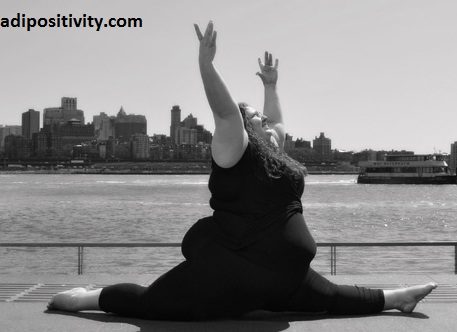
Gotcha! You looked at the picture of me and now you’re going to eat cookies until you explode. If you are my friend in real life you should stop hanging out with me now before you weigh 5000 pounds. Set your computers to not show images – HURRY!!!!!
I’m not making this up – it’s “research” (research here having the meaning of highly questionable marketing copy). You can find an abstract here.
Basically these two women conducted a study where they did things like ask random people to take a survey:
The surveys had photos of an overweight person, a person of normal weight, or a lamp. After completing the survey, the researchers asked respondents to help themselves from a bowl of candy as a thank you. “People who completed the survey that included a picture of someone who was overweight took more candies on average than people who saw either of the other two pictures.”
“Seeing someone overweight leads to a temporary decrease in a person’s own felt commitment to his or her health goal,” the authors explain.
Explain? I do not think this word means what you think it means. That’s not an explanation – that’s a theory that their research can’t back up. It also reads as patently offensive to me because their false dichotomy suggests that fat people DON’T have a commitment to health. (And for that, they can bite me.)
By this logic I should be an alcoholic. You see I don’t drink. I just never started: I don’t care for the taste, it’s an expensive hobby and I have enough of those, and I don’t like headaches or puking. But I’m the CEO of a company that owns a bar, a restaurant, and a performance venue where we sell a ton of liquor. I’m around people drinking CONSTANTLY. Yet somehow I’ve managed to find the resolve to make my own choices. Which is amazing since it seems that according to the researchers I’m a big fat fatty who can’t stop stuffing myself while bringing everyone around me down with me.
TIME Magazine let me WAY down by running with the headline “Why Seeing Overweight People Makes Us Eat More, Not Less”. It’s not “Why.” TIME Magazine, it’s still “Does?”, nobody has proven anything. I’m normally a fan of TIME but what the hell? Is it just a mistake, is your headline writer a moron, or do you not care about journalistic integrity?
Not to mention the “not less” part implies that seeing fat people would for some reason cause people to actually lose their appetite.
Correlation means that things often happen at the same time. Causation means that one thing can be proven to cause another thing. Say it with me regular readers: Correlation never ever, never ever, never ever implies causation. The headlines are saying that a majority of people who looked at a picture of a fat person ate more candy, therefore seeing a fat person makes you eat more. You just can’t do that. For example: in 2003 the month of August had the most ice cream eaten, and the most murders committed in the United States. So TIME should have run a headline saying “Why Eating Ice Cream Makes You Murder People”. WAIT… if having fat friends makes you more likely to eat sweets, and ice cream is a sweet, and ice cream makes you murder people, then I’m not just making you fatter – I’m also making you a murderer. GET OUT WHILE THERE’S STILL TIME!
As long as you’re still here, let’s talk about the study.
- Who chose the pictures – who judged what was considered “overweight”? Actual scientific studies have shown that different people have different interpretations of overweight, meaning that some participants might have thought that the “overweight” picture was normal weight and some might have thought that the “normal weight” picture was underweight or overweight. Did they ask the participants? If not do we feel that brings the conclusions into question?
- Were the researchers handing out surveys and candy all the same size?
- Was there some other connection between the participants who saw the fat picture?
- Did it matter that the pictures were all female?
- The respondents were asked to “rank” the pictures (ostensibly a sham task) – rank them how? Did that affect results?
- Did it matter if the researcher was male or female (participants may have been more likely to eat more candy from a male researcher for example).
- Could the researcher’s (possibly subconscious) fat bias have lead them to offer the candy in a different way to those who saw the fat people?
- Did anybody see if the study was different if they just left the participants alone in the room with the candy?
- Was a control group offered celery?
- How many participants are we talking about here? Was the sample size statistically significant?
I’m also wondering how the lamp fared. Was it a skinny lamp or a fat one? Would that make a difference? Maybe everyone should get rid of any big furniture before they inexplicably polish off a gallon of ice cream. Or, if the people who saw the lamp ate the least candy, maybe those seeking to change their eating habits should carry around a picture of a lamp. Why didn’t the study’s authors draw conclusions about the lamp?
And the big question – who funded the study? I know that you’ll be shocked to learn that I couldn’t find that information. I’ve e-mailed the contact to ask, I’ll let you know what I hear back.
I don’t know why people took more candies and neither do these “researchers” (and I use the term loosely). It could have been complete coincidence, it could be because fat people have such a stigma attached to them that people see fat people, think about how their body will never match up to the ideal, and then eat candy as an emotional crutch, or as an act of rebellion. Nobody knows.
And really, what’s the point of this research? With all the actual problems in the world, who in their right mind spends money to research whether looking at a picture of a fat person make you likely to eat more candy?
Margaret C. Campbell is an Associate Professor of Marketing at the University of Colorado at Boulder. Her thesis was called “Perceived Manipulative Intent: A Potential Risk to Advertising” Some of her published papers include:
- When Attention-Getting Tactics Elicit Consumer Inferences of Manipulative Intent: The Importance of Balancing Benefits and Investments
- What Makes Things Cool? How Autonomy Influences Perceptions of Coolness
- Implicit Theories about Influence Agents: Factors that Affect the Activation and Correction of Persuasion Stereotypes
- Persuasion Sentry and Goal Seeker: How Consumer Targets Respond to Interpersonal Marketing Persuasion
Gina S. Mohr is a Ph.D student in Marketing. I couldn’t find out much about her. She has 4 connections on LinkedIn, I hope they’re not fat. Maybe someone should publish an article that says “Why Getting a Ph.D. in Marketing Means You’ll Only Have Four Friends”
We talk aboutabout healthy eating and movement – maybe the first thing that we should do on our path to health is exercise some common sense. Then again, I’m hungry – any thin people want to make an ice cream run with me? Come on, you know you wanna…
Huge thanks to the always fabulous Virginia Sole-Smith for telling me about this. You can read her fantastic blog about the subject here!


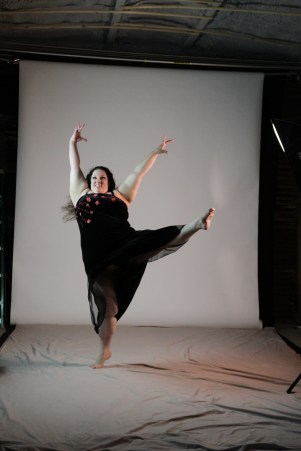
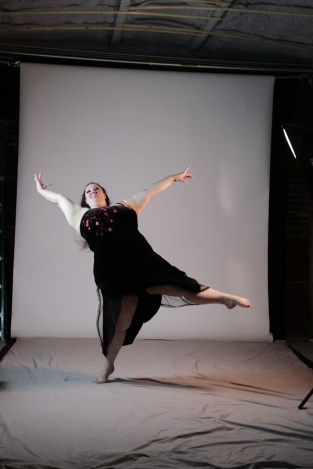


 Dances With Fat