Oh the Humanity!

I talk a lot about minding our own business, today I want to talk about the opposite.

When I wrote about ways to deal with the Friends and Family Food Police at  at the holidays, I got an e-mail saying that I should just “keep my mouth shut and appreciate that they care enough about to say something”.

Um, no.  I’m not going to do that. I respect everyone’s right to handle these situations in their own way, but that’s not how I roll. To me this behavior is inappropriate and I’m not going to smile pretty and take it.  The people who are in my life must respect my choices (even if they don’t agree with them) and must treat me with the level of respect that I require. I give clear communication, set specific boundaries and consequences, and follow through.  I respect someone’s choice not to be in my life, and I will not hesitate to remove someone from my life if they aren’t able to get it together. What I won’t do is be surrounded by family and friends treating me in a way that I find inappropriate while I smile and say thanks.

When I wrote denouncing bullying behavior disguised as being for our own good, I got an e-mail saying that I should “stop worrying about the words people are saying and appreciate their intentions instead.”

I get why this makes people uncomfortable.  It’s difficult to see someone get upset with  a person who seems (or says that they are) well intentioned.  And I think that’s exactly what’s so insidious about this type of bullying.  People get to mistreat us and then side step while waving their red cape of “good intentions”.  That doesn’t work for me.  I think that we teach people how to treat us and, well meaning or not, this behavior is not appropriate treatment.

When I did a video condemning the fact that Dr. Oz, who makes MILLIONS of dollars selling weight loss, was shocked to find out that there is research that disagrees with him, I received e-mails saying that I “need to find more compassion for Dr. Oz and where he is at in his journey”.

I would have a tremendous amount of compassion if Dr. Oz admitted that he was on a journey, and had bothered to find out that there is opposition research. But he chooses to call himself an expert and tell millions of people (as a medical doctor who they trust, and for profit) to do something when he hasn’t even bothered to do a literature review.  I’m not scraping up a lot of compassion for Dr. Oz, I do have tons of compassion for the people he is so confidently and profitably lying to.

In this culture fat people deal with a whole bunch of crap and everyone has their own way to deal with it and that is totally cool, but I will not give up the option of insisting that I be treated with the level of respect that I require, and calling out fat shaming/hating/stigmatizing when I see it.

This blog is supported by its readers rather than corporate ads.  If you feel that you get value out of the blog, can afford it, and want to support my work and activism, please consider a paid subscription or a one-time contribution.  The regular e-mail subscription (available at the top right hand side of this page) is still completely free.   Thanks for reading! ~Ragen
But Did I Learn the Lesson

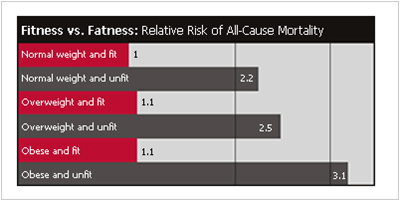
Wei et al. “Relationship Between Low Cardiorespiratory Fitness and Mortality in Normal-Weight, Overweight, and Obese Men.” JAMA. 1999;282: 1547-1553

My mom was telling me a story that she heard.  Now, this is my mom and she is the best mom in the whole world, and she’s not always really focused on the details of a story so feel free to consider this a parable.  Apparently there was a woman who wanted to be a model and she was told that she could make a career out of it but first she would need to lose weight.  So she started dieting which lead to an eating disorder.  She did the hard work to recover and got herself into college.  Then she got called from a modeling agency asking her to be a plus size model. But, they told her, she needed to gain weight.  She said “This was a chance for me to see – did I learn the lesson or not?” So she told them that no, she wasn’t interested in artificially manipulating her weight to get a modeling gig.

This really struck a chord with me.  I spent a lot of my life trying to artificially manipulate my weight.  Not for a modeling career but because I allowed myself to be convinced that it was healthier, and because I wanted the social acceptance that comes with having a body size that is socially acceptable.  But it never worked, I was hospitalized for an eating disorder 15 pounds over my “healthy” weight.  So I started doing research and it turns out that weight loss almost never works for anybody.  And that my premise was half flawed and half bad choice.  The flawed part was the idea that I had to be thin to be healthy, that’s just not true. The bad choice was that I thought I should solve bullying by trying to do what the bully wanted.  Now it’s crystal clear that weight loss is not the cure for social stigma, ending social stigma is the cure for social stigma.

As I walk my fat body around the world I get all kinds of messages about how I should lose weight so that I can be healthier, or happier, more date-able or more socially acceptable (from people who have no idea about my baseline health, happiness, date-ability or social acceptability.)  And I consider each of these occasions a chance for me to see if I’ve learned the lesson.  I shudder to think of the money, time, and energy I gave to the diet industry that makes over 60 Billion dollars each year selling us a product that has the opposite of the intended effect 95% of the time.

So when Weight Watchers asks me to believe that Jennifer Hudson is finally a success because she lost weight (even though she was an American Idol Finalist, Grammy Winning singer and Oscar Winning Actress when she was “fat” and now the only thing she stars in are Weight Watchers commercials) it’s a chance for me to see – did I learn the lesson or not?  Ok, that’s an easy one.

When someone tells me that they think I’m great but they don’t date big girls, it’s a chance for me to see if I’ve learned the lesson.  Do I think that it’s a good idea to date someone who only wants me if I’m different than I am now? Sure they’ll date me if I lose weight, maybe even marry me if I can keep the weight off long enough.  But what happens when time changes the superficiality of my body?

When they try to tell me that I’ll be all but immortal if I lose weight, it’s a chance to see if I learned the lesson.  Do I believe the research, or the hype?  Do I demand evidence-based treatment from my doctor or do I allow him to treat me based on the information that he got at the Allergan-sponsored seminar, or the prescription he’ll write me with the Meridia pen that he got when he played golf with his friendly neighborhood pharmaceutical rep.

When the Shape Magazine publishes its 1,153rd cover article on how I can “quickly and easily lose weight for good!” it’s a chance to see if I’ve learned the lesson.  Do I really want to support these people with my money – do I really think that the 1,153rd time is the charm?

In our thin-obsessed culture there are countless opportunities to see if I’ve learned the lessons – that thin is not the same as healthy and that every body deserves respect. The more I learn that more I’m sure that I’m on the right track this time.

If you’re looking for a little bit of activism today, might I suggest emailing the Communications Director of Surgeon General Regina Benjamin to ask that she denounce the Georgia Fat-Shaming Strong4Life billboards? You can send a quick note to Mary Beth Bigley and let her know where you stand: marybeth.bigley@hhs.gov I sent my e-mail yesterday!

This blog is supported by its readers rather than corporate ads.  If you feel that you get value out of the blog, can afford it, and want to support my work and activism, please consider a paid subscription or a one-time contribution.  The regular e-mail subscription (available at the top right hand side of this page) is still completely free.   Thanks for reading! ~Ragen

Stand

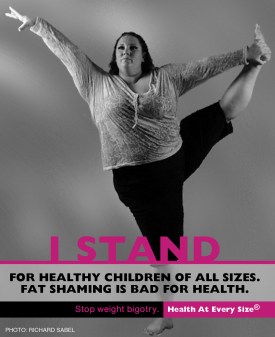
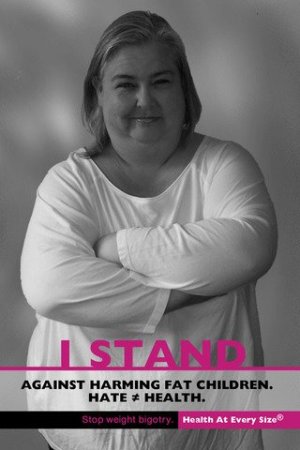
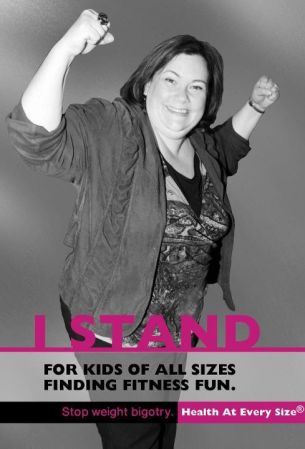
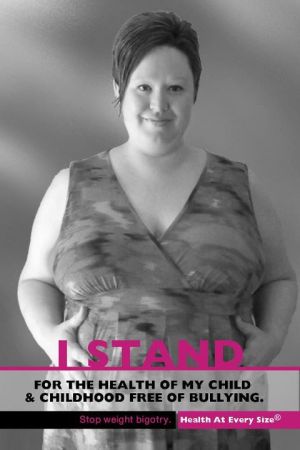
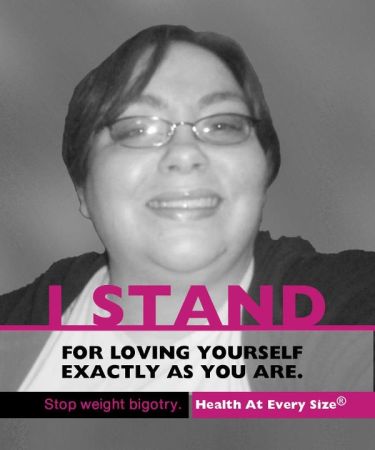
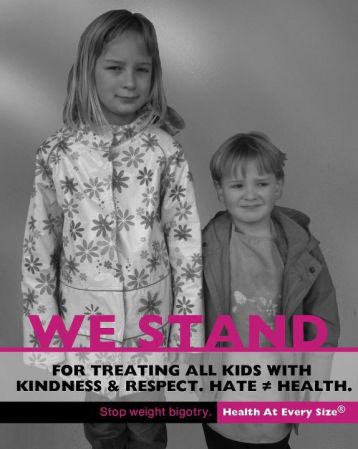
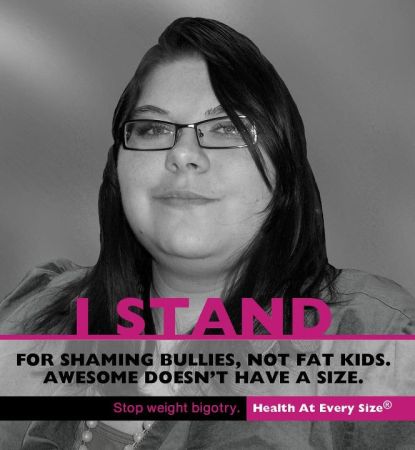
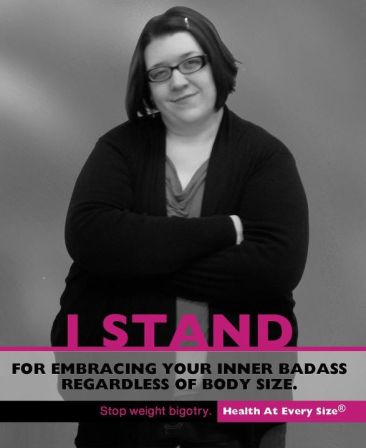
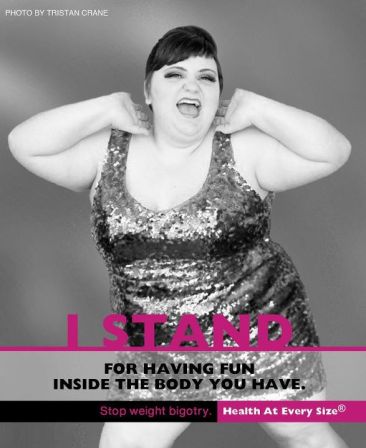
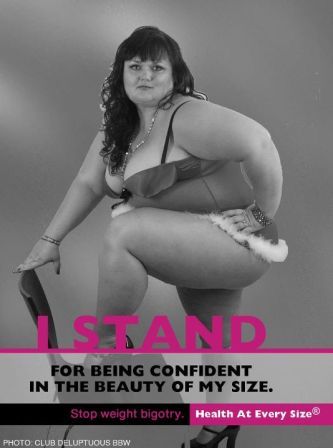
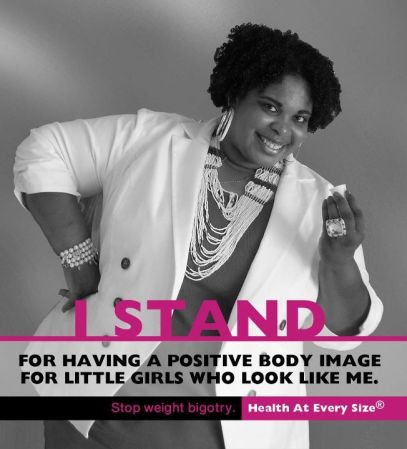
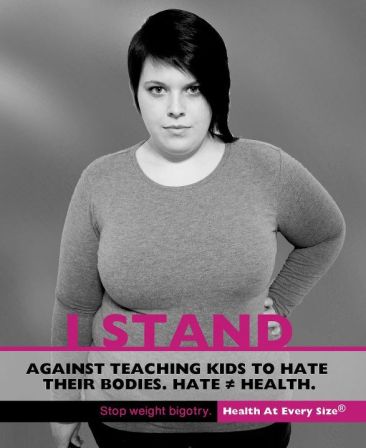
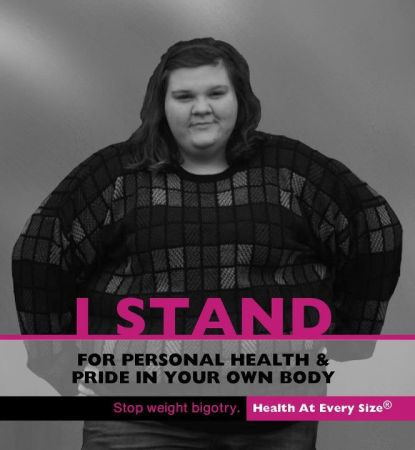
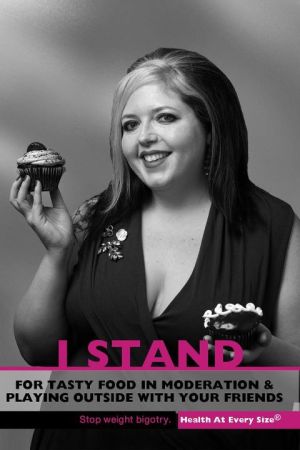
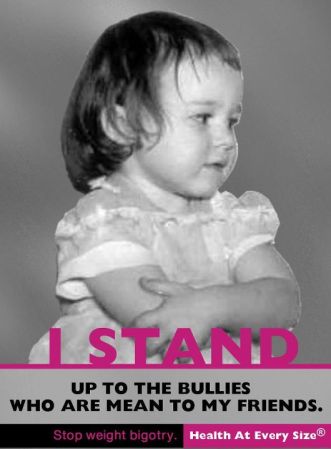
Today is the Lunar New Year.  According to my friend Belinda Mendoza (who is a Feng Shui expert) arguing today is bad luck.  So no rant.  Just a question – what do you stand for?  The always amazing Marilyn Wann has come up with a brilliant campaign to inject some positivity into the Georgia Child-Shaming Billboard Debacle.  Some of the pictures are below.   Today consider putting the active in activism by getting involved with Marilyn’s Stand4Kids campaign either by sending a picture to marilyn at fatso dot com and she will create one for you (she’ll get your ok before publishing it), or passing along the pictures on Facebook or Twitter, or whatever you’re comfortable with.

This blog is supported by its readers rather than corporate ads.  If you feel that you get value out of the blog, can afford it, and want to support my work and activism, please consider a paid subscription or a one-time contribution.  The regular e-mail subscription (available at the top right hand side of this page) is still completely free.   Thanks for reading! ~Ragen

Wrong Thing Opposite Direction

If you’re an avid reader of the blog you may have seen me post about this before.  But people keep doing it so I’m gonna keep talking about it.

You know how we hate it when people say that fat bodies are unattractive/not as attractive as thin bodies, or that people can tell what we eat, how much we exercise and how healthy we are based on our body size, or that all fat people are diseased, etc.?

How about we don’t do that EXACT.  SAME.  THING.  to thin people.  How about we never say again “she needs to eat a sandwich” or “real women have curves” or “you can’t be healthy when you’re that thin”.

This is not cool.  I’ve heard, and I reject, the argument that because thin people have thin privilege we can just bash them all we want.  This isn’t the Oppression Olympics – it’s not about who gets oppressed worse, it’s about nobody getting oppressed at all. And let’s remember that although they undoubtedly benefit from thin privilege, that doesn’t mean that every thin person goes looking for it.  Much of privilege is conferred and trying to tear somebody else down rarely makes our situation better.

I’m always sad when I see fat people posting cartoons on Facebook or Twitter that shame thin bodies, happily commenting “Bigger is better!” or whatever.  I think that because fat women are so beaten down, told so often that our bodies are less than, that we are just so excited when someone suggests that “bigger is better” we don’t always think it all the way through.  In truth I think bigger isn’t better or worse, it’s just different.  I think being for Size Acceptance means accepting all sizes. I think it’s best to avoid being a hypocrite of epic proportions.   I don’t believe that I can call my self a Size Acceptance advocate unless I fight as ferociously for society to recognize the beauty of flat chested women with thin boyish bodies as I do for women who look like me and everyone else.  To me Size Acceptance is about realizing that every body is beautiful, not trying to convince people that my body is better than someone else’s.

Nobody should have to live in the environment of hate and judgment in which fat people currently reside.  And that includes thin people.  Doing the wrong thing in the opposite direction is not the same as doing the right thing.

Again, I understand why people do this,  I know how fat people get treated in this society and how it hurts. But that doesn’t make it right and I hope you’ll consider 1.  Choosing to just stop body snarking altogether and 2.  Gently pointing it out when you see it.  Body stigma hurts everyone and stigma just breeds more stigma.  Why don’t we be the ones to stop it.

This blog is supported by its readers rather than corporate ads.  If you feel that you get value out of the blog, can afford it, and want to support my work and activism, please consider a paid subscription or a one-time contribution.  The regular e-mail subscription (available at the top right hand side of this page) is still completely free.   Thanks for reading! ~Ragen

Dude, We all Know I’m Fat

I saw a promotional spot for a new series called “The Weight of the Nation”.  Oh, this cannot be good…

As obesity continues to diminish the quality of people’s lives and raise health care costs, the Institute of Medicine is pleased to join HBO, the Centers for Disease Control and Prevention (CDC), the National Institutes of Health (NIH), the Michael & Susan Dell Foundation, and Kaiser Permanente in developing “The Weight of the Nation,” a new national campaign tackling the obesity crisis.

I am Type 3 Super Obese – I’m as fat as you can get on the (deeply flawed) BMI scale.  I am obese, it is not a crisis, please don’t tackle me.  My actual body size has not affected my quality of life at all. The only thing affecting my quality of life is the shame and stigma that I deal with from everyone from strangers on the internet to doctors, which is perpetuated when well respected institutions claim that my body is a crisis requiring tackling. Let’s be clear that if fat people’s “issues with our body size” are actually issues caused by social stigma, then the cure lies in ending social stigma, not ending fat people. And, based on all the science we have now,  ending stigma has the added benefit of actually being possible and quick – just stop doing it.  Let’s not forget that there are some very serious questions about how much obesity is affecting healthcare costs. Regardless, I just wanted to say very clearly that the PR firm that wrote this does not speak for my experience as an obese person, and has no right to try to replace my experiences with versions that will be more profitable for them.

The press release also stated:

Past studies by IOM and others have shown that obesity is not simply a failure of personal responsibility and combating it demands action at all levels — from the individual and the family, to communities, to the nation as a whole. IOM is also working with the collaborating organizations to develop action kits that will provide tools to help community-based groups take steps to prevent obesity.

I fear that this one is a little from column A and a lot from column shit.  Yay to “obesity is not simply a failure of personal responsibility”, except that the rest of it makes it sound to me like they think it’s a failure of family, community and National responsibility, rather than simply a body size which is separate from people’s health.  Maybe they’ll surprise me and all of these community actions will not be about shaming and stigmatizing fat people, and will be about focusing on healthy habits for yourself, and minding your own damn business. I certainly hope so.

Especially since they don’t have any answers.  Not even one scientific study of intentional weight loss has shown that longterm significant weight loss is possible.  This is just a bunch of people saying “You just [fill in the blank with a weight loss cliche: eat less and exercise more, send your kid outside to play, count your points, give up carbs etc.]”  Pro tip – anytime someone is talking about health and weight and they start a sentence with “You just…” it’s better than even money that they are about to say something that is wholly unsupported by the science.  Because health and weight are two separate things, both vastly complicated, and neither has answers simple enough to start with “You just…”

I am concerned about the trend I see of suggesting that the problem with obesity is that we just aren’t making fat people aware enough that they are fat. I saw an article the other day concerned that Doctors aren’t talking to their fat patients enough about their weight.  This is not mirrored in the testimonials of real live fat people I know who go to the doctor (including me – who had a doctor suggest that weight loss was a good treatment for strep throat).  Based on what I’m hearing from the actual community of fat people (and not those who make a profit on us) doctors can’t seem to STOP talking about our weight, even when it has nothing to do with the issue.

We already discussed how I felt about the article that suggested you confront a loved one about their weight over the holidays.

The folks over at Children’s Hospital of Atlanta – you remember them, they brought us the 100% logic-free message that their billboards don’t stigmatize or humiliate fat kids because the pictures of fat kids with stigmatizing, humiliating messages across them are targeted at parents.  They claim that they have to shame and humiliate fat kids because 75% of Georgia parents are unaware that their kids are fat.  I find that hard to believe, especially since they have refused many, many requests to give a source for that number.

So many messages about how we fatties need tough love, and someone has to tell us we’re fat.

Dude, we all know I’m fat.  What we disagree about is whether or not it’s any of their damn business,  and the fact that I think it’s just a descriptor – like I’m short and fat with curly hair – and they think it’s a reason to make my life endlessly miserable until I overcome all the scientific evidence and look like they want me to look, at which point I can engage in whatever unhealthy behaviors I want without comment unless I get fat again.  Since I’m, you know, me, I feel confident that I have final say on this due to that whole life, liberty and the pursuit of happiness thing.

It’s certainly possible that some of these “shame the fatties for their own good” proponents are so insulated by their thin privilege that they honestly don’t know what it’s like to be fat, and they think that fat people walk around getting the same treatment they do.  A problem that could be solved by having actual, real live fat people at the table for these discussions – talking with us instead of about us.

But I think that there is another contingent.  A group who, when they say: “We have to tell fat people they are fat,” are really saying “We have to shut these people up”.  The  strides that have been, and continue to be, made by my heroes – people like Marilyn Wann, Linda Bacon, Deb Burgard, Jon Robinson, Paul Campos and many others – combined with the massive amount of science that supports a health-based, rather than a weight-based health paradigm, and a community that is starting to find the strength to stand up and demand respect, is threatening the profits of a 60 billion dollar diet industry and a pharma and medical establishment that looks at fat people and sees dollar signs.

So when those industries say “We need to make sure that fat people know they’re fat, and get their families and communities involved in policing them” what I hear is “We need to keep these people down to keep our profits up”.

There is a beautiful quote by Ghandi:  First the ignore you, then they laugh at you, then they fight you, then you win.  I think that the diet, pharmaceutical and health companies may be moving out of the laughing at us phase. Just remember that as long as we keep fighting we are getting closer to winning.

Fat people do not have to buy into the very flawed idea that we are a crisis, or an epidemic that requires intervention, no matter how profitable or self-satisfactory it might be for others to claim that we are.

Big News

I’m a podcast! (Well, it’s big news for me because I had to master a couple types of technology to get it done.)  You can go to iTunes Store and search danceswithfat (all one word) or you can go to my podbean blogcast directly.  It’s completely free, I’ll record most of the blogs and put them up on a few day lag.  There’s already a back  log there.  Of course I still hope that you will come to the blog online to comment and interact, I just thought that this would be a neat addition for people who enjoy podcasts and/or might want to hear what these blogs sound like when I’m ranting them out loud.  By the way, I started with the intention that every one would be perfectly read, but I find that my perfectionist streak fades around take 6, so the experience is sometimes more authentic than perfect.

This blog is supported by its readers rather than corporate ads.  If you feel that you get value out of the blog, can afford it, and want to support my work and activism, please consider a paid subscription or a one-time contribution.  The regular e-mail subscription (available at the top right hand side of this page) is still completely free.   Thanks for reading! ~Ragen

Dear Paula Deen, Sorry About these Idiots

You’ve probably heard by now that Southern Cooking Diva Paula Deen has announced that she has Type 2 Diabetes. She barely got the words out of her mouth before people started to write articles that came dangerously close to saying that she deserved the disease because she cooked unhealthy foods on her various cooking shows. As if, instead of allowing people to make their own decisions, these foods shouldn’t even exist.  As if it is possible to correctly deduce what Paula eats at home based on what she cooks on her show  (in which case do they also assume that the only thing Anne Thorton eats is dessert?)

Next it was about how she had the nerve to wait three years to tell people that she had a disease that is not communicable in any way or any kind of public threat.  Look, she’s under no obligation to disclose this ever and we need to stop acting like this is anybody’s business but hers.  Interestingly,  I don’t remember any articles that attacked Halle Berry when she went public with her type 2 diabetes.

Then is was her sheer audacity in not being contrite. Perhaps having some foresight into how she would be treated after being honest about her health, she lined up a sponsorship with a diabetes drug and had her sons start a show about making her food more healthy.  And she got criticized for that. You gotta love a no win situation.

Maybe “worst of all”,  Paula had the nerve to say that she had made “small changes” to her diet but that she had always eaten moderately.  People wrote blogs that just went ahead and assumed that was a lie and made up their own version of what she eats.  Because of course they are better witnesses to Paula Deen’s experience than Paula Deen is. Wait, no they’re damn well not. To add insult to making up stuff, typically those same writers also incorrectly said that excess body fat causes Type 2 diabetes, rather than correctly stating that it is correlated.  But, you know, who cares about accuracy when you can get a good fat shaming rant going.

Some of this is based around misinformation about diabetes.  We’ve already talked about the “diabesity” myth. Also, even if body size were a risk factor, so is age, race, and genetic predisposition, prolonged high stress, and being the subject of social stigma (so, incidentally, if you want to play “shame the fatties” then congratulations, you’re part of the problem.)  In addition to genetics, Paula was diagnosed at 68, has talked about living a high-stress life for many years, and has been the subject of all kinds of stigma for her weight. So if body size was a risk factor, it was just one of her many risk factors.

Which leads us to the very prevalent myth that anyone can successfully make their body smaller.  In truth, long term weight loss is unsuccessful 95% of the time.  We must face the fact that, as was beautifully stated by Wayne Miller of George Washington University:

There isn’t even one peer-reviewed controlled clinical study of any intentional weight-loss diet that proves that people can be successful at long-term significant weight loss.  No commercial program, clinical program, or research model has been able to demonstrate significant long-term weight loss for more than a small fraction of the participants. Given the potential dangers of weight cycling and repeated failure, it is unscientific and unethical to support the continued use of dieting as an intervention for obesity.”

If these people believe that body weight causes diabetes then they should be telling people not to diet, because statistically the best way to gain weight is to try to lose it.  And weight cycling (aka yo yo dieting) opens people up to a number of other health issues that these people will have to find the time to police and shame them for.

A lot of this is based on the idea that a fat body is public property.  You can see it all over the place.  The way that they photograph us without heads.  The way they wage a war against us “for our own good” – the way  people are encouraged to tell us, at family celebrations, that our bodies are not socially acceptable (like we somehow missed it the first 386,169 times we heard it this year.)  The way that some people think that they know everything about us just by looking at us.  The way that when we speak out and say that people’s assumptions about us are wrong they call us liars. Or the bullshit “Oh won’t somebody think of my tax dollars” argument that falls apart under the most moderate scrutiny.

You do not owe anybody an explanation for your body or your health and they have no right to ask you for one. These people need to let go of the ridiculous notion that they can look at someone’s body size and know what their habits are. Everybody knows people who eat tremendous amounts of crap food and yet they stay thin.  If you believe that’s possible then you must also believe that there can be people who eat moderate amounts of healthy food and stay fat.  You cannot believe in one situation and not believe in the other.  Once people grasp that concept, they should also understand that they can’t make guesses based on size. But get this – if I polish off an entire pizza waiting for my Chinese food to arrive it’s still none of anybody’s damn business. Singling out fat people because you can see the size of their bodies is just bullying unless these people are also shaming and stigmatizing people who jaywalk, run Ironman Traiathalons,  don’t get enough sleep, live under a lot of stress and on and on.  Somehow people have gotten it into their heads that once a body becomes fat it’s theirs for the commenting, shaming, stigmatizing and metaphoring, and that they can claim that it’s all for the fatties own good,, or in the interest of public health.  Those people are wrong, and I’m happy to disabuse them of this notion.

Public health does not mean public thinness.  It also doesn’t mean being a judgmental busybody who shames or stigmatizes people who don’t look or act like you think they should.  Being for public health means that you are for people having access to the foods that they choose to eat, safe movement options that they enjoy,  and affordable evidence-based medical care. If public health is important to you then you fight like hell for people to have access of these things, then you butt out and let people make their own choices.

Advocating for public health is neither rocket surgery nor brain science, it’s a three step process:

  1. Work for access
  2. Make decisions for our own health
  3. Respect everyone else’s choices and body

This blog is supported by its readers rather than corporate ads.  If you feel that you get value out of the blog, can afford it, and want to support my work and activism, please consider a paid subscription or a one-time contribution.  The regular e-mail subscription (available at the top right hand side of this page) is still completely free.   Thanks for reading! ~Ragen

Rolls Not Trolls

Today in the US was Martin Luther King Jr. Day.  This is actually a kind of a big holiday for me because he is a hero of mine – Dr. King dreamed a dream and then worked tirelessly, eventually giving his life, to make it come true as part of a community that was ready for, and demanded, change.

Today I’m reflecting on how important the “community that was ready” part is.  There has never been a civil rights uprising by a group of people who thought that their poor treatment was their own fault, and that’s where a lot of fat people are right now.  They’ve bought into the idea that their bodies are proof that they are lazy or weak-willed or deserving of bullying, shame, stigma and poor treatment.  People are allowed to do that, I just want to make sure that they know it’s not the only option.

I think, based on where was are as a community, that it’s extremely important that fat people understand they can demand respect.  It’s very difficult to have a civil rights movement when the people involved aren’t sure that they deserve civil rights.

But I also see that there are some things shifting in the world. More and more information is coming out showing that bodies naturally come in a variety of sizes, and that weight loss is almost never successful. There’s so much more research that shows that healthy habits are the best choice for health. Fat people are starting to realize that they deserve respect for their bodies as they are.  A conversation around bullying has begun and there are people realizing that weight loss is not the cure for social stigma – ending social stigma is the cure for social stigma.

So I’m adding something to my activism. Something that I call “Ninja Commenting”. For a very long time I’ve avoided commenting on negative discussions about fat people on the internet because you just get shouted down by rabid internet trolls.  But then I got a few e-mails from readers who were self-described “lurkers”, they read the blog but never comment, and get a lot of benefit from it. It occurred to me that there may be people reading those fat hating comment threads desperate to hear a fat positive message.  So I decided to start trying “Ninja Commenting” – if I happen upon a fat hating thread I leave a comment.  I do NOT check the box to get e-mailed replies and I resist, with conviction, the temptation to go back and check on my comment.  I Ninja Comment and get out of there.  It allows me to add another perspective to the discussion without sacrificing all my Sanity Watchers points and my mental health.

I posted something about this on Facebook today and Erin accidentally typed “roll” instead of “trolls” and an idea was born.  Let’s be a gang of positive internet commenters.  We’ll call ourselves “Rolls not Trolls” and soon we’ll own the internet with our Ninja commenting style.

If that’s not your thing it’s totally cool, but let me encourage you to make 2012 the year of doing some fat activism.  We’re over 60% of the population – in the United States, fat people control the vote- so this system of oppression only works with our buy-in.  It doesn’t have to be a big major thing either – repost some HAES or Size Acceptance stuff on your Facebook or Twitter.  Go to the blog of someone  doing  fat  activism  and leave a supportive comment thanking them for their work.  E-mail someone you admire and tell them that you think they’re awesome.  Get involved in a cause (here’s something you can do right the hell now! )  You’re not obligated to do this and of course it’s totally cool if it’s not your thing, I’m just making suggestions here.

If you’re interested in doing Rolls not Trolls for real, I could start a Facebook group and we could share discussion links and get more than one person sharing the body love.  (To be clear, I’m not suggesting that we go to people’s personal weight loss sites and try to convince them to do something else.  I hate it when people do that to me and I try really hard not to be a massive hypocrite.)  I’m saying we add our voice, loudly, to discussions on the New York Times, WebMD, etc. If you’re interested let me know and I’ll get a Facebook page going.

Edit:  As of this morning (1/17) by request we started a Facebook group. Come join us at https://www.facebook.com/groups/165890630180774/

Whatever you do, remember that your Big Fat Dreams are NOT impossible,  every little bit helps, and we’re gonna win.

This blog is supported by its readers rather than corporate ads.  If you feel that you get value out of the blog, can afford it, and want to support my work and activism, please consider a paid subscription or a one-time contribution.  The regular e-mail subscription (available at the top right hand side of this page) is still completely free.   Thanks for reading! ~Ragen

Now We’re Spying on Fat Kids?

I saw this article in the New York Post (trigger warning for “obesity hysteria” talk, diet ads, and comments like you might expect).  The gist is that they are putting electronic activity monitors on kids as “reinforcement in fighting the obesity epidemic.” People in the article question the program. They ask if this is a privacy violation? They ask how safe the data on the website really is? Does the data pass along with the child from school to school? When will insurance companies want to get access to it? Will a school want to medicate a child that the monitor identifies as hyperactive?

I have some other questions:

The article said that the school in Long Island bought 10 of the devices.  Are they putting them on kids at random or are they actually singling out fat kids?

On what data are they basing the conclusion that monitoring students’ activity level in this way will affect obesity now and in the future?

What data are we using to determine a baseline for the amount of movement that a student “should” have?  How statistically valid is that baseline?

How accurate are these monitors?  How often do they malfunction?  How can they be tampered with or manipulated?

Since the program is non-optional and no parental signature is required (many parents had no idea that it was going on), how will it affect students with, or trying to recover from, eating disorders that the school might not be aware of?

Will this trigger eating disorders in students?

How will it affect the self-esteem of disabled kids?

What happens when the fat kids get lots of activity?  Do we finally start to question the simple calories in/calories out model or do we call the kid a liar and ask him how he’s cheating the system?

In one school “upper-grade students’ marks in phys ed are based in part on heart-rate monitors and activity sensors.”  What happens when there is a malfunction that affects a student’s GPA?  What about students with disabilities or those  struggling with depression or other mental illnesses whose symptoms include fatigue and lack of energy?

But mostly what I want to ask is: What the hell are we doing? We have lost our damn minds. Have you MET a teenager lately?  With the surliness and the rebellion?  There are much better ways to help kids develop a lifelong love of exercise than to spy on them electronically and threaten them with bad grades for non-compliance. Why are we not trying to develop intrinsic motivators when we know that research (Gneezy et al for example) shows that external incentives may work for the short term but they can crowd out the intrinsic ones that actually would have worked long-term.

I’ve talked before about the dangers that happen when we lose our rationality in a wave of  “won’t somebody think of the children” hysteria.  I think that spying on kids definitely qualifies. We can do better to help our kids honor their bodies signals and needs than to spy on them and threaten their grades.

This blog is supported by its readers rather than corporate ads.  If you feel that you get value out of the blog, can afford it, and want to support my work and activism, please consider a paid subscription or a one-time contribution.  The regular e-mail subscription (available at the top right hand side of this page) is still completely free.   Thanks for reading! ~Ragen

Big Fat Impossible Dreams

I try not to rant two days in a row but sometimes it’s a rule that I break.  For the second time in a week someone has told me that some type of fat activism that I was doing was impossible and a waste of time.

Here’s what happened: I said (in two separate incidences) that I want to help put up a billboard in Georgia to counter a hateful billboard campaign that shames fat children, and that I want to work with airlines (as an expert both in business operations and in fat activism) to figure out a solution to the issue of flying fat. In both instances, People felt the need to tell me that I should give up before I start because it’s just too hard/impossible.

I understand that I’m touchy about this because it’s been happening all my life:  I’ve been doing stuff that people said was impossible since before I entered kindergarten and as recently as yesterday.  I still remember that my senior quote was “It’s better to die on your feet than live on your knees.” by Emiliano Zapata  I really believed that when I got to be an adult, or did enough stuff that people said was impossible, that it would stop.  Apparently not.

But don’t be discouraged by these people .  It’s historically demonstrable that these naysayers are likely wrong.  I know that because I wore pants when I left my desegregated school to vote for the first time.  I know that because 42 years after the Stonewall Riots I signed as a witness at the legal marriage of my gay best friend and his husband.  When it comes to civil rights, history is on our side, and the odds are in our favor, and if we fail, we’ll be better for having tried, than to have spent our energy trying to discourage the people who are doing the work.

What’s the point of telling those of us who are trying to improve a situation to stop trying?  Are these people just looking for eventual “I told you so” rights?  Were they not able to make their dreams come true and so now they want to stomp on someone else’s? What is the deal with this?  If they think that they are doing this for our own good, it’s just another form of concern trolling and it’s just as unwelcome as any other form.  One of the core tenants of my activism, taken from one of my heroes – Harvey Milk, is “You gotta give them hope”.  If your motto is “You gotta take their hope away” then you’re allowed to do that, but I will never understand it.

I get hatemail everyday from idiots who tell me things from “You’re disgusting” to “I want to kill you”. But none of that is as annoying to me as people who tell me that I shouldn’t try to change things because it’s impossible.  You know who never makes anything better?  People who say “don’t bother trying to make things better”.  You don’t have an obligation to try to change things, I think it’s cool if you’re not interested in activism at all, but how about you don’t try to pull down those of us who are.

People tell me sometimes that my blog is too angry.  I AM  angry sometimes and I do not apologize for that.  I’m also happy, energized and hopeful much of the  time.  I saw something on the brilliant Marilyn Wann’s Facebook that pretty much sums it up for me:

I share this feeling, with Margaret Cho, that I have an endless fund of rage, a wonderful energy source, and like her, I will not set aside the option of directing a honed beam of that rage at people who — whether thoughtlessly and knowingly and venally — inflict their weight prejudice on others as if that’s at all okay. Disproportionate response, my fat ass.

I am treated like a second class citizen in any number of situations every day.  If people are shocked that I’m angry, then I’m shocked that they’re shocked.

If you are fat, then I know that you may have been encouraged to dream small, or not at all.  To settle for a partner who is less than what you want, or to expect that nobody will ever love you. To give up your dream of being a dancer, or an athlete, or a corporate CEO. To take a crappy job for less pay than you deserve and never try for anything more.  To just accept social injustice and being treated like a second class citizen. To stop “complaining” and just accept the status quo.

If you want to dream big then I say do it.  Dream big.  Really big.  Huge.  Tell me how I can support you and I’ll do anything I can.  I believe that we will see substantial change in the way that fat people are treated in my lifetime, and that will make everyone’s lives better. I choose to dedicate my time and energy to being part of that change.  If you disagree or if you don’t, that’s just perfectly fine.  If you think I can’t or shouldn’t,  that’s absolutely your right, but feel free to keep that to yourself because I don’t care, I will not tolerate it, and if you want to see how angry I can be then keep it up.

If you want to be part of the change then let’s go.  We’ll have fun, do cool stuff, and change the world. Here’s that Harvey Milk Speech one more time:

“I know that you cannot live on hope alone, but without it, life is not worth living.  And you, and you, and you, you gotta give them hope”

This blog is supported by its readers rather than corporate ads.  If you feel that you get value out of the blog, can afford it, and want to support my work and activism, please consider a paid subscription or a one-time contribution.  The regular e-mail subscription (available at the top right hand side of this page) is still completely free.   Thanks for reading! ~Ragen

This is the Size I Come In

I received a comment on my blog yesterday that I want to address here (trigger warning – if you just want to read my stuff and not the triggery stuff, skip the block quote below and the italics.)

Nona wrote:

For the most part I agree with what you’re saying, but there are times when being fat directly effects other people and that’s on public transportation and planes. I live in NYC, and while I know I have the right to ride its not fair to someone else when I need to take up 1.5 seats on a crowded train and part of my thigh invades someone else’s seat. This isn’t about rights or statistics, it’s about being annoying to others on public transportation and size functionality. I also travel a lot and there is nothing worse than being squeezed in a seat next to someone on a 5 hour flight. I don’t really watch my weight per se, but I do use my ability to comfortably fit into a plane seat and fasten my seatbelt as a personal barometer.

Let’s take this bit by bit:

I live in NYC, and while I know I have the right to ride its not fair to someone else when I need to take up 1.5 seats on a crowded train and part of my thigh invades someone else’s seat.

In the subway the seat divisions are arbitrary. Some people take up less than one seat but they don’t pay any less.  The subway is a perfect example of paying for transit and not for space.  You aren’t even guaranteed a seat.  The people who get on first take up the available sitting space, everyone else stands.  That’s the deal. If I paid my ticket and there’s enough room for me to sit, then I get to sit.  People come in different sizes, this is the size that I come in, I take up this much space. and that’s just fine. We would never say that the legs of a really tall person take up too much space in front of them when they sit or that they should try to get shorter or pay more.  Because that’s what size they are and that’s how much space they take up.  I think that the best thing might be to have flat benches rather than seat divisions, so that people can take up as much space as they take up and everyone else can stand.

This isn’t about rights or statistics, it’s about being annoying to others on public transportation and size functionality.

This is absolutely about rights.  What are fat people supposed to do, stay at home so we aren’t “annoying” people with our big fat bodies?  My right to life, liberty and the pursuit of happiness doesn’t exist if it includes public transportation?  That’s not how it works.  People can get annoyed by whatever they want but that doesn’t make it my problem.  I’m annoyed by people who are prejudiced against people my size, but I don’t get to kick them off the subway.

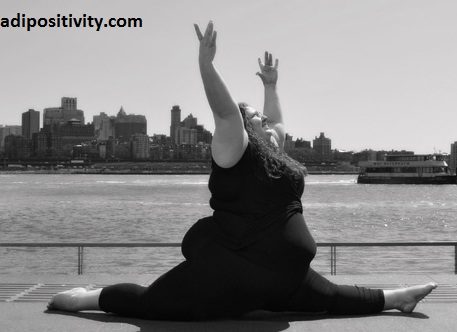
And the phrase “size functionality” smacks of ableism as well as the myth that you can tell how healthy someone is or what they can do by their body size.  [note:  In conversation with Nona, she did not mean size functionality as I interpreted it. In her words she  “was referring to being able to do things like fit comfortably into an airplane seat.”  I’ll leave the original text because I do think that people talk about size functionality in the way that I interpreted it as well, with my deep apologies to Nona for the mistake.] I’m extremely functional for someone of ANY size – I’m a dancer who can do the splits, press 1,000 pounds with my legs, backbend, leap etc. but that doesn’t give me any more right to public transportation than anybody else, so don’t worry I’ll still let you on the subway even if they can’t do all of those things.  It’s the subway, not the Olympics, and it’s called public transportation, not “thin functional body transportation”.  The job of public transportation is to get the public (which includes people of all sizes, ages, and abilities) from place to place safely, not to give people an opportunity to stigmatize and shame some of the public.

I also travel a lot and there is nothing worse than being squeezed in a seat next to someone on a 5 hour flight.

Oh, let’s gain some perspective, there are LOTS of things worse than being squeezed in a seat next to a fat person for a flight of any length.  Like sitting next to someone with Ebola, or getting a cancer diagnosis, or spraining your ankle.  Let’s not hyperbolize.  The thing about airlines is that they try to have it both ways.  They say that we are paying for a seat and therefore if we take up more than one seat then we need to pay for more than one seat.  But it’s ok for men with broad shoulders to take up more than one seat. And it’s ok for people with long legs to take up more than one seat. We would never make them pay for an extra seat. But if you’re fat then you need to pay up?  How is that fair?

Also, when they overbook and people can’t sit in the seat that they were promised, they turn around and say that we aren’t buying a seat, we’re buying the trip – not the seat. And if that’s the case then it shouldn’t matter how much room anyone takes up since we’re paying for transportation from one place to another.  The airlines have made seats smaller and changed the pitch (the angle of the seats) which also means that there is less space.  Different planes have different sized seat and lengths of seatbelts so it’s impossible to predict what will happen.

I proposed some alternative solutions but in the end your beef is with the airline, not with people who look like me. People come in different sizes, this is the size I come in, it should be treated exactly like height.  I happen to fit in an airplane seat but when I’m stuck next to the tall guy whose legs and shoulders are in my space, he is always glaring at me as if it’s my fault while I’m not complaining because I understand it’s not his.

You should also know that they make it very difficult for us to buy two seats even if we want to. You can’t always buy two seats in the same name and so you have to call and book on the phone which often incurs a surcharge in addition to buying the second seat, then people have arrived at the airport to find that their seats are separated, or that the airline says that they can’t have two seats because they need to put passengers in, or they have to deal with the glare of passengers and the whispers that someone got left behind because the fatty needed two seats, it’s even worse if the person doesn’t take up very much of the second seat.  There are also the people who fly the first leg of their trip with no problem and then, stranded in a strange city, they are told that they have to buy another seat.  Believe me, it hurts us at least as much as it hurts you.  Here’s a video that really captures a lot of issues.

I don’t really watch my weight per se, but I do use my ability to comfortably fit into a plane seat and fasten my seatbelt as a personal barometer.

So you feel comfortable not watching your weight, but you feel that I need to try to change my shape and size so that I don’t “annoy people”? Let me recommend this post on thin privilege.  The problem for me is that every attempt at weight loss has a less than 5% chance of resulting in long term weightloss and a whopping 95% chance of leaving me the same size or bigger than I am now, and less healthy.  I’m not risking my good health because someone doesn’t want to sit next to me on a plane, nor should I have to.

This transportation argument that says it’s ok to be tall, have broad shoulders, long legs etc but that if you are fat then you are the devil incarnate get off my subway car. It’s bullshit and it has to stop.

This blog is supported by its readers rather than corporate ads.  If you feel that you get value out of the blog, can afford it, and want to support my work and activism, please consider a paid subscription or a one-time contribution.  The regular e-mail subscription (available at the top right hand side of this page) is still completely free.   Thanks for reading! ~Ragen