Obesity and Smoking

I’ve had this post written for a while, but I’ve been really nervous to post it because smoking is a sensitive subject and this is one of those posts that may pull us off topic or upset readers, but hear me out.  I often see people saying that obesity and smoking are the same thing – that being obese is the same thing as being a smoker.  There is a whole debate to be had about smoker’s rights, but that’s not the point of this blog (and if we could avoid a flame war about it in the comments that would be great). The point that I am trying to make is that the two are not comparable.  Let’s look at the arguments:

Smoking and Obesity are Both Addictions

This argument assumes that all obese people must be food addicts, which is simply not true. Obesity is just a ratio of weight and height. Smoking is an addictive behavior.  Statistically there will be a small percentage of obese people who have food addiction issues but that does not make all obese people addicts.  There are also some smokers (I know one personally) who can smoke or not and have no withdrawal issues but that doesn’t change the fact that most smokers are addicted.

They can both be changed through personal responsibility

It is not certainly not easy to quit smoking.  The failure rates for smoking and long term weight loss are actually similar – according to a CDC study 6.2% of smokers succeed at quitting.  About 5% of dieters are able to maintain weight loss long term (however many of those people did not start out as obese, or did not lose enough weight to change their BMI category).  The big difference here is that a smoker is healthier for every day they don’t smoke – even if they start smoking again.  Every time someone loses wight and gains it back they become less healthy because of the effects of weight cycling.

Smoking and Obesity Both Cause Health Problems

Again, the main problem with this argument lies in the confusion between a body size and a behavior.  Every smoker breathes in cigarette smoke. The carcinogens in that smoke have been shown to have a causal relationship with cancer.  That is not to say that all smokers will get cancer, but all smokers, well, smoke.  Which they are allowed to do, but it’s not the same as being obese.

The only thing that all obese people have in common is our height/weight ratio. There are vegan, vegetarian, and omnivore obese people.  There are obese people who exercise and those who don’t.  There are healthy and unhealthy obese people (and let’s be clear that health is not an obligation, a barometer of worthiness, or entirely within our control).  Also obesity is correlated with many health issues, but causation has not been proven.

If you believe that obese people shouldn’t be policed by society then you have to believe that smokers shouldn’t be restricted or policed

This isn’t comparable.  By being near me, people are not forced to take part in my obesity – my obesity has no direct effect on them. Someone could stand beside me and they would not catch fat.  If someone is near a smoker, they are forced to take part in their smoking, at least until they can get away.  In the interest of full disclosure, this one hits home for me because I’m sensitive to cigarette  smoke – it causes me to have breathing difficulties.  Both of my parents smoked and I can remember feeling tortured in a car filled with smoke with my shirt over my mouth and so I have strong emotions around this.  But let me set aside those emotions and make this argument:

I do not care if people smoke.  I do not care what people do to their bodies.  You can drink your body weight in whiskey every day, you can smoke ten cartons a day, you can survive on a steady diet of McDonald’s french fries and milk (with a little oatmeal or you’ll die).  You are the boss of your underpants – I do not care what you do with your body.

When it comes to personal habits (as opposed to things that help the common good like mass transportation), my right to punch ends at the tip of someone else’s nose. Smoking doesn’t fit this mold.  I had to go to traffic court which required me to walk past a row of smokers.  I wasn’t able to hold my breath for long enough and so I was forced to participate in their habit which caused me to have difficulty breathing and increased my risk for cancer according to the National Cancer Institute.  You can argue about whether or not it is my right to not be exposed to smoke or someone else’s right to smoke, but the indisputable fact is that a row of fat people standing outside the court would have no such negative consequences on passersby and that makes them incomparable to smokers in this way.

You don’t like to breathe smoke and I don’t like to look at fat people, it’s the same thing

This is just asinine. One is an issue of aesthetics, the other is a health issue.  You can look the other way any time you want, but you can’t just breathe different air.

As I said, there are arguments on each side of the smoker’s rights debate, but that’s not the point of this blog.  The point I’m trying to make is that people should stop comparing obese people to smokers because it’s apples and oranges.  Obesity is no more like smoking than tallness is like smoking. If you want to make arguments about obesity or smoking you can do that, but comparing the two makes no sense.

Like this blog? Consider supporting my work with a donation or by  becoming a member! For ten bucks a month you can support size diversity activism, help keep the blog ad free, and get deals from size positive businesses as a thank you. I get paid for some of my speaking and writing (and do both on a sliding scale to keep it affordable), but a lot of the work I do (like answering hundreds of request for help and support every day) isn’t paid so member support makes it possible ( THANK YOU to my members, I couldn’t do this without you and I really can’t tell you how much I appreciate your support!)   Click here for details

Here’s more cool stuff:

My Book:  Fat:  The Owner’s Manual  The E-Book is Name Your Own Price! Click here for details

Dance Classes:  Buy the Dance Class DVDs or download individual classes – Every Body Dance Now! Click here for details 

If you are uncomfortable with my selling things on this site, you are invited to check out this post

Don’t Cry for Me Well-Meaning Concern Troll

Yesterday I revealed the super secret blog project that I’ve been working on  with some amazing people –  a video response to The Biggest Loser’s Campaign to love yourself only after/because you lose weight.  One of the responses that I saw a lot as it got posted around the web was “I’m glad that these people are happy but I’m concerned about their health”.

These people may be well meaning, but here’s the deal with this – my health is none of their business and is not discernible by looking at the size of my body. (Or for some of the serious whackadoodles who tell me all about my health without meeting me – from looking at pictures of me and reading my blog.)

This can be difficult to deal with because, since people seem well intentioned, we can feel obligated to appreciate what they are doing or accept it as ok.  Like everything, it’s your choice how to deal with it, but for me this is not ok.  People are allowed to be concerned about whatever they want, but it is not ok to unburden that concern onto me. Whatever my level of health, it’s highly unlikely that it will be improved by having people tell me over and over that they assume it’s poor. It can also be a quiet way to try to say that I am not a competent witness to my own experience, and let’s not forget that however well-intentioned it might be, this kind of “concern” is based on all kinds of myths, misunderstandings, and misinformation and conflates weight and health  in a way that is not appropriate.

There are lots of reasons that people may choose to express their concern.  There are some who are truly  well-meaning, for others it’s about feeling superior, feeding their ego, or just killing fatties with kindness.  It does not matter why someone does it, it does not fit within what I consider acceptable behavior.  The way that I handle this with people I care about is by setting boundaries.  Of course this is just how I handle it, there are many, many ways and they are all valid.  Take what you like, ignore the rest:

“I’m just concerned about your health”

Basic responses:

  • Oh, no need, my health is fine.
  • My health is great, thank you, and I’m not soliciting outside opinions.
  • My health is none of your business.

Data based responses, especially good for a teachable moment:

  • According to research out of Columbia, people who are concerned about their weight have more physical and mental illness than those who aren’t – regardless of weight.  So every time you try to make me concerned about my weight you may be putting my health in jeopardy.
  • Can you tell me how you justify your beliefs based on the findings of Matheson et al., Wei et. al, the Cooper Institute Longitudinal studies, and Mann and Tomiyama 2007 and 2013?
  • Are you aware that there isn’t a single study in which more than a tiny fraction of people succeed at longterm weight loss and that there isn’t a st single study where dieting is shown to lead to better long term health?
  • The most likely outcome of weight loss attempts is weight regain, so even if you believe that fat is bad, weight loss attempts are the worst thing that you could recommend.

The things I think but do not say when I’m having a bad day:

  • My path to health is something that I’ve spent hundreds of hours researching – are you an expert on this or can we just assume I know more than you about this than you do?
  • Really? Coincidentally,  I’m concerned that all of your worrying will affect your health.  Please feel free focus your concern somewhere that is else.

Like the blog?  Here’s more of my stuff:

Interviews with Amazing Activists!!  Help Activists tell our movement’s history in their own words.  Support In Our Own Words:  A Fat Activist History Project!

Become a member: Keep this blog ad-free, support the activism work I do, and get deals from cool businesses Click here for details

The Book:  Fat:  The Owner’s Manual  The E-Book is Name Your Own Price! Click here for details

Dance Classes:  Buy the Dance Class DVDs or download individual classes – Every Body Dance Now! Click here for details

Love Yourself As You Are – the Super Secret Blog Project

Reader Hedda sent me this video (Warning:  triggering in every possible way).  It seems that the theme for The Biggest Loser Australia is “Love Yourself”. Of course, they mean love yourself after/because you lose weight.  I found the video and its message absolutely sickening – I had to do something.  I decided to recreate the Biggest Loser video but instead of “love yourself after you lose weight” the theme would be “love yourself as you are”.  I put the word out on Facebook that I had a super secret blog project and the responses started pouring in.

Below is the result.  My undying gratitude to Patricia Washburn (who also set up my hatemail page) who took all the stuff I sent her and created an amazing video,  Darci Monet who let me not only use her beautiful song, but cut it up and rework it to accompany the video, and to everyone who participated.

No matter what you want to do with your body, there is just no reason that you can’t love and appreciate it, as it is, in every moment.  Your body will change over time and if you base your ability to love your body, love someone else, or be loved on achieving and maintaining a specific weight, then what happens when time changes the superficial? You are the only person who is in charge of how you feel about yourself, and you can choose to love yourself as you are.

This blog is supported by its readers rather than corporate ads.  If you feel that you get value out of the blog, can afford it, and want to support my work and activism, please consider a paid subscription or a one-time contribution.  The regular e-mail subscription (available at the top right hand side of this page) is still completely free.   Thanks for reading! ~Ragen

Ball of Behavior Confusion

It’s just vaguely possible that you might have noticed that our current culture has a teensy weensy tendency to use weight as a proxy for health.  That, in and of itself, is an incredibly bad idea. But I think what’s worse is that it leads to confusing weight loss behaviors with healthy behaviors.  So people get the idea that any behavior that makes you thinner must constitute a healthy behavior, and that behaviors that don’t lead to thinness must be unhealthy.

This causes a number of problems.  The first one that comes to mind is the idea that a fat body means that anyone can be the judge, jury, and executioner of our health because they know we aren’t eating healthy because, the false assumption tells them, if we were eating healthy then we would be thin.  It’s just not true. There are people who eat the same diet but have vastly different body sizes.  There are people who have the same body size but eat vastly different diets.

Another problem is that people are lured to participate in behaviors that  that, if they were viewed outside of our current obesity hysteria, would perhaps not seem like such a great idea… Consuming reconstituted soy protein shakes 5 times a day with a small meal at night? Eating 500 calories a day and getting urine-derived injections? Partially amputating a perfectly good stomach?

This also gets me into discussions that I can’t even deal with – where I explain that I focus on whole, nutritious foods, lots of veggies etc. and somebody tells me that I should give that up and drink a thin chocolate beverage that can have a laxative effect, or eat a cup of diet breakfast cereal with skim milk for 14 out of 21 meals a week.

Of course everyone is free to choose whatever behaviors they want, for whatever reason they want to choose them. I’m simply suggesting that it might be important to realize that behaviors that are meant to lead to thinness (however fleeting or unsuccessful that attempt might be) are not necessarily – and are sometimes precisely the opposite of –  behaviors that can actually support, create, and/or improve health.

Project Update:  Georgia Billboard Project

This is a go.  We are going to put up a billboard in Georgia next to one of those horrible fat kid shaming billboards. I’m in the research phase now, once we know how much money we need to raise and the specs we’ll start the fundraising and design phases.  Right now I need to know the location of those billboards in Georgia – if you happen to know where one is (specifically) please let me know.  More details to follow…

This blog is supported by its readers rather than corporate ads.  If you feel that you get value out of the blog, can afford it, and want to support my work and activism, please consider a paid subscription or a one-time contribution.  The regular e-mail subscription (available at the top right hand side of this page) is still completely free.   Thanks for reading! ~Ragen

Fat Vacation Deathmatch: Universal Studios vs Disney World

I have now ridden every adult ride at Disney World and I fit comfortably in them all.  Feeling confident from that experience we went to Universal Studios because my best friend really wanted to do the Harry Potter Experience.  We got there and, after going through Olivander’s Wand Shop, we got in line for Harry Potter and the Forbidden Journey.

We waited for about an hour and a half and as we were waiting the gentleman in front of us (who was at least 6’5) was pulled out of line by an employee so that they could see if he would fit in the seat.  I looked directly at her, assuming that if there was any question about my size she would pull me too.  She just smiled and walked away.  When it was time to board I got in the ride and fit comfortably width-wise.  Then the park employee pushed down the restraint and it became obvious that it would not accommodate me. He said “We are unable to accommodate you safely” and asked me to step off the ride.

As soon as I stepped off the ride every employee knew what was going on and I was directed to an area I’ll call the FGHA (Fat Girl Holding Area) where I joined 7 other women waiting for their friends and family to get off the ride.  Oddly, everyone but me was offered passes to get to the front of the line in other rides. I have no idea why they weren’t offered to me.

My best friend, his husband, and I decided that we weren’t interested in spending our time or money at a park that wasn’t interested in my experience and we headed to guest relations.

First let me say that I certainly could have done a better job researching this.  I absolutely would have researched this further but I fit into all the rides at Disney World with so much room to spare that it didn’t occur to me that it would be a problem.  In researching it now I read articles that said that there were some seats made to accommodate larger passengers but this wasn’t offered as an option to me.  When we got to guest relations Samantha let us know that there were test seats available.  Unfortunately they were being blocked by a tour group and we didn’t realize that they were test seats at all (and the employees are told not to point them out to fat people).

The policy, as explained to us, is that employees can pull tall people out of line to test them in the seats, but they cannot even suggest to fat passengers that they do the same. So if you are fat and miss the test seats, nobody will say anything to you until you are sitting on the ride and an employee is bruising your stomach with a restraint. Again – I could have researched it further and the tests seats would have saved 90 minutes of waiting but would not have changed the overall outcome.

Samantha in guest services, a larger woman herself, was extremely empathetic and kind.  She offered to tell me which rides she thought would accommodate me, but I politely explained that I wasn’t interested in giving the park any money or time since they had chosen not to give me the full experience.  She went to bat with her manager and we received full refunds for our tickets and meal passes. So, what have I learned?

I think that this illustrates well the issues with attaching shame to horizontal body size that is not ascribed to vertical body size.  The cast is allowed to pull people who are too tall out of line, but not allowed to even suggest test seats to passengers who may be too wide. The women in the FGHA with me were all embarrassed and ashamed but the tall dude was just annoyed when he was pulled out of line after waiting.  If we correctly acknowledged that bodies come in different shapes and sizes then 1.  all the people who Universal doesn’t bother to accommodate on their rides would be treated the same and fat people wouldn’t have to wait until they are on the ride to get kicked off and  2.  People would rightly place the blame on the park for choosing not to accommodate them, and not their own bodies.  Some of the women in the FGHA were talking about diets but the tall guy never once talked about trying to be shorter, even though our heritability and likelihood of changing our body size is roughly the same.

If you’re not going to accommodate guests of size, how about you let us know before we spend our money. The test seats should be in the front – before I pay or enter.  The website should give me the height, width, depth and any other possible measurements that each ride fits.  At least there could have been an employee pointing out that the test seats were hidden behind a large tour group,  but even if I had known about the test seats I still would have had to pay for the cab to Universal Studios, pay for a ticket, and walk all the way through the park to find out that they didn’t care if I got to ride the ride.

I’m confused about why Universal didn’t just make the seats more accommodating.  I can understand if a ride uses a lap restraint that goes over a group of people, that having it accommodate those with large bodies can be a problem (since then the lap bar is then too high for the rest of the passengers).  But this was a single person restraint so it seems like it could have been made to fit a wider variety of people.  It can’t be an issue of weight and physics since a person of my weight with a different frame could have fit on the ride.  If Disney World can make all of their coasters work for someone my size, why can’t Universal?  Or why won’t they?

One thing that I was very happy about was that I did not feel embarrassed, ashamed, or bad about my body or go into dieting thoughts as I would have in the past.  I was crystal clear that the park had decided that it wasn’t interested in giving the full experience to guests of my size –  the park is wrong for me, I am not wrong for the park. All of this work on body image and HAES is really paying off!

It was obvious when we went to Guest Relations that this had happened before.  I don’t know how often (although I do know that there were eight of us in five minutes in the FGHA) but my Best Friend was so excited about going that he had planned to spend what he called “an embarrassing amount of money”.  He fully intended to buy every food and drink and a ton of clothing and souvenirs – basically any clothing that was available  and other toys and trinkets as well.  Instead we stood at guest relations while they refunded over $300 of our money and we didn’t buy so much as a butter beer.

My research shows that the park has been aware of this issue since before the ride opened and had options to be more accommodating, so I wonder if they did a cost benefit analysis and found or bet that most fat people would be too embarrassed or ashamed to make a fuss, and would spend their time and money in the souvenir shops and food court anyway.   I’m guessing that there are fat people who can’t fit into the rides and happily make the decision to stay and spend money at the park and that’s certainly their valid choice.  As for me and my house, we will spend our money at places that have proven that they deserve it.  I believe in hitting a fat-hating company hard in the checkbook and then kicking them in the bank account when they are down.  I had a fantastic experience at Disney World (my one regret about Disney was that I couldn’t find any merchandise with the dancing hippos from Fantasia. That jackass editor really made me want to collect stuff with them on it but it looks like they are out of vogue.), other than that everything was fantastic, they obviously wanted me to have the full experience, and that’s who will be getting my money now and in the future.

Blog Poll: I talked yesterday about the Georgia Body-Shaming billboard campaign, and  the brilliant Well Rounded Mama gave me an idea.  What if we did some fundraising and put up a billboard or two with our own slogans (for example instead of “Being fat takes the fun out of being a kid” something like “State-sponsored bullying and stigma takes the fun out of being a kid”.  We could even have a design contest and include a url to a resource list. I would be willing to coordinate the project, I just want to get a sense of the level of interest (if any) in supporting something like this before I do a ton of research.  What do you think?

This blog is supported by its readers rather than corporate ads.  If you feel that you get value out of the blog, can afford it, and want to support my work and activism, please consider a paid subscription or a one-time contribution.  The regular e-mail subscription (available at the top right hand side of this page) is still completely free.   Thanks for reading! ~Ragen

Georgia, Disney, and the Wave on My Mind

Perhaps you’ve heard of the ads about Georgia’s Strong4Life “anti-childhood obesity campaign.”  If not, suffice it to say that it is pictures of fat kids with sayings like “It’s hard to be a little girl if you’re not” and “Being fat takes the fun out of being a kid”.

First of all, I’m 5’4, 284 pounds, and 35 years old and I dare you to tell my Mom that I’m not her little girl.  So surely other people can get past the idea of little in little girl not necessarily being dependent on body size.  And I was a fat kid and had lots of fun, and I know other fat kids who have lots of fun.

Maybe the ads should say “It’s hard to be a little girl when the state of Georgia is shaming and bullying you.” and “Being the victim of state-sponsored bullying and body shaming takes the fun out of being a kid.”

I saw the play “Beauty and the Beast” at Disney’s Hollywood studios yesterday (stick with me, I’m going somewhere with this).  In the play, Gaston convinces the townspeople to kill the beast – who had been living there for years without anyone trying to kill him – but giving a speech about how he was going to come after their kids.  I’ve seen this used in other political fights as well.  Can’t whip people up into a big enough frenzy about two consenting adult men who love each other?  Just say that they are coming after your children.  I worked on the No on 9 campaign in Oregon in 2000.  The ballot measure Prohibited “public schools from providing instruction on behaviors relating to homosexuality and bisexuality in a manner that encourages, promotes or sanctions such behaviors”.  They trotted out teachers who said that gay teachers were infiltrating schools and teaching kids to be gay and people lost their minds.  The phrase “Won’t somebody please think of the children” is iconic.  When kids get involved we have to be careful to hold onto rationality.

I think that if we really thought it through, we would realize that shaming and stigmatizing fat kids is not the way to go.  You cannot have a war on childhood obesity without having a war on obese kids.  We can be for healthy kids without being against fat ones. Being for healthy kids means that we avoid the double whammy of giving fat kids the erroneous idea that healthy habits don’t “work” unless they make you thin, while giving thin kids the dangerous idea that they don’t need to worry about being healthy because they are thin. With hospitalizations for eating disorders in kids under 12 up 119% we can do better for our kids’ health than bullying them, shaming them, and making them terrified of their bodies and of the state-sponsored bullying and shaming that will be heaped upon them if it decides their body is the wrong size.

I saw something else at Disney’s Hollywood Studio that gave me hope.  We were at the fireworks show.  Like many of the over 1500 people crowded into the standing room only space, we were hungry, exhausted, freezing cold, and cranky.  Five kids two rows below us decided that they wanted to start the wave.  They tried repeatedly but only ever managed a five person wave.  They stopped for a while and then one of them said “let’s try again”.  They did a couple more 5 person waves and were about to give up when someone a row behind us yelled “Do  it again!”. This time it was a 10 person wave.  The person who yelled had caught the attention of people two rows below the original wave group.  Now they joined in.  Within a couple of minutes the ENTIRE STADIUM did the wave.  But them something amazing happened – it came back around.  The kids who started it went NUTS, they were so happy they could barely form words except to say “Let’s do it again!” and again it went all the way around the studio and them came all the way back.  In the space of less than 5 minutes, 5 people influenced 1500.  To me it was the perfect example of grassroots activism.  A small group of people can make a difference.

So if you agree that the Georgia campaign against fat kids is wrong, there are some things that you can do:

Sign the petition

Contact the people involved:

Kevin McClelland (PR Director of the campaign)

Children’s Healthcare of Atlanta
404-785-7600
kevin.mcclelland@choa.org

Stephanie Walsh (medical director, handling interviews)
404-778-2400
stephanie.walsh@choa.org

Children’s Foundation
1687 Tullie Circle NE
Atlanta, GA 30329
404-785-GIVE
Fax: 404-785-7355
choagiving@choa.org

Tell other people what’s happening and let them know what they can do to get involved. The key word in activism is “active”  We can make a difference.

This blog is supported by its readers rather than corporate ads.  If you feel that you get value out of the blog, can afford it, and want to support my work and activism, please consider a paid subscription or a one-time contribution.  The regular e-mail subscription (available at the top right hand side of this page) is still completely free.   Thanks for reading! ~Ragen

Awesome Fatties on Parade

Belly Bumping my hero Marilyn Wann was a definite highlight of my year!!

Happy New Year!  I hope that this is the start of the exact year you are hoping to have!  I want to let you know about a series of really cool telesummits that the brilliant Golda Poretsky is coordinating that I am part of.  But before I do I want to talk about something really cool about the fat activist community.  I’ve done a lot of activism with a lot of communities and one of the things that has really struck me about the this community is how unbelievably friendly, open, and supportive everyone is.  I’ve had the opportunity to meet Marilyn Wann, Dr. Linda Bacon, and Dr. Deb Burgard who are straight up heroes of mine and they were all welcoming and supportive.  In other communities I’ve worked in, people like Linda, Marilyn and Deb have been more worried about protecting their “territory” than the work –  and I’ve seen those communities suffer for it.  The willingness of people in the SA and HAES communities to set their egos aside and work together for change is really powerful.

Here’s a perfect (and relevant!) example:  I am scheduled to be on the health panel for Golda’s telesummit with Dr. Linda Bacon.  When I first found out I freaked out a little bit – the woman has three post graduate degrees and wrote one of the books that first taught me about the Health at Every Size (r) concept. So I was talking to two of my amazing fat activist friends (Jeanette DePatie  of The Fat Chick and Jayne Williams of Slow Fat Triathlete) and I said that my main concern was that, since these discussions take place on the phone, people would think that I wasn’t there since my plan was to smile and nod while Dr. Bacon talked. The two of them were super supportive and immediately gave me an awesome little pep talk and now I’m excited instead of freaked out.

So as we all move into the next year, I wanted to stop for a second and say thank you to the people I had a chance to meet and/or work with this year:  Dr. Linda Bacon, Marilyn WannDr. Deb Burgard, Jeanette DePatie, Jayne Williams, Golda Poretsky, the women of Big Moves San Francisco,   Darryl Roberts, all the people I met at the film premieres and fatty n’ friends meet-ups, all my blog readers and commenters, and anyone I’m forgetting! Thank you!!!

And while I’m at it a huge thank you to all the fat-o-shere bloggers, everyone who is out there standing up to fat stigma, challenging stereotypes and refusing to buy into the notion that our worthiness is weight-dependent, everyone who passes size acceptance and HAES stuff along on Facebook and Twitter, participates in social activism projects, and inspires me.  We are making a difference and we’re doing it together.  So awesome!

Now, without further adieu, here is the schedule for the 2012 Body Love Revolutionaries Telesummits (all times are Eastern Standard)

Register for access details at http://www.bodyloverevolution.com

Tuesday 31 January, 8pm EST
Activism
Peggy Howell, Amanda Levitt and Marilyn Wann.

Thursday 2 February, 7pm EST
Health
Linda Bacon and Ragen Chastain.

Tuesday 7 February, 8pm EST
Fatshion
Marie Denee, Rachel Kacenjar and Yuliya Raquel.

Thursday 9 February, 8pm EST
Sex
Hanne Blank and Virgie Tovar.

Thursday 16 February, 8pm EST
Blogging
Marianne Kirby, Margitte Leah Kristjansson, and Brian Stuart.

Tuesday 21 February, 8pm EST
Fitness
Jeanette DePatie and Anna Guest-Jelley.

Thursday 23 February, 3pm EST
Fatness/Queerness
Bevin Branlandingham, Jessica Jarchow and me.

Tuesday 28 February, 8pm EST
Politics/History
Paul Campos and Amy Erdman Farrell.

Register for access details at http://www.bodyloverevolution.com

If you want to let people know about this stuff you can add yourself to the Facebook Event and use it to invite your friends, you can Tweet about it using the hashtag #blrev

This blog is supported by its readers rather than corporate ads.  If you feel that you get value out of the blog, can afford it, and want to support my work and activism, please consider a paid subscription or a one-time contribution.  The regular e-mail subscription (available at the top right hand side of this page) is still completely free.   Thanks for reading! ~Ragen

All the Fun, Way Fewer Pants to Wash

I was talking to my new friend Dawn and she mentioned that the commercials for Meridia diet pills are what actually got her into Size Acceptance, because they were fat women with great clothes who looked like they were happy and having fun.  I laughed and said that was fantastic because the side effects of Meridia are …unpleasant… so the commercials helped her get all of the confidence with none of the anal leakage. It turns out that she skipped a lot more than that.

First of all,  I was wrong, extra laundry of the pants and panties variety is not a side effect of Meridia.  But these are (feel free to skim, it’s a long list):

dry mouth, increased appetite, nausea, strange taste in the mouth, upset stomach, constipation, trouble sleeping, dizziness, drowsiness, menstrual cramps/pain, headache, flushing, or joint/muscle pain, fast/pounding/irregular heartbeat, numbness/tingling of the hands or feet, mental/mood changes (e.g., excitement, restlessness, confusion, depression, rare thoughts of suicide), change in the amount or color of urine, easy or unusual bruising/bleeding, black stools, vomit that looks like coffee grounds, yellowing eyes or skin, unexplained fever, shaking, unusual sweating, swelling of the arms/legs, seizures, chest pain, weakness on one side of the body, vision changes, trouble breathing. serotonin syndrome (for which there are class action lawsuits).

alli is the diet pill I was thinking of – the one that literally recommends wearing dark pants.   Side effects may include (feel free to skim, it’s a gross list):

back pain, sinus infection, soft stool, abdominal pain, fecal urgency, gas with a small amount of oil or stool, uncontrolled anal seepage, fatty or oily stool, spontaneous bowel movements, kidney stones, severe stomach pain, life-threatening liver damage (for which there are class action lawsuits)

I know that it’s just a homophone but fecal urgency is pretty far away from being an ally by my definition. And boy, to take on these risks a person might assume that  these must be some really damn effective treatments. How much weight can you lose? In studies Meridia helped people lose an additional 4.5 pounds a year.  Alli is expected to help people lose an additional 4 pounds a year (and it sounds like a fair amount of that leaks out).  If we pretend that I won’t gain the weight back, I’ll be in the healthy BMI category in just 35 short years. So for my 70th birthday  I can finally like myself, buy a bikini, and start dating.

No wait, screw a bunch of that.  I already like myself, I’m dating, and I’m not carrying around an extra pair of pants, or waiting on the liver transplant list.  Look, people are allowed to take diet pills if they want, but can we please not pretend that they are “medicine” that treats a “disease”.  Body size is not a diagnosis, and nobody is suffering from a Meridia deficiency or dangerously low alli levels in their blood.  These are for profit companies who are selling us drugs with horrible side effects and very little upside at a HUGE profit. The company that makes Meridia had over 25 Billion dollars in revenue in 2010.

One of the many massive problems with using weight as a proxy for health is that we then assume that weight loss behaviors are healthy behaviors, or that even if we use unhealthy behaviors to become thin it doesn’t matter because we’ll be healthier when we are lighter.  But that’s just not true. And for me, taking pills with life threatening side effects just to be four pounds smaller at the end of the year takes the fly-over past unhealthy behaviorsville and goes straight to what-the-hell-am-I-thinking town?

Instead of a New Year’s Resolution, I’m having a New Year’s Revelation this year.  I realized that in the past when I was trapped in weight cycling, my resolutions always involved being less and giving up:  weighing less, eating less, giving up soda, giving up sugar, no desserts.  Once I started working with Health at Every Size my resolutions became much more about adding and doing things: drink more water, eat more vegetables, find more movement that I enjoy.  My life is mostly an additive process now – being more instead of being less –  and I like it. Happy New Year!

This blog is supported by its readers rather than corporate ads.  If you feel that you get value out of the blog, can afford it, and want to support my work and activism, please consider a paid subscription or a one-time contribution.  The regular e-mail subscription (available at the top right hand side of this page) is still completely free.   Thanks for reading! ~Ragen

The Most Overlooked Aspect of Health

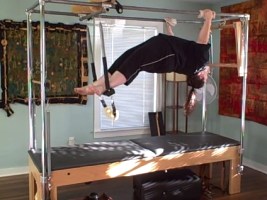
Me – 5’4, 284 pounds.  Suspended pull-ups courtesy of the coaching of Kate Wodash Catlow at The Mindful Body Center in Austin, Texas. For extra fun the thing my feet are on is suspended by springs so you have to hold the body up with the core or very bad things happen.

Understanding that health is not an obligation, barometer or worthiness, or entirely within our control, and that every body has different abilities, and that ableism and healthism are real and they privilege some people and oppress others, I think that strength training may be the absolute most under-recommended part of health for people of size.

I was at the front desk at a friend’s gym and beside me was a fat person having his first session with a personal trainer. They were talking about goals and he said “I just want to be in better shape – lift some weight, be stronger.”  The trainer replied “We’re going to focus only on cardio to get some of that weight off. We don’t want to bulk you up or put more weight on you.”  I almost bit through my tongue.

This is a huge mistake for every reason imaginable.  I would feel differently if the client said that he hated strength training or that his goal was something different but he was asking a professional and he got horrible advice. Far too often we blame mobility issues on being overweight when really it’s just as likely that we simply are under-strong – that we don’t have the strength to move our weight around.  People always ask me how I can move like I do at my size – obviously it’s not that the rules of physics don’t apply to me, there’s a bunch of dance training, there are my genetics, and there’s the fact that I’m strong enough to move my body around.  My ability to put on muscle is tied in to my genetics so your mileage may vary, of course, but there’s a far better chance of someone getting strong long term than of that person losing weight.

The idea that people should do cardio at first to “get weight off” would be completely wrong, even if weight loss was possible for the vast majority of people, since additional muscle mass in theory raises basal metabolic rate and doing only cardio causes you to lose lean muscle mass as well as fat. The truth is that most people will never be able to achieve long term weight loss.  If you have a 400 pound object and your dolly will only hold 200 pounds, you don’t try to make the object lighter – you get a stronger dolly.  Considering the realities of weight loss it is super extra ridiculous for a personal trainer to purposefully not add strength to facilitate mobility in a larger body.

Similarly the idea of not wanting to “add weight” to the body with strength training seems to be based on the concept that smaller is always better if you’re fat, which is just modern mythology. I believe that fitness programs should be based around the client’s actual goals.  If you want to compete as an Olympic weightlifter your training program should be very different than if your goal is to be able to pick up your grandkid. Programs designed to just make people smaller are almost guaranteed to fail, and when they do, those clients won’t be any closer to any functional fitness goals. Also, strength training can be really good for people who don’t enjoy more cardiovascular-centered workouts, and weight training programs can be designed to create a cardio benefit without being anything like running or being on the elliptical or whatever.

For me being strong is about more than functionality too.  I like how I feel about myself when I’m strong.  I feel like I can trust my body and I feel more prepared to take on whatever might happen, I walk through the world differently when I feel strong.  I remember when Darryl first asked me to climb the Santa Monica Stairs for the film and though they looked daunting, I didn’t hesitate because I knew that my strength would allow me to do it.  Of course it’s not like that for everyone and I’m not saying that it should be, just suggesting that if you’ve never tried strength training you might give it a shot and see how you feel.

To be clear, strength is not an “if one person can do it anybody can” situation.  People’s genetics and abilities are different – some are built with the ability to put on more muscle, or more of certain types of muscle than others (most women do not have the genetics to become “bulky”).  And I’m not saying that my love of strength training overrides the studies that show that 30 minutes of movement a day gives you amazing health benefits.

The point that I’m trying to make is that if you are struggling with mobility, or with body confidence, and you feel like you would move better, or like your body more if you were lighter, then based on both science and hearsay you might consider putting some energy towards being stronger.

This blog is supported by its readers rather than corporate ads.  If you feel that you get value out of the blog, can afford it, and want to support my work and activism, please consider a paid subscription or a one-time contribution.  The regular e-mail subscription (available at the top right hand side of this page) is still completely free.   Thanks for reading! ~Ragen

Even Though It Doesn’t Make Any Sense

The New York Times ran an article by Tara Parker Pope called The Fat Trap.  In it she had some very interesting information that you don’t always hear in the mainstream about how unlikely permanent weight loss is, including new research   It’s an eight page article, but here are some of the highlights:

While researchers have known for decades that the body undergoes various metabolic and hormonal changes while it’s losing weight, the Australian team detected something new. A full year after significant weight loss, these men and women remained in what could be described as a biologically altered state.

For years, the advice to the overweight and obese has been that we simply need to eat less and exercise more. While there is truth to this guidance, it fails to take into account that the human body continues to fight against weight loss long after dieting has stopped. This translates into a sobering reality: once we become fat, most of us, despite our best efforts, will probably stay fat.

Amen sister, you hit the hammer on the nail with that one.  Then she shares her own struggles with weight cycling and discusses several studies which have suggested that the tendency to gain weight is hereditary.  She talks about how fat loss appears to change muscle fibers, causing them to burn less calories, about how after people lose 10% of their body weight they are metabolically different than those who started at that size, how weight loss changes the way that the brain responds to food.   She discusses how difficult it is to maintain weight loss:

Kelly Brownell, director of the Rudd Center for Food Policy and Obesity at Yale University, says that while the 10,000 people tracked in the [Weight Loss] registry are a useful resource, they also represent a tiny percentage of the tens of millions of people who have tried unsuccessfully to lose weight. “All it means is that there are rare individuals who do manage to keep it off,” Brownell says. “You find these people are incredibly vigilant about maintaining their weight. Years later they are paying attention to every calorie, spending an hour a day on exercise. They never don’t think about their weight.”

While I was excited about the article, each time I turned the page I braced myself for it.  The “even though it doesn’t make any sense” section.  This is the section at the end of almost any article that shows fat people in a positive light, or dieting in a negative light, where they basically negate everything they’ve just said.  It’s why a news interview with Darryl Roberts and I talking about healthy habits ends with a picture of someone stuffing their face with cake and a voice over that says “of course, common sense should tell you that this is a bad idea.”  In this article, the transition to this section is stark:

Nobody wants to be fat. In most modern cultures, even if you are healthy — in my case, my cholesterol and blood pressure are low and I have an extraordinarily healthy heart — to be fat is to be perceived as weak-willed and lazy. It’s also just embarrassing. Once, at a party, I met a well-respected writer who knew my work as a health writer. “You’re not at all what I expected,” she said, eyes widening. The man I was dating, perhaps trying to help, finished the thought. “You thought she’d be thinner, right?” he said. I wanted to disappear, but the woman was gracious. “No,” she said, casting a glare at the man and reaching to warmly shake my hand. “I thought you’d be older.”

I wish fat people would stop being embarrassed by other people’s poor behavior.  If it were me I would be embarrassed FOR my date, not by him. If this kind of thing happens to you, I suggest a phrase like:  “I’m sure you’re embarrassed to have said something so stupid, don’t worry about it for now  we’ll talk about it later.” Or you can say (in your head if necessary) “That’s not mine, you can keep it”, but you don’t need to be embarrassed because other people behave like idiots. The cure for social stigma is not weight loss – it’s curing social stigma.  Next she says:

If anything, the emerging science of weight loss teaches us that perhaps we should rethink our biases about people who are overweight. It is true that people who are overweight, including myself, get that way because they eat too many calories relative to what their bodies need. But a number of biological and genetic factors can play a role in determining exactly how much food is too much for any given individual. Clearly, weight loss is an intense struggle, one in which we are not fighting simply hunger or cravings for sweets, but our own bodies.

This paragraph is a little from column A, a little from column shit. Hell yes we should rethink our biases about fat people. but not because of the science.  It doesn’t matter why people are fat, or whether or not they could be thin.  Every body of every size deserves respect.  If you’re wondering why someone is fat you can feel free to file that away in the None of your Damn Business folder while treating them with basic human respect.  And here’s the paragraph that made me swear at my computer:

But with a third of the U.S. adult population classified as obese, nobody is saying people who already are very overweight should give up on weight loss.

Oh what in fat hell?!  You just spent 7 damn pages talking about how unlikely weight loss is – citing a variety of experts, how the weight loss registry shows that 10,000 out of tens of millions keep weight off and they do it by obsessing about their weight (and it stands to reason that there are some people who obsess about their weight and STILL can’t keep it off).  And even if you’re not, lots of people are saying that we should give up on weight loss, they include medical doctors, Ph.d’s, and people who can do math. There are lots of reasons to choose Health at Every Size – here are 10 of them and  here are 11 more.

She concludes by saying:

Even though all the evidence suggests that it’s going to be very, very difficult for me to reduce my weight permanently, I’m surprisingly optimistic. I may not be ready to fight this battle this month or even this year. But at least I know what I’m up against.

Let’s look at quotes from some of the people in Tara’s own article who “successfully” maintain weight loss:

  • “It’s something that has to be focused on every minute. I’m not always thinking about food, but I am always aware of food.”
  • Since October 2006 she has weighed herself every morning and recorded the result in a weight diary. She even carries a scale with her when she travels.  She also weighs everything in the kitchen.  If she goes out to dinner, she conducts a Web search first to look at the menu and calculate calories to help her decide what to order. She avoids anything with sugar or white flour, which she calls her “gateway drugs” for cravings and overeating. She has also found that drinking copious amounts of water seems to help; she carries a 20-ounce water bottle and fills it five times a day. She writes down everything she eats. At night, she transfers all the information to an electronic record.
  • Because she knows errors can creep in, either because a rainy day cuts exercise short or a mismeasured snack portion adds hidden calories, she allows herself only 1,800 daily calories of food. (The average estimate for a similarly active woman of her age and size is about 2,300 calories.)
  • Today, she’s a member of the National Weight Control Registry and maintains about 140 pounds by devoting her life to weight maintenance. She became a vegetarian, writes down what she eats every day, exercises at least five days a week and blogs about the challenges of weight maintenance. She has also come to accept that she can never stop being “hypervigilant” about what she eats.

Tara is allowed to choose weight loss and be optimistic about it – just like I’m allowed to choose to focus on health and be optimistic.  I’m just wondering how, as a society, we got to a place where living with a food obsession that shares many characteristics with an eating disorder seems like the best idea.  Especially when we know that exercise mitigates the risks associated with being fat, without “dedicating your life” to maintaining a weight.

Also, it is too much to ask for more balanced reporting? If we have to have the “even though it doesn’t make any sense…” paragraph section at the end of any article that talks about the mountain of scientific evidence against weight loss, I would like to see a similar section at the end of any article that talks about weight loss in a positive light, maybe something like:  “Even though we’ve talked around it here, the science overwhelmingly agrees that weight loss is impossible for most people, and that 95% of people end up as heavy or heavier than when they started, and subject to the health risks of weight cycling.”

Oh, I totally spaced it yesterday, but the winner of the Marilyn Wann Fat!So? Dayplanner from Ask Me Anything Day was Ealasaid!  Thanks for your question and congratulations, you’re going to love the dayplanner – it is super awesome! If you didn’t win, you can still buy one of your very own, the proceeds to go Marilyn Wann to support her Weight Action Diversity Lounge which is going to be amazing!

This blog is supported by its readers rather than corporate ads.  If you feel that you get value out of the blog, can afford it, and want to support my work and activism, please consider a paid subscription or a one-time contribution.  The regular e-mail subscription (available at the top right hand side of this page) is still completely free.   Thanks for reading! ~Ragen