HAES – Less Preach More Teach

I got a great question from a reader yesterday about the nature of Health at Every Size:

While I think HAES is the best option for fat people right now, the whole natural organic from scratch thing really rubs me the wrong way and keeps me from fully embracing the movement. I love going out and I love my processed food. And nothing is going to change that. So not to try and derail but where is there room in HAES for someone like me? I have plenty of options and I’m making the deliberate choice to eat the foods I love and that make me happy. So does that element of preachiness I’m detecting from HAES really exist, or am I just being oversensitive?

I have definitely experienced people who consider themselves Health at Every Size practitioners and also seem to feel like theirs is the gospel of health.  I find this to be not only obnoxious, but also antithetical to a HAES perspective.

I firmly believe that Health at Every Size is about a paradigm change (from a weight-centered paradigm to a health-centered paradigm) and not about specific foods or behaviors that are “right” for everyone.  Let’s look at the two paradigms first:

Weight Centered Paradigm

  • Weight is used as a proxy for health
  • It is believed that in order to be healthy, bodies must be within a specific weight range
  • Body size interventions are given for health problems (ie: if a fat patient presents with a health problem they are prescribed weight loss, if a thin patient presents with the same health problem they are given an intervention that is not weight loss)
  • If people are above the specific weight range (or concerned about becoming so) food and exercise are seen as ways to manipulate body size, often using very specific rules and restrictions, and with success being judged by body size

Health at Every Size

  • Health is seen as multi-dimensional and not entirely within our control. Health is assessed through a variety of measurements including health markers (blood glucose, blood pressure) and quality of life with a clear understanding that it’s about what you can do, with what you have, where you are
  • It is believed that bodies can be healthy at a variety of sizes
  • Health interventions are given for health problems (regardless of the size of the patient, the intervention for a given health problem is the same and based on evidence)
  • Eating is seen as a part of life and people are encouraged to take into consideration nutrients, pleasure, and their own internal cues of satiety and fullness

While there are excellent professionals who help people eat from a Health at Every Size perspective, (Michelle at The Fat Nutritionist is one of my favorites), HAES itself is not a specific set of foods or food choices and it drives me nuts when people want to spout out general advice “everyone feels better eating blah blah blah” or “nobody should be eating blah blah blah”.  When we talk about food choices we should stick to telling our own stories and making our own choices, health/food/exercise/is not a one size fits all situation.

My firm belief is that people get to prioritize their health however they want and they get to choose their path to health. Our job, if public health is important to us, is to make sure that people have access to the foods that they want to eat and safe movement options in which they want to partake (if any), and the best in evidence-based education and healthcare.  Then we butt the hell out and let people make choices.

A separate issue can be the pressure that HAES practitioners can feel (and perhaps put on each other) to be “perfect” in our habits, and  I’ll talk about that in tomorrow’s blog.

Can you help Robert?

The brilliant Marilyn Wann let me know about a gentleman named Robert Gibbs has made a heart-wrenching YouTube plea for help He is a fat man with mobility problems who wants to lead a better life.  I’m hoping that there may be some HAES professionals reading this who could help him out.  I’ve heard rumors that Dr. Phil and Dr. Oz are looking to get involved.  Weight-based interventions have failed him repeatedly (and statistics say that they will keep failing him) and I would love to see the HAES community come together to offer help and support whether it’s expert advice or just an encouraging comment on his YouTube video.

This blog is supported by its readers rather than corporate ads.  If you feel that you get value out of the blog, can afford it, and want to support my work and activism, please consider a paid subscription or a one-time contribution.  The regular e-mail subscription (available at the top right hand side of this page) is still completely free.   Thanks for reading! ~Ragen

Weight Mistakes

One of the things that always astounds me about the way that our society currently deals with weight and health is the way that we prescribe to fat people what we diagnose in thin people.

It’s no secret that I absolutely hate the show Biggest Loser and one of the reasons is that I when I behaved exactly like the contestants on The Biggest Loser I was hospitalized for an eating disorder, not given a $250,000 check.

Is it strange to anyone else that the whole push right now is toward natural foods, grown locally and prepared fresh – unless you’re fat in which case you are encouraged to go on Jenny Craig and/or Nutrisystem where you microwave food that comes to you frozen in a plastic baggie?  Or Medifast where you drink 5 reconstituted soy protein shakes a day? I’ve been to several farmer’s markets and never saw even one packet of reconstituted soy protein shake there.

I don’t believe that the same behavior is healthy for fat people but unhealthy for thin people, I don’t think that we should diagnose and treat in some people what we recommend and prescribe to others.

It’s supremely annoying to me that that we have to fight to get decent information about health. But, just because so many other people aren’t using any common sense, and just because so many businesses put profit in front of health or truth doesn’t mean that we have to get caught up in it or run over by it.

This blog is supported by its readers rather than corporate ads.  If you feel that you get value out of the blog, can afford it, and want to support my work and activism, please consider a paid subscription or a one-time contribution.  The regular e-mail subscription (available at the top right hand side of this page) is still completely free.   Thanks for reading! ~Ragen

But What Do You Know?

As regular readers already know, I’m a major Buffy The Vampire Slayer fan.  There is a scene where she is teaching how to kill vampires and she says “It’s not what do you think, it’s always what do you know.”  That flashed into my mind today during a panel discussion that I was involved in.

One of the panelists was a dietician and 90% of what she said was information that was accurate based on my research and she had a really positive attitude.  She made a really interesting point that we are being told to eat more closely to nature but we judge our results by the completely artificial standard of modern beauty – she asked the group how we would eat if there were no mirrors.  Great question!  But then someone asked about weight loss and she said that the reason that 95% of people gain weight back after diets is because they lose weight too fast.  That caused me to raise an eyebrow because I don’t know of research that supports that.  Then she said that people who lose weight very slowly keep it off long-term.  Note that she didn’t say that these were her ideas or opinions.  As the only professional dietician on the panel she said these things as if they were true.

So I asked if there was any research to support that and she admitted that there was not.  I later pointed about that there isn’t any research that shows any method of weight loss that works, and the rest of the panel nodded their heads in agreement.  The effects of this were amplified by the fact that I was at CalTech where most, if not all, students are trained to make decisions based on evidence. Several audience members came up afterwards to thank me for taking an evidence-based approach.

People who are looked upon as healthcare experts need to realize that there is a vast chasm between what they think and what they know, and it can only be crossed through disciplined research. That doesn’t mean that it’s not ok to give theories, talk about what evidence might suggest (without mistaking that for being ” sure proof”), or make their own choices based on what they think is right.  But they still need to have the intellectual humility to realize that they cannot ethically and responsibly state their opinions or pet theories as fact when they are speaking in a professional capacity, regardless of how good their intentions might be.

If we were making health decisions based on evidence we would have long ago suspended the practice of recommending dieting on the basis that there is no evidence that would lead us to believe that it is possible for most people and there is evidence to suggest that it may be dangerous. One of the reasons that dieting continues to be recommended by healthcare “professionals” who should know better is that they are confusing what they think for what they know.  That’s dangerous, and for those who get paid to sell weight loss it borders on perpetrating a fraud.

We may not be able to stop them from doing it, but as consumers we can educate ourselves to know the difference, and we can demand that our healthcare professionals provide us with evidence to back up their interventions and treatment plans.  You are the boss of your healthcare underpants, don’t trust them to just anyone!

I wrote a piece for iVillage about the dangers of villifying a certain food (fat, sugar, carbs, gluten).  You can find it here. As always if the mood strikes you, it’s awesome if you want to read and comment!

This blog is supported by its readers rather than corporate ads.  If you feel that you get value out of the blog, can afford it, and want to support my work and activism, please consider a paid subscription or a one-time contribution.  The regular e-mail subscription (available at the top right hand side of this page) is still completely free.   Thanks for reading! ~Ragen
Fatty and Friends Fellowship

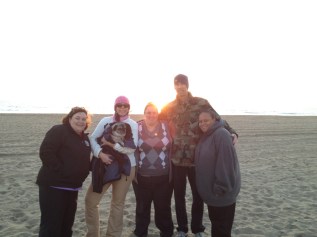
Today I got to cross an item off my bucket list.  The amazing Jeanette DePatie, Julianne, Danielle, Patti, and Brad from the NAAFA-LA chapter braved the cold to have a bonfire on the beach. It was amazing.  We told funny family stories, we talked about fat activism, we took a break from the fat hate of the world and hung out on the beach (and now this blog will be short because I am, as they say in Texas, clean tuckered out.)

It made me remember how important fatty and friends fellowship is. The ability to be in a room and be totally comfortable, to know that you aren’t being judged, to be around people who face challenges similar to yours or, if they don’t, support you firm in the knowledge that society is messed up when it comes to people of size.

I really can’t explain my gratitude to everyone for giving me this little dream experience – it was just awesome and I hope that everyone who wants to have this kind of community finds it.  I highly recommend that you find some fat community in your area.  Go to meetup.com and search for fat meet-ups, or health at every size meet ups. Check local papers, start a meet-up of your own, get involved with discussion boards online.  The world is messed up and it’s great to find some pockets of comfort, friendship and hope!  If you have a group, please feel free to talk about it in the comments, or talk about what your group does that you really like and that helps. Yay Fatties and Friends!

If you are near CalTech I’ll be part of a panel on health and eating disorders tomorrow (Friday) at noon at Avery Hall.

If you are in Austin I’ll be teaching a fun dance workshop for all bodies and all abilities with Theresa Woodsong on March 10th at 10:30. Details are here!

The Austin Plus Size Clothing Swap and Sale – Camaraderie, Community, and Clothes – is on April 1st.  It includes free food, a cash bar, fun and games, a raffle for a one-of-a-kind gown and it supports GenAustin, SafePlace, and Austin Fairy Godmother.  Details  are here!

This blog is supported by its readers rather than corporate ads.  If you feel that you get value out of the blog, can afford it, and want to support my work and activism, please consider a paid subscription or a one-time contribution.  The regular e-mail subscription (available at the top right hand side of this page) is still completely free.   Thanks for reading! ~Ragen

I’m Not Suffering from Obesity

I see people talk a lot about how we need to “do something” because so many people are “suffering from obesity”.  I won’t presume to speak for everyone but I will say that while I sometimes do suffer because I’m obese, I’ve never suffered from obesity.

I’m suffering from living in a society where I’m shamed, stigmatized and humiliated because of the way I look. Where I’m oppressed by people who choose to believe that I could be thin if I tried (even though there’s no evidence for that), and that I should try to be thin because that’s what they want me to do – as if personal responsibility means that I’m personally responsible for doing what they think I should and looking like they think I should (even though it’s none of their business).

I’m suffering from doctors who have bought into a weight=health paradigm so deeply that they are incapable of giving me appropriate evidence-based healthcare.  I’m not just talking about diagnosing me as fat and giving me a treatment plan of weight loss (which is using a completely unreliable diagnostic and then prescribing a treatment that has the opposite result 95% of the time).  I’m also talking about the two doctors who tried to prescribe me blood pressure medication without taking my blood pressure or looking at my chart to see that it is always 117/70 (which means that taking blood pressure medication would have been extremely dangerous).  I’m talking about a doctor trying to get me to lose weight to treat me for Type 2 Diabetes when I actually had anemia.  I’m talking about a doctor telling me that my strep throat was due to my weight. I’m talking about people who are supposed to be scientists abandoning science and research in a way that strongly resembles the time when the Catholic church told Galileo to sit down and shut up.

I’m suffering from a societal witch hunt where instead of putting me in a river they put me on a scale.  People look at my body and feel comfortable blaming me for everything from global warming to healthcare costs despite a lack of evidence for either. People send me crazy hate mail, say nasty things to me at the gym (although making fun of a fat person at the gym is something I will never understand).  People who are drenched in thin privilege try to use that position of privilege to make me feel bad about myself.

I’m suffering from the misinformation campaign that is led by the diet industry, weight loss pharmaceutical industry and surgeons who profit from mutilating people who look like me, none of whom are willing to be honest about the risks or horrible success rates of their interventions long term, and some of whom just don’t seem to care.

I am suffering from living in a society that tells me that the cure for social stigma, shame, humiliation and incompetent healthcare is for me to lose weight, when the truth is that the cure for social stigma is ending social stigma.

What has lessened my suffering is that I now realize that this isn’t my fault – although it becomes my problem. One of the reasons that I choose to pursue a life of social justice work is that nothing makes me feel better than knowing that I am doing what I can to fight this and making some kind of difference – whether it’s in the lives of individuals or in society at large.  I deserve better and so does everyone else and I and lots of others are fighting for it and we’re going to win.  But to be clear, we shouldn’t have to.  Nobody should have to fight to be treated with basic human respect.   And that’s what I find so sad – all of this suffering of obese people could end right this second and nobody needs to lose a pound – society just needs to stop trying to shame, stigmatize, humiliate and hate people healthy.  We can work on access to healthy foods, we can work on access to safe movement options that people enjoy, we can work on making sure that people have access to appropriate, evidence-based healthcare.  If we give up being a horribly failed example for making people thin, we could be a successful example for health.

This blog is supported by its readers rather than corporate ads.  If you feel that you get value out of the blog, can afford it, and want to support my work and activism, please consider a paid subscription or a one-time contribution.  The regular e-mail subscription (available at the top right hand side of this page) is still completely free.   Thanks for reading! ~Ragen

Not Shaming Fat People is Not Enough

One of the things that the Georgia Project did was bring together some uneasy allies.  People like Jillian Michaels and Alton Brown who regularly deliver an anti-obesity, fat=bad thin=good message, but who felt that the Georgia Fat Kid Shaming billboards went too far.

While I am happy that they were at least able to realize that shaming kids is a truly horrible idea, I want to be careful that we don’t take our eye off the ball here.

Not shaming fat kids is not nearly good enough.  Not shaming fat people of any age is not nearly good enough.  The gold standard for me is that body size is not a barometer for anything- every body deserves respect.

Jillian Michael’s comment about the campaign is a really good example. She said “let me be really clear – shaming children is NEVER the solution for any problem. Leading by example is always your best bet with obesity.”  She used the hash tag #hateobesitynotobesepeople

I just want to make it clear that while I’m glad that she was able to step up the 2 inch curb of realizing that shaming kids is bad, the idea that obese people are lost and need to be led by someone’s example is offensive.  And you can’t hate obesity but not obese people – it doesn’t work that way.  If you hate obesity, then you hate me.  I’m not a thin woman covered in fat, I’m a fat woman.   You can’t love the thin person who you wish I was without hating the fat woman I am now.

Also, let’s remember that Ms. Michaels is part of a billion dollar business (The Biggest Loser) that emotionally and physically abuses fat people for entertainment and profit.  (Off topic a bit – Does anybody else wonder what would happen if they took the people on the biggest loser and had them do moderate activity that they enjoy 30 minutes a day, 5 days a week and encouraged them to add healthier foods to their diet?  No screaming trainers, no lying to people by conflating weight and health, no working through massive injuries, no duplicating the activities that get people diagnosed with eating disorders, no manipulating the scales with water weight, no “weeks” that last 14 days.  I’ll bet that the health benefits would be the same, even if they didn’t experience weight loss.  Does anybody want to do a reality show of happy fat people moving 30 minutes 5 days a week?  Call me.) Perhaps it’s a commentary on what Jillian inspires vs. what she says that many of her fans responded to her comment in defense of the billboards “It’s not shaming to tell kids that their lives won’t be good if they are overweight” was a common theme.

As we move forward on the path to abolish weight stigma and end  the oppression of people of size, I think that we should be careful to maintain a goal of being fully respected, rather than just not being shamed, stigmatized, and humiliated. Let’s be clear that we deserve nothing less than full respect.

This blog is supported by its readers rather than corporate ads.  If you feel that you get value out of the blog, can afford it, and want to support my work and activism, please consider a paid subscription or a one-time contribution.  The regular e-mail subscription (available at the top right hand side of this page) is still completely free.   Thanks for reading! ~Ragen

When Good Intentions Go Bad

As I was reading articles about the Disney Fat Shame Ride and why it should be taken down, I noticed something that I’ve seen a lot before that bugs me.  Articles would quote scholars – experts in the field of childhood development – and somebody, let’s call them “bully99” (since these folks so rarely put their actual names on their work) will say “This is a huge problem and we need to stop worrying about kids feeling good about themselves and start caring about them dying before their parents”.

Now, I’m not saying that we should never questions experts in articles about health – I do it all the time- but if you are going to say that the National Institutes for Health are wrong, then maybe you should come up with some research of your own.

An article in the Calgary Herald mentioned that the Disney ride was opposed by the Binge Eating Disorder Association, National Association of Anorexia Nervosa and Associated Disorders, Canadian Obesity Network and then went on to quote a Medical Doctor, Professor and Two Dietitians, an expert and author on food, and the doctor who chairs the obesity research and management at the University of Alberta who called the exhibit “appalling on so many levels.”

One response in the comments said “Disney did a superb job creating awareness to this disease. Is a shame not well intended people with attention seeking victim syndrome personalities are trying to slander Disney’s efforts.”

I’m sorry but is this person a moron?  Did they not read the article?  Do they really think that the University of Alberta chair of obesity research and management has attention seeking victim syndrome?

I’m a little bit tired of hearing that these type of people are well-intentioned because I think that having good intentions means that you do a little research and that if this many experts disagree with you, you consider that you might be wrong and if you continue to espouse your opinion you back it up with some research. “Good intentions” do not excuse actively being an uninformed bully.  If they weren’t so (choose all that apply):

  • Lacking in intellectual humility
  • Eager for the thrill of being mean to someone
  • Excited about putting someone down so that they feel better
  • In love with the sound of their own unsupported-by-research voice (or typed words)
  • Likely to profit from fat shame and hate
  • Ignorant of the benefits of their thin privilege

then they might take the time to see if there is a shred of evidence that supports their claims. If the commenters actually engaged in critical thinking they would realize that most of the experts in the Calgary Herald article are actively involved in anti-obesity efforts, so they are not Health at Every Size/ Size Acceptance people at all, and most of them are thin.

In fact, in other forums I would be pointing out that these experts have no evidence that any of their interventions are likely to lead to long-term body size changes.  The truth is that we’re really not sure of anything, so we have to make our best choice based on the evidence, also weighing what will happen if we are wrong.

The evidence suggests that shaming kids about their weight leads to disordered eating (both under and over eating), low self-esteem, and bullying. The evidence suggests that promoting weight loss behaviors in kids predicts eating disorders and weight gain but not weight loss.

So if we follow the evidence we would choose to focus on health, and promote programs that encourage kids of all sizes to develop health habits. If we are wrong about that intervention then kids health is the same as it would have been without the intervention.

Or, we could ignore the evidence, focus on kid’s weight and promote shame-based weight-loss interventions (it should be noted that there is no evidence to support that this would work, but many people are currently promoting it anyway.)  If we’re wrong, we end up with a generation of kids who are weight obsessed, have much higher incidence of eating disorders and are heavier and less healthy than they would have been had there been no intervention at all (which would seem antithetical if you buy into the idea that thinner bodies are more healthy bodies.  I don’t, but the people who promote this particular intervention typically do.)

So, we’ve been employing this shame-based weight-focused paradigm for a while now and hospitalizations for eating disorders are up 119% for kids under 12.  Eating disorders among boys are up. Girls are starting to be concerned about their body weight in kindergarten and the average age of dieting is 8.  I hate to go all doctor Phil, but hey – how’s that working out for ya?

Sigrún Daníelsdóttir, Cand.Psych., Deb Burgard, Ph.D., & Wendy Oliver-Pyatt, M.D. from The Academy for Eating Disorders wrote fantastic evidence-based guidelines for Childhood Obesity Prevention Programs.  Toronto Public Health already has a health-based program in place – it includes self-esteem as a component of heath, and suggests things like eating a variety of foods without guilt and making movement fun.

Hey look, over there, it’s a BIG FLAMING SACK OF DUH!

So there’s this contingent of people who think that shaming fat people, including kids, is a good idea, despite the fact that there is no evidence to support that and a mountain of evidence that suggests that it will do more harm than good. I suggest that it doesn’t matter if they have the best of intentions or if they are part of an evil plot to destroy the world because:

They are hurting us.

They are hurting our kids.

I’m all for providing people with information in a respectful way, and I’m all for letting people make their own choices for themselves.  But when they’ve clearly been provided  information (like, for example, having just read an article that contains a [group noun] of experts saying that shaming is harmful to health), and they are still arguing for shaming other people, who are not them, based on their own personal “tough talking” style and a complete lack of evidence, then I think it’s time to say that their good intentions have gone bad, stand up for ourselves, and start pointing out the deeply flawed logic.

This blog is supported by its readers rather than corporate ads.  If you feel that you get value out of the blog, can afford it, and want to support my work and activism, please consider a paid subscription or a one-time contribution.  The regular e-mail subscription (available at the top right hand side of this page) is still completely free.   Thanks for reading! ~Ragen


Disney and Georgia Billboard Updates!

If you haven’t heard by now, Disney has closed the Habit Heroes ride and it is rumored that they are going to revamp it. If you have a moment and are so moved, you can always send them an e-mail thanking them for doing the right thing!  The response to this atrocity was focused, fast, and widespread – a perfect example of Fatties and Friends Kicking Global Butt!

The voting is over and our billboard is chosen.  Thanks to Sabrina for a wonderful design and thanks to Shawn, Brandon, Geri, Jeanette, and Marilyn for their great work as well.

There are more really exciting things developing that may expand the footprint of our campaign and I’ll tell you as soon as I know for sure!

I’ll be in LA next week.  I’m speaking at CalTech on Wednesday. The event is invitation only so if you want an invitation please e-mail me at ragen at danceswithfat dot org!

This blog is supported by its readers rather than corporate ads.  If you feel that you get value out of the blog, can afford it, and want to support my work and activism, please consider a paid subscription or a one-time contribution.  The regular e-mail subscription (available at the top right hand side of this page) is still completely free.   Thanks for reading! ~Ragen

Bad Magicians

Lately I’ve seen a lot of conpanies who seem to think that they are magicians instead of massive for-profit entities who are making money off the backs of the fat people who they are stomping on.

Children’s Healthcare of Atlanta tried to pull a rabbit out of their hat when they claimed that the fact that the National Eating Disorder Association, Kaiser Permanente, the National Institute of Health and many others had condemned their program as harmful to kids was actually a good thing.  It turns out, they desperately explained, that they were just trying to start a conversation and they want us all to say what a good job they did since everyone’s talking about it.

Of course in order to believe this you would first have to buy the ludicrous idea that people aren’t talking about obesity, then you would have to think it was ok to harm millions of kids in order to start a conversation that is meant to keep kids from harm.

Next Vivus waved their magic wand and got an FDA panel to reverse the decision of the full FDA in 2010 and recommend approval of a very dangerous drug, based on the testimony of experts who were paid by…wait for it…Vivus.  Dr. Michael S. Lauer, a cardiologist at the National Heart, Lung and Blood Institute, was one of only 2 members on the panel to vote against approval.  He mentioned that the drug might increase risk of heart attack (because ostensibly people would be taking the medicine expecting  to lower that risk) I imagine that Dr. Lauer risked professional misconduct charges for going on the record and saying something that makes sense:  “The consequence of making a mistake here is huge.  We’ve unfortunately had many examples of having made mistakes before.”  Meanwhile, most of the stories have played out in the business world talking about the billions that Vivus will make if the drug is approved. Of course it will be more than enough to pay the lawsuits for the families of the people who die.

The trifecta of men behind the curtain was complete when Disney used their magic to stereotype fat people and claiming that it would help make kids healthy.  Of course, there’s not a shred of evidence to support that, and there is a ton of evidence that shaming kids and making them scared of being fat predicts disordered eating and decreased health. But hey, we’ve abandoned evidence-based medicine in our healthcare system so why would we expect Disney to hold themselves to a higher standard.

These tricks are all easy to see through.  But all of these would-be magicians have something in common – they want to make fat people disappear.  These people are actively engaged in the psychosis that they should get to decide what size people should be.  Then they make a ton of money on a campaign to rid the Earth of people who look like me. And the kicker is that all that money comes from people who look like me.  I refuse.  I say no.  My body is fine exactly as it is and the only magician who is allowed to try to make me disappear will be in Vegas,  and will have a plan to bring me back exactly as I was – I’ll buy a ticket for that.

In the meantime I was watching re-runs of The Sing-Off and saw this great number that combines one of the great protest songs of all time (or at least since I was in Junior High) with one of my favorite types of music – a capella.  Enjoy!

My work is supported by my readers rather than corporate ads.  If you feel that you get value out of the blog, can afford it, and want to support my work and activism, please consider a paid subscription or a one-time contribution.  The regular e-mail subscription (available at the top right hand side of this page) is always completely free.   Thanks for reading! ~Ragen

Deeply Disappointed in Disney

Everyday people send me articles about the atrocities committed against people of size all over the world.  I get frustrated, I get angry, occasionally I yell at my computer, but I usually don’t cry.

That changed today.  As I sat in the tiny airport at Gainesville and read an article about Disney’s latest attraction “Habit Heroes” I couldn’t stop the tears.

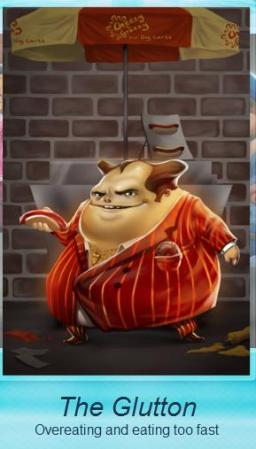
This is a new game at Epcot wherein kids meet their “Heroes” Will Power and Callie Stenics and fight with them against “Enemies” The Glutton, Lead Bottom and Snacker:

And as I type I’m crying again. Disney is my absolute favorite vacation place. It’s where my Best Friend and I go for a week at a time to bond, go on rides, and watch the Lion King Show nine times in a row.   So I’m heartbroken that we may have gone for the last time.  I won’t go back now (except possibly in protest) unless and until they get rid of this.

But that’s not why I’m crying, I’m crying because I know how excited kids get about Disney.  Disney is supposed to be the happiest place on Earth and now fat kids – who are subjected to a barrage of shaming, humiliating, stigmatizing, and bullying messages from society on a daily basis – will go on vacation and find out that people who look like them are villains who other kids fight for points and bragging rights. Why doesn’t Disney just hold fat kids down and let park guests kick them?

At the end of the ride kids can have their picture taken and e-mailed to them at home.  So what happens when the kids (or their moms, friends, etc.) look like the “enemies? What happens to the vacation that they have been looking forward to since their parents first said “We’re going to Disney World!”?   Shaming kids does not lead to better health, why is that so hard for people to understand?  You can’t tell how healthy someone is, how much they exercise, or what they eat by looking at their bodies, you just can’t.

This ride is a partnership with the people at Blue Cross and Blue Shield.  Regional Market President Tony Jenkins said:  “As an insurance company, we have the information kids need to be healthier.  Our challenge was to tell that story in a fun, engaging way, which is what Disney does better than anyone.”  I think I might break my desk with my forehead.  What about their mental health? Do we really want to create more fear of being fat when we know that there is a 119% increase in the number of hospitalizations for kids under 12, UNDER TWELVE, who have eating disorders?  The National Institute for Health just issued a statement that said that programs that shame kids:

carry a great risk of increasing stigma for those children who are overweight or obese which, in turn, can reinforce unhealthy behaviors (e.g., overeating). A number of research studies over the last decade have supported this concern. For example, studies suggest that overweight children who are teased about their appearance are more likely to binge eat or use unhealthy weight-control practices, and weight-based victimization has been correlated with lower levels of physical activity. Not surprisingly, stigmatization of obese individuals, particularly adolescents, poses risks to their psychological health.

Other studies show that the perception that obesity is solely a matter of personal responsibility, as opposed to understanding the complexity of contributing factors, can increase negative stereotypes of overweight people. It is important, therefore, that public messages about obesity address this complexity whenever possible.

So the NIH is willing to admit that it doesn’t have all the answers for kids’ health, but Blue Cross Blue Shield thinks that they do?

I’m going to do something, but I’m not sure what yet.  I’m very tired from 13 hours of travel today, and deeply saddened that my vacation respite is ruined and that 44,000 people a day are being exposed to weight bigotry and body shaming by the so-called “Happiest Place on Earth”, and so many ideas are swirling around in my head – Should we petition, protest at Epcot (dress like the bad habits and hold signs saying ‘I’m not the enemy’?), start a letter writing campaign? I’m open to suggestions…

You know, I understand where we are as a civil rights movement and I understand that there will be days like this but it doesn’t always make it easier.  In good news, our Georgia billboard campaign got a major article in Huffington Post, some of the commenters even get it!

UPDATE:  On 2/25/12 Disney closed the ride indefinitely.  There are rumors that it is being “reworked”.  Never doubt that a small group of thoughtful, committed citizens can change the world.  Indeed, it  is the only thing that ever has.

My work is supported by my readers rather than corporate ads.  If you feel that you get value out of the blog, can afford it, and want to support my work and activism, please consider a paid subscription or a one-time contribution.  The regular e-mail subscription (available at the top right hand side of this page) is always completely free.   Thanks for reading! ~Ragen