But Not Too Big

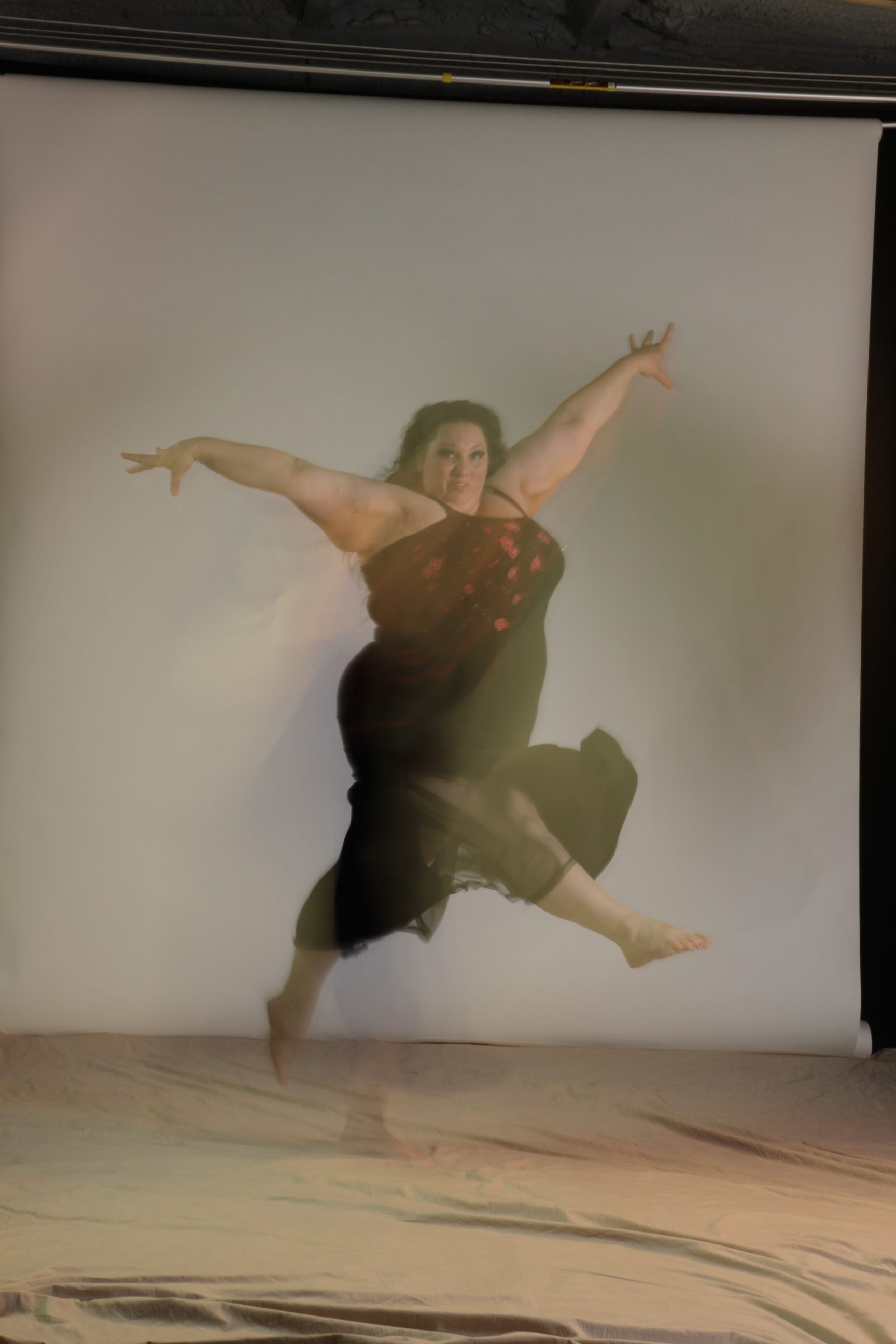
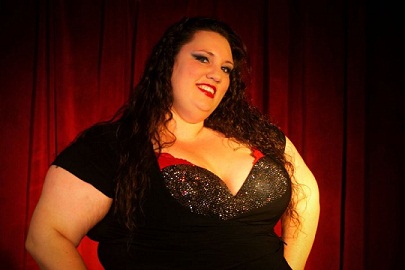
Photo by Richard Sabel

I did a segment on HuffPost live today called “Too Big to Dance?”  The segment was great but there was just one problem, I had final thoughts I wanted to give and, as is wont to happen in these situation, time ran out.  But what is the point of having a blog but to prattle on long after they’ve turned off your mic?  Before I get into it I just want to thank HuffPost Live for continuing to create spaces for this type of discussion- I’ve been on before but this time I was in studio and it was an absolute blast.  Nancy Redd is a talented and super gracious host (which helps because I’m a total dork), Camille and Vanessa who produced the segment were amazing, the crew rocked and the panel was fantastic – Glenna Cush from Shimmy Sista  provides plus size clothes for belly dancers, bad ass pole dancer/instructor Roz Mays, and dance writer Lauren Warnecke.  So, here are my final thoughts:

First, the idea that people don’t want to see a fat dancer as Giselle (or at all).  There is a word for saying that we don’t want people to get jobs because of how they look, and that word is bigotry.  The dance world tends to act as if bigotry is ok because that’s just how dance is, or claim they won’t sell tickets if they use dancers with “non-traditional” bodies.  First of all, neither of those things change the fact that this is bigotry, and neither mean that bigotry can’t be challenged. Also, I’m not sure that the ticket sale idea is based on good evidence, and even if it’s true that doesn’t mean that it’s ok – people may want bigotry but that doesn’t mean we have to give them what they want.  Also, let’s remember that the fact that we only ever see thin bodies dancing trains us to think that fat bodies look “wrong” and the only way to fix that situation is to put fat bodies out there. Risk is the currency of revolution and I think it’s time for the dance world to start paying up.

I really liked a lot of what Laura said, but I must take exception to her assertion that “severely overweight” dancers shouldn’t dance en pointe. First let’s talk about calling bodies “severely overweight.”  As I am Type 3, Super Obese at 5’4 and nearly 300 pounds, I assume that I would find myself firmly in that category, and I protest mightily.  Over what weight?  People come in different sizes and shapes, this is the size that I come in.  And while I am sorry for the difficult journey that Laura has had, and very happy to hear that she is finding a path to peace with her body as a dancer, I think in this comment she missed the point of the whole segment a little bit.  The point being: don’t assume that there is something wrong with fat dancers because of our size, and don’t tell us what we can and can’t do.

Tatyana Gladkaya from Big Ballet Russia (Thanks to reader Ras for finding her name!)

In general I think we’ll do best to avoid the “big, but not too big” language that I sometimes hear in discussions like this, suggesting that loving and appreciating your body and using it in ways that you enjoy has a size limit.  No, no, no, no, seriously no, not even for “really fat” people.

While we’re at it, I would love to see an end to the “as long as they’re healthy” dialog.  First because often “healthy” is a euphemism for “not too fat” and second because, even if they actually mean healthy that is very deeply problematic.  It’s not that I think we shouldn’t discuss health at all, I do take exception to making health a barrier to entry or barometer of worthiness.  Health is multi-dimensional and includes things within and outside of our control including genetics, environment, access, and behaviors.  Health is not an obligation – nobody owes anybody else “health” or “healthy behavior,”  and those who aren’t interested in health are not better or worse people than those who are interested in health.  Prioritization of health and the path that someone chooses to get there are intensely personal and not anybody else’s business.  The rights to life, liberty and the pursuit of happiness are not health or healthy habit dependent. I don’t think that people are allowed to dance “as long as they’re healthy,”  I think that, with the exception of movement restrictions for actual health issues, people are allowed to dance, period.  Of course that goes for any activity.

Finally I want to address how important I believe it is for fathletes to be visible.  Not just us making the choice to be out there, but venues like Huffpost Live giving us air time.  As we’ve discussed before, the absolutely ridiculous notion of “promoting obesity” (as if someone will watch me dance and think “I wish I could dance that way, I guess the first step is to get to 300 pounds) means that fat people, including fat kids, don’t have role models who look like them doing the things that they want to do.  So they often assume that means that those things are impossible for all fat people.  I get e-mails all the time from fat people who wanted to try dancing  but never tried because they thought they couldn’t at their size.  Obviously every fat person can’t do what every fat athlete can do – but neither can every thin person.  The problem here is that when someone says that showing fat people as anything other than miserable is “promoting obesity,” they are actually saying that we should give fat people the message that they should do nothing with their lives but try to lose weight because there is no hope for their happiness until they are thin.  They are consciously choosing to withhold hope from fat people, and I believe that withholding hope is a crime and should be punishable.

Fat dancers are here, we are here to stay, and we will not stop until we get the opportunities that we deserve.

Follow Up

On the show I mentioned the Fat Fatties Forum.  If you want to see some amazing representations of fathletes, you can check out the photo and video galleries at www.fitfatties.com.  It’s completely free to join and use and is a space for people of all sizes who want to discuss fitness at all levels from a Health at Every Size perspective.

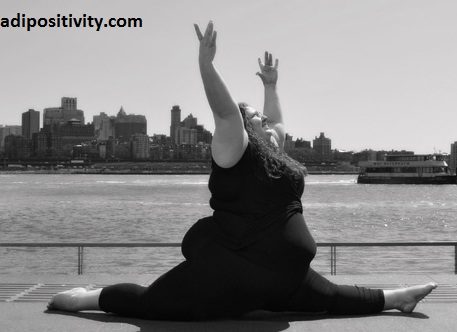
The picture they showed of me in the splits was taken by the incredible Substantia Jones for The Adipositivity Project (NSFW)

Update:

My dance classes are now (finally!)  available for download, and not just DVDs, and they even have their own website! 

Like the blog?  Here’s more of my stuff:

Become a member: Keep this blog ad-free, support the activism work I do, and get deals from cool businesses Click here for details

The Book:  Fat:  The Owner’s Manual  The E-Book is Name Your Own Price! Click here for details

Dance Class DVDs:  Buy the Dance Class DVDs or download individual classes – Every Body Dance Now! Click here for details

Taking the Fat Out of NAAFA?

NametagThe National Association to Advance Fat Acceptance (NAAFA) was founded in 1969 and bills itself as “North America’s oldest civil rights organization working to end size discrimination.”  It seems that they are considering a name change.

I received a copy of their May newsletter which read:

Life comes with very few guarantees but one of those is that things are going to change. Those of us who have been around for a while have seen tremendous evolution in our world. NAAFA has evolved to its present form in response to the changes in the world. Whether as an individual or as an organization, we must continue to evolve if we are to survive and thrive.

Over the course of its lifetime, NAAFA has undergone name changes in order to better communicate its purpose and goal. This is not a new idea but we believe that it is an idea whose time has come again.

NAAFA’s message is often obscured by the reaction of the public to the name National Association to Advance Fat Acceptance. Illustrating this point are the many rude and obnoxious comments following news articles online in which the organization is quoted. Many members refuse to read these comments because it consumes too many “sanity points” to do so.

With the pressure of society to demonize fat, organizations don’t look at common goals and interests, and disregard NAAFA’s requests for alliance because of our name. NAAFA needs to develop alliances and garner support of other organizations in order to further our goals in the civil rights and social justice arenas. We cannot continue to bury our heads in the sand and believe this problem will resolve itself. For us to affect change, we must be taken seriously.

NAAFA recently entered into an agreement with a public relations firm to seek corporate sponsorship for NAAFA’s annual convention and on-going programs. Sadly, its efforts were fruitless and, in most cases, the corporations indicated their objection, not to the mission, but to our organization’s name. This firm has recommended swift action to change the name of NAAFA.

Our mission is EQUALITY AT EVERY SIZE. The NAAFA Board of Directors believes that it is important that the organization’s name reflect its mission and goal. What do you think? pr@naafa.org

They’ve asked for thoughts, here are mine:

Full disclosure – I feel like I have a positive, if slightly complicated, relationship with NAAFA that I want to be open and transparent about.  There are amazing people in NAAFA doing excellent work and I appreciate them and respect what they do. The organization was very helpful with the Georgia Billboard Project and other projects that I’ve been involved with, and I was a super workshop speaker at last year’s NAAFA convention.  That said, I choose not to be a member of NAAFA predominantly because of the decision of the board not to hold elections at the National level.  Their chapters are required to have yearly elections and term limits, but the National Board has neither, describing themselves as member funded and board run.

While they are, of course, allowed to run the organization like this, I just don’t personally want to pay membership dues and lend my name to an organization where I have no direct way to influence policies, decisions, leadership etc., and where the National leaders don’t hold themselves to the best practices that they demand from local chapters.  Obviously the fact that it doesn’t work for me doesn’t make it wrong and I don’t expect that every organization will comport itself to my liking, and while I don’t want to be a member at this time, I do very much want to see NAAFA survive and succeed and I think that this name decision is an important one, which is why I wanted to write about it.

Mine is just one opinion and I sincerely appreciate their invitation to share thoughts before they make this major decision.   Remember that they are currently giving everyone a chance to share their thoughts about the name change at pr@naafa.org

As far as the name change, I’m a bit confused about the reason.  Are they trying to stop rude and obnoxious comments?  Is it because they want corporate money?  Or is it that organizations truly don’t want to work with them because they have fat in the name? Or maybe all three?  Let’s take them one by one:

As someone who runs websites for DancesWithFat, More Cabaret, the Size Diversity Task Force, I can tell you that, in my experience, any attempt at suggesting that fat people should be treated with basic human decency will meet with “rude and obnoxious comments” whether or not you actually use the word fat, so I’m not sure that a name change will do anything about that – for that you need to call the jackass whisperer and, try as I might, I can’t find the number.

If they are looking for corporate money I would suggest that, from my perspective based on what I read in the newsletter (and there may be information I don’t have here),  it seems that they hired a PR firm which was completely unsuccessful, who then blamed their lack of success on the name of the organization, and recommended a name change.  If that’s the case and if it were me, I would be leery of making failed salespeople into branding consultants, and might suggest that it could be worth it to try another PR firm.

If the concern is that other organizations won’t work with them because the word fat is in the name and, as they say “we cannot continue to bury our heads in the sand and believe this problem will resolve itself. For us to affect change, we must be taken seriously” then there are tough choices to be made.  I don’t think anyone’s asking them to bury their heads in the sand and I appreciate the difficult situation they are in,  but I also don’t think that “taken seriously” is the same thing as “backed down based on outside pressure”.  There is a choice here as to whether the name issue is, in and of itself, an opportunity for activism; or if it’s better to change the name in the hopes of gaining cooperation from organizations who would otherwise refuse to work with NAAFA because of their chosen identity.  Both are legitimate choices depending on goals, but I personally hope that they at least have the guarantee of that cooperation before making such a sacrifice –  it would be a shame to change the name only to be given another excuse as to why cooperation isn’t possible.

The NAAFA Constitution states

We choose to use the word fat to describe ourselves in order to remove the negative connotations normally associated with larger-than-average body size.
So I wonder how this name change would affect that sentiment?  It’s not that the strategy might not work, but I am concerned about the statement it makes – that we started out specifically reclaiming the word fat, but are now disavowing it. Are we to understand that they are suggesting that members do the same thing – that as a community we should stop calling ourselves fat because people and corporations may not like it?  Or is this just for the organization and not for its members? That said, there are people who would qualify as “fat” based on many definitions but do not choose to identify with the word, should we choose a path that gives them more opportunities to embrace a fat identity and remove the negative connotations, or change the name to bring down the barrier?
I fully acknowledge that it’s a difficult decision.  I do believe that there is a case to be made for inclusive language.  I was one of many people involved in naming the Size Diversity Task Force and we were specifically looking for a name that acknowledged that fat-phobia hurts us all and that spoke to not only fat-identified people, but also those who want to fight for justice in this arena who don’t identify as fat.  I was also involved in naming the Fit Fatties Forum and, though we are open to people of all sizes, we specifically chose to use the word fat because we wanted to claim a fat space in the fitness world.  Both decisions were cheered by some and criticized by others, none of whom were wrong. I empathize with the Board in that, whatever decision they make, they will meet with both support and criticism.
My concern here isn’t so much about a name, it’s about a name change.  They mentioned in the newsletter that there have been name changes  – the original name I found was the National Association to Aid Fat Americans, so it seems to me like it has been tied to the word “fat” since the beginning, and I am concerned about what it says that such an old and prestigious organization would makes a conscious, deliberate, and public move away from identifying as fat.  I wonder if they might end up trading criticisms – from being criticized for choosing a reclaiming identity, to being criticized for disavowing a reclaiming identity, thus making it a wash in the end.
Of course there pros and cons to either choice, and I obviously don’t have all the answers, I’m just trying to think it through.  If it were my decision, I don’t think that I would do it.  I don’t believe that corporate cooperation is worth disavowing a fat identity.  But then, identifying as fat is important to me and I recognize that it’s not important to everyone.   These are just my thoughts, if you want the NAAFA board to hear yours, remember that you can send your feedback to pr@naafa.org   In the meantime I wish the NAAFA board the best of luck and the greatest success in this and all of the work they do.
Update: 6/14/13
The leader of NAAFA was quoted in the media saying “The reason the word ‘fat’ was kept in the structure of our communications was it was an attempt to reclaim the word so it wasn’t seen as a bad word. Unfortunately, that part of the media war has been lost.” I don’t care what name NAAFA chooses, I am very concerned  that their leader seems to think that because they didn’t get something done “the battle is lost.” It’s fine if they aren’t up to this fight, I don’t think they are obligated to fight it. I just think it’s important that they be clear that just because they couldn’t get it done, or no longer want to try, doesn’t mean “the battle is lost”.

Like the blog?  Here’s more of my stuff:

Become a member: Keep this blog ad-free, support the activism work I do, and get deals from cool businesses Click here for details

The Book:  Fat:  The Owner’s Manual  The E-Book is Name Your Own Price! Click here for details

Dance Class DVDs:  Buy the Dance Class DVDs – Every Body Dance Now! Click here for details
Seeing My Body as Separate

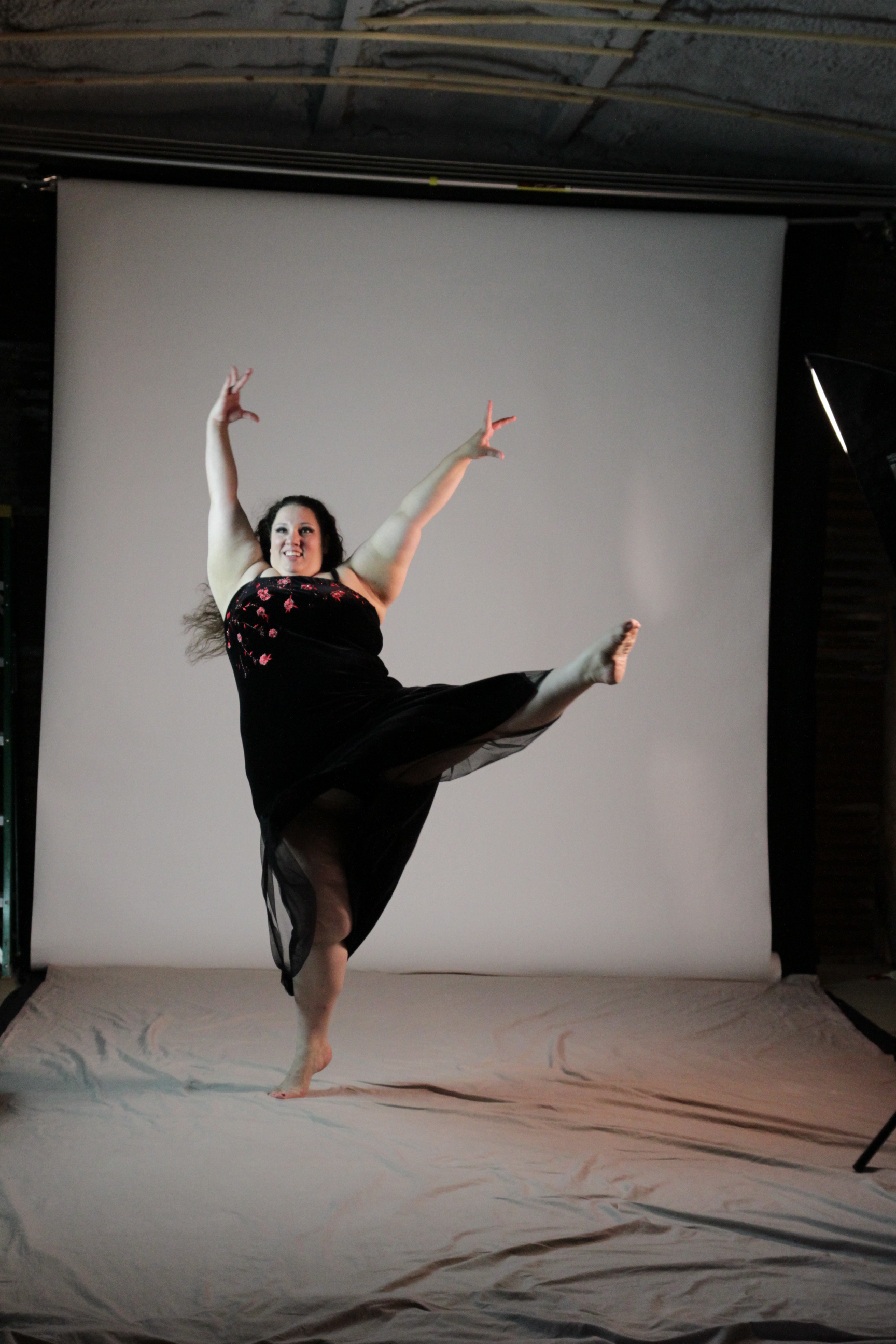
Photo by Richard Sabel

I often talk about my body and me being a team. Often people ask why, and sometimes they let me know that it bothers them because they like to think of themselves as an integrated whole.  First, of course however you view yourself and your body is totally fine The Underpants Rule absolutely applies here.  Thinking of my body as separate is actually the result of a conscious choice for me.

If you are a regular blog reader you may remember that my journey to body love started with my decision that, not matter what it took, I was going to learn to love myself as I was.  At that point I wasn’t able to see that my body was beautiful, and it felt disingenuous to say that I did, so I was looking for ways to shift the way I felt about my body.  As part of that journey, I spent a lot of time thinking about how I treated my body and why.  One day I was sitting in my mechanic’s waiting area as my car got an oil change.  I realized that I treated my car way better than my body. Unlike my body, I always took my car in for preventative maintenance and necessary repairs, and I would never have given it a fraction of the fuel it needed and then become angry when it stopped working.

I also realized that I treated my friends way better than I treated my body.  If I got into an accident and a friend had to do everything for me, I couldn’t even imagine responding to that by spending all of my time berating them for how they look.  But that’s how I was treating my body every day.

So I made a conscious decision to try treating my body at least as well as I treated my car, and preferably like I would treat a close friend – which meant that I would love it regardless of how it looked, take care of it, and defend it from detractors.  I decided to treat my body like a partner in everything that I do, rather than treating it like an adversary.  The first thing that helped me do was take the last steps away from my diet mentality as starving my body by feeding it less food than it needs to survive in the hopes that it would eat itself and become smaller was no longer an acceptable way to treat my body.

That, along with a shift in focus to appreciating all the things that my body did for me, helped me become motivated to take really good care of my body, to appreciate what my body did for me, and to decide that, even if I didn’t love the way it looked, my body was still amazing and deserving of love, respect, and excellent care.  I would later learn to love the way my body looks – actually, it would be more truthful to say that I unlearned the idea that there was something wrong with how my body looked – but for me that was the icing on the self-esteem cake.

I continue to think of my body as an incredible friend and partner because it works for me to think about it like that.  Of course that’s not better or worse than thinking of myself as an integrated whole and, as always, your mileage may vary.  For me, seeing my body as separate helps me to see my body as worthy of love, respect and excellent care.  It helps me remember that my body deserves nothing less than my unconditional love and full-throated support. It helps me respect my bodies boundaries when it comes to sickness or injury. It helps me be in a place of peace and love and joy with my body, a place that – before I started to think of my body this way – seemed like somewhere I could never get, and now is somewhere that I never want to leave.

Two Cool Upcoming Events!

The Size Diversity Task Force retreat is open for registration.  We’re going to Vegas in October! It is designed to be a fun, laid back weekend with a couple workshops and group activities, and a whole lot of hanging out with fun and fabulous fatties and friends.  Registration is just $35 and includes a one-year membership to SDTF, snacks, casual lunches, beverages throughout the weekend, as well as the workshops/group activities during the day on Saturday.  The hotel has amazing deals and scholarships are available.  Check out all the details here!

In November, I’ll be keynoting the Abundia Conference!  This fantastic conference takes place near Chicago and the focus will be “Finding Joy in Your Body” I’ll be giving talks, workshops, even dance classes and hopefully hanging out with super cool people and meeting my awesome blog readers in person!

Like the blog?  Here’s more of my stuff:

Become a member: Keep this blog ad-free, support the activism work I do, and get deals from cool businesses Click here for details

The Book:  Fat:  The Owner’s Manual  The E-Book is Name Your Own Price! Click here for details

Dance Class DVDs:  Buy the Dance Class DVDs – Every Body Dance Now! Click here for details

The Right to Discriminate?

Dream WorldThe recent Ambercrombie and Fitch dust-up has brought up some common issues faced by activists.  The minute we point out corporate behavior that is discriminatory, someone pipes up that corporations have a right to discriminate. Of course, that is not the point.

When someone engages in activism against discriminatory practices we’re rarely arguing whether or not someone has the legal right to do the thing (though it’s very often a legitimate question and this type of activism is valuable), we’re typically questioning whether it’s ok with us that they are doing it and, if not, what we want to do about it.

Whenever an activist says “This corporation’s practices are discriminatory and that’s wrong,”  someone always feels like the definitive and final answer to the concern is to say “It’s legal for them to discriminate in that way .”  To which I would like to say “Dude, thanks for pointing that out, because I forgot to eat my bowl of No Shit Sherlock Flakes this morning.”  I don’t know about you, but I don’t want to live in a world where the fact that bigotry against a group is legal constitutes a good enough reason to let it go on unchallenged.

Yes, I know it’s not illegal for a clothing store to delight in their refusal to make plus size clothes (though if a businesses’ expression of their rights to life, liberty and the pursuit of happiness is to take pride in discriminating against a group of people for how they look, I think they might want to rethink their use of precious freedoms.)  Regardless, I have the right to discuss that businesses choices, take action against them, and try to incite others to take action as well.  The fact that someone, somewhere can justify the behavior is not a reason for me to stop taking action against it.  If discrimination is happening, it’s highly likely that there is already a justification for it, but that doesn’t make it right or indicate that nobody should try to change it.

Clothing businesses are allowed to choose a target market and are not obligated to make clothes for everyone, but when a business’s goal is to make their brand a status symbol, then their choice to systematically exclude all people who look a certain way becomes more than a simple business decision, it becomes a purposeful creation of a second class who can’t access the “status” they provide. It becomes especially problematic when almost every business that exists in a niche makes the same “business decision.”  When a “business decision” purposefully excludes a group of people in a way that adds to the stigma already heaped upon that group of people because of how they look, then that decision deserves examination and critique.

As a fat dancer, and now training for a marathon, I find myself constantly frustrated by an industry that tells people that exercise is good for us, but seems to want fat people to do it in togas that we make out of bedsheets because god forbid a fatty be seen working out in their clothes. So they justify it by calling it a “business decision” – let’s remember that plenty of horrible wrong things had similar justifications – the existence of a justification does not indicate an absence of issues, or a lack of impetus for complaint.  Pointing out the systematic exclusion of a group, and the ways in which that increases stigma on that group is not entitlement, it’s classic civil rights action.

One thing I’ve learned about activism is that when you decide to do something, there will always be someone who insists that there is a reason why you shouldn’t do it.  In my experience, anything worth doing is worth doing despite the critics.

Like the blog?  Here’s more of my stuff:

Become a member: Keep this blog ad-free, support the activism work I do, and get deals from cool businesses Click here for details

The Book:  Fat:  The Owner’s Manual  The E-Book is Name Your Own Price! Click here for details

Dance Class DVDs:  Buy the Dance Class DVDs – Every Body Dance Now! Click here for details

This Self-Esteem Thing

Wrong RoadIn my recent blog post discussing what to say to girls about body image and self-esteem,  mentioned intrinsic self-esteem.  I’ve since received several questions about it so I thought I would go into more detail about it today. If self-esteem is a word that’s triggering to you, then you have both my apologies and my suggestion to try substituting self-worth or something else that works for you, the main idea here is to think about how we think of ourselves.

The theory that I’ve learned that makes the most sense to me is that there are two types of self-esteem – intrinsic and extrinsic.

Extrinsic is what we get from external feedback:

  • Roles:  We play lots of roles in life – mother, father, sister, brother, partner, volunteer, employee, boss, parent, child etc.  and how we perform in these roles can inform how we feel about ourselves
  • Social Approval:  This is about how we perform based on social conventions, stereotypes etc.
  • Third Party information: This is about what we read/hear/learn about people who are like us.

Intrinsic Self Esteem

This is our sense of our innate value We are each the only person who can determine our intrinsic self esteem – how we feel about ourselves – and part of that is deciding what factors we include in our calculations.

Many people choose to determine their intrinsic self esteem based on their extrinsic self esteem values – people are, of course, allowed to do this but it can be pretty problematic for a number of reasons.  Our performance in role values varies from day to day – even minute by minute as anyone with a toddler can attest –  so one day we might feel like we are an excellent parent, employee and friend, and the next day we might feel like we are epic failures in all three.  If we base our intrinsic self esteem on our role values we can end up on a self-worth roller coaster that isn’t necessarily that much fun.  If we base it on societal approval and third party information then we are putting our sense of self worth entirely in the hands of other people, some of whom have the very specific goal of making us feel bad so that they feel better.

Another option is to realize that we are the only person in charge of how we feel about ourselves and that, as such, we can decide that we are intrinsically amazing and that there is nothing that will ever change that. If today we were a crappy employee, parent, and friend then we are an awesome person having a bad day, or maybe even a bad year. At any given time we may be damaged goods, but we are always goods nonetheless. (Bonus points for the movie reference)

If we can keep our intrinsic sense of self esteem high, then we can handle the extrinsic blows with our head held high.  We can see ourselves as always being worthy of respect, love, and good care – and we can see that when we aren’t treated that way the issue lies with the people treating us poorly and not with us.  We shield ourselves from attacks made by those who are hoping to make themselves feel better by making us feel worse.  We can see through the lie that our belief that we are intrinsically amazing is somehow hubris or arrogance (a lie most often repeated by those who profit emotionally or monetarily from its dissemination.)

Here’s an example:  I’ve been getting a lot of troll mail lately on my post about my first official 5k.  Most failed to comprehend the post, and think that I’m claiming to be an athlete soley based on my having having walked this 5k. Of course that’s not the case and wasn’t the point of the article, but so what if I was?  When did they get to be the “Athlete Decider”?  Was there a ceremony? Was it nice?  There are plenty of people, of all sizes, for whom walking a 5k is an athletic achievement and there is nothing in the world wrong with that.  There are plenty of people, of all sizes, for whom walking to the mailbox i an athletic achievement and if they want to do a butt-shaking happy dance with their newly acquired junkmail then I’m all for that and there is no reason that anyone would be against it that doesn’t begin and end with petty animus.

Anyway,  back to the example.  I’ve received tons of comments suggesting that, not only shouldn’t I be happy that I did the 5k, but I should feel bad about myself for not running it, that I should have been kicked out for walking, that nobody should be allowed to walk these races or do anything other than what the commenter has chosen to do.  These are easily identifiable as people in two camps – those who are desperate to hold onto their stereotypes about fat people and thus have to find a way to negate fat people’s achievements/experience that don’t support their prejudice, and/or those  who are trying to increase their self-esteem by putting other people (in this case me) down.

Alas, I’m not the jackass whisperer and I can’t make these people behave like they’ve had some home training.  I do get to choose whether or not I want to fall for their crap.  I choose not.  In the end, I’m truly sorry that these people are in such a bad place but I’m not obligated, or willing, to fall on my self esteem sword to help them out of it.  I would suggest that you don’t have to either.

Like the blog?  Here’s more of my stuff:

Become a member: Keep this blog ad-free, support the activism work I do, and get deals from cool businesses Click here for details

The Book:  Fat:  The Owner’s Manual  The E-Book is Name Your Own Price! Click here for details

Dance Class DVDs:  Buy the Dance Class DVDs – Every Body Dance Now! Click here for details
Back Off My Fat Body

Ragen Chastain - superfat - picture by Substantia Jones for Adipositivity.com
Picture by Substantia Jones for Adipositivity.com

Everyday I hear messages from society about my fat body. I’m told that it’s a sign of moral failing, laziness, it’s a shortcoming, it’s unattractive, blah blah blah –  the negative messages are incessant and ubiquitous.

I spent a lot of my life so intent on hating my body for not meeting the cultural stereotype of beauty, that I never once appreciated it for what it did.  Instead of defending the amazing body that helps me do every single thing that I do every moment of every day, I joined in the chorus of disapproval. I sold my own body out to buy into an arbitrary social stereotype of beauty, and a modicum of begrudging approval that was contingent upon my keeping myself down so that my detractors didn’t have to bother doing it themselves.

If I’ve learned anything on my journey away from self-hatred, disordered eating, and compulsive exercise, it’s that my body deserves nothing less than my unconditional love and full-throated support. So to all of those who would suggest that my body is anything other than magnificent I say this:

My fat body is far too valuable to be treated like a car whose worth is lowered because of some wear and tear.  It’s far too astounding to be a metaphor or a political statement.  It’s far too complicated to run on the same formula used to fuel a lawn mower. It is far too profound to be reduced to a ratio of weight and height.  And it is far too amazing to be judged by anyone.

My fat body is not a representation of my failures, sins, or mistakes. My fat body is not an indication of my level of health or fitness. My fat body is not up for public discussion, debate or judgment. My fat body is not a signal that I need help or input to make decisions about my health or life.  My fat body is the constant companion that helps me do every single thing that I do every second of every day and it deserves respect and admiration.

If you are incapable of appreciating my body and treating it with respect and admiration that is your deficiency not mine; work on it or not, but I do not care. Nor am I interested in hearing your thoughts on the matter so, if you want to be around me, you are 100% responsible for doing whatever it takes to keep those thoughts to yourself. If you are incapable of doing that I will stop spending time with you – I spend my time with people who can treat me appropriately.

I will wield my beautiful fat body like a weapon.  I will love it, I will care for it, I will move it, I will show it in public, I will viciously defend my body against anyone who seeks to classify it as anything but amazing. You’ve been warned – back the fuck off.

Like the blog?  Here’s more of my stuff:

Become a member: Keep this blog ad-free, support the activism work I do, and get deals from cool businesses Click here for details

The Book:  Fat:  The Owner’s Manual  The E-Book is Name Your Own Price! Click here for details

Dance Class DVDs:  Buy the Dance Class DVDs – Every Body Dance Now! Click here for details
What Do We Tell Our Girls

I am powerfulThis is one of the questions that I get a lot when I give talks – how do we raise girls to love and respect themselves in a world where they are told very clearly that they are not and will never be enough. Girls are rewarded for being “cute” while being flooded with images of a single, unattainable, photoshopped stereotype of beauty.  They are inundated with the idea that their value as a human being is inextricably tied to how close they can get to that stereotype, and how attractive they are to men.

The truth is that there ARE major rewards for meeting the stereotype of beauty and serious consequences for failing.  Fat women get hired less and paid less than their thin counterparts.  Women who refuse to wear make-up are seen as unprofessional – including by other women.  Women who refuse to wear high heels are seen as matronly, unsexy, and unfashionable.   Social approval is very important to a lot of girls and you can get more of it if you meet the standard of beauty; that’s why we love make-over shows so much, because it’s not a new look, it’s a new social standing, and that’s precisely why the idea is so damaging.

So what do we tell our girls?  I’m not claiming for a second to be an expert on childhood development, but here is what I wish more people would have told me:

The world is massively screwed up when it comes to beauty, body image and health.  It’s not you, it’s the current culture that we all live in.  Once you can separate your actual intrinsic self esteem (that you know you are amazing) from the messages that you should base your self-esteem on standards of beauty that were (as my friend CJ Legare says) created to steal your self-esteem, cheapen it, and sell it back to you at a profit, then no matter whether you choose to work the system, reject the system, or something in between you can stay ok within yourself.

I think we should do whatever we can to help girls see their bodies as amazing and worthy of love and care. I think we should give them access to as many different kinds of food and movement as we can without pressure or obligation.  I think we should teach them that those who suggest that weight is the same as health, and weight loss habits are the same as healthy habits,  are no different than those who insisted that the sun revolves around the Earth.  I think we should remind them that “everybody knows” is not the same as the truth.

I think we should be honest with girls that we are giving them a pretty crappy inheritance when it comes to our cultures ideas about beauty and health, and talk about options for their own activism.  Give them role models like Julia Bluhm who got 17 Magazine to take a “no photoshop” pledge.  Help them see that the industries that oppress them run on their time, energy, and money and so if they  take control of those things, they take control of the system. Teach them that one of the worst things that they can do is to try to make themselves look or feel better by making another girl worse.

Girls are going to be bombarded with the message that they have to change themselves to fit in the world. We can choose to give them the message that who they are is already amazing, and that, if they want, they can work to change the world to fit them.

Like the blog?  Here’s more of my stuff:

Become a member: Keep this blog ad-free, support the activism work I do, and get deals from cool businesses Click here for details

The Book:  Fat:  The Owner’s Manual  The E-Book is Name Your Own Price! Click here for details

Dance Class DVDs:  Buy the Dance Class DVDs – Every Body Dance Now! Click here for details
I Screwed Up

Motivate FinalThis is one of those retrospective blogs where I talk about a screw up I made and what I learned from it.  If this isn’t your thing don’t worry, I’ll be back with my usual blog tomorrow!

It was late Thursday night and I was getting ready to post the blog I had written earlier that day about a truly offensive article. It had been a rough day.  I had been dealing with two troll attacks – one  on this blog which I’m used to and just makes me want to work harder.  The other attack was on the More Cabaret blog, on Tiffany Kell’s beautiful and moving piece about her father’s death and I found it was really emotionally difficult for me to deal with the fact that there are people who would be so absolutely cruel and heartless as to troll that piece.

Then I started getting negative feedback from people, including some inside the SA/HAES community, for writing about Abercrombie and Fitch’s deeply bigoted marketing and hiring policies.  I was told that I shouldn’t have talked about it and given them “free advertising” that I should have ignored it.  I’ve heard that argument, and disagreed with it, before – but it was harder on that day with everything else that was going on.

So there I was, getting ready to discuss another negative article and I realized that I was opening myself up to the same criticism  – that I should just have ignored it and not given her any traffic etc. I’ve been accused of ignoring criticism.  That’s not the case – while I sometimes ignore my critics, the criticism itself can keep me up at night.  So I caved to my fear of the criticism.  I deleted the “Activism Opportunity” paragraph that contained links to give feedback, I deleted the author’s name from the piece leaving only the title of the article that I was criticizing and I posted the piece without the links.

As is often the case, my readers knew better than I. Ngaire Wadman found and posted the links to the article, the Happy Fan Girl posted the Yelp link for the author’s health consulting practice, Cattie posted her Google Site, Crystal Williams posted the Facebook page and readers went to work.  Now the awful piece has been taken down and the owner of the site as well as the author of the offensive piece have made apologies on the site’s facebook page, and I’m wishing I had been brave enough to include the links in the first place.

I respect people’s right to choose to ignore things like this for whatever their reasons, it is a completely legitimate choice.  It’s also completely legitimate to make choices based on a desire to avoid being criticized.  It’s just not the choice that I wish I had made in this instance.

So I screwed up, certainly not the first time, certainly not the last.  Here is what I learned from this one:

  • Rather than avoiding talking about things because it might bring the subject “traffic” or “free advertising”  I’ll just try to get better at presenting my case to communicate more clearly the option to not to participate in fat bigotry and maybe even choose to speak out against it.
  • Nobody has the right to tell anyone else how to deal with the stigma, bullying, and oppression that they face ever, the underpants rule absolutely applies here.
  • Comments that attempt to devalue someone else’s activism for not being important enough, or not ignoring an issue or whatever – however well-meaning or intentioned – will be moderated out of this blog from here on.  I just don’t believe it’s a good use of this space.
  • I don’t believe that bigotry will just go away if we ignore it, or that giving someone “internet traffic” or “free advertising” is such a threat that I should let their behavior continued unquestioned and unchallenged.
  • I believe that risk is the currency of revolution, including the risk of being criticized. I want revolution, so I will try my best to never allow the fear of being criticized lead me to stay silent about things that are important to me.

I feel especially bad that I didn’t just trust my readers to take the links and run with them – I’m truly sorry about that.  The readers on this blog have moved mountains and done what many said was impossible with their activism, and it should come as no surprise to anyone that they dispatched with this in short order.  Thanks for doing what I did not find the courage to do, I’ll try to be as brave as you all next time.

Like the blog?  Here’s more of my stuff:

Become a member: Keep this blog ad-free, support the activism work I do, and get deals from cool businesses Click here for details

The Book:  Fat:  The Owner’s Manual  The E-Book is Name Your Own Price! Click here for details

Dance Class DVDs:  Buy the Dance Class DVDs – Every Body Dance Now! Click here for details

No Mani for You Fatty

Decorate your body, or don't, at any size!  It's your choice!
Decorate your body, or don’t.  It’s your choice.

Update:  Thanks to feedback from readers on this blog, they’ve taken down this highly offensive piece, and made an apology on Facebook.  Way to go y’all!

Reader Thea sent me an article that expresses a sentiment that I’m disturbed to say I’ve been seeing more of.  In the article, titled “Don’t Hate Me” a woman, who obviously knows that her actions are hateful, waxes on about a *gasp* fat women who dares to go to the same nail salon and…wait for it…gets a manicure.  She wonders why someone who is so far outside the beauty ideal would bother having her nails done.   She says: (trigger warning for general and specific fat hating jackassery and conflation of weight and health)

My point again? Hasn’t something gone wrong when pretty pink nails make someone feel better about their high blood pressure? When a serum helps someone ignore the cell mutations taking place in their body? When a good foundation helps someone smile through their insulin shot?  I adore beauty products and they are truly there for all of us, no matter what our short comings. But priorities! Please.

First of all, how dare she make health assumptions about someone she doesn’t know and then seek to deny them happiness on the basis of her rectal pull guesses when even if she had all of their medical records in front of her this would be wildly inappropriate?  How dare she call fat bodies – amazing fat bodies that breathe and blink and live – shortcomings.  And how dare she suggest that someone who uses insulin (or any other medicine) doesn’t deserve beauty products. What the actual fuck!?  Something has “gone wrong” here but it’s not with any of the people in her examples.

Even if we ignore the fact that body size and health are two different things, neither body size nor health should be considered a litmus test for whether or not we can dress, adorn, and  decorate our bodies.  Just like I have no obligation to comport myself so that men want to have sex with me, I have no obligation to take a pass on beauty products because my body doesn’t meet some artificial stereotype of beauty.

The idea that there is some sort of health hurdle that we have to jump to “deserve” a manicure or good foundation is ridiculous beyond all reason.  I kind of wish I could ask her – how far does it go? If being fat means that, in her estimation, I shouldn’t get a manicure or wear foundation, should I just stop brushing my teeth as well?  Should I run gravel through my hair instead of Herbal Essences?  Screw that.

And let’s not forget that there are tremendous social benefits to meeting the arbitrary standard of beauty, including being passed over in hiring and promotions, based on the stereotype that we lack discipline and ambition and are lazy and unkempt.  One of the ways to mitigate that prejudice (which we absolutely should not have to do) is through clothes (though well fitting appropriate clothes are not always accessible to us), and grooming.  So what this woman is actually saying is that fat people should not have options for attempting to get social standing through traditional means.

Tragically this woman is a mother with two daughters and runs a health center. Talking about her feelings toward her body in one piece she says “And I’m female so I’m never happy!” though according to her bio “it’s safe to say she understands health, beauty and well being from the inside out.”  I beg to differ based on a preponderance of the evidence.  It is a good reminder that so much of the health and beauty advice we get is delivered by people who are supremely damaged by our effed up society, and by identifying and disregarding it we can help to stop the cycle.

Like the blog?  Here’s more of my stuff:

Become a member: Keep this blog ad-free, support the activism work I do, and get deals from cool businesses Click here for details

The Book:  Fat:  The Owner’s Manual  The E-Book is Name Your Own Price! Click here for details

Dance Class DVDs:  Buy the Dance Class DVDs – Every Body Dance Now! Click here for details

Athletic Privilege and Me

IMG_9103 - CopyI wrote a blog a couple weeks ago about my first official 5K and in it I discussed the fact that I benefit from athletic privilege and I got some questions about what that means.  Recently some stuff has happened that brought it into sharp relief.  About 4 weeks ago I woke up with a pain in my back.  I thought nothing of it and assumed it would work itself out.  Fast forward a week and the constant pain was pretty intense and I could not lift my right arm.  Thankfully I happened to be in Austin where I have a team of amazing healthcare providers (Dr. Robin and Dave I’m looking at you).

It turns out that while ignoring the pain and “working through it” I managed to slip some discs and a tendon and tear some muscles. I wasn’t able to lift my right arm until four weeks later (a few days ago.)  I had to ask for help with day to day tasks, I couldn’t do my own hair.  The pain caused me to cancel things that were really important to me because I just couldn’t deal with the thought of having to leave the house and I’d only been in pain for a month, there are people who live with chronic pain their whole lives.   Things are getting better for which I am very grateful, and this has really reminded me a lot about my athletic/ability privilege:

There are a number of ways that this privilege shows up in my life:

First, by luck of the gene lottery I have some natural athleticism and good natural proprioception and kinesthetic awareness.  I build muscle, in particular Type 2 muscle, very easily.  Second, I was able to be an athlete growing up. Being an athlete in your youth can make athleticism easier to maintain when you’re older.  Also, I got the confidence of athletic achievement.  When I first worked on loving my body for what it does for me and as I live day to day, I didn’t and don’t have to negotiate any disabilities and I had all of that athleticism to fall back on.  Finally, there are social pay-offs that come to me because I am athletic that can negate some of the fat prejudice that I would otherwise face.

So I have privilege.  Of course I also deal with bullshit – like the fact that people suggest that I can’t be an athlete unless I’m thin and plenty of other fat stigma/oppression crap, and yes I’ve worked very hard to develop my athletic skills, but that doesn’t negate my privilege  – like the fact that I get social approval for the hours of work that I put in to physical fitness because I enjoy being an athlete, but I would not receive that same approval if I had spent those same hours becoming a bad ass knitter (and that’s bullshit).  We all have privilege in some ways, typically we didn’t ask for it and we can’t give it away, but we can acknowledge it and we can try to use it to make things better.

Ways that I think we can do that include:

Being loud and clear that, while it’s not a bad thing to be, or talk about our experiences  as, athletes, and while neither of those things are healthist or ableist in and of themselves, being an athlete/exercising/being physically fit etc. doesn’t make us any better or worse than people who aren’t those things for whatever reason, or who choose different hobbies than we do. (In general I think it’s a good idea to avoid feeling good about ourselves by cultivating a belief that we are better than others.)

Being proactive about making sure that the businesses and events we go to, and the events that we coordinate, are accessible to people who have limited mobility, disabilities, and less athletic privilege than we have.

Seeking out information from, and listening to, people whose experiences are different than ours (and who want to discuss these things) to see what we might be able to do to make things more accessible, and to better avoid healthism and ableism.

If you have more ideas, leave them in the comments!

Like the blog?  Here’s more of my stuff:

Become a member: Keep this blog ad-free, support the activism work I do, and get deals from cool businesses Click here for details

The Book:  Fat:  The Owner’s Manual  The E-Book is Name Your Own Price! Click here for details

Dance Class DVDs:  Buy the Dance Class DVDs – Every Body Dance Now! Click here for details