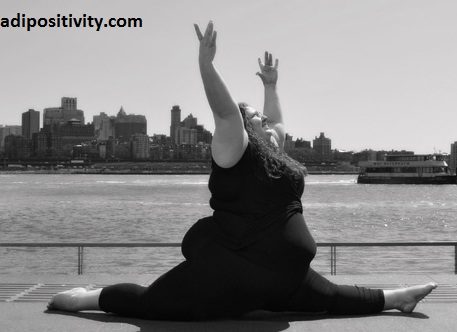
Why Does It Have to Be About Obesity?

Public HealthJust like I’m tired of fat people having experimental medicine practiced on them without their consent, I am tired of people being encouraged to promote/sell/legislate whatever is in their heads as long as they say that it “fights obesity.” People are telling businesses what size of sodas they can sell, talking about taxing certain foods, suggesting a public shame campaign, suggesting that little kids have have a surgery that can kill them, all under the auspices of “fighting obesity” without much or any evidence to support that these things will change the people’s weight or their health.

I’ve recently been looking into some grants to help fund More Cabaret and I’ve been really disappointed at how many grants require that the program “fight obesity” in some way.  Why, for the love of whatever,  can’t we just create fine art using a fine arts grant?

Why is every health initiative marketed as a way to “fight obesity”? Increase vegetable consumption to fight obesity. Take a 30 minute walk to fight obesity.  WTF Dude? Vegetables are only good for fatties?  Walks are only for making people thin? Not only is it ridiculous based on logic,  it’s exactly the opposite of what the evidence supports.  Studies show that healthy habits, like vegetables and walking, can help increase the odds of being healthy (though of course health is multi-dimensional, not entirely within our control, and there are never any guarantees) but have almost no chance of creating long term weight loss.

This kind of messaging does a disservice to fat people, who are told that healthy habits don’t work unless they make them thin, and does a disservice to thin people who are told that they are healthy by virtue of their weight and regardless of their habits which, again, is not what the evidence tells us.

Can you imagine the kind of world it would be if public health messaging was actually based on evidence, and was about making options for health available to the public rather than making fat people’s health the public’s business?

To be very clear, health is not an obligation or a barometer of worthiness – nobody owes anybody else “health” or “healthy habits” by any definition.  People of all sizes prioritize health in all different ways and that’s absolutely fine.  The prioritization of health and the path one chooses are intensely personal decisions and private decisions that should never be up for public discussion or debate unless someone asks for that.

I’m not trying to tell anyone how to live.  I’m asking a simple question: how would public health and health promotion be different if we took out the weight loss and “fighting obesity” rhetoric and actually created health messaging?  (Which would make sense since there’s no intervention that has been shown to lead to long term weight loss in more than a tiny fraction of people.

Maybe we could get correct information.  Instead of being lied to that the only way to pursue health is through weight loss, we could hear the truth – that simple, small, habits increase our odds when it comes to health.  That, for example, around 30 minutes of enjoyable movement around 5 days a week has shown to have tremendous positive effects on health

All of this anti-obesity messaging is completely superfluous – it’s not necessary at all for talking about health, and may actually do much more harm than good. So let’s just stop.

Imagine if you had only ever been given access to true information about health, and had been told that how you prioritize your health is your business .  What if you had always had access to a variety of affordable foods, safe movement options that you enjoy, and evidence-based health care, without even a trace of body shaming.  What if it has never been suggested to you that the purpose of food and movement was to attempt to manipulate your body size?  Would your relationship with the concepts of health, food, and exercise be different?  What else would be different for you? How would society be different?  I don’t know about you, but, for me, I’d like to find out.

Like the blog?  Here’s more of my stuff:

The Book:  Fat:  The Owner’s Manual  The E-Book is Name Your Own Price! Click here for details

The Dance Class DVDs:  Buy the Dance Class DVDs for Every Body Dance Now! Click here for the details

Become a Member, Support My Projects, and Get Special Deals from Size Positive Businesses

I do size acceptance activism full time.  I created a membership program so that people who read the blog and feel they get value out of it and want to support the work I do can become members for ten bucks a month  To make that even cooler, I’ve now added a component called “DancesWithFat Deals” which are special deals to my members from size positive merchants. Once you are a member I send out an e-mail once a month with the various deals and how to redeem them – your contact info always stays completely private.

Not Tiny, Not Working On It, and Not Putting Up With This

WTFA couple of days ago I got a lovely massage.  After two non-stop cross country flights, two 3- hour bus rides, and doing my workouts in the fricken freezing cold of New Hampshire, it was very welcome.  And it added to the rage I would have felt anyway when several readers let me know about a woman who had just finished a half-marathon was denied a massage because, at 250 pounds, she was “too fat” for the tables.  According to its website, at Natural Healing Center in Aurora, Colorado, the practitioners “are hand selected because of their training and ability, as well as their extensive experience and an innate gift as healers”  Innate gift here having the meaning of ability to fat shame.

They go on to explain that  “Healing is truly a “we” event. We build strong relationships with each patient so they have a partner in healing.”  Unless you’re fat.  Then you can you fuck right off.

My three hundred pound ass has had about a billion massages and never once was my weight a concern so I felt a bit confused when I read that Penny Wells, the center owner, claimed that a 165 pound man recently broke a table.  According to theaveragebody.com, the average American man weighs 191 pounds so it sounds like Penny needs to stop buying her massage tables a the 99 cent store.

What was even more upsetting to me was that, in the reports I saw, the lead quote was the woman saying “‘I mean I’m not tiny, I know that, but I’m working on it.”  Of course she is allowed to feel this way and do whatever she wants with her body.  I just want it made clear that  but it still it’s not just people who are trying to lose weight who deserves a shame-free massage. The truth is that everyone, of every size, deserves shame-free health and wellness care from a healing center where the uniforms aren’t “no fat chicks” t-shirts.

If you’d like to tell The Natural Healing Center what you think about this, you can shoot use this form to shoot them an e-mail.

Then I got a bunch of reader e-mails about “Dear Prudence,” Slate’s advice column, where a woman wrote in because she is concerned that someone else’s child is eating too much.  Of course, being prudent, Prudence told her that if she is looking for her beeswax, she won’t find it on someone else’s kid’s plate.  Just kidding!  She made a video where she illustrated the little girl as, I’m not kidding or hyperbolizing in any way, having a pig face.  I’m not linking or including the picture – you’ll have to google if you want to see this one.

Those of us who are mere mortals might suggest that, even if it was appropriate to food police other people’s kids – which it’s not – her snapshot view of this girl and her eating habits do not give this woman the information that she needs to make any kind of determination.  Luckily for Prudence, she’s a psychic who can tell the future so she let’s us know:

“Unfortunately, what’s going to be going on inside this little girl eventually is going to be broken down joints, a failing pancreas and clogged arteries.”

Wow, that’s specific. While you’re at it Prudie – I can call you Prudie, right? –  I could use next week’s lottery numbers.

But, Prudie says, don’t just keep your food shaming to yourself and an advice columnist, you’ve seen her eat two meals so go ahead and give her an eating disorder diagnosis and call the authorities (anonymously of course, since being a tremendous coward makes it easier to be all judge-y)

“And given that the parents seem committed to super-sizing her, I think it would be fair for you to contact this girl’s pediatrician. You can send an anonymous letter, and describe the compulsive eating. It might be helpful for an adult with authority to intervene.

Hell, why not just kidnap the girl and keep her in the basement on a diet of water and celery sticks – OMGDEATHFATZ ARE COMING FOR HER THE MOST HORRIFIC BEHAVIOR IS JUSTIFIED!!!!!!  Or, you know, not.

This is 100% not okay.  It is terrible advice, and I think it probably says more about Prudie’s own issues with food and weight than it says about how to deal with other people’s kid’s eating habits.

If you’d like to share any thoughts on this, you can contact Sarah Trankle at 212 445 5330 or nyoffice@slate.com

I’ll end today’s news trifecta with a little bit of win:

Julia Louis-Dreyfus chose to star in a commercial in which she first incorrectly guesses that a co-worker is pregnant and, when corrected, says ” “I would like to apologize to Betty for thinking that she was pregnant. Obviously she hasn’t dated anyone in forever!”

I have good news but I’ll give you a second to get over any pure rage you’re feeling at the idea that after mistaking a fat woman as pregnant the solution is to shame her by indicating the nobody would ever date her.

Good news:  the commercial was pulled from Israeli television after the Yedid Association for Community Empowerment wrote an official letter of complaint:

“There are a lot of weight-challenged individuals in Israel who are treated in an irreverent and hurtful manner. There is no justification to illustrate a stigma which suggests a larger woman is either pregnant or simply too fat for anyone to consider going out with.”

I do not love the term “weight-challenged” but let me just say big ups to the Yedid Association for Community Empowerment for doing their part to have some basic human decency since Julia Louis-Dreyfus couldn’t seem to scrape any together.

I just try to remember that each of these things is another opportunity for tiny acts of revolution and an opportunity for more people to realize how far we’ve gone down a very, very bad road.

Like the blog?  Here’s more of my stuff:

The Book:  Fat:  The Owner’s Manual  The E-Book is Name Your Own Price! Click here for details

The Dance Class DVDs:  Buy the Dance Class DVDs for Every Body Dance Now! Click here for the details

Become a Member, Support My Projects, and Get Special Deals from Size Positive Businesses

I do size acceptance activism full time.  I created a membership program so that people who read the blog and feel they get value out of it and want to support the work I do can become members for ten bucks a month  To make that even cooler, I’ve now added a component called “DancesWithFat Deals” which are special deals to my members from size positive merchants. Once you are a member I send out an e-mail once a month with the various deals and how to redeem them – your contact info always stays completely private.
Talented Fat People Are Not Actually Shocking

Reality and PerceptionI just saw another video on Facebook where I’m supposed to be shocked because someone who is fat, and therefore doesn’t meet the stereotype of beauty, can sing.  What the hell? Yes, in this society we very often choose our singers (not to mention actors and dancers) on their ability to meet a stereotype of beauty first and the ability to sing a distant second.  Thus, unsurprisingly, almost every singer is thin and stereotypically beautiful and many are aided by auto-tune, but we take it to the next level when we allow ourselves to assume that those who are not stereotypically beautiful are not talented.

There are more and more reality shows where people can get 45 seconds to display their talent.  Some of these shows make various attempts to find contestants who are stereotypically beautiful, but some do not.  So when a fat person risks the stigma, shame and bullying that so often come from just existing in public and go onto one of these shows  and turn out to be talented, I think we could live without a million YouTube videos and Facebook posts discussing how absolutely shocking it is that they have talent.

I would like to see a bunch of posts about how shocked people are that they allowed themselves to be lulled into the view that someone who doesn’t fit the cultural stereotype of beauty is unlikely to be talented, or thrilled that someone was able to overcome the prejudice and oppression to get on a stage in front of people and share their talent.  I would like to see a bunch of comments about how absolutely ridiculous it is that every time a talented fat person gets in the public eye we have to deal with people wringing their hands and shrieking about how they are “bad role models” who, they claim even more ridiculously, promote obesity (like people will hear them sing and think – I wish I could sing like that, I guess the first step is to get fat…) In a piece that was supposed to be about Adele and Kelly Clarkson’s performances at the Grammys, Fox news brought in a nutritionist who has never met either woman to speculate wildly about their health based on how they look, and wring her hands and suggest that if girls believe they can follow their dreams even if they aren’t thin then they might not hate themselves enough to be willing to pay nutritionists for weight loss solutions that never work.  Instead of being shocked that these women are talented, how about we be shocked that body shaming them and making blind guesses about their health and food choices on National Television constitutes news on the Fox Network.

This all leaves me to wonder, how many amazingly talented people are we missing out on as a society?  How many horrible actors and actresses do we suffer through because the industry chooses them for their ability to fit a narrow stereotype of beauty (either because of their size, their color, their facial features, or something else), before their ability to act?

Why, as a culture, do we ignore the actual abilities we are looking for and instead make the ability to fit a narrow stereotype of beauty our main criteria?  People come in all shapes and sizes and so it makes sense that talent come in all shapes and sizes. Why are we always so shocked when someone who isn’t traditionally attractive can sing?  What does one have to do with the other?  We’re so conditioned to think that talent only comes in a stereotypically beautifully package that we lose it when Susan Boyle stands up and belts out I Dreamed a Dream.  I don’t mean to shock anyone here, but how someone looks has literally nothing to do with their chances of being a good singer, or actress, or dancer, or anything else.  I think it would be just fantastic if we chose people based on their talent and not on their ability to walk a red carpet in a sample size dress, and even more fantastic if we were more shocked at our society’s prejudice than a fat person’s talent.

Like the blog?  Here’s more of my stuff:

The Book:  Fat:  The Owner’s Manual  The E-Book is Name Your Own Price! Click here for details

The Dance Class DVDs:  Buy the Dance Class DVDs for Every Body Dance Now! Click here for the details

Become a Member, Support My Projects, and Get Special Deals from Size Positive Businesses

I do size acceptance activism full time.  I created a membership program so that people who read the blog and feel they get value out of it and want to support the work I do can become members for ten bucks a month  To make that even cooler, I’ve now added a component called “DancesWithFat Deals” which are special deals to my members from size positive merchants. Once you are a member I send out an e-mail once a month with the various deals and how to redeem them – your contact info always stays completely private.

Fat Prisoners of War

End the war on fat peopleSadly I hear stories all the time about a fat person who has put their life on hold – they skip events, they don’t do things that they want to do, they don’t hang out with friends,  they don’t even attempt to date, so crushed are they by self-hatred derived by bullying and stigma, that their life is a living hell.  We are told (often by someone trying to sell us weight loss) that this person is a prisoner of their fat, that the solution to all of these problems is weight loss.  That weight loss will somehow free them from their prison of fat and allow them to live a full life.

I would suggest that they are prisoners – but not of fat.  They are prisoners of war – the war on obesity.  A war waged on them by the government, which is actively encouraging people to stereotype fat people and make wild guesses about our “cost” to society, and blame us for anything bad in their lives.  They are actively recruiting our bosses, doctors, friends, family, and strangers who interact with us to join in the battle.  The war on obesity has casualties. It also has prisoners.

When there is a movement of public and private interests to stigmatize people for the way they look – for a physical characteristic that they can’t possibly hide, then some will choose to try to escape the incessant stigma, shame and bullying by doing the only thing they can – hiding themselves, withdrawing from life.

And then they get shamed for withdrawing and blamed for the poor treatment that they are receiving.  Surrender, they are told, act the way we want you to act and look the way we want you to look and all of this pain will go away.  Never mind that there’s no proof that it’s even possible for more than a tiny fraction of people to become thin.  Never mind that the cure for social stigma and bullying is for people to stop stigmatizing and bullying people – not weight loss. Surrender they are told.  Surrender and pay the piper – the diet industry can’t make 60 billion (and rising every year) dollars a year without your contribution.

I say enough is enough.  I say it’s time to call for an end to the ridiculous notion that there can be a war on obesity without having a war on obese people.  That war can be waged on our fat but not on the “thin people” they claim, without evidence, live underneath it. It’s time to call for an end to the assertion that the casualties and prisoners of this war are acceptable collateral damage, so important is the goal of a world where everyone has the same height/weight ratio. Well, maybe not so much important as… profitable.

I used to be a prisoner of the war on obesity – spending my time desperately hoping that I could change my body so that I could start living the life that I wanted to live.  Even after I learned that there were options to fight back, to escape, I remained casualty for a long time – deeply damaged by the stigma, shame and bullying that were heaped upon me by family, friends, doctors, strangers and the government the seems to think that ‘inalienable rights” actually means “rights you’ll get as soon as you’re thin.”

Things are different now.  There’s still plenty of stigma, shame, and bullying. There’s still a war being fought against me for how I look. People are still trying to leverage an inappropriate use of power to alienate me from my rights to life, liberty, and the pursuit of happiness.  I still have rough days.  But I’m no longer a prisoner, no longer a casualty.  I’m a combatant now. And If the government wants a war on obesity, I’ll damn well give them one. 

Like the blog?  Here’s more of my stuff:

The Book:  Fat:  The Owner’s Manual  The E-Book is Name Your Own Price! Click here for details

The Dance Class DVDs:  Buy the Dance Class DVDs for Every Body Dance Now! Click here for the details

Become a Member, Support My Projects, and Get Special Deals from Size Positive Businesses

I do size acceptance activism full time.  I created a membership program so that people who read the blog and feel they get value out of it and want to support the work I do can become members for ten bucks a month  To make that even cooler, I’ve now added a component called “DancesWithFat Deals” which are special deals to my members from size positive merchants. Once you are a member I send out an e-mail once a month with the various deals and how to redeem them – your contact info always stays completely private.


Bodies: Glorifying, Demonizing, Pathologizing

Ragen Chastain - superfat - picture by Substantia Jones for Adipositivity.com
Ragen Chastain – 5’4 284lbs  Picture by Substantia Jones for Adipositivity.com

As a society we have a lot of trouble accepting the fact that bodies come in lots of different sizes for lots of different reasons and that every body is amazing. Instead we have a tendency to glorify one body size, demonize other body sizes, and pathologize body sizes.  Each comes with their own issues.

Glorifying a specific body size creates a stereotype of beauty.  That creates an automatic stigma against those outside the stereotype.  It also creates an environment where people determine their value based on their proximity to the stereotype.  Those who happen to fit the stereotype can develop a fear of losing that approval that can cause them to engage in unhealthy behaviors – especially if they’ve based all of their self-esteem on getting approval for being part of the glorified group.  Stereotypes of beauty can become confused with health so that even healthcare professionals become confused and think that body size and health are the same thing.  It can also lead to a situation where people are chosen based on their ability to conform to a stereotype rather than for their ability to do a job (imagine how different our world would be if we chose actors and singers based on their ability to act and sing rather than their ability to meet a stereotype of beauty!)

The opposite of this is demonizing a particular type of body – as ugly, wrong, unhealthy etc. – and it causes another set of problem. First of all, shame and stigma are not great for our health.  Peter Muennig did research at Columbia University that found that being under the stress of constant shame and stigma over a long period of time was correlated with the same diseases with which obesity has been correlated.  He also found that women who were concerned about their weight had more mental and physical illnesses that those who were ok with their size, regardless of their size.  People don’t tend to take good care of things that they hate, so creating a situation where people are encouraged to hate their bodies creates also creates a situation where people start to view their bodies of unworthy of care.  Shaming people’s bodies “for their own good” in the hopes that they will hate themselves healthy is a questionable practice at best.  It also creates an environment where people who aren’t part of the demonized group can become terrified of becoming part of the demonized group and/or start to derive their self-esteem from stigmatizing and shaming those who are part of the demonized group.  Like glorifying, it can lead to people mistaking a body that society arbitrarily finds “unattractive” with a body that is unhealthy.
That brings us to the pathologization of body sizes. When we start to make guesses about health based on what people look like we create an avalanche of issues.  It can lead to healthcare providers giving body size interventions for health problems.  So where a person considered a “healthy size” will be given evidence-based interventions proven to help their health issue, those who are considered an “unhealthy size” will be told to change their size – even when there is no evidence that it will change their body size or affect their health issue.  It does a disservice to people of all sizes since those who are considered an “unhealthy” body size are given the message that the only path to health is to change their body size, and people who are considered a “healthy” size are told that they are healthy by virtue of their size and regardless of their habits.
I believe the truth is that stereotypes of beauty are arbitrary and unhelpful. Bodies come in lots of different sizes for lots of different reasons and every body is absolutely amazing. Neither evidence-based health interventions, nor healthy habits, are size-dependent. Health is multidimensional, not entirely within our control, not a barometer of worthiness, and not an obligation – each person’s decision about how highly to prioritize their health and the path that they want to take to reach their goals is intensely personal and nobody else’s business.  There are healthy and unhealthy people of all sizes for lots of reasons and there is no magical “healthy weight” that makes people immune to health issues because weight and health are two different things, neither of which is entirely within our control.  If I were the underpants overlord we would stop our current habits of glorifying, demonizing and pathologizing certain body sizes and start celebrating all bodies.

Like the blog?  Here’s more of my stuff:

The Book:  Fat:  The Owner’s Manual  The E-Book is Name Your Own Price! Click here for details

The Dance Class DVDs:  Buy the Dance Class DVDs for Every Body Dance Now! Click here for the details

Become a Member, Support My Projects, and Get Special Deals from Size Positive Businesses

I do size acceptance activism full time.  I created a membership program so that people who read the blog and feel they get value out of it and want to support the work I do can become members for ten bucks a month  To make that even cooler, I’ve now added a component called “DancesWithFat Deals” which are special deals to my members from size positive merchants. Once you are a member I send out an e-mail once a month with the various deals and how to redeem them – your contact info always stays completely private.

Radically Hospitable

WelcomeI’ve been having a complete blast here at Dartmouth.  This morning I was giving a talk to the Dean of the College Staff and one of the speakers who went before me was discussing a very cool plan that they are implementing to allow the campus community to get involved in discussions about what kind of campus they want to be.  One of the things that their Resident Life group uses as a standard is being “Radically Hospitable.”

I’ve been involved in lots of conversations about accessibility and accommodation but I’ve never heard it couched in these terms.  It struck me that being accessible – at least in the ways that I’ve heard it used – has a very different connotation than the idea of being radically hospitable.

What if, instead of complaining about how much of a pain it is to accommodate left-handed people, or how difficult it is to make a space accessible, or how a business shouldn’t have to accommodate fat people – or not thinking about these things at all – what if instead of that, our discussions were around how we could be radically hospitable.

What if healthcare offices challenged themselves to figure out how everyone could be accommodated without shame – from something as simple as having armless chairs in their lobby to something as mission critical as having the equipment that they need to transport, move, and treat patients of all sizes and dis/abilities?  Not because someone filed a lawsuit, not begrudgingly, but because they were truly excited about removing barriers to healthcare rather than trying to justify them.

What if people who happen to find themselves easily accommodated by most spaces were asking those places why they don’t make everyone feel so welcome and comfortable?

What if everyone, not just those who aren’t accommodated, refused to patronize businesses that aren’t committed to radical hospitality?

What if those who plan spaces and events had conversations starting at the beginning of planning and lasting until it was over, asking themselves and their guests how they can be more radically hospitable?

I think that an excellent way to start is with discussions like the ones being promoted by programs like Our Dartmouth, Our Home. What kind of world do we want to live in? What kind of community do we want to live in?  What kind of workplace do we want?  Do we want to justify being inhospitable or choose to be as hospitable as possible?  Do we want to try to insist that people who want to be accommodated should feel ashamed, feel like they are a burden, or feel the need to justify their desire to be comfortable?  Or do we want to encourage people to believe that they absolutely deserve spaces that are welcoming and comfortable for them?

We can start with ourselves – are the spaces that we control radically hospitable?  When we invite friends out do we make sure that we’re inviting them to a space that welcomes them with radical hospitality?  Does that movie theater have fat-friendly seating? Does the restaurant have delicious well thought-out vegetarian and vegan options or are they just going to steam whatever vegetables are around? Does the hall where that lecture is happening have desks that work for left handed people?  Is that old theater wheelchair accessible?  How long of a walk is it from the parking lot to the club? Are there stairs?  Is it on a public transportation route?  Can you get a scooter to your beach bonfire?  Then expand  – whether or not I have a friend who isn’t fully welcomed by a space, do I want to support businesses tat aren’t radically hospitable? How about leaving feedback with the business, on yelp etc. letting them know exactly why they aren’t getting your money.

We can also start talking about this at our workplaces. Is the business absolutely committed to providing radical hospitality to its employees so that they can do their jobs under the best of circumstances? How about customers?  Are there armless chairs in the lobby?  How is the office accessibility – does it just meet minimum standards or has someone really looked at how it can be made as accessible as possible?  Consider having people get in a wheelchair and try to get around your office, school campus etc – I bet you’ll think of things that you can do to make it better.  Ask your customers what you can do to be more welcoming to them.  Start talking about Radical Hospitality as a business concept- how can we use it to help the bottom line, customer acquisition, retention, and referrals, etc.

There are lots of actions that we can take to make a better world, but I think that often the first action is declaring that we want a better world, a better workplace, a better community –  and I’m really inspired by the work that so many people here at Dartmouth are doing to make that happen.

Like the blog?  Here’s more of my stuff:

The Book:  Fat:  The Owner’s Manual  The E-Book is Name Your Own Price! Click here for details

The Dance Class DVDs:  Buy the Dance Class DVDs for Every Body Dance Now! Click here for the details

Become a Member, Support My Projects, and Get Special Deals from Size Positive Businesses

I do size acceptance activism full time.  I created a membership program so that people who read the blog and feel they get value out of it and want to support the work I do can become members for ten bucks a month  To make that even cooler, I’ve now added a component called “DancesWithFat Deals” which are special deals to my members from size positive merchants. Once you are a member I send out an e-mail once a month with the various deals and how to redeem them – your contact info always stays completely private.

Even if Weight Loss Was Easy

Nothing to proveGreetings from Dartmouth College – I’m excited to be back here (although to a SoCal by way of Texas girl it’s cold beyond all reason.) As I’m doing final preparations for my talks I thought I would reiterate something on here that sometimes causes confusion – especially to people new to the concepts of Size Acceptance and Health at Every Size.

In many of my talks, especially those to healthcare providers, healthcare students etc. I discuss the evidence about health and weight.  Including that there is no evidence that would lead us to believe that weight loss is likely to succeed.  None.  When people who try to lose weight gain it back, nobody should be surprised, it’s exactly what the evidence says will happen.

Regardless of how moving out of the stigmatized class of fat people might make someone’s life better, or even if you believe that it would make them healthier, weight loss does not meet the criteria of evidence based medicine and every time someone attempts weight loss the absolute most likely outcome is that they will end up as heavy or heavier than they were when they started, and with even less social approval since they “failed” at weight loss, and at risk for health problems from weight cycling if they continue to attempt intentional weight loss.  The science does not support intentional weight loss interventions as a way to lose weight or as a way to become healthier.  There are options to pursue health outside of weight loss that have a basis in evidence.  In my experience a thorough discussion of this information has helped a lot of people open their minds to Size Acceptance and Health at Every Size, I think that there is value in discussion based on science and evidence.

That said, I also think it’s important to include these facts:   Even if weight loss was very easy for every person, it’s not ok to stigmatize, shame, humiliate or oppress fat people.   The rights to life, liberty and the pursuit of happiness are inalienable, they are not dependent on size, health, dis/ability, or looking the way someone else thinks we should look or doing what someone else thinks that we should do.  The cure for social stigma and bullying is not for the stigmatized and bullied to change themselves; the cure for social stigma and bullying is for those who are doing the stigmatizing and bullying to stop. People have the right to exist in fat bodies without making any attempt to lose weight and without public food and body policing, concern trolling, shaming, or weight bullying, whether or not long-term weight loss is possible.  Fat people have every right to demand respectful treatment that is not, in any way, contingent on our body size, or attempts to change that size, whether or not our body size is changeable.

Like the blog?  Here’s more of my stuff:

The Book:  Fat:  The Owner’s Manual  The E-Book is Name Your Own Price! Click here for details

The Dance Class DVDs:  Buy the Dance Class DVDs  Click here for the details

Become a Member, Support My Projects, and Get Special Deals from Size Positive Businesses

I do size acceptance activism full time.  I created a membership program so that people who read the blog and feel they get value out of it and want to support the work I do can become members for ten bucks a month  To make that even cooler, I’ve now added a component called “DancesWithFat Deals” which are special deals to my members from size positive merchants. Once you are a member I send out an e-mail once a month with the various deals and how to redeem them – your contact info always stays completely private.


Is It Ok to Have Diet-Talk Free Spaces?

The jerk whispererTwo friends of mine had an altercation on their Facebook page today.  It started with someone posting a story about his wife’s weight loss.  He was told politely that this page was diet-talk free and that the page owner understood if he wanted to unfriend.  Then the original poster and his wife went what I can only describe as batshit – freaking out and making absolutely horrible, baseless accusations.

I see this all the time. Groups that have a “no diet talk” policy are accused of censorship and exclusion.  People insist that they should be able to talk about dieting everywhere because their story is just as valid as anyone else’s. I get reader comments asking how to deal with people who are being disrespectful to them on their own Facebook page.  On this blog people whose comments I choose not to approve because they are pro-weightloss claim everything from offense – how dare I ignore them? – to insisting that their right to free speech includes me being required to approve any type of nonsense that someone types in the comment box.

I think that it is absolutely ok to have exclusive spaces.  The fact that every story is not welcome on every space says nothing about the validity of the storyteller.  It’s ok to have a space that does not allow diet talk  – that does not suggest that dieters’ stories are any less valid, just that they are not welcome in this place.  Similarly, if people create a space exclusively for low-carb dieters I don’t think it’s in any way ok for me to insist that I should be allowed to post about why I don’t choose low-carb dieting.  I do not know what makes people think that they are the specialist special and so their story should be welcome anywhere, but I think it’s highly misguided.

I suggest the following:

Your Facebook page is yours – you are the complete boss of its underpants.  You are not required to let anyone post anything on your page.  You can make it an anything-you-want-free-zone and that is ok.

It is ok to have groups with rules that allow the group members to feel safe.  That includes groups that do not allow diet talk.

I think complaints against diet-talk free spaces are particularly ridiculous considering how pro-diet talk most of the world is.  There are a zillion places to go and talk about being on a diet.  It seems to me that people who feel the need to disrespect a diet-talk free space probably have an agenda or some issues to work out. Maybe they are part of the vast majority of people for whom dieting doesn’t work but, frustrated and unwilling to opt out, they are angry at those of us who have.  I know that when I refuse to post people’s pro-weightloss comments they often escalate to all-caps rage, name calling, etc. really fast.  Or maybe they are the kind of person who feels like the fact that other people make different decisions than they do is somehow an affront to their decisions, whether we actually care about their choices or not.

While it’s perhaps interesting to speculate, in the end I don’t think it really matters.  Our spaces our rules.  Don’t like it?  Please feel very free to go somewhere that is else.

Like the blog?  Here’s more of my stuff:

The Book:  Fat:  The Owner’s Manual  The E-Book is Name Your Own Price! Click here for details

The Dance Class DVDs:  Buy the Dance Class DVDs (hint:  Free shipping was supposed to end on Monday but I haven’t had a chance to make the changes to the pricing so there’s still free shipping until I get it done)!  Click here for the details

Become a Member, Support My Projects, and Get Special Deals from Size Positive Businesses

I do size acceptance activism full time.  I created a membership program so that people who read the blog and feel they get value out of it and want to support the work I do can become members for ten bucks a month  To make that even cooler, I’ve now added a component called “DancesWithFat Deals” which are special deals to my members from size positive merchants. Once you are a member I send out an e-mail once a month with the various deals and how to redeem them – your contact info always stays completely private.


No Person is a Study

bad scienceHere is a scenario I see all the time.  Someone posts a discussion about the massive long-term failure rate of dieting, including a number of studies that have found that most people are able to lose weight in the short term but most gain it back within a 5 year period.  Someone responds “You just have to [insert tired dieting /crappy dieting program/ that we’ve all heard a billion times here].  I’ve been doing it for 6 weeks and I’ve lost 10 pounds. ”

Even if the person really doesn’t understand the difference between 6 week and 5 years this is still highly problematic.   I don’t know what I would pay to never have to read something like that again, but I know it’s a lot.  When I was still in the thrall of dieting and I used to hear about somebody’s recent weight loss my immediate thought would be “how did you do it?”  Now that I have done the research and become disenchanted, my first thought is always “talk to me in 5 years” because most people gain their weight back between years 2 and 5.  This is beyond “everybody knows” which is annoying enough – this is the suggestion that no amount of careful scientific study can stand up to one person’s random experience.

Just like no person is an island, no person is a statistically significant well-run scientific study.  Studies show that only a tiny fraction of people successfully lose weight long term.  So there are a tiny fraction of those who engage in intentional weight loss who will have lost weight and maintained that long term.  That doesn’t even begin to prove that weight loss is possible for everyone, or even a simple majority of people.

The idea that “if I can do it so can you” is prevalent and frequently false.  People who use this logic when dealing with weight loss like to act as if all fat people are alike – the idea being that if one fat person can maintain weight loss then all fat people can.  The trouble with this is that fat is a single physical characteristic and not a magical determiner of a person’s abilities.  It’s like saying that if one tall person lived through a skydiving accident even though their parachute didn’t open then all tall people can do it. That’s ridiculous and ignores hundreds of other variables to simply suggest that if two people have a single physical characteristic in common then they have all the same capabilities.  That’s just not the case.

The problem occurs when we try to make sweeping generalizations based on size. Because of society’s fascination with weight loss and the current campaign against fat people, people are willing to suggest that a tiny fraction of people who have successfully lost weigh proves that weight loss is possible for everyone, and simultaneously say that no amount of people regaining their weight proves that most people regain their weight.  The truth is that weight loss hardly ever works, people have lots of different sizes for lots of different reasons and our individual experiences tell us more about ourselves, but nothing about other people – we are each a point, not a pattern.

Like the blog?  Here’s more of my stuff:

The Book:  Fat:  The Owner’s Manual  The E-Book is Name Your Own Price! Click here for details

The Dance Class DVDs:  Buy the Dance Class DVDs (hint:  Free shipping was supposed to end on Monday but I haven’t had a chance to make the changes to the pricing so there’s still free shipping until I get it done)!  Click here for the details

Become a Member, Support My Projects, and Get Special Deals from Size Positive Businesses

I do size acceptance activism full time.  I created a membership program so that people who read the blog and feel they get value out of it and want to support the work I do can become members for ten bucks a month  To make that even cooler, I’ve now added a component called “DancesWithFat Deals” which are special deals to my members from size positive merchants. Once you are a member I send out an e-mail once a month with the various deals and how to redeem them – your contact info always stays completely private.

Obesity Researchers’ Questionable Confession

Bad DoctorThe sun revolves around the Earth.  Thalidomide is a great treatment for morning sickness.  Heroin is a non-addictive substitute for morphine.  Lysol is a fantastic douche.  Everyone who tries hard enough can lose weight.

These are all things that science believed at one time.  Three of them used to be the basis of healthcare advice.  One of them still is.  Sometimes science gets it wrong and there’s no crime in that – it’s the nature of science.  The problem starts when science isn’t willing to admit that it’s gone really far down the wrong road.

That’s the situation that we find ourselves in when it comes to the “obesity epidemic.”  A panic around fat people has been trotted out by the media to the multi-billion dollar profit of the diet and pharmaceutical industries.  Now some researchers, including David B. Allison, director of the Nutrition Obesity Research Center at the University of Alabama at Birmingham, have come clean about the prevalence of myths that are floated by people in the field as fact.

Commenting on the article, Dr. Jeffrey M. Friedman, an obesity researcher from Rockefeller University said , “there is more misinformation pretending to be fact in this field than in any other I can think of.”

Some of the myths mentioned are :

  • Walking a mile a day can lead to a loss of more than 50 pounds in five years.
  • Diet and exercise habits in childhood set the stage for the rest of life.
  • Add lots of fruits and vegetables to your diet to lose weight or not gain as much.
  • People who snack gain weight and get fat.
  • If you add bike paths, jogging trails, sidewalks and parks, people will not be as fat.

It’s a good start in breaking down supposed “healthcare interventions” that make sweeping health generalizations based upon a single physical characteristic.  But we’re not all the way there.  They also includes some “facts” that I think warrant a closer look:

  • Weight loss is greater with programs that provide meals.
  • Some prescription drugs help with weight loss and maintenance.
  • Weight-loss surgery in appropriate patients can lead to long-term weight loss, less diabetes and a lower death rate.

Though weight loss may be greater with programs that provide meals in the short term, long-term weight loss does not go up – there is no study of any “lifestyle intervention” where more than a tiny fraction of participants maintained their weight loss for 5 years or more and many of those had weight loss from 2 to 5 pounds.  Not for nothing, but I could exfoliate and lose 5 pounds in 5 years, and I wouldn’t have to eat highly processed food that comes in a baggy to be microwaved to do it.

As for drugs and surgery, there is no drug that has shown long-term success for weight loss, and some diet drugs have been taken of the market because they had a pesky habit of killing people so I’m not sure that this is a bandwagon on which fat people should be prepared to jump.

Weight loss surgery is nowhere near the panacea we’ve been promised.  Whether it’s stomach binding or stomach amputation there are major risks, awful complications (anal leakage anyone?) and serious ethical questions. As Linda Bacon points out in her book:  Dr. Edward Mason, who developed gastric bypass surgery said “For the vast majority of patients today, there is no operation that will control weight to a ‘normal’ level without introducing risks and side effects that over a lifetime may raise questions about its use for surgical treatment of obesity.”

Why does he say this?  As Dr. Bacon explains, maybe it’s because almost 3% of the patients died after the first year, and 6.4% die at the end of the fourth year. Sandy Swarze a science blogger at Junkfood Science found that “By best estimates, bariatric surgeries likely increase the actual mortality risks for these patients by 7-fold in the first year and by 363% to 250% the first four years.”  And among those who don’t die, many regain their weight.  In the case of those who’ve had a bypass, they will never regain their ability to properly process nutrients since a surgeon has redesigned their innards to optimize weight loss over digestion.

Still, “everybody knows” is powerful and if you don’t believe me you can check out the comments on this article (provided you’ve been banking your Sanity Watchers points of course).  Though these researchers are trying to explain that the sun does not revolve around the Earth,  commenters help play out this modern-day Galileo story and would have them made to recant and put under house arrest if they could just for suggesting that what “everybody knows” isn’t true.

People of all sizes deserve evidence-based healthcare and the right to informed consent.  Fat people have been the victims of experimental medicine pretending to be evidence based medicine for far too long.  This confession is, despite its flaws,  at least a step in the right direction.

Correction:  I originally mis-identified Dr. Jeffrey M. Friedman as the author rather than just someone commenting on the article. Thanks to readers Deb, Atchka, and Pearlsong Press for pointing out the mistake!

Like the blog?  Here’s more of my stuff:

The Book:  Fat:  The Owner’s Manual  The E-Book is Name Your Own Price! Click here for details

The Dance Class DVDs:  Buy the Dance Class DVDs (hint:  Free shipping was supposed to end on Monday but I haven’t had a chance to make the changes to the pricing so there’s still free shipping until I get it done)!  Click here for the details

Become a Member, Support My Projects, and Get Special Deals from Size Positive Businesses

I do size acceptance activism full time.  I created a membership program so that people who read the blog and feel they get value out of it and want to support the work I do can become members for ten bucks a month  To make that even cooler, I’ve now added a component called “DancesWithFat Deals” which are special deals to my members from size positive merchants. Once you are a member I send out an e-mail once a month with the various deals and how to redeem them – your contact info always stays completely private.