The War on Obesity Is a War on Fat People

End this warIn response to my blog about the inconsistencies with the way obesity is treated when compared to other people who are viewed, whether correctly or erroneously, to not prioritize their health, reader Anna responded:

I have never taken the statement “war on obesity” as a war against a group of humans. So, although I get your post and where you are coming from, I believe the statement has been misconstrued.

I’ve heard this sentiment repeated many times and of course Anna is allowed to believe whatever she wants, but let’s examine the situation.

Let’s look at some ways in which the war on obesity is fought:

Now let’s examine how this plays out (aka, the casualties of the war)

  • Fat people are policed by others on their bodies, food and movement
  • Fat people are shamed, stigmatized, and bullied – the Journal of Pediatrics has identified bullying of overweight/obese children as the number one type of bullying that takes place
  • Fat people’s parenting abilities are called into question
  • Fat people experience stigma from their healthcare practitioners
  • Fat people get hired less and paid less than their thin counterparts
  • Fat people who suggest that they are human and deserve basic human respect get hatemail and deathreats
  • Studies find that “Those who are obese are reminded through their everyday encounters with family members, peers, healthcare providers, and strangers, that their being deviates from social norms.”
  • Studies show that even if fat people manage to lose weight, they are still subject to discrimination based on being previously fat

Maybe the people who started the War on Obesity thought that they could wage war against people’s fat without waging war on the fat people, but that’s just not working out.  Maybe those who started a war on obesity didn’t intend for this to happen, but intention isn’t everything and, at this point, it’s almost nothing.  Maybe people think I should be okay with them hating my current self but being willing to love the thin person they believe I could become, but I refuse to participate.

I think the belief that you can have a war on obesity without creating a war, and subsequent casualties, out of fat people is at best naive and at worst intentionally obtuse.  We cannot separate people from their bodies and any war on people’s fat becomes a war on fat people. Luckily the first step of the solution is pretty simple – end the war on obesity.  Right now. Then we have all kinds of options to make public health about providing information, access, and options without actively contributing to stigma, low self-esteem, and poor body image.

Like the blog?  Here’s more of my stuff:

Become a member: Keep this blog ad-free, support the activism work I do, and get deals from cool businesses Click here for details

The Book:  Fat:  The Owner’s Manual  The E-Book is Name Your Own Price! Click here for details

Dance Classes:  Buy the Dance Class DVDs or download individual classes – Every Body Dance Now! Click here for details

AMA Says Obesity is a Disease

Bad DoctorA year ago the American Medical Association charged its Council on Science and Public Health with studying whether or not obesity should be considered a disease.  Today they ignored that council’s recommendation and now, per the American Medical Association,  Arnold Schwarzenegger, Tom Cruise, Barry Bonds and I all have the same disease.

To be very clear, there is no shame in having a disease, I think that there is shame in the actions of the AMA.

So does that mean that Tom Cruise needs to start diet pills?  Does Barry Bonds have to sign up for Weight Loss surgery?  After all, they are obese by the clinical definition and obesity is a disease per the AMA  So you can see why the Council on Science and Public Health thought this was a bad idea.  The “disease” is a body size, the “cure” is to change the body size and nobody has to take any health measurements at all. This does not have the feel of sound science.

But really it’s just the Council on Science and Public Health and what do they know about science and public health making  a profit for pharmaceutical companies?

“Companies marketing the products will be able to take this to physicians and point to it and say, ‘Look, the mother ship has now recognized obesity as a disease’” says Morgan Downey, a self-identified advocate for obese people and publisher of the online Downey Obesity Report.  I’ve got to say, with advocates like this, who need detractors.  Morgan gets paid to consult for organizations that represent companies that market these products, so it’s a good day for him.

In a blatant attempt at “if wishing made it so” the AMA resolution stated hypotheses as if they were facts:

Whereas, Weight loss from lifestyle, medical therapies, and bariatric surgery can dramatically reduce early mortality, progression of type 2 diabetes, cardiovascular disease risk, stroke risk, incidence of cancer in women, and constitute effective treatment options for type 2 diabetes and hypertension;

It’s important to note that there is not a single study that proves this.  They forgot the last sentence which is “We guess.”  They also ignore the fact that many obese people never develop these issues and plenty of thin people have them.  Not to mention that one reasons that good research doesn’t exist is that so few people have lost weight long term that there aren’t even enough to study.  That’s because there aren’t any weight loss methods that are shown to work long term for more than a tiny fraction of participants, and studies don’t have a success criteria that included a change in BMI, often the “successful” weight loss amounts to 2-5 pounds.   There’s weight loss surgery but that has a high rate of weight regain and may have a 700% greater chance of dying in the first year alone and no proof that those who underwent the surgery have any better health outcomes than they would have if they had skipped the surgery and practiced healthy habits, so that’s questionable at best.

So against their own recommendations the AMA declared body size – including my body size – to be a disease.  No actual health measurements necessary, just a quick ratio of your weight and your height and they’ve got you diagnosed.  They aren’t the first, the NIH has considered me, Mel Gibson, and most NFL linemen to have a disease for a while now. No matter how many organizations say it, I don’t think it’s medically and scientifically sound.  I do think it’s profit driven.

I’m still going to the doctor’s office as the CEO of my healthcare team.  I’m still going to say the same things at the doctor’s office, I’m still going to insist on appropriate, evidence-based health care.  I will continue to defend my amazing body from any and all attacks. So bring it on AMA, I’m a fat woman, but I will not be your cash cow.

Like the blog?  Here’s more of my stuff:

Become a member: Keep this blog ad-free, support the activism work I do, and get deals from cool businesses Click here for details

The Book:  Fat:  The Owner’s Manual  The E-Book is Name Your Own Price! Click here for details

Dance Classes:  Buy the Dance Class DVDs or download individual classes – Every Body Dance Now! Click here for details

We’re Gonna Need More Wars

Public HealthThere is an argument that suggests that it’s ok to body police, bully, shame, stigmatize and have a war against obese people because being fat is an indication that someone doesn’t prioritize their health and that costs taxpayer dollars, and so prioritizing health is a social obligation and the punishment for not holding up our end of the bargain is that the government has declared war on us.

For today let’s set aside the fact that body size is not an indication of behaviors, health, or prioritization of health.  Even if it were true that fat people don’t prioritize our health, the argument is still bullshit – a convenient lie used to justify indefensible bigotry. The way I know that is that if people truly believed the argument, there would be a lot more wars:

The War on Football Players:  Football players, especially at the professional level, are absolutely not prioritizing their health. When their careers end their bodies are often in horrible shape – multiple concussions, blown knees, some players admit to having had over 50 surgeries after leaving the NFL. They retire at an average age of 28 years old with no salary, studies show that 78% go bankrupt within 5 years of retirement, but they don’t get insurance until they turn 50 and then only if they are vested and qualified.  This sounds expensive, let’s get that war going.

The War on Insomniacs:  Lack of sleep has been shown to be detrimental to people’s health.  Studies suggest that most people are shown to need 7-8 hours of sleep a night. Sounds like we’re gonna need to gear up for a war on people who choose to sleep less than what is shown to be healthy.

The War on Rock Stars:  The rock star life that we celebrate as a culture includes drugs, alcohol, and a schedule of, rehearsals, shows, and appearances that runs performers ragged.  These people are clearly not prioritizing their health. Where’s the war?

The War on Unhealthy Thin People:  This whole idea rests on stereotypes about fat people – that you can tell by a fat body that someone doesn’t eat well and doesn’t exercise enough.  Of course that’s no more true then the idea that every thin person eats well and exercises. Everyone knows a thin person who eats a ton of “junk food” never exercises and remains thin. If we’re going to do this we’re going to need to have a war on those people too.

The potential list goes on – UFC fighters brag about not prioritizing their health, professional bullriders, X Games athletes, people who choose to work third shift, people who choose jobs with repetitive motion, people who climb mountains, Iron Man triathletes, people who don’t look both ways before they cross the street, people who buy cars that don’t have the highest safety ratings etc.

The truth is that there are many ways to prioritize and de-prioritize our health and none of them can be be judged by body size.  People of all sizes prioritize their health at different levels for different reasons.  Fat people simply make good scapegoats because we share a single physical characteristic that is easily picked out in a crowd. The prejudice is kept in place by “everybody knows” thinking, the frantic shouting down of good research, embarrassingly poor research done from a platform of confirmation bias or for profit, and lies about healthcare costs.

In what should be a blinding flash of the obvious (with a nod to my friend Stan), the solution is not to have more wars on more people.  The solution is to end the wars.

I don’t believe that health is a moral, social, or personal obligation (you can choose to prioritize things other than your health just like professional bull riders, X Games participants, stressed-out sleepless executives, those who have elective plastic surgery, sky divers, and people who don’t look both ways before they cross the street). Also, let’s not kid ourselves – our health isn’t completely within our control.  Health is multi-dimensional and includes genetics, access, stress, environment, and behaviors among other things.

It’s time to recognize that public health is not about making the individual’s health the public’s business.  It’s about removing stress whenever possible (like, say, the stress of having the government fight a war against you or hearing politicians promise that in a generation they will have eradicated all the people who look like you) and providing information, access, and options to people of all sizes.

Those who disagree with that better be prepared to police EVERYBODY and fight a war on people who don’t prioritize their health on every imaginable front because it’s unacceptable to simply pick a group of people who can be identified by sight and start “calculating their cost” to support the idea of having a war to eradicate us.

Like the blog?  Here’s more of my stuff:

Become a member: Keep this blog ad-free, support the activism work I do, and get deals from cool businesses Click here for details

The Book:  Fat:  The Owner’s Manual  The E-Book is Name Your Own Price! Click here for details

Dance Classes:  Buy the Dance Class DVDs or download individual classes – Every Body Dance Now! Click here for details

Hold the Concern Please

beeswaxI keep hearing people suggest that it’s their moral obligation to tell fat people that we need to lose weight, exercise more, or that if someone sees a fat child they need to say something to the caregiver. I’ve been part of any number of conversations where people who had no business or permission to talk to me about my weight or health (and let’s remember they are two separate things) did so.

First of all, we know that you can’t tell anything from someone’s body size other than what size their body is, and what prejudices you hold about that body.  Even if these people’s assumptions about fat people were true, the behavior would still not be justified.

I often respond by saying, with finality,”I’m not taking unsolicited opinions about my health, thank you.”   What I think in my head is more along the lines of No. No no no no no no no.  No. First of all, how much of an idiot do you have to be to talk to me as if I’ve never heard that I should lose weight.  Do you think I’ve never seen a TV commercial? Listened to the radio?  Looked the hell around?  Do you think I live under a very large rock?  By my count I get about 386,170 messages a year that my body is wrong.  I’ve been fat for at least 27 of my 36 years so that’s 10,426,590 times that I’ve been told that my body is wrong. If I was going to buy into that bullshit I would have done it already.  So how about you trust me when I tell you that the 10,426,591st first time is NOT the charm.

I think that when someone feels this strong of a need to “save a fatty”, it’s often really much more about their own ego than the person they are supposedly so concerned about.  Like an ambitious relief pitcher, they want to get credit for the save.  I call this “Pulling a Jillian” as in Jillian Michaels, ego maniac from The Biggest Loser, who can’t stop talking about how she’s saving lives and she’s making people healthy, she’s doing this and she’s doing that blah blah blah. Newsflash Jillian, if you really cared about people we would be hearing a whole lot less about you.

I am a grown ass woman making choices.  That is my right. Just like other people get to make choices for themselves.  You can decide that your path to health is a raw foods diet, vegan, vegetarian, liquid diet, whatever.  I don’t get to decide how you live, it’s not my business.  I get to make choices for my body and you have no right to question those choices. (And if you’re even thinking about making a “but my tax dollars pay for fatties” argument, head over here.)

The bottom line here is very simple:  This is not a tree and I am not a kitten so you can put your ladder away. Thank you.

Like the blog?  Here’s more of my stuff:

Become a member: Keep this blog ad-free, support the activism work I do, and get deals from cool businesses Click here for details

The Book:  Fat:  The Owner’s Manual  The E-Book is Name Your Own Price! Click here for details

Dance Classes:  Buy the Dance Class DVDs or download individual classes – Every Body Dance Now! Click here for details

Low Hanging Health Fruit

evil breadI’m often asked what I think the first steps are to pursue health.  First, to be clear, I don’t think that anyone is obligated to pursue health or healthy habits.  I think that the decision of how highly to prioritize health and the path to take is an intensely personal one.  I am also aware that, while there are things that are shown to help us play the odds when it comes to our health, there are never any guarantees.

Still, many fat people have been mislead to believe that dieting is the only path to health and that weight loss behaviors are the only type of healthy behaviors if you’re fat.  Once they learn that weight loss hardly ever works and, even when it does it isn’t shown to lead to better health, people can feel completely lost.  I remember being really scared in the time between learning the truth about dieting but before I learned about Health at Every Size that there was nothing I could do to help my health odds.  Even when I learned about HAES I wasn’t sure where to start.

I’ve noticed that with a diet mentality the focus is often on what we are going to give up (I’m giving up this type of food, this drink, this food group etc.),  and doing what we hate (Not a morning person?  You are now!  Not a runner?  You are now!)

I’ve seen people be much more successful doing the exact opposite – making it an additive process and going after the “low hanging fruit” first.

There are any number of things that have been shown to improve our health – more sleep, less stress, fruits and vegetables, movement, water, and that’s just a start.  We are never going to be able to do all of them all of the time.

So if you want to put more focus  on your health and you aren’t sure where to start, consider adding more of something that you already like.  If you love veggies, add a couple more servings in a day.  If you hate veggies, leave that alone for now and pick something you do like/can do – get an extra hour of sleep, do some movement that you like, drink some water, hit a pillow with a tennis racket to relieve some stress.  Consider laying off the sweeping declarations for now (I’m going to drink x ounces of water every day for the rest of my life! Five servings of fruits and vegetables each day or BUST!) and just make a decision in this moment to have some water or eat an apple. Celebrate every victory and have a ton of compassion for yourself.

Obviously this isn’t the only way, but for me part of rejecting the diet mentality was rejecting the idea that the path to health was paved with giving things up and doing things that I hated. I think there’s absolutely a better way and I think it’s worth it to find it.

Like the blog?  Here’s more of my stuff:

Become a member: Keep this blog ad-free, support the activism work I do, and get deals from cool businesses Click here for details

The Book:  Fat:  The Owner’s Manual  The E-Book is Name Your Own Price! Click here for details

Dance Classes:  Buy the Dance Class DVDs or download individual classes – Every Body Dance Now! Click here for details
They Are Our Bodies

Things you can tell by looking at a fat personThere’s a picture going around Facebook that suggests that the world is unfair because fat people get medical care but same sex couples can’t get married.  Even if I wasn’t a fat queer woman who can’t get insurance or get married, this would royally piss me off.  I’ve been looking for some response more eloquent than “fuck this bullshit” and this is the best I’ve got:

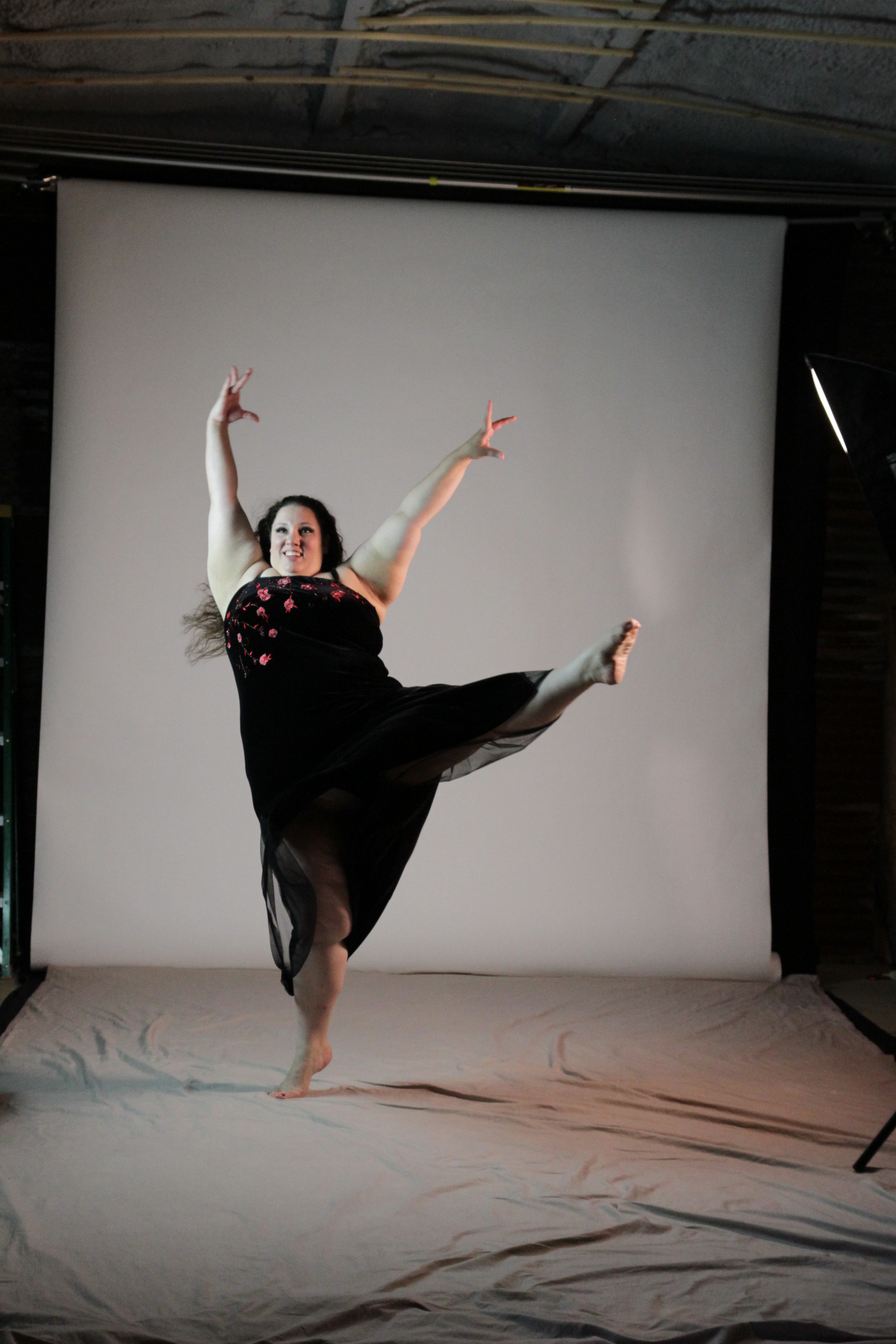
They are our bodies.

They are not a representation of greed or capitalism.  They are our bodies.

They are not pictures without heads to accompany yet another OMGDEATHFAT article.  They are our bodies.

They are not stand-ins for our health and well being.  They are our bodies.

They are not for you to judge. They are our bodies.

Do you get it?  They are our bodies. So back off.

Our bodies are far too valuable to be treated like a car whose worth is lowered because of some wear and tear.  They are far too astounding to be a metaphor or a political statement.  They are far too complicated to run on the same formula used to fuel a lawn mower. They are far too profound to be reduced to a ratio of weight and height.  And they are far too amazing to be judged by anyone.

Because they are our bodies..

IMG_9103

Like the blog?  Here’s more of my stuff:

Become a member: Keep this blog ad-free, support the activism work I do, and get deals from cool businesses Click here for details

The Book:  Fat:  The Owner’s Manual  The E-Book is Name Your Own Price! Click here for details

Dance Classes:  Buy the Dance Class DVDs or download individual classes – Every Body Dance Now! Click here for details

Fat Gym – You’re Doing It Wrong

facepalmProspect High School has created a new PE program wherein students are tested on their physical fitness twice a year.  Those who get a “high” score get to pick which activities and sports they want to do in gym class.  Those who get a “low score” are forced to into separate classes where they do mandatory cardio, like running laps, three times a week.

Some of the students have called the lower class “Fat Gym.’  The stigmatizing of fat kids in is horrible, and is just the tip of the iceberg of horrible on this one.

Unless their goal is to make sure that some kids develop a lasting hatred of exercise, I submit that this program is a terrible idea.  I am not against movement programs in schools.  I do think that they should be created with primary goals of fostering high self-esteem, body confidence, and creating something on the spectrum of not being driven completely away from the entire concept of movement, to developing a lifelong love of movement by the time they get out of school.  Where on that spectrum any kid lands will depend on the kid. 

Of course to do that we would have to accept some basic truths:

  • Not every kid is going to excel in gym class and that’s ok.
  • Not every kid is going to be interested in gym class and that’s ok.
  • It’s very possible that the kids who don’t score well on the fitness test fall into one or both of the above categories, and forcing them do cardio while their friends play games isn’t likely to move them out of either category (which isn’t necessarily a worthy goal to begin with.)
  • As history is written by the winners, so gym class is often taught.  Many gym teachers are people who were/are naturally athletic and they can fall prey to the dangers of confusing their experience to everyone’s experience.

We also have to avoid making the mistake of believing that if most of the fat kids are in lower gym, that means that their fat is to blame.  Remember that fat kids are given the message from a very early age that they are lazy and un-athletic.  They may not be asked to play by their peers, they may not be chosen for teams by adults, when they are on teams they may be automatically placed in the least athletic role without being given a chance to develop athleticism.  In this way prejudice can be made into reality.  Looking at a kid’s body size tells you nothing about their athletic ability or how much they like or dislike athletics, and all kids should be given every opportunity to find movement they enjoy while scrupulously avoiding shame or stigma around the concept of movement.

I’ve seen the argument that if you struggle with reading you are put in remedial reading, and so if you struggle at gym class you should be put into remedial gym class.  Here’s the issue with that:  Reading and movement are not equivalent.  Reading is a specific skill, movement/exercise is a concept.  To get the benefit of reading 6th grade books, you typically have to read at a 6th grade level.  To get the benefit of movement kids simply need to raise their heart rates for a suggested 60 minutes a day. How they do that or how “good” they are at it compared to others their age is completely immaterial.   Winning at dodgeball, hell, being any good at all at dodgeball, is not a requirement for kids to gain health benefits from movement.

My suggestion is this:  Create several options for kids that change every six weeks, with walking being a constant.  So this 6 weeks it might be basketball, dancing, dodgeball, and walking the track.  Next 6 weeks it might be lifting weights, yoga, soccer, and walking the track etc.  I’d love to see two sets of sports – one competitive and one that is just about participating and having fun (maybe we could redirect some of that $60 Billion that we give to the diet industry every year to pay for it?) 

Even if one argues that none of those changes are possible, we can do WAY better than punishing kids who don’t score well on a fitness test by making them run laps while their friends play games.  Any school that has created a PE program which kids are calling “Fat Gym” needs to go back to the drawing board, very quickly.

Like the blog?  Here’s more of my stuff:

Become a member: Keep this blog ad-free, support the activism work I do, and get deals from cool businesses Click here for details

The Book:  Fat:  The Owner’s Manual  The E-Book is Name Your Own Price! Click here for details

Dance Classes:  Buy the Dance Class DVDs or download individual classes – Every Body Dance Now! Click here for details
5 Ways to Improve Your Online Fat Hating

Keep CalmThose who have the audacity to suggest that fat people are human beings who deserve to be treated with basic human respect tend to be the recipients of  plenty o’ hatemail.  I don’t know about the rest of you, but I often feel like my haters aren’t reaching their full potential, so I thought I’d help out.  Here are 5 quick and basic tips to improve your online fat hating:

1.  Lose and Loose – learn the difference.  Lose is a verb that means to suffer the loss of.  Loose is an adjective that means the opposite of tight or constrained.  They are not interchangeable.   Here’s a sentence to help you out:  If one more person e-mails to tell me I need to loose weight, I’m going to seriously lose my temper.

2.  Speaking of spelling, cunt is spelled C-U-N-T.  The number of times I’ve been called a fat cnut is absolutely staggering. Apparently I’m not the only one, Clever Pie covered this issue in their fabulous song ‘Thank You Hater.”  I’m just saying that if you’re going to use your precious, limited time on earth to send me an e-mail calling me names, at least take the extra three seconds to spell check that shit.

For the record I don’t feel any need to apply my grammar/spelling criticism consistently. I make plenty of grammar and spelling errors myself. If someone is trying to engage in actual conversation then I don’t care at all about their grammar and spelling.  If someone is writing me for the purpose of spreading hate or attempting to make me hate myself, then I reserve the right to be offended that they didn’t at least take the time to use the spelling and grammar check.

3.  Calling me a landwhale.  I don’t mind this per se, I’ve even seen some pretty decent photo shop combinations with my body and a whale’s head, I am always impressed that someone took that kind of time on me.  The thing is, there are fat animals that live on land and I feel like they’re not getting their due.   There is just no need to make up animals when you could call me an elephant, hippo, or rhino.  Or, go the extra mile and do some research (I mean, do you want to be just an adequate hater or do you want to really excel?)  Did you know that the Formicium giganteum was an ant that was HUGE by ant standards – larger than a hummingbird. So you could call me Formicium giganteum or, since we know that spelling isn’t your strong suit, just call me Formi!

4.  If you are going to make an impassioned and/or indignant assertion that you are just doing this to help me (incidentally I think that I’ll know when you’re being helpful because I’ll actually feel helped, but that’s a blog for another day), if you want to try to make the claim that you are somehow doing this for my own good, you might want to take a pass on mocking me for doing the very things you say I need to do – find a way to keep yourself from photo shopping a whale’s head onto a picture of me exercising, somehow find the restraint not to post videos of me dancing and then mock them.  I’m only telling you this for your own good, since otherwise people are going to assume that you are a massive jackass.

5.  Finally, the way that you are able to e-mail me and say “Ragen, You are a fat landwhale cnut who needs to loose weight,” attaching that picture you spent so much time photo shopping, is because I put my e-mail, picture, and name on this blog.  Even knowing that I’m going to suffer abuse from bigots, I put my name on what I write.  So if you’re going to sign that e-mail swolebro or whatever anonymous thing you use, then you are a coward.  You can fuck right the hell off, at the very least until you locate your guts.

So there it is, a little dose of fat hater community service from danceswithfat.  Those of you with your own haters know that there are many more areas for hater improvement, but I thought we’d start with the basics today and leave the rest for another time.

Like the blog?  Here’s more of my stuff:

Become a member: Keep this blog ad-free, support the activism work I do, and get deals from cool businesses Click here for details

The Book:  Fat:  The Owner’s Manual  The E-Book is Name Your Own Price! Click here for details

Dance Classes:  Buy the Dance Class DVDs or download individual classes – Every Body Dance Now! Click here for details

Fatty Was Here and Still Is

First they ignore youWe’ve started watching a television show called “I’m Alive” about people who have survived wild animal  attacks.  It’s the kind of show where they mix interviews with re-enactments.  I became aware of something super cool – in the re-enactments they really work to use actors who look like the actual people including their weight.  So if someone in the actual situation was fat, so is the actor who plays them.  I’m seriously excited about this, since I rarely see people who look like me represented on television.  I even e-mailed Animal Planet to thank them (comments@animalplanet.ca).

While I’m excited and I celebrate the victory, it also brings the issue of fat representation into sharp relief for me. I read a quote today from Junot Diaz: “If you want to make a human being into a monster, deny them, at the cultural level, any reflection of themselves.” That is exactly what is happening to fat people right now.

Fat people rarely see ourselves represented in the media as anything other than a body without a head meant as a cautionary tale.  Fat people are as different as any group of people who share only one characteristic and yet we see almost no evidence of that in popular culture, and in many cases we see the exact opposite.

First and foremost is the War on Obesity.  I think the clearest way to see the issues with the war on obesity is to notice that a common and popular way for politicians to gain favor among voters is by promising to eradicate everyone who looks like us.  There are major problems with the way that the “cost” of fat people is calculated but the biggest problem is that the cost is calculated at all.  There is nothing ok about finding a group of people who can be identified by sight, calculating their supposed cost on society, and using those calculations to call for the eradication of everyone who shares that single physical characteristic.

Then there is the myth that showing fat people being successful at anything other than weight loss is “promoting obesity.”  This is among the most ridiculous things that I’ve ever heard.  As if someone will see me dancing and think “I wish I could dance like that.  I guess I’ll gain up to 300 pounds and then go from there.”  It’s insulting to my years of hard work and training, and it’s insulting to others’ intelligence. Like it’s the new V8 commercial:  millions of thin people, who see the same 386,170 negative messages a year about fat people, will see one of us being successful in some way, smack their foreheads and say “I coulda been fat!” The end result of this is that fat people are robbed of both representation and role models.

And so we are made monsters – blamed by shocking shoddy research for everything from workplace costs, to healthcare costs, to fuel usage; unwilling combatants in a war by which the government seeks our eradication, preyed upon by a $60 Billion industry that sells snake oil in the promise of weight loss that will cure our social stigma by working the wrong end of the problem.

I think it’s fantastic when someone outside the fat community reads my work and gets something out of it, sometimes I get e-mails from people who tell me that my blog has helped them identify their own fat bigotry and I’m always happy about that.  My focus, though, is that fat people knowing and remembering that we have the right to exist, that hating our bodies is not compulsory, that we are not required to be complicit in our own eradication, that we are the best witnesses to our experience and that we can demand to be treated with respect.

Sometimes I wish that I could put on some sort of fatty tent revival,  I’d call it Fat, Fat, Fat Fest and travel from city to city and set up a huge tent, gather all the fatties that I can and have speakers, poets, and all manner of fat performers who help fat people know they have options, to let them see people who look like them being happy and successful (with their heads attached), to see people who look like them who love and appreciate their bodies and reject our culture’s fat bigotry and claim and own their right to life, liberty and the pursuit of happiness.  You know, if I start now it could be my project for next summer….

Like the blog?  Here’s more of my stuff:

Become a member: Keep this blog ad-free, support the activism work I do, and get deals from cool businesses Click here for details

The Book:  Fat:  The Owner’s Manual  The E-Book is Name Your Own Price! Click here for details

Dance Classes:  Buy the Dance Class DVDs or download individual classes – Every Body Dance Now! Click here for details

The Lie of Just the Way It Is

Dream WorldI got an e-mail today about the blogher Fat Talk survey results.  I would first like to say that I wish they would say “negative body talk” instead of fat talk so as to avoid piling more stigma onto people who are fat.  But that’s another blog.  For now, I’m just going to refer to it as negative body talk.

I wish I were more surprised by the results.  Seventy-four percent of women, across all age groups, engage in negative body talk.  When asked why women engage in fat talk, answers included:

Because most women are not happy with their bodies.

In some ways, it’s bonding over a common interest. We all have things we don’t like about our bodies.

It’s the social norm. Sadly, it’s just part of life.

That reminded me of the blogger who is supposedly a health and beauty expert who, discussing her feelings toward her body said “And I’m female so I’m never happy!”

While a case could be made that negative body talk  is currently a part of life, let me suggest something:

It doesn’t have to be a part of life.  We do not have to talk badly about our bodies.  Ever.  We can simply stop.  Maybe we’re not in a place where we love our bodies yet, maybe we aren’t interested in the concept of loving our bodies.  But our bodies push air in and out of our lungs, blink our eyes, beat our hearts, and we do not have to talk badly about them as part of some horrible social norm.  Many of the functions of our body are autonomic, but the way we talk about them is not.

We are each absolutely allowed to speak poorly of our bodies if we choose. But when we buy into the belief that negative body talk is some sort of unavoidable part of life, we are buying into a lie that has been foisted upon us and perpetuated by those who profit from it, whether it’s monetarily, socially, or emotionally.   They are asking us to hate ourselves for their benefit.  We do not have to oblige.

Of course this is easier said than done.  We have been and continue to be absolutely indoctrinated with the idea that engaging in negative body talk is natural and normal, and that sucks and it’s not fair.  But we are each the only person who can decide how we talk about our bodies.  Women have everything that we need to end negative body talk- we can simply refuse to do it.  We can refuse to talk badly about our own bodies, and we can refuse to talk badly about other people’s bodies. Nobody is obligated to do this, but it is an option that is available to all of us.

Of course it may take some, perhaps a lot, of work to kick the negative body talk habit- especially if its become ingrained.  But I submit that it may be well worth the effort.   I understand that for some people positive body talk feels like bragging so I’m not even suggesting that – that’s a blog for another day.

All I’m suggesting is we simply stop talking badly about our bodies.  I’m suggesting that we can become conscious of our thoughts and words about our bodies and interrupt and redirect them. In the beginner version you just stop yourself and start thinking or talking about something else.  In the intermediate version you might replace them with a simple thank you to your body.  In the advanced version you state your intentions and then do either the beginner or intermediate version.

Here are sample scripts to get you started:

Beginner Version:

Ugh, I just feel so ugl….how about that local and/or college sporting team?

Tell me about it Pam, my stomach..Hey I meant to ask, did you see Michelle Chamuel on The Voice last night?

God I totally hate my… hey look, bundt cake! (Points for the knowing the movie reference)

Intermediate Version

Ugh, I just feel so ugl… hey body, thanks for breathing, you are kicking ass at breathing and I really appreciate it!

Tell me about it Pam, my stomach… Wait, have you ever thought about how much our bodies do for us?  I think they deserve some love.

God I totally hate my…actually, I really appreciate my butt because if I didn’t have a butt where my butt is supposed to be, that would be very inconvenient.  So thanks body, for having a butt where my butt’s supposed to be, rock on.

Advanced Version

Ugh, I just feel so ugl… No, I’m not doing this anymore.  How about that local and/or college sporting team?

Tell me about it Pam, my stomach…actually, I’m going to interrupt myself because I’ve decided that I don’t want to talk badly about my body anymore – it deserves some love.

God I totally hate my…fuck this body hating bullshit, rock on body.

Seriously, you could make the decision, right now – right this second – that you are done with negative body talk. And then you can make it happen.

Like the blog?  Here’s more of my stuff:

Become a member: Keep this blog ad-free, support the activism work I do, and get deals from cool businesses Click here for details

The Book:  Fat:  The Owner’s Manual  The E-Book is Name Your Own Price! Click here for details

Dance Classes:  Buy the Dance Class DVDs or download individual classes – Every Body Dance Now! Click here for details