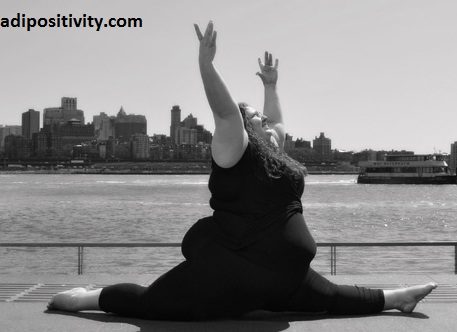

A reader yesterday asked a question that comes up a lot for me. She asked if, like the very small percentage of people who are able maintain weight loss, I might be an anomaly… that most obese people are not capable of my athleticism.
It’s possible that my athleticism is the result of my being a physical anomaly, but I seriously doubt it. First of all, while the reader asked me the question respectfully, often this is a way to solve cognitive dissonance while avoiding questioning one’s personal stereotypes. People see a fat person being athletic and instead of questioning their stereotypes about fat people and athleticism, they chalk it up to the athletic fatty being an “anomaly” and hold onto their preconceived notions and whatever it is that those stereotypes buy for them.
The comparison to weight loss doesn’t hold. Current intentional weight loss methods have been thoroughly tested for decades and they have a very long track record of failure. Athleticism in fat people have rarely been tested at all but in the existing research activity leads to improved health although not to weight loss. Unfortunately we spend so much time trying to figure out how to make fat people thinner that we neglect to look at what would make fat people healthier.
Let’s examine what our culture does:
- tell fat people several times a day, every day, that they can’t be athletic
- Make sure that they never see anyone who looks like them who is athletic
- Act super surprised that fat people aren’t athletic
- Point to the lack of fat athletes as evidence of the unlikelhood
That is messed up.
So if I am an anomaly, I don’t think that it’s my physical characteristics. I think it’s my ability to ignore the hundreds of thousands of negative messages that I get from society every day and just be an athlete anyway. And let’s not pretend that I’m the only one – there are tons of fat athletes. Unfortunately you don’t see us that often right now because every time someone puts us in the media they have to deal with the truly ridiculous accusation that they are “promoting obesity”.
I hear a lot that bodies just aren’t “meant” to carry [insert some random amount of weight], or that it’s just too much for the joints of fat people. I think that the human body is an amazingly adaptable thing. Look at professional athletes. There are joint issues with very tall bodies but we aren’t telling the NBA to shut it down. Thin people have join issues and there are protocols that treat them that do not involve weight loss. Those protocols involve looking at muscle tightness and imbalance and movement patterns among other things. I’ve had joint pain at various times and various weights and it has always been solved by fixing the mechanical issues that exist around the joint and they have never been solved through weight loss.
To be clear, if you are looking for better health, then based on the research about 30 minutes about 5 days a week ought to do it – walking, dancing in your living room, whatever. If you want to take that farther because you are interested in a sport or athletic achievement of some sort then you probably need to do a little planning . Physical fitness is based on three pillars – strength, stamina, and flexibility. Each sport needs these things in different combinations. Then you have the skills/techniques for whatever your particular sport is. No matter what you weigh, if you are new to a sport you want to make sure that you have the necessary baseline fitness which will help prevent injuries. My friends who work in emergency rooms talk about all the injuries that come in when the weather warms up and people in their thirties, forties, and fifties decide to get back into sports all at once. If you haven’t played soccer since you were seven, you probably don’t want to join a spirited pick up match tomorrow. But consider the fact that it’s not because of your weight, but because of your baseline fitness. When I give classes to the teachers at dance studios, often they will make assumptions about the abilities of their fat students. My rule is that you have to examine the problem and exhaust strength, stamina, flexibility and technique before they even THINK of blaming an issue on weight.
Look, nobody has a moral, social, or personal obligation to exercise. You don’t have to do it if you don’t want to, I’m not going to judge you and nobody else has the right to. But I am damn tired of so many things being blamed on body size without proof. And I think it’s unconscionable that fat people are warned away from something that actually is shown to make us healthier, while being inundated with the message that we MUST do something that is shown to lead to worse health. But let’s not pretend that fathletes are unicorns. We do exist and there are a bunch of us and there’s no reason to believe that you can’t be one too if you want.
This blog is supported by its readers rather than corporate ads. If you feel that you get value out of the blog, can afford it, and want to support my work and activism, please consider a paid subscription or a one-time contribution. The regular e-mail subscription (available at the top right hand side of this page) is still completely free. Thanks for reading! ~Ragen

 Dances With Fat
Your blog is simply inspiring.
I work in the theatre as a designer/builder/costume maker and every time start work on a show, the techies (and directors for that matter) take one look at me and assume that I’m kidding them when I say that yes I can build the set and no, I don’t necessarily need help with that. Then, without fail, I’ll get comments like ” wow, I can’t believe you managed that by yourself” when I’m through. I don’t think they’d even blink if I was thin (or male – but thats a different story altogether).
I don’t feel a magical horn on my forehead or a splarky swooshy tail. I just feel like a normal person who has found a form of movement that freakin’ kicks ass.
Thanks, Ragen, for your thoughtful and respectful reply to the reader’s question.
but wouldn’t it be cool to have a splarkly swooshy tail, just sometimes?
Oh my goodness, this was a pleasure to read. My boyfriend is also a theatre techie, can lift serious loads and work very long days and do copious push ups, and is also quite fat. It is remarkable to me that people think fatties are lacking in the ability to be athletic, but maybe that’s just because I’m faced with daily evidence to the contrary.
It could actually be the other way round – that athletic bodies are more prone to obesity. There was some research that came out recently that suggests that metabolic efficiency gives you both an athletic advantage and a predisposition towards obesity (which makes sense – obesity can be a sign of a very efficient metabolism that, if we were still living in the wild, would confer a huge survival advantage).
http://www.drsharma.ca/are-athletes-more-prone-to-obesity.html
Just a side note here in that I find the fat unicorn premise a little funny, since I am involved in the “furry” community, and the character I choose to represent myself within the community IS a fat unicorn. A fat unicorn cow. 😀
I would say that all athletes are unicorns, particularly as we get older. I don’t know how old you are, but I am 44 and not too many of my friends are athletes. Most of them get some exercise. I get some exercise. I go to the gym a couple of days a week and do this or that in between. About the same as most of my friends (more than some, less than others). I am certainly not an athlete, but I do more or less what I am supposed to.
You are unusual Ragen, but not because you are fat. I think it’s OK to acknowledge that. In fact I think it’s important, because if I were to compare myself to you (in the athletic department) I would be very disappointed. Although it is theoretically possible that I could reach your level of athleticism, it is highly unlikely I will. I am not the least bit motivated to. I’m not an athlete.
For the vast majority of us heath at every size is a challenge (whatever size we are). I think we need to recognize that and not be afraid to say it out loud. Good health, particularly as we age, and living in this culture, is a challenge for nearly everyone.
We aren’t special because we are fat. We may be special, but it’s incidental to being fat. So maybe you are a unicorn, or more accurately a competitive dancer. Most of us aren’t. As fat people I don’t think we should be hesitant to embrace our unicorn-ness. Just make it clear that it’s irrelevant to our fatness.
Rebecca Weinstein
PeopleOfSize.com
Thank you, you beat me to it. Truly gifted dancers are unicorns, no matter what their size.
No, Regan,you are not a unicorn, you are an *angel* for being such a shining, supportive example of fitness, while constantly having to defend against fat stereotypes. Almost everyone living a modern sedentary lifestyle needs encouragement to move, build strength, stamina and flexibility (myself included!) simply because it improves health and well-being. thanks for the encouragement!
Thanks Elizabeth! I’m glad that I can support you. I think it’s a shame that society spends so much time beating people down and then asks why we don’t take better care of ourselves.
~Ragen
The thing that always baffled me about the “no fat athletes” thing… american football. I’m pretty indifferent to the sport, but a lot of those guys look pretty massive. And I know for a fact that at my high school half the team weighed as much or more than I did without being much (if at all) taller. And they never got lectures much less dragged out of class for an “intervention” in front of almost everyone in my grade.
Normally if you mention them though, people are almost certain to come back with “most fat people aren’t as athletic as football players”… which seems silly to me since most thin people aren’t either!
I have always kind of thought that athleticism in fat people depends on how strong their muscles and joints can carry and move their own weight. Take someone your same height and weight for example. If they are not an athlete, their muscles are going to be weaker so it would make sense that they are going to struggle to dance or become out of breath quickly. The average person who is not an athlete is going to carry around something like 200 lbs of weight a lot easier than hundreds more. Also, I have always been under the impression that so much body weight can put added pressure and strain on the heart and lungs, although I don’t know how accurate that is.
I think the key here is building up gradually and starting at an appropriate level. Muscles and even bones are not static, they can grow stronger with appropriate stress on them. Even your heart and lungs will get more fit. If an out of shape fat person (any person really) tries a workout that is too hard, moving their body weight can be dangerous. But if you start out walking or doing a gentle yoga/dance/aerobics class, there’s no reason why a fat person won’t be able to work up to something very hard, as their muscles get stronger.
My personal opinion is that starting out an exercise regime when you are heavy and unfit is significantly more difficult than doing the same at a lighter weight. I can’t provide any statistics on it, but from my own experience when I’ve done long distance running, people who are lighter can usually jump right into it easier than heavier individuals.
That’s of course not to say one can’t work through this, but in this discussion of fat athleticism I think it’s important to note that although a fat person can easily be athletic, doesn’t mean that it’s easy to become that way if one hasn’t been already, so one doesn’t get discouraged and quit when it winds up being difficult.
the heart and lungs are muscles and the body adapts…trust me it keeps up. the heart just learns to beat harder and better, gaining more muscle like any other muscle. look at the people that live at super high altitudes, the the chilean natives….their heart is 3x bigger than the average person’s because it has to beat that much hard to get the thin oxygen in the air around the body.
Ragen, I feel weird saying I’m a fat “athlete”, but I can say I’m a very strong, fit, fat person. I began doing yoga a few years ago and was hooked, and have practiced 4-7 times a week since, in the most difficult classes. As I’m sure you’ve realized, what happens when you do a million lunges, plank-low planks, downward dogs, and warriors with a fat body? The same thing that happens to a weight lifter lifting a lot of weight, you get really really strong. I think you’ve mentioned it in other posts, but some people may think that a fat person’s joints are likely to give out or have problems during exercise, but what if that person’s muscles get incredibly strong to compensate for the extra weight instead? I think everyone should begin at their own level, whether that’s a walk a few times a week, or something more, but if they find something they love they may be surprised at how fit they will be in a few months/years time!
I’ve been Jazzercising for over 30 years. A long time ago I figured out that it wouldn’t make me lose weight, but it has made me strong.
About 10 years ago, Jazzercise did away with their weight requirement for instructors. If you could do the routines at high impact, you could be an instructor. Which I thought at the time was pretty cool.
In recent times, I see more and more fat women coming to Jazzercise. So things are changing out there in the world.
It’s my understanding that Jazzercise only did away with this requirement after being sued by Jennifer Portnick: http://articles.sfgate.com/2002-05-07/news/17546775_1_jazzercise-jennifer-portnick-aerobics
God bless her!
Something I’ve been meaning to ask for a while – has the 95% statistic that’s used in every post been proven by numerous studies or is it just one? I’m hesitant to base an entire argument on one single study is all.
Hi Jamie,
It was first shown in a 1959 and has been repeated in virtually every study since. I blogged about it here: https://danceswithfat.wordpress.com/2011/06/28/do-95-of-dieters-really-fail/
Thanks!
~Ragen
Several months ago when I saw the doctor that diagnosed me as diabetic, I had a very weird, insulting exchange with her. I explained my exercise habits, that I’ve been working out with a trainer for several years and that even though I’d left my trainer, I was still in the gym 3-5 times a week doing cardio and weights. Not even 10 minutes later she told me, “I don’t want you getting your heart rate above 125. Your heart might explode!”
I didn’t think about it at the time; I was still stunned by the diabetes diagnosis. But every time I think about it now, I get pissed off. She ignored everything I’d told her about my exercise habits because I was fat. She ASSUMED that my heart was weak because I was fat.
Fail, doctor. FAIL.
Fire your doctor. That’s bullsh!t. My bmi falls in the obese category, my bf who has a healthy bmi, has high cholestrol, high bp and is a prediabetetic well on his way unfortunately to being a diabetic. None of my medical professionals are EVER allowed to lecture me on my weight( I’m 10 year post weight loss surgery barely survivor) with abnormally low cholestrol, low bp, and reactive hypoglycemia,moderate to severe anemia among other health conditions even with complications, and weight gain post wls.
. Prior to surgery I just abnormal low cholestrol, normal bp, normal blood sugars. As Ragen has stated repeatedly as well as other FA’s the causation and correlation that medical professionals blame obesity on has no real medical foundation, for several reasons, thin people get diabetes, have high bp and high cholestrol so when they say how much the obesity crisis is costing america, they aren’t seperating by weight who has what. Furthermore there has never been any kind of conclusive study on how much it costs people in their health and in healthcare dollars of living in a fat phobic society. That’s one of another reason I adore Ragen so much because as a size acceptance advocate, it’s not ok in my book either to bash anyone, either people of weight (I don’t have a problem saying fat or using that to describe myself) but it doesn’t help someone who’s dying of anorexia because the stigma of being fat is so ingrained in our heads in society that the emotional, physical and financial toll of what people due to themselves not to be fat and has made them in poor health, has never been signicantly studied. I’m a perfect example of that, I had weight loss surgery because I hated myself for being fat because I’d been told I was fat and ugly all my life (literally from the 1st day of Kindergarten til 6 months after my gastric bypass) on a daily basis.
The few people who recognize me because I’m wordy and while I don’t respond a lot, when I do, I am very wordy and I do talk about how costly emotionally,financially and physically my gastric bypass (I nearly died and I’m disabled now) has been, and I’m sure I’m not the only person who’s life has been almost ruined if not ended because of the constant bombardment we are subjected to, by everyone, especially the medical community who should know by now that one’s weight has no factor on their health, and that a fat athlete is not an anomaly or an oxymoron. In my case, I was eating disordered, but I was very active prior to my weight loss surgery. People especially doctors have to stop using the aesthetic prejudice they have against people of weight as a license to shame us, there is too many people who have what’s considered a healthy bmi who are diabetics, on high blood pressure medication and/or cholestrol medications. I’m sure Dr Oz (who I loathe )has operated on zillion thin people as well.
I hope you find a physician who treats you with the respect you deserve… And I apologize for being so wordy your story I hear so many times and I heard it so many times, being fat in itself didn’t kill me trying to get thin has as well as caused intellectual disabilities from years of nutrtional deficiencies(makes me the world’s worst writer,however if I ever get better, I plan on blogging my story on my own blog instead of Ragen’s, lol)… peace, lisa
“I don’t want you getting your heart rate above 125. Your heart might explode!”
I don’t know if I’m misreading, but it sounds like she did hear what you said about exercise and was doing the usual fat-22 thing, she wanted to tell you off for not exercising and when she found out you do, she wish to be discouraging by trying to frighten you.
Ashley, exercise makes the body stronger, increases stamina & endurance, regardless of size. And if ‘carrying weight’ is so bad for us, why are we constantly encouraged to lift weights as part of our exercise program? The heart & lungs grow stronger as you work them harder, just as your other muscles do. The heavier you are, the harder ALL your muscles work to move you. I have read several places that heavier people work harder in less time than smaller people.
I am not an athlete because I cannot be. Yes, genuinely athletic people ARE unicorns, not because of body size, but because real athletic ability is not given to everyone. Many of us can exercise & everyone has to train, build strength & improve his/her skills, but many of us cannot do athletic things regardless of how hard we work, & movement can often come more easily to the athletically gifted. Even among athletes, some are stronger, faster, more flexible or whatever than others. They have different talents & abilities, as we all do.
I am 62, I have arthritis now, pain in my joints, especially hands & arms, but some in my knees & now, in the cold, in my hips. I was also born with cerebral palsy & I have real serious issues with balance, agility, coordination, poor reflexes & hand/eye coordination & impaired motor skills. I can train from now until Hell freezes over, Ragen, & I will not be able to move my body the way you do, any more than I could dunk a basketball the way Michael Jordan used to. My lack of athletic ability has not one damn thing to do with the size of my body, though, & I have known many fat people who have managed to ‘carry’ their weight successfully for 90 years or so.
I am active, I do move. I did my best to move around, play, ride my trike (have never been able to balance a bicycle), etc. when I was small. I played at school as much as I was ‘allowed’ by other children. And, since I was 9 years old, I have been a walker, walking to school, to run errands, for exercise. I have never had a license or owned a car & my legs get me through the world…slowly, awkwardly, limping a lot, falling easily…but they get me there. I have had issues with overexercise for much of my life, going through 4 separate periods of 3-4 years each when I increased my usual exercise to 4 hours daily, pushing my body, which valiantly did its best, to be what it was not & could not be. I have worn out an exercise bike after putting 4000 miles on, another exercise machine called a cardioglide, also ridden into the ground for 4000 miles, I have spent 7 years doing at least 1500 stomach crunches daily because all my life I was told I was not supposed to have a round belly. So, no, I am not an athlete & I cannot be, but I am active & as fit as my body is able to be, & I am my own kind of fat, active unicorn because I am a unique human being, as we all are.
And the claim of no fat athletes is utterly ridiculous & a case of being in denial, refusing to acknowledge what one’s sees, & adjusting reality to fit one’s own preconceived ideas. There are fat athletes all around, especially in football & sumo wrestling, but in other sports as well.
Okay, I admit…I kind of wish I was a fat unicorn, because that would be super-cool. 🙂 I also want to poop rainbows. And fly.
More to the point: I’m a fat person who does half-marathon distances (though I’m planning to drop back to 10K’s next year as part of a goal to get faster). I average 8 miles a week as part of my training. Admittedly, I see very few women my size out doing half-marathons…but you know what? I totally get why:
1) Finding running clothes in my size is a PITA, since I’m both short and fat. I’ve given up on running pants, as they’re all either way too long or way too small. I use capri’s and leg warmers instead. I’m damn lucky to be able to wear a normal-ish sports bra size. If I couldn’t, that’d be tough too. (Moving comfort, often heralded for their “generous size” sports bras, doesn’t do my band size, though they do my cup size.)
2) While sometimes I find it appealing to see the incredulous looks when I pick up my bib or mention it to people, it’s also a bit annoying after awhile.
3) The dearth of positive and helpful writing on the topic of being a fat runner is astounding. A great example is that I spent quite a bit of time trying to find out if a larger runner should drink more water (overhydration and underhydration are both big problems for endurance athletes). After some hunting, I found one article that explained the general science of hydration that I applied to my own situation. I found NO articles that specifically addressed my question, even though this is something where not doing it correctly is a life or death issue. (And how much you wanna bet that fat folks like me who end up over or under hydrated have it blamed on their fat most of the time rather than on the lack of information designed for them??) For what it’s worth, I figured out that yes, I should be drinking more water than most runners, but it’s based more on how much I sweat (medium amount) and how long (time, not distance…which for me is longer than most) I spend between aid stations.
I could go on. But the point being that you’re right on target in saying that our society discourages fat people from being athletes. I’d go farther by saying our society’s anti-fat bias makes it less safe for fat people to be athletes and thus distorts what data exists on fat people being athletes.
I’m damn lucky to be able to wear a normal-ish sports bra size. If I couldn’t, that’d be tough too.
Actually, I’m working on distance running, and I’m finding this — lack of an adequately supportive and correctly sized sports bra — to be the single most significant limiting factor. With all other areas of my body, I’m depending on my muscles (and connective tissue and circulatory system and all that jazz) to support me– and those are responding quite well to increased training. Not that they’re never uncomfortable, but they strengthen and adapt.
With my breasts, I’m depending on the bra for support. It’s not cool when someone’s idea of “high impact” apparently stops somewhere around the 5-7k mark, at least for my body, so that’s when the compounding pain hits the “can’t deal” mark. This is probably related to the fact that my cup size falls somewhere between Good God and Holy Hell, so bras that advertise going “up to DD!” (or even DDD) fail to impress me.
If I were feeling increasing pain in multiple parts of my body, I’d certainly be looking more closely at my training patterns, stride, need for additional strength training, or even my total weight (after the above factors had been ruled out). But when the rest of my body feels fine, and it’s just my breasts — parts of my body that do not, by the way, actually participate in the moving-me-forward process that is running — that continue to hurt, then I have to look at inadequately supportive clothing as the principle culprit here.
http://decentexposures.com/ Best bras ever. Made to fit you, any size. Incredibly comfortable, last forever, reasonably priced. Been wearing them for like 15 years and would never wear anything else.
I’ve tried them, and they’re good for every day wear. However, none of the styles I tried (and there is no “high impact” style listed) held up for distance running.
Have you tried Enell bras? I’ve got a similar cup size, and the damn thing was expensive, hot, and really really good at keeping my breasts in place. I used it mainly for long distance (100+/day) biking, so I had it on for hour on end.
Yes, but I’d have to custom order to get one that works for me. From what I’ve tried on, there’s about 2-3 sizes difference between what fits in the ribcage and what fits in the bust. At this point, I can’t afford the cost of a custom Enell bra (especially not allowing for the possibility of additional needed alterations).
Thanks for bringing up the point about liquid consumption. I need to watch carefully to see that I get enough because I sweat very heavily. And because of my disability, I work very hard to do what the average able-bodied person usually considers ‘normal’ activity. I was told that, when I walk 30 minutes (I do at least 40-45 minutes most days, occasionally well over an hour), I am actually working as hard & getting as much exercise as the average able-bodied person who walks for 60-90 minutes. My shirt is usually soaked, especially this time of year when I have to dress warmly because it is COLD (4 degrees this morning), & my hair generally looks as if I have just gotten out of the shower, especially, again, after wearing a winter hat, when I come in from walking.
I have been quite thin for a couple of brief periods in my youth, &, believe me, increasing exercise, working out hard, was no easier then than it is at a heavier weight. I did work out hard & long then, which of course resulted in greater weight GAIN once I finally listened to my body telling me loudly that that much exercise was beyond what it could really handle.
To me every athlete is a unicorn.
First because the German word ‘Athlet’ has a slightly different meaning than the English athlete and second because I know very few people who do any kind of sport.
Defensive tackles and offensive linemen in American Football are often over 320 lbs. I am 334 myself and am a pretty good rebounder in pick up games of basketball, though I am no athlete…..that is more probably a result of me not spending enough time on the court than my spending too much time at the dinner table.
But I am mostly semi-sedentary these days like most Americans, and I don’t think I should get “shamed” for it….when lots of equally couch potato like thin people are given a free pass.
I improve my mind (I am a literature B.A working on my masters and I read 20 or more works of the canon of great literature a year)…I expect that is just as long as a marathon runner spends on the open road.
Thin people have a right to have different priorities than I do….but I don’t think my efforts are “less than” just because they aren’t immediately visible.
Two words: Sumo wrestlers.
Anybody want a few more? Okay: caber tossers, discus and hammer throwers (don’t believe me? watch the next summer olympics!), quite a few weight lifters… and the list goes on. And Babe Ruth? Was not a skinny guy.
A friend of mine has been complaining to me for a couple years now that she has pain in her knee when horseback riding, something she does a lot of. She believed her doctor who told her she had to lose weight, because clearly a knee couldn’t take that much weight. She kept trying to lose weight, and never got very far with that. Then she saw a new doctor. Funny, that doctor did an actual examination of the joint, decided she needed more information, and ordered an MRI to see what was going on in the joint.
Turns out my friend has several old injuries in the joint that she keeps re-injuring, in large part from the angle she sits at when riding her horse.
No amount of weight loss was ever going to fix strained ligaments, but once the knee is actually better, she can ride as well and as comfortably as she ever did. And she’ll be as athletic as ever she was.
I was a hammer thrower! 😀
And I bet you rocked at it!
Throwing stuff can be all kinds of fun, can’t it? Though I must admit the thing I’m best at throwing is my temper.
Thanks! I actually was quite good, not to toot my own horn. All-American. Always fun telling doctors about it. Though it doesn’t seem to matter to them. Most of my weight is muscle weight and despite the fact that I don’t do any lifting anymore (back injuries), my muscles have not atrophied one bit and they’re just as big as when I was in my peak physical condition. But doctors think that the weight out to magically come off after 7 years of hammer throwing and power lifting.
Athleticism in fat people have rarely been tested at all but in the existing research activity leads to improved health although not to weight loss.
That’s an important point. Weight loss is pushed on fat people (and thin) people on a massive scale. I’ve seen estimates that as much as one fourth of all men in the US and half of all women are on a diet on any given day. We’re constantly bombarded with thousands of messages telling us to go on a diet. If there are people who are capable of long-term weight loss through dieting, but have just never gotten around to trying, they’re an incredibly tiny group. However, there are a lot of fat people discouraged from exercising (for a broad range of reasons, including “If you really want to get the numbers on the scale down, don’t do anything that builds muscle” dieting advice, and being publicly harassed for riding a bicycle where people can see). If half of all women were exercising for half an hour or more on any given day, I bet more than five percent of them would see significant long term benefits to health and athleticism.
(Although I don’t think that it should turn into the sort of ugly social pressure thing that dieting is. People should be free to make their own choice, and if someone doesn’t want to test their athletic ability, or even reduce certain specific types of health risks, they have that right as an autonomous human being, and it isn’t a license to treat them badly.)
Granted, there definitely is a range of natural aptitude and inherent ability, and it wouldn’t surprise me if Ragen was on the high end. That’s true for people of all sizes, not just fat people. A movement insisting that being as athletic as Ragen was possible for absolutely everyone, and treating anyone who failed to do so as a “just not trying hard enough” moral failure would cause damage similar to diet culture. Publicly recognizing that the range of athletic potential among fat people includes people of exceptional ability such as Ragen, and quite a lot of people who have the potential to be serious athletes (including a fair number who are serious athletes), however, is awesome.
I love it! Especially the points about joint health. I’m sick of seeing ‘weight loss’ as a recommendation for treating Osteoarthritis. As if that’s the best thing you can do for joints – forget about rehab, mobility work, muscle imbalances….
I see that all the time – and it amuses/annoys me. My osteoarthritis is in my fingers. Would someone like to explain how my weight affects them? (Heredity does – it’s a known hereditary syndrome – and definitely runs in my family. In people of all builds…)
I also may be developing arthritis in my knee. What would help that the most is not having fallen down a flight of stairs 20 years ago… but it’s a bit late for that. So I’m working on strengthening the muscles supporting it. They used to be *very* strong, when I taught small children and did squats all day to get to their level, but I let that slide when I changed jobs. Now, I mostly walk a lot (I still work on my feet) but am starting to use an exercise bike for the knee.
Athletes are “unicorns” no matter what their body size; that’s why it’s so hard to become a professional athlete. So are dancers, regardless of whether they’re fat or thin – the ability to dance beautifully is a rare and precious gift indeed. I think the question here is not whether or not Ragen as a fathlete is an anomaly; the question is “How do we get people of size more access to movement we enjoy?” Maybe 1% of us have the kind of innate talent that Ragen has, but the other 99% should also be able to attend classes in dance, yoga, martial arts, aerobics, or Pilates without shame, whether we’re good at it or not. All of us should be able to work out in a gym without personal trainers or other gymgoers getting all Jillian on us. Everyone should have sidewalks to walk or ride on, places to swim, and playgrounds to jump and climb in no matter what their economic status. Schoolkids should have PE classes that are true physical education, not open season for bullying. Lastly, we need to stop viewing movement as punishment and start seeing it as a pleasure. Fix all these things, and I’ll bet that being fit and fat would no longer be an oddity.
I have no idea what makes an anomaly but I do know, I can look up the reference, I still have the book somewhere, but they did do a study with prisoners who had volunteered. They were in a highly controlled environment and put them all on a 1000 calorie a day diet. Some lost weight, some gained weight and some stayed the same. I was able to manage my weight many years ago before I was a parent an all my parts worked. I exercised daily for about 45 minutes to and hour and then on weekends, I played tennis in the mornings and hiked for several hours in the afternoon in the winter and swam miles in the summer. After becoming a parent this became more difficult and it was rather extreme in the first place. I had a doctor recently tell me my back problems (severe arthritic degeneration) were because I am fat. Never mind that I have had back problems since I was about 12 and not especially fat. Well, I recently learned that I have a hereditary condition that made all my joints hypermoblie and prone to substantial, I have had multiple surgeries secondary to these joints all being injured by all of my activities, except perhaps swimming. I am now fat and disabled. Oh I exercise daily and am in relatively good health minus my damaged joints. For some of us perhaps we could be average weight or slightly above exercising an hour a day on weekdays and 8 hours a day on weekends. If this is how you want your life to be have fun. I have other priorities. FWIW most people consider my diet pretty extreme but I do have health problems that have eliminated my consumption of gluten and most sugars and I do not like to eat dead things. Really a lot of people who know me don’t know how I stay as large as I am. I no longer care or devote energy to do. I have better things to do. One of my doctors said I would make good breeding cattle because you don’t need to feed me much to fill me out. I just this we all come in naturally different shapes and sizes like different heights and different breeds of dogs come in all shapes and sizes. We accept our dogs , I hope someday we can accept people.
I’ve been overweight since puberty, skinny as a rail before then. I ran track in high school, never worked a desk job, and enjoyed playing tennis, racketball, and lifting weights. For the past seven years, I’ve learned foil fencing and now teach it. I do yoga occasionally. I have low cholesterol, normal BP, normal bone density, and can walk for miles and miles without getting exhausted.
But I’m fat.
Oh well!
I just wished I could find clothes that fit better, including bras.
Hooray! I often am complimented by my doctors and physical therapists on my exercise routine – which is good, yes, but if I were 50 pounds heavier I suspect the compliments would stop. They often say things like, “You’re *looks me up and down* fit, so this shouldn’t be happening to you.” But it is, and they’re judging that fitness solely on the fact that I’m thin. When I was 14 and painfully thin, it wasn’t because I was fit – it was because I wasn’t eating. Thin does not equal healthy, or fit! Fat does not equal unhealthy!
I so agree with this post! I’m an extermely athlectic person, and have been at sizes that are far above ‘normal athletic’. Everyone is alway shocked about how I could possibly win a race when everyone else is thinner than me. I do not consider myself a special case. I have just done athletics my entire life, and so, am athletic*. I think that chunky kids are given many, many signals that they will just never be successful athletes – and like all kids, decide they don’t want to do something they feel they are going to fail at. At some point, quite early in a lot of sports, the child has to take it seriously and commit to it above other things. As well, its likely going to take a lot of time, energy, money, and support from parents and community. Fat kids aren’t given that the way skinny kids are. Fat kids are seen as having less potential in athletics, and therefore less worth the investment (from parents, coaches) it takes to make 7-8 year old kids into a competitive 11-13 year old soccer player, swimmer, skier, tennis etc.
* I’m not saying people who were never athletic as kids can’t be excellent athletes as adults. But it certainly helps. Some types of fitness (not to mention skill) take years and years of intense practice to build up.
Hi again! Thank you for going into so much detail on my question! It really was kinda the last pillar holding up a lifetime of self-hate and internalized messages about how fat is the opposite of fit. 🙂 The point I like the most is that studies haven’t been done on fat athletes. No one seems to care about fitness unless it goes hand in hand with slimness. Well, enough of that. Football players are a good place to start but I am going to stock my brain up with examples of healthy fitness and body acceptance, people like yourself 🙂 Happy Holidays!
Allison
I just love seeing the words “fat” and “athlete” together. I’m a professional dancer, and am seeing a sports chiropractor for a back injury. In our first session, he started a sentence with “well, as an athlete, you…” and I almost burst into tears in his office.