Cool Story Bro

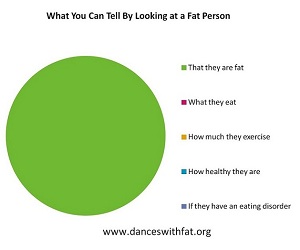
Small - Things you can tell by looking at a fat personOne of the ways that fat people are oppressed is that people feel free to substitute their stereotypes and stories for our actual experiences.

Studies claim that they have found a way to prevent/cure obesity when what they actually studied were calories consumed, or protein consumption, or consumption of fat etc.  That is not the same thing as body size.

Possibly the most egregious example I have seen of this is a list called “27 People Confess to the Fattest Thing They Ever Did”  (no power on Earth will make me link to it) Basically it’s story after story of people who ate a lot one time.   That not being fat, that’s eating a lot one time. Fat is a description of body size (and sometimes composition), not of behavior.  The practice of judging other people’s eating, then associating that eating with a body size, then justifying stigmatizing people of that body size based on that platform of judgment and stereotyping is, not to put too fine a point on it, bullshit.

I was once in a discussion with a therapist who specializes in working with people who have Binge Eating Disorder (not any of the cool people we know, don’t worry) during which she told me that “In my experience, everyone your size has Binge Eating Disorder.”  I replied “Doesn’t your experience including a sign on your door that basically says ‘Come Here if You have Binge Eating Disorder’?”  I asked her how many people my size she had spoken to about their eating outside of her office, and how exactly did she broach that topic and she admitted that there weren’t any.

I asked if she would think it was reasonable for an orthopedic surgeon specializing in knee problems to say that in their experience everyone who is 5’6 has knee problems because everyone that she sees who is 5’6 has knee problems. She admitted that she wouldn’t and then said “I just don’t see how someone can be your size without binge eating.”  I mentioned a number of things that can lead to people being fat beside Binge Eating Disorder (genetics, weight cycling -aka yo yo dieting, certain health conditions etc.) and asked that she please not substitute an eating disorder diagnosis for a lack of her understanding of how body diversity works, especially since it does a disservice to people who are suffering from BED but aren’t fat and have trouble being taken seriously, as well as the mistaken belief that ending Binge Eating Disorder will result in a thin body.

I spend a lot of time doing research.  Often I explain that Matheson et. al. did a study of 11,761 people and Wei et. al did a study of 25,714 people and that the Cooper Institute Research on fitness and weight is based on the Cooper Institute Longitudinal Study which is a database that has more than 250,000 records from nearly 100,000 people totaling more than 1,800,000 person-years of observation and that this research supports the idea that, knowing the health is multi-dimensional, not an obligation, barometer of worthiness, or entirely within our control, healthy habits are a far better way to support our bodies than weight loss is.

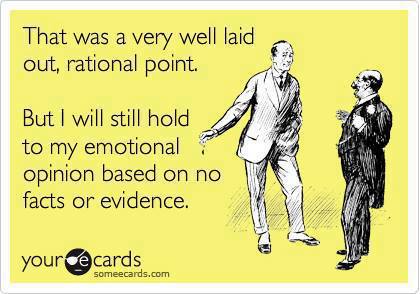
Then I have to wade through 12 comments a day that say “I think you’re wrong because my Aunt Gertrude lost weight and got healthier” Ok? Are you sure it’s the weight loss and not the behavior change that lead to better health?  Do you really think your aunt’s experience trumps a combined sample of more than 120,000 people?

Or this one “All the people I know who have type 2 diabetes or heart disease are fat.”  Is this a frequent topic of conversation among your friends?  Do you know the T2D and heart disease status of more than 120,000 people?

How about this –  instead of tell stories to justify size-based stigmatizing, stereotyping  oppression we could fight it instead.

It’s Weight Stigma Awareness Week, check out this call to action!

http://bedaonline.com/weight-stigma-awareness-week-2014/weight-stigma-awareness-week-2014-call-action/#.VCBbCStdV5k

Like this blog? Consider supporting my work by becoming a member! For ten bucks a month you can support size diversity activism, help keep the blog ad free, and get deals from size positive businesses as a thank you. I get paid for some of my speaking and writing (and do both on a sliding scale to keep it affordable), but a lot of the work I do (like answering hundreds of request for help and support every day) isn’t paid so member support makes it possible (THANK YOU to my members, I couldn’t do this without you and I really can’t tell you how much I appreciate your support!)   Click here for details

Book Me!  I give talks all across the country about self-esteem, body image, health and wellness for people of size and more, and I’d love to speak to your organization. (I’ll be in Northern New York and Central Pennsylvania in the next couple of months if you are in those areas and would like to add an event to those trips.) You can get more information on topics, previous engagements and reviews here or just e-mail me at ragen at danceswithfat dot org!

Here’s more cool stuff:

Buy my book:  Fat:  The Owner’s Manual  The E-Book is Name Your Own Price! Click here for details

Dance Classes:  Buy the Dance Class DVDs or download individual classes – Every Body Dance Now! Click here for details 

I’m training for an IRONMAN! You can follow my journey at www.IronFat.com

If you are uncomfortable with my offering things for sale on this site, you are invited to check out this post.


Prescribed To Fat People, Diagnosed In Thin People

ConcernOne of the things that always astounds me about the way that our society currently deals with weight and health leads to fat people being prescribed behaviors that would be diagnosed in thin people.

It’s no secret that The Biggest Loser is an abomination, even so Michelle Obama called the show’s contestants Role Models.” Really?  Role models? [tw:  potentially triggering eating disorder talk for the rest of this paragraph]  Consider for a moment if someone who wasn’t fat told their doctor that they were behaving like the contestants on TBL: -severely restricting calories, exercising 8 hours a day, eating large amounts of food that are “forbidden” on their current “diet” and then exercising all night to “make up for it”, and manipulating their weight for their weekly weigh in with dehydration.  I hope against hope that the doctor would not say “good for you, you’re a role model.”

Is it strange to anyone else that even with the big (and problematic in many ways) push toward locally grown whole foods, fat people are still encouraged, including by doctors, to go on Jenny Craig and/or Nutrisystem and microwave food that comes to them frozen in plastic baggies?  Or Medifast where you consume 5 reconstituted soy protein based “meals” a day? I’ve been to several farmer’s markets and never saw even one package of “parmesan puffs” made from reconstituted soy protein there. Again, I’m not arguing for any specific type of eating, I’m just trying to point out the ways that fat people and thin people are given very different messages.

I don’t believe that the same behavior is good for fat people but dangerous for thin people, I don’t think that we should diagnose and treat in some people what we recommend and prescribe to others.

Health is not an obligation or barometer of worthiness. It’s multidimensional and not entirely within our control. It’s not guaranteed under any circumstances. That said, it’s supremely annoying to me that that we have to fight to get decent information about health. But, just because so many other people aren’t using any common sense, and just because so many businesses put profit in front of health or truth doesn’t mean that we have to buy into it.

Don’t forget – it’s Weight Stigma Awareness Week! Check out today’s linkss:

Today’s Links:

http://bedaonline.com/WSAW2014/wsaw-2014-physical-therapy-movement-angela-meadows-msc/#.VCP9YytdXWE

http://bedaonline.com/WSAW2014/wsaw-2014-physical-therapy-movement-tammy-griffith-cpc-crc-cfpc/#.VCP9dCtdXWE

http://bedaonline.com/WSAW2014/wsaw-2014-physical-therapy-movement-rochelle-rice-ma/#.VCP9iStdXWE

http://bedaonline.com/WSAW2014/wsaw-2014-physical-therapy-movement-katie-thompson-ms-lpc-ncc/#.VCP9mCtdXWE

http://bedaonline.com/WSAW2014/wsaw-2014-physical-therapy-movement-jeanette-depatie/#.VCP9tytdXWE

Like this blog? Consider supporting my work by becoming a member! For ten bucks a month you can support size diversity activism, help keep the blog ad free, and get deals from size positive businesses as a thank you. I get paid for some of my speaking and writing (and do both on a sliding scale to keep it affordable), but a lot of the work I do (like answering hundreds of request for help and support every day) isn’t paid so member support makes it possible (THANK YOU to my members, I couldn’t do this without you and I really can’t tell you how much I appreciate your support!)   Click here for details

Book Me!  I give talks all across the country about self-esteem, body image, health and wellness for people of size and more, and I’d love to speak to your organization. (I’ll be in Northern New York and Central Pennsylvania in the next couple of months if you are in those areas and would like to add an event to those trips.) You can get more information on topics, previous engagements and reviews here or just e-mail me at ragen at danceswithfat dot org!

Here’s more cool stuff:

Buy my book:  Fat:  The Owner’s Manual  The E-Book is Name Your Own Price! Click here for details

Dance Classes:  Buy the Dance Class DVDs or download individual classes – Every Body Dance Now! Click here for details 

I’m training for an IRONMAN! You can follow my journey at www.IronFat.com

If you are uncomfortable with my offering things for sale on this site, you are invited to check out this post.

Body Respect – The Interview

Sorry the blog is a bit late today (I’ve been traveling and I’m a bit behind on everything!), but I think you’ll find it’s totally worth the wait.  I had the opportunity to interview Lindo Bacon and Lucy Aphramor about their new book Body Respect.  This is super exciting for me, because Dr. Bacon and Dr. Aphramor are at the forefront of the research on weight and health and if you read the blog regularly you know them because I often refer to their work. Without further ado, here’s the interview:
How did the book come about?

It started off destined for the classroom. Lindo was teaching a health class and didn’t feel comfortable using a conventional textbook, as all of them have damaging misinformation about weight and also fail miserably both in their recommendations for improving health habits and in drawing attention to inequality as a health hazard. As we worked on it together it morphed into a more generalized book that enables people to re-think health, and we made it more suitable for a wider audience.

What makes this book different than other health books?

Many readers of this blog are probably familiar with our previous writings and/or our reputations and know to expect a critical examination of weight science and sensitivity to social justice concerns. Those, of course, are hallmarks of this book.

And here’s another huge difference: we challenge the value of a focus on lifestyle change that ignores the context of people’s lives. Note that in saying this, we are not suggesting that taking good care of ourselves is misplaced – far from it. Instead, we show how the current lifestyle conversation makes it hard for people to sustain self-care for two reasons. One, it arises from a partial view of the science that ignores data on social determinants. It’s not a coincidence that less advantaged people have poorer health, and this can lead to confusion over health outcomes for both clients and practitioners and frustration when treatment is less effective than expected. And second, this partial reading means lifestyle advice is too often given in a way that inadvertently leads to victim blaming and self-blame. When we instead take people’s stories seriously, including their experiences of advantage and disadvantage, we can find new ways of understanding health outcomes and why people make the health choices they do. We can also better envision what’s required for change.

What we’ve done in Body Respect is draw on findings at the intersection of science and social theory to help people make sense of their health practices and see options for improving self-care. We also argue for politically aware relationships with health care practitioners that foster resilience and self-care, keeping health care practitioners relevant in an inequitable world.

What is the dream? If the book is as successful as you can imagine, how would it change the world?

If readership reaches a tipping point then there will be enough of us insisting on relationships of mutuality and respect, in and beyond healthcare, to destabilize the thinking and change the behaviours that shore up the status quo. Those who pick up the book looking to end the misery of dieting will get that, and more besides. People looking to factor rights, oppression and privilege into a health culture that inevitably has to start from where we are will find out how to do so. We would be incited to live by a politics of justice where our default response is more often one of compassion than it is judgment, where children grew up secure in their self-worth, and where the daily abuses of power that lead to stereotype, silencing and inequity were recognized for what they are and challenged.

What was it like working as a team? 

We’re both very passionate about this work. We’ve got a real connection and it’s great to have the opportunity to work on projects together and fun to see things taking shape as we pool our concerns and perspectives. When differences of opinion surface it of course leads to vulnerability, which can be painful at times, though we recognize that it’s an important part of the collaborative connection and one which keeps the writing process meaningful as well as generating still more views . Being in close contact is also invaluable for the support we can give each other with other areas, and has real a spin off in terms of resilience.

What’s next for the two of you?

We’re just finishing a training video to help eating disorders professionals integrate the concepts of Body Respect into their work, and we’re also working on two further book collaborations. One is a revised version of Lindo’s first book which is updated with new data, more explicitly integrates the social determinants of health, and is more of a step by step how-to manual. The second book is tentatively called Eat Well: For Yourself and for the World. This delves deeply into nutritional science with chapter headings much along the lines of a typical undergraduate dietetic text book. No prizes for guessing for some of the things that make it different from comparable mainstream books are a weight science chapter from a HAES perspective, plus attention to sustainability. We’re also concerned with how oppression directly affects individual metabolism and therefore contributes to avoidable discrepancies in health outcomes from conditions misleadingly referred to as “lifestyle” diseases. And again, it also moves more consciously to use a relational and embodied framework to talk about nutrients and bodies and how we make food choices rather than the reductionist and prescriptive framework commonly adopted in nutrition and dietetic text books.

How can people acquire the book?

From your local independent bookseller … from BenBella books http://shop.benbellabooks.com/Body-Respect.html … Amazon and all the usual places. Why not ask your local or academic library to stock a copy?

My great thanks to Dr. Bacon and Dr. Aphramor for the amazing work that they do!

Like this blog? Consider supporting my work by becoming a member! For ten bucks a month you can support size diversity activism, help keep the blog ad free, and get deals from size positive businesses as a thank you. I get paid for some of my speaking and writing (and do both on a sliding scale to keep it affordable), but a lot of the work I do (like answering hundreds of request for help and support every day) isn’t paid so member support makes it possible (THANK YOU to my members, I couldn’t do this without you and I really can’t tell you how much I appreciate your support!)   Click here for details

I’m training for an IRONMAN! You can follow my journey at www.IronFat.com

Here’s more cool stuff:

Buy my book:  Fat:  The Owner’s Manual  The E-Book is Name Your Own Price! Click here for details

Dance Classes:  Buy the Dance Class DVDs or download individual classes – Every Body Dance Now! Click here for details 

Book Me!  I give talks all across the country about self-esteem, body image, health and wellness for people of size and more, and I’d love to speak to your organization. (I’ll be in Northern New York and Central Pennsylvania in the next couple of months if you are in those areas and would like to add an event to those trips.) You can get more information on topics, previous engagements and reviews here or just e-mail me at ragen at danceswithfat dot org!

If you are uncomfortable with my offering things for sale on this site, you are invited to check out this post.

Doctors Don’t Get To Be Everybody

Everybody knowsI am super excited about being a blogger for Weight Stigma Awareness Week, which starts today.  You can get all the information here!   You can also follow the action (and join in) on Twitter using #WSAW2014

For many fat people a history of absolutely terrible experiences causes them to avoid the doctor’s office more than they would avoid the plague that might send them there. We shouldn’t have to “arm ourselves” just to go and get an annual check-up, but the truth is that many of us do. In this situation, information can truly be power.

Weight and health. “Everybody knows” that they are the same thing – that you can tell how healthy someone is by their body size. “Everybody” knows that weight loss improves health. “Everybody knows” that this is proven in study after study.

Except it’s not. “Everybody” is wrong. This is something that happens a lot. If we went with what “everybody knows” we would still believe that the sun revolves around the Earth, that heroin is a non-addictive substitute for morphine and that Lysol makes a great douche.  And let me just add…yikes.

Doctors are steeped in the biases of the societies where they live just like we all are, but by choosing to become healthcare practitioners, I argue that they create an obligation to examine and overcome those prejudices and to provide care that is evidence based, driven by informed consent, blame free, shame free, future oriented and compassionate. Let’s break these down one by one as they pertain to fat patients

Evidence Based, Informed Consent

There isn’t a single study that exists where more than a tiny fraction of people were able to maintain weight loss for more than a few years. Even among those “success stories” the amount of weight loss was very often five pounds or less. So if a doctor suggests that you should lose and maintain a more than 5 pounds and to maintain that loss for more than a couple of years they are asking you to do something that, based on every piece of research that exists, is nearly impossible.

From the perspective of a healthcare professional making recommendations about health, there are no studies that would lead us to believe that maintained weight loss is even remotely likely for most people. Therefore, recommending weight loss simply does not meet the criteria for evidence-based medicine. If a doctor wants to prescribe weight loss, she or he must therefore meet the requirements of informed consent – that is, the doctor has an obligation to tell the patient that while most people lose weight in the short term, the most likely long term outcome of any weight loss attempt is weight regain, that a majority gain back more than they lost and that there is no study showing that even if the patient is in the tiny minority that succeeds there is no study that demonstrates health improvement, and that studies in fact suggest that weight loss is not associated with improved health.

In order to fully inform the patient, the doctor should at that point let them know that studies that take behavior into account show that changes in behavior are shown to lead to improved health outcomes whether or not they lead to a change in size.

To put it succinctly – knowing that health is not an obligation, a barometer of worthiness, completely within our control, or guaranteed in any circumstances and that each of us gets to choose how highly we prioritize our health and what path we want to take to get there, and that those choices can be limited by circumstances beyond our control including access, socioeconomic status, discrimination, and the availability of true, unbiased information – healthy behaviors give us a much better chance at improved health than does weight loss if that’s something that we’re interested in.

Blame Free, Shame Free, Future Oriented

There should be absolutely no shame in having a health condition.  None. Ever. It does not matter why someone has a health issue, it matters what happens moving forward.  We can never change the past so after a diagnosis there’s no point in even wondering if it’s the patient’s fault and it certainly doesn’t help to make them feel ashamed.

I don’t believe that body size constitutes a disease diagnosis.Even if a doctor believes that being fat is a disease or even that being fat is a bad thing and being thin is a good thing, creating shame around weight has actually been correlated with weight gain so, again, that doctor would not be practicing evidence based medicine if she or he were trying to shame patients as a path to weight loss or health (not to mention the other issues with weight loss and evidence that we already discussed.)

People who are diagnosed with a health condition should be given true information, all of their options, have all of those options available and affordable for them, and be given compassionate care based on their values, culture, and choices. In order for them to be in the best place to make those choices they need to feel empowered and not shamed, blamed, or guilty.

The only kind of healthcare that makes sense is blame free, shame free, and future oriented.

Compassionate

To me this is the catch all category. Even if a doctor believes that people’s fat is their fault, even if doctors believe that they should encourage patients to diet despite the lack of evidence for and the mountain of evidence against the practice, even if doctors are steeped in a fat phobic society, they still have an obligation to first do no harm. As such, doctors are required to, if not examine and eradicate their prejudice against fat people, at least keep it to themselves and provide the same level of care and service that they give to patients against whom they don’t harbor bigotry. (If you’re looking for an example of precisely what not to do, this doctor can help you out)

I don’t know if we’ll ever stop having debacles because we put “everybody knows” before the actual evidence, but when it comes to healthcare, doctors have to do a lot better than “everybody.”

For thoughts on how to talk to your doctor about these things, check out this post

Here is the research that supports this post:

Research about the failure rate of dieting:

Mann T, Tomiyama AJ, Westling E, Lew AM, Samuels B, Chatman J: Medicare’s Search for Effective Obesity Treatments: Diets Are Not the Answer (link goes to article)

http://www.ncbi.nlm.nih.gov/sites/entrez/17469900 (link goes to study)

“You can initially lose 5 to 10 percent of your weight on any number of diets, but then the weight comes back.  We found that the majority of people regained all the weight, plus more. Sustained weight loss was found only in a small minority of participants, while complete weight regain was found in the majority. Diets do not lead to sustained weight loss or health benefits for the majority of people…In addition, the studies do not provide consistent evidence that dieting results in significant health improvements, regardless of weight change. In sum, there is little support for the notion that diets lead to lasting weight loss or health benefits.”

http://www.academia.edu/4796404/Tomiyama_A._J._Ahlstrom_B._and_Mann_T._2013_._Long-term_effects_of_dieting_Is_weight_loss_related_to_health_Social_and_Personality_Psychology_Compass_7_12_861-877._doi_10.1111_spc3.12076

We believe the ultimate goal of diets is to improve people’s long-term health, rather than to reduce their weight. Our review of randomized controlled trials of the effects of dieting on health finds very little evidence of success in achieving this goal. If diets do not lead to long-term weight loss or long-term health benefits, it is difficult to justify encouraging individuals to endure them

Miller, WC:  How Effective are Traditional Dietary and Exercise Interventions for Weight Loss

“Although long-term follow-up data are meager, the data that do exist suggest almost complete relapse after 3-5 yr. The paucity of data provided by the weight-loss industry has been inadequate or inconclusive. Those who challenge the use of diet and exercise solely for weight control purposes base their position on the absence of weight-loss effectiveness data and on the presence of harmful effects of restrictive dieting. Any intervention strategy for the obese should be one that would promote the development of a healthy lifestyle. The outcome parameters used to evaluate the success of such an intervention should be specific to chronic disease risk and symptomatologies and not limited to medically ambiguous variables like body weight or body composition.”

Methods for voluntary weight loss and control. NIH Technology Assessment Conference Panel

A panel of experts convened by the National Institutes of Health determined that “In controlled settings, participants who remain in weight loss programs usually lose approximately 10% of their weight. However, one third to two thirds of the weight is regained within one year [after weight loss], and almost all is regained within five years.”

Bacon L, Aphramor L:  Weight Science, Evaluating the Evidence for a Paradigm Shift

“Consider the Women’s Health Initiative, the largest and longest randomized, controlled dietary intervention clinical trial, designed to test the current recommendations. More than 20,000 women maintained a low-fat diet, reportedly reducing their calorie intake by an average of 360 calories per day and significantly increasing their activity. After almost eight years on this diet, there was almost no change in weight from starting point (a loss of 0.1 kg), and average waist circumference, which is a measure of abdominal fat, had increased (0.3 cm)”

Field et. al Relationship Between Dieting and Weight Change among preadolescents and adolescents

“Findings from this study suggest that dieting, and particularly unhealthful weight control, is either causing weight gain, disordered eating or eating disorders; serving as an early marker for the development of these later problems or is associated with some other unknown variable … that is leading to these problems.  None of the behaviors being used by adolescents (in 1999) for weight-control purposes predicted weight loss[in 2006]…Of greater concern were the negative outcomes associated with dieting and the use of unhealthful weight-control behaviors, including significant weight gain…Our data suggest that for many adolescents, dieting to control weight is not only ineffective, it may actually promote weight gain”

Studies about healthy habits leading to healthier bodies

Matheson, et al:  Healthy, Lifestyle Habits and Mortality in Overweight and Obese Individuals

“Healthy lifestyle habits are associated with a significant decrease in mortality regardless of baseline body mass index.”

Steven Blair – Cooper Institute

“We’ve studied this from many perspectives in women and in men, and we get the same answer: It’s not the obesity, it’s the fitness.”

Glenn Gaesser – Obesity, Health, and Metabolic Fitness

“no measure of body weight or body fat was related to the degree of coronary vessel disease. The obesity-heart disease link is just not well supported by the scientific and medical literature…Body weight, and even body fat for that matter, do not tell us nearly as much about our health as lifestyle factors, such as exercise and the foods we eat…total cholesterol levels returned to their original levels–despite absolutely no change in body weight–requiring the researchers to conclude that the fat content of the diet, not weight change, was responsible for the changes in cholesterol levels.”

Paffenbarger et. al. Physical Mortality:  All Cause Mortality, and Longevity of College Alumni

“With or without consideration of …extremes or gains in body weight…alumni mortality rates were significantly lower among the physically active.”

Wei et. al. Relationship Between Low Cardiorespiratory Fitness and Mortality in Normal-Weight, Overweight, and Obese Men

Research about doctors perception of fat patients

Rebecca M. Puhl and Chelsea A. Heuer The Stigma of Obesity –  A Review and Update

“In a study of over 620 primary care physicians, >50% viewed obese patients as awkward, unattractive, ugly, and noncompliant. One-third of the sample further characterized obese patients as weak-willed, sloppy, and lazy.”

I’m training for an IRONMAN! You can follow my journey at www.IronFat.com

Like this blog? Consider supporting my work by becoming a member! For ten bucks a month you can support size diversity activism, help keep the blog ad free, and get deals from size positive businesses as a thank you. I get paid for some of my speaking and writing (and do both on a sliding scale to keep it affordable), but a lot of the work I do (like answering hundreds of request for help and support every day) isn’t paid so member support makes it possible (THANK YOU to my members, I couldn’t do this without you and I really can’t tell you how much I appreciate your support!)   Click here for details

Book Me!  I give talks all across the country about self-esteem, body image, health and wellness for people of size and more, and I’d love to speak to your organization. (I’ll be in Northern New York and Central Pennsylvania in the next couple of months if you are in those areas and would like to add an event to those trips.) You can get more information on topics, previous engagements and reviews here or just e-mail me at ragen at danceswithfat dot org!

Here’s more cool stuff:

Buy my book:  Fat:  The Owner’s Manual  The E-Book is Name Your Own Price! Click here for details

Dance Classes:  Buy the Dance Class DVDs or download individual classes – Every Body Dance Now! Click here for details 

If you are uncomfortable with my offering things for sale on this site, you are invited to check out this post.


Marathon Update: The Big Reason

So since I announced that I’m doing a second marathon people have been asking why.  Especially since I was so very, very miserable training and doing the first one.  I’ve just been saying “for reasons” which many of you found to be an unsatisfying answer – and I can’t blame you.  A big part of that was making sure that the main reason is actually something that I want to do.  And I’ve decided that it is and it’s time to tell everyone.

This marathon isn’t just another goal, it’s actually a small part of a bigger goal.- 114.4 miles bigger to be exact.

I’m going to attempt IRONMAN Arizona in November of 2016.  I haven’t really swum since I was in high school which is also the last time I rode a bike so I’m giving myself a little over 2 years to get it done with plenty of events in between.

The first question most people ask is What is an IRONMAN exactly?  It’s a 2.4 mile swim, 112 mile bike ride, and 26.2 mile run, done consecutively in less than 17 hours.

The next question is typically “Why?”  The answer is complicated. Part of it is just because it’s there and if you finish it this guy named Mike Reilly says [Your name] YOU ARE AN IRONMAN! over a loudspeaker as you cross the finish line (and also, they give you a medal.)

Part of it is an extension of why I did the first marathon – to push myself out of my comfort zone (in this case way, way, way out of my comfort zone), do things at which I’m not naturally talented and see what lessons live out there.  Part of it is about my constant mission of insisting that fat people have a place in the fitness conversation – both so that we can have and be role models for others who are lied to about what is possible with a fat body, and because we can use the position of being athletes (and the privilege we get that we can’t give away) to speak out against the good fatty/bad fatty dichotomy.

Part of it is just because a few months ago I was listening to a book about a guy who completed an IRONMAN and the thought jumped into my head (completely uninvited) “I wonder if I could do that?” and that thought just kept bouncing around in there, until I really wanted to know the answer.

So here I am, training for this thing. The next question is, how am I going to talk about it?  I decided to give it its own blog because  I really want to record my IM journey and I want to do it in a way that doesn’t take over this space (I know that a lot of people who read this blog get triggered when I talk about athletics and fitness and such so I want to keep it just to the Sunday Marathon updates.)

So if you want to follow my IRONMAN journey I invite you to www.ironfat.com!

Like this blog? Consider supporting my work by becoming a member! For ten bucks a month you can support size diversity activism, help keep the blog ad free, and get deals from size positive businesses as a thank you. I get paid for some of my speaking and writing (and do both on a sliding scale to keep it affordable), but a lot of the work I do (like answering hundreds of request for help and support every day) isn’t paid so member support makes it possible (THANK YOU to my members, I couldn’t do this without you and I really can’t tell you how much I appreciate your support!)   Click here for details

Book Me!  I give talks all across the country about self-esteem, body image, health and wellness for people of size and more, and I’d love to speak to your organization. (I’ll be in Northern New York and Central Pennsylvania in the next couple of months if you are in those areas and would like to add an event to those trips.) You can get more information on topics, previous engagements and reviews here or just e-mail me at ragen at danceswithfat dot org!

Here’s more cool stuff:

Buy my book:  Fat:  The Owner’s Manual  The E-Book is Name Your Own Price! Click here for details

Dance Classes:  Buy the Dance Class DVDs or download individual classes – Every Body Dance Now! Click here for details 

If you are uncomfortable with my offering things for sale on this site, you are invited to check out this post.


Fat Discrimination Is Real Discrimination

WTFIn an absolutely ridiculous piece for The Mirror, Fiona Phillips tries to make the point that discrimination against fat people is somehow not “real” discrimination.

Now, obviously, we can’t really take someone seriously as a journalist when she says “overeating costs the NHS alone over £5billion a year and takes up beds that could be used by those who haven’t eaten their way to illness.”  Not only does she make a beginner statistics correlation vs causation error (assuming that body size causes diseases when there is no proof of that), the statistics she’s using are actually about a ratio of weight and height, not how much people eat – but somehow she thinks that “overeating” is actually interchangeably with body size. (Also, any argument that includes the cost of obesity/tax dollars is a ridiculously slippery slope.)   But just in case the obesity epi-panic is so out of control that her complete ignorance in this area isn’t immediately apparent and utterly discrediting, let’s break down her main argument:

Insults aren’t productive but comparing it to other prejudices is also insulting to those who suffer abuse and injury because they have a difference they’re born with.

The title of the article is “Anti-obesity is not the same as other types of discrimination.” I don’t do a lot of comparison of discrimination except in my own experience so, speaking just for myself as a queer woman, this argument sounds damn familiar to me.  I came out in the mid nineties and did a lot of queer activism work (I was the first official liaison between the Queer community and student government at the University of Texas, I was one of the small group who started the Safe Space program at UT etc.)  I remember very well the argument that discrimination against queer people was justified because we could just choose to be straight and then the abuse would stop.   Even if I didn’t remember those days, I wouldn’t need to because it’s still happening.  I’ve written before about the horrifying nature of the argument that if we can “blame” people for something, then we should be “allowed” to discriminate against them for it.

Yes, fat people are discriminated against.  Yes, discrimination based on size is “real” discrimination that’s worth fighting.  No, it’s not ok. Ignoring the fact that there isn’t a single study where more than a tiny fraction of people have successfully lost weight (and success is generally defined as 2 to 5 pounds,) fat people have the right to exist in fat bodies without shame, stigma, or discrimination and it doesn’t matter why we’re fat, what being fat means, or if we could become thin.

Just in case all of this wasn’t ridiculous enough, Fiona then blames fat people for our own discrimination – the old chestnut that if you’re being bullied you should ask yourself “Is it possible to change myself in a way that might get my bullies to stop beating me up?”  And if the answer is yes, you’re somehow obligated to do that because, people like Fiona believe, the problem isn’t bullies, it’s that people won’t respond to their bullying with self-loathing and compliance.  The idea that the only type of discrimination that’s wrong is discrimination against people who can’t change themselves to suit their bullies preferences is incredibly problematic on every level.  And we’re back to things that I would hope that everyone, or at least everyone who is not Fiona, understands.

Perhaps the saddest part of this whole thing is that she wrote the article in response to a study that found that fat shaming is correlated with higher weights.  I think this study is problematic on a number of levels, but her understanding of the study means that, at its base, her argument is that even though she thinks being fat is bad, and even though the research shows that weight discrimination and fat shaming are correlated with people being fatter, Fiona is still wasting digital ink to argue that discriminating against fat people isn’t that bad. It sounds to me like a woman desperate to justify her desire to treat a group of people poorly based on how we look, but of course that’s just a guess. It really doesn’t matter why she does it, as long as we’re clear on how very wrong she is.

Like this blog? Consider supporting my work by becoming a member! For ten bucks a month you can support size diversity activism, help keep the blog ad free, and get deals from size positive businesses as a thank you. I get paid for some of my speaking and writing (and do both on a sliding scale to keep it affordable), but a lot of the work I do (like answering hundreds of request for help and support every day) isn’t paid so member support makes it possible (THANK YOU to my members, I couldn’t do this without you and I really can’t tell you how much I appreciate your support!)   Click here for details

Book Me!  I give talks all across the country about self-esteem, body image, health and wellness for people of size and more, and I’d love to speak to your organization. (I’ll be in Northern New York and Central Pennsylvania in the next couple of months if you are in those areas and would like to add an event to those trips.) You can get more information on topics, previous engagements and reviews here or just e-mail me at ragen at danceswithfat dot org!

Here’s more cool stuff:

Buy my book:  Fat:  The Owner’s Manual  The E-Book is Name Your Own Price! Click here for details

Dance Classes:  Buy the Dance Class DVDs or download individual classes – Every Body Dance Now! Click here for details 

If you are uncomfortable with my offering things for sale on this site, you are invited to check out this post.

Too Fat for the Holidays

Angry FrustratedIt’s a special day for me – I just got my first e-mail from a company trying to make money by making me terrified that “the holidays” are coming and I’m somehow too fat for them.  Thus begins the next stop on the dieting Axis of Evil marketing tour  (the holidays are coming, New Year’s Resolutions, and Bikini Season is coming.)

Of course there’s the fact that ye olde diet company assumes that everyone celebrates holidays at the end of the year which is messed up. Then we have their wanton disregard for people actually enjoying the holidays.  The message they sent to me:”The holidays are just around the corner, will you have a body you can be proud of?” is a disgusting attempt to create insecurities and then play on them for profit.  Here I was nervous that I would have to call my mom 14 times and still screw up the holiday dinner and embarrass myself, now I’m supposed to worry that I’ll embarrass myself just by existing in a body that hasn’t been manipulated to some size I can be “proud of” which, based on the picture that accompanied the message, would require me to lose about 150 pounds  and grow 6 inches in the next two months.

If they were honest their ad copy would have read “The holidays are coming so it would be great if you would hate your body and make a desperate bid to change it that won’t work but will make us a boatload of money so that our last quarter numbers look good.”

Since I was a kid I’ve seen what now seem like unending permutations of the message “you’re too fat” delivered to me by those who hope to profit from my believing it. The holidays are coming and you’re too fat. It’s New Years and you’re too fat.  Bikini season is coming and you’re too fat.

Screw that.

We may not be able to stop the diet companies from trying to ruin the next three months (and the month after that with their New Year’s Resolution, and the months after that with whatever they try to use to create a giant chasm between us and loving ourselves) but we can decide that they aren’t going to succeed.  I recommend a secret little mantra that I’ve created that I say whenever I see diet industry ads.  My mantra is “HEY, THAT’S BULLSHIT!”  Works like a charm to remind me not to buy into any of this.

The holidays are coming and I’m just fine.  New Year’s is coming and I’m just fine.  Bikini season is coming and I’m just fine.  This diet industry that spends so much time and money oppressing me with a product that doesn’t do anything successfully except make them money,  runs on our time and money energy.  We take the fuel away and the machine stops.  It happens as one person at a time changes the channel, throws out the postcard, or rolls their eyes and says “No more. I’m done with this.”

Like this blog? Consider supporting my work by becoming a member! For ten bucks a month you can support size diversity activism, help keep the blog ad free, and get deals from size positive businesses as a thank you. I get paid for some of my speaking and writing (and do both on a sliding scale to keep it affordable), but a lot of the work I do (like answering hundreds of request for help and support every day) isn’t paid so member support makes it possible (THANK YOU to my members, I couldn’t do this without you and I really can’t tell you how much I appreciate your support!)   Click here for details

Book Me!  I give talks all across the country about self-esteem, body image, health and wellness for people of size and more, and I’d love to speak to your organization. (I’ll be in Northern New York and Central Pennsylvania in the next couple of months if you are in those areas and would like to add an event to those trips.) You can get more information on topics, previous engagements and reviews here or just e-mail me at ragen at danceswithfat dot org!

Here’s more cool stuff:

Buy my book:  Fat:  The Owner’s Manual  The E-Book is Name Your Own Price! Click here for details

Dance Classes:  Buy the Dance Class DVDs or download individual classes – Every Body Dance Now! Click here for details 

If you are uncomfortable with my offering things for sale on this site, you are invited to check out this post.

Things that Aren’t Bullying

Reality and PerceptionI was in a conversation where I was pointing out how completely screwed up I think it is to body shame strangers for sport on the internet, and someone responded to suggest that what I was doing was “the same thing I was arguing against” by speaking out against the behavior, and that I was “bullying” people for thinking that something (“something” here having the meaning of a video of a person none of us knew) is funny, and that they have a “right to their opinion.”  This is a common reaction to being called out on stigma, shaming, and bullying – try to paint the person who is pointing out your bad behavior as the bully.

Here’s the thing.  There is a vast difference between shaming, stigmatizing and bullying, and pointing that behavior out. (I certainly wouldn’t walk past someone bullying someone else and not intervene because the bully has a right to their opinion.)  Making fun of strangers for sport is not even close to  the same thing as pointing out why that is problematic. This is a tactic that is often used to try to shut down civil rights activism, or to silence those people who point out behavior that shames, stigmatizes or bullies other people.

Another excuse used in the conversation was that I was directly “bullying” people in person by pointing out that their behavior was hurtful, because they’re behavior of body shaming her didn’t hurt her at all.  The truth is that we don’t know the affects on this woman because we don’t know if she’s seen the body shaming that people are engaging in and if she did, how she felt about it. What I do know is that this kind of behavior reinforces a culture where women are punished with shaming and derision for existing in bodies that don’t meet a stereotype of beauty. It’s about the fact that people making negative comments about her body don’t just affect her, but everyone else who sees the comments and gets the message that some bodies are good bodies, and others deserved to be shamed and made fun of because of how they look.

You are under no obligation to speak out against this kind of behavior, but if you do, and the people engaging in shaming, stigmatizing and bullying someone try to suggest that you are the problem, you can speak out against that too.

Like this blog? Consider supporting my work by becoming a member! For ten bucks a month you can support size diversity activism, help keep the blog ad free, and get deals from size positive businesses as a thank you. I get paid for some of my speaking and writing (and do both on a sliding scale to keep it affordable), but a lot of the work I do (like answering hundreds of request for help and support every day) isn’t paid so member support makes it possible (THANK YOU to my members, I couldn’t do this without you and I really can’t tell you how much I appreciate your support!)   Click here for details

Book Me!  I give talks all across the country about self-esteem, body image, health and wellness for people of size and more, and I’d love to speak to your organization. (I’ll be in Northern New York and Central Pennsylvania in the next couple of months if you are in those areas and would like to add an event to those trips.) You can get more information on topics, previous engagements and reviews here or just e-mail me at ragen at danceswithfat dot org!

Here’s more cool stuff:

Buy my book:  Fat:  The Owner’s Manual  The E-Book is Name Your Own Price! Click here for details

Dance Classes:  Buy the Dance Class DVDs or download individual classes – Every Body Dance Now! Click here for details 

If you are uncomfortable with my offering things for sale on this site, you are invited to check out this post.


BELVIQ – Hilarious if It Wasn’t Horrifying

Bad DoctorI talked a couple of days ago about why I think it’s important to avoid supporting organizations like the Obesity Action Coalition. Today at the gym I saw an advertisement for the weight loss drug BELVIQ (whose manufacturer gave the OAC over $100,000) that reminded me why I think it’s so important. What I learned about BELVIQ was so ridiculous that it would be funny if it wasn’t completely horrifying:

What does it do to you?  (All of these quotes are pulled directly from their website)

Before using BELVIQ, tell your doctor about all the medicines you take, especially medicines that treat depression, migraines, mental problems, or the common cold. These medicines may cause serious or life-threatening side effects if taken with BELVIQ. Call your doctor right away if you experience agitation, hallucinations, confusion, or other changes in mental status; coordination problems; uncontrolled muscle spasms; muscle twitching; restlessness; racing or fast heartbeat; high or low blood pressure; sweating; fever; nausea; vomiting; diarrhea; or stiff muscles.

You read that right, taking BELVIQ with cold medicine could be life threatening.

It is not known if BELVIQ when taken with other prescription, over-the-counter, or herbal weight-loss products is safe and effective. It is not known if BELVIQ changes your risk of heart problems, stroke, or death due to heart problems or stroke.

There are some combinations that we know can cause serious or life-threatening side effects.  Everything else might do that, we really have no idea. Hell, this medicine might kill you on its own, again we just don’t know.  I mean, we can’t be expected to know everything right? Shut up and take the pill fatty.

BELVIQ may slow your thinking. You should not drive a car or operate heavy equipment until you know how BELVIQ affects you.

Maybe you remember that “joke” survey in which women were asked if they would choose to be smarter if it meant that they would have a bigger ass. The joke’s on us because that shit just got real.

Some people taking medicines like BELVIQ have had heart valve problems. Call your doctor right away if you experience trouble breathing; swelling of the arms, legs, ankles, or feet; dizziness, fatigue, or weakness that will not go away; or fast or irregular heartbeat.

I mean, who needs working heart valves, fitting into that size whatever is totes worth it y’all!

Taking too much BELVIQ may cause hallucinations, a feeling of being high or in a very good mood, or feelings of standing outside your body.

Careful, you may miss the signs that our drug is killing you because you’re too busy chatting with the purple spotted elephant.  But nobody would take too much right?  It’s not like it’s addictive.

BELVIQ is a federally controlled substance (CIV) because it may be abused or lead to drug dependence.

Oh, right, it is addictive.  Um… But you’ll be thin.  Yes, focus on that.  Thin thin thin thin thin thin. (Or, you know, probably not but we’ll get to that.)

BELVIQ may cause your heart to beat slower

Which, if you think about it, might help your heart valve hold out a little longer.  It’s not a bug, it’s a feature! (sarcasm level is a 10 out of 10 here)

BELVIQ may cause your red and white blood cell counts to decrease.

Are your current high blood cell counts making you look fat?  We’ve got you covered.

BELVIQ may increase the amount of a hormone called prolactin. Tell your doctor if your breasts begin to make milk or a milky fluid, or if you are a male and your breasts increase in size.

Maybe you thought it was one of those hallucinations we talked about but nope, you’re lactating!

Let’s review:

This medicine may cause your heart and brain to slow down, your white and red blood cell count to drop, your heart to be damaged, and non specific life-threatening side effects.  And you may become addicted to it.  I’m sure the scientists accountants working on BELVIQ were relieved to find out that, even though the side effects might make people want to quit, there’s a possibility that they won’t be able to, and as long as they remain fat the drug is recommended for them and paid for by their insurance.

But what are we risking all of this for?

In a major clinical trial, people taking BELVIQ were able to lose weight and maintain weight loss up to 2 years. In the 2-year study, almost half of people who completed the first year continued on in year 2. All people regained weight but remained below their starting weight.

  • Almost half of people (47.1%) taking BELVIQ® lost 5% or more of their body weight after 1 year of treatment, compared with those using diet and exercise alone (22.6%)
  • Some (22.4%) lost as much as 10% of their body weight after 1 year of treatment, compared with those using diet and exercise alone (8.7%)

First of all, did you catch that HALF the people dropped out of the study at year one.  No news from BELVIQ about why – maybe they wanted to take cold medicine without risking their lives?  And nobody maintained their weight loss –  the most anyone lost was 10% of their body weight before they started regaining, which every single one of them did, even though they were still on the drug.

We know that almost everyone can lose weight on a diet and almost everyone gains it back within the next three to five years. So based on the research what we are seeing is the beginning of the weight regain that will eventually find around 95% of people regaining  all of their weight with many gaining back more than they lost, while perhaps becoming addicted to a drug with side effects that include death, or dealing with the long term consequences of taking the drug, which have not been studied at all.

We’re all dying to know, how does it work anyway?

BELVIQ® helps you feel satisfied with less food by targeting a hunger receptor in the brain.

Of course!  Feeding your body less food than it needs to survive in the hopes that it will consume itself and become smaller is difficult.  BELVIQ can help you become more adept at completely ignoring your body’s signals by messing with your brain. But exactly how does it do that?

The precise way BELVIQ® produces feelings of satisfaction is not fully understood.

And why would we bother to fully understand how it works? I mean, they’re just fat people, they’re barely human. We don’t know how this works, what we do know is that it seems to stop working between year one and year two, that it’s addictive, and that it may seriously harm or kill people. The diagnosis for who should take this dangerous, addictive, and poorly understood drug is a simple ratio of weight and height and as long as that’s in range insurance may even cover it!  Hey, let’s offer a free trial on our website – first one’s free!

Now, I’ve been joking around because that’s one of the ways that I deal with the absolute horror of things like this – but make no mistake, this drug is going to kill people.  People who could have lived full, happy lives in the bodies that they have now are literally going to die trying to be thin while this company rakes in millions, even billions, in profits. And if, like the victims of Phen-Fen before it, their surviving family members are able to get a settlement because of this company’s complete negligence, it will be cold comfort for them, and just a drop in the bucket of profits for Eisai pharmaceuticals.  Right now some doctor somewhere is probably recommending this to an unsuspecting fat person who will take it because they trust their healthcare practitioner not to put their life in danger for no good reason.

The “War on Obesity” is being fought whether we like it or not and, to me, is seems clear that they don’t care if they shrink us or kill us, as long as they don’t have to look at fat people anymore (you know, for our own good.).  If they want a war on obesity I will fucking give them one and for me that includes never, ever supporting these companies because it’s truly life and death.

Like this blog? Consider supporting my work by becoming a member! For ten bucks a month you can support size diversity activism, help keep the blog ad free, and get deals from size positive businesses as a thank you. I get paid for some of my speaking and writing (and do both on a sliding scale to keep it affordable), but a lot of the work I do (like answering hundreds of request for help and support every day) isn’t paid so member support makes it possible (THANK YOU to my members, I couldn’t do this without you and I really can’t tell you how much I appreciate your support!)   Click here for details

Book Me!  I give talks all across the country about self-esteem, body image, health and wellness for people of size and more, and I’d love to speak to your organization. (I’ll be in Northern New York and Central Pennsylvania in the next couple of months if you are in those areas and would like to add an event to those trips.) You can get more information on topics, previous engagements and reviews here or just e-mail me at ragen at danceswithfat dot org!

Here’s more cool stuff:

Buy my book:  Fat:  The Owner’s Manual  The E-Book is Name Your Own Price! Click here for details

Dance Classes:  Buy the Dance Class DVDs or download individual classes – Every Body Dance Now! Click here for details 

If you are uncomfortable with my offering things for sale on this site, you are invited to check out this post.


Write a Letter, Feel Much Better

You Forgot Your BullshitAs fat people in a fatphobic society, we deal with a bunch of ridiculous bullshit all the time, from family and friends food police to street harassment to businesses that don’t accommodate us, sometimes on purpose.   There are lots of ways to deal with all of these things, today I want to talk about the power of writing a letter.  I don’t mean letter writing campaigns – though they can be powerful – I don’t even mean reviews on site like Yelp  – though they can be effective as well.

What I’m talking about is dealing with discrimination/poor treatment where you decide not to fight back in the situation (which is a legitimate choice) and/or you still have more to say after it’s all over.  Maybe it’s because you decide not to go off on your fat shaming grandma at the family reunion, maybe it’s because you just don’t want to get into it with the nail salon owner who wants to charge you extra for being fat, or maybe the guys who threw eggs at you drove away like cowards before you could have that chat you were hoping for (about fat bigotry and also that dude’s terrible throwing mechanics…)

In cases like that I have found that it can be sometimes help to write a letter so that instead of dealing with internalized rage I get it out there.  To me there are three main parts to the letter:

1.  Name the party who wronged me specifically

2.  Place the problem where it belongs  – on the person who perpetuated the mistreatment (this can keep me from buying into the idea that social stigma is my fault because bigots insist that people who look me deserve mistreatment, or that the cure for social stigma is for me to change myself – essentially giving the bullies my lunch money and hoping they stop beating me up.)

3.  Take back my empowerment over the situation – explain how I will not allow them to affect me.

Here’s a little fill-in-the-blank example to get you started, but feel free to ignore it in lieu of whatever you like best (and feel free to write your own and publish them in the comments if you would like!)

Dear [grandma/manicurist/egg chuckers/jerk],

It was really [messed/screwed/fucked] up when you [did that bigoted/bullying/stigmatizing/discriminatory thing to me].  I didn’t appreciate it and [here is what I would like to say to you.]  I wish you weren’t such a [bigot/bully/jackass] and I may not be able to change you, but I’m sure as [heck/anything/shit] not going to let your bad behavior mess with my great life.  I’m going to sign this letter and [send/file/toss/burn] it and your bullshit fatphobia along with it.

Sincerely,

Empowered Fat Person

So there you go, just another little tool for being fat in a fatphobic world!

Like this blog? Consider supporting my work by becoming a member! For ten bucks a month you can support size diversity activism, help keep the blog ad free, and get deals from size positive businesses as a thank you. I get paid for some of my speaking and writing (and do both on a sliding scale to keep it affordable), but a lot of the work I do (like answering hundreds of request for help and support every day) isn’t paid so member support makes it possible (THANK YOU to my members, I couldn’t do this without you and I really can’t tell you how much I appreciate your support!)   Click here for details

Book Me!  I give talks all across the country about self-esteem, body image, health and wellness for people of size and more, and I’d love to speak to your organization. (I’ll be in Northern New York and Central Pennsylvania in the next couple of months if you are in those areas and would like to add an event to those trips.) You can get more information on topics, previous engagements and reviews here or just e-mail me at ragen at danceswithfat dot org!

Here’s more cool stuff:

Buy my book:  Fat:  The Owner’s Manual  The E-Book is Name Your Own Price! Click here for details

Dance Classes:  Buy the Dance Class DVDs or download individual classes – Every Body Dance Now! Click here for details 

If you are uncomfortable with my offering things for sale on this site, you are invited to check out this post.