Independence vs. Being Supported

I locked myself out of the house.  I came home from the gym, kicked off my shoes, turned on my toaster oven to warm it up, and ran outside to put some jeans in the dryer.  Roughly a minute later I was standing outside a locked house in smelly gym clothes and socks with no wallet, phone, keys, or shoes.  Awesome.

I knocked on my neighbor’s door but the one who has the necessary tools was gone.  His roommate took a look at the situation and we realized that it was futile. I remembered that I had given a key to my friend Amy who lives just a few blocks away and I asked my neighbor for a ride.  He offered to let me borrow his car.  I got to Amy’s and told her what happened.  She immediately said “come hang out with me!”.  It turns out that after I changed the locks I neglected to give her a key.  So she let me use her phone to call a locksmith and then followed me back home so that I would have someone to talk to while I waited.  The locksmith came, unlocked the door and fifty bucks later my problems were solved.

I used to be one of those people who thought that I had to do everything myself.  I would NEVER ask for help, NEVER accept it if it was offered.  I wore it like a badge of honor, I pretended that my inability to accept support was actually a sign of strength.  I didn’t need anything from anybody.  I was fine on my own. I was clearly superior to all of those people who needed help and support.  I fooled myself into believing that they were weak and I was strong.

I’m not sure when I learned about the joy of accepting support (and I don’t mean the kind that comes from pantyhose) but I can tell you that it completely changed my life.  The realization that there was no weakness in asking for or accepting support was a revelation.  Had this little key incident happened a few years ago, I would have ended up breaking a window to get in and then having to pay way more than $50 to replace it and probably getting a nasty cut in the process.  Plus, I wouldn’t have known how many people there were willing to support me and that is an awesome feeling.

To me, the ability to accept support is HUGE when it comes to living a Body Positive life.  Yesterday Virginia from Beauty Schooled kicked a whole bunch of ass letting people know about the whole Steve Seiebold thing. Tons of people got on board to expose this guy as the hack he is (including the always awesome bloggers at Jezebel).  All because she got a press release that she found disgusting and she asked for support from her fellow bloggers.

Of course, my experience may not be your experience but I submit that in living a Body Positive life, trying to go it alone can be a long, difficult road when we have misinformation coming at us from every direction:  the news media, the doctor, and let’s not even talk about our families. If you believe that healthy behaviors lead to a healthy body, then maybe consider surrounding yourself with people who believe that too: enlist your friends to support you, set boundaries and decide how people are allowed to treat you, get the support of your friends in keeping those boundaries.  If you’re not sure what “healthy behaviors” means for you – how much activity to do, what healthy eating is etc. then consider asking for professional support.

Of course if you want to be independent that’s your option.  If you decide you want to give help a chance, then find professionals, books,  blogs, whatever you need to be supported and live the life that you want.  You can start on my Blogs I Love page if you’d like but whatever you do, there are tons of resources out there – go get them and experience the joy of being supported in your choices!

Steve Siebold Wants Your $16, Even If It Kills You

Remember how I always say that if someone is trying to convince you to feel guilt, fear, or shame, you should immediately ask yourself “What are they trying to sell me?”

Well, meet Steve Siebold.

This morning I got an e-mail from Virginia who writes Beauty Schooled – one of my favorite blogs.  If you’re not aware, we are in the midst of Fat Talk Free Week, a project started by Delta Delta Delta and now on at least 35 college campuses to just say no or ‘no comment’ to any mention of weight, size, shape, or any other kind of Fat Talk.

Virginia received a press release from Bruce Serbin about Steve Siebold’s personal mission AGAINST fat talk free week.  I am not kidding.  Because “he’s out to save as many people as he can from an early grave, but not talking about the problem is not the solution.”

Who the hell is Steve Siebold you ask?  He is a self-proclaimed “Mental Toughness Expert”.  His website lists him as a  “CSP” but never explains what that means.  I found 55 meanings for those initials, none of which pertain to health.  But Steve lost some weight himself and then wrote a book called “Die Fat or Get Tough”.  (I’m still not sure if he is saying that mental toughness will make me immortal or just that I should prefer to have a thin corpse, but the fact that Steve has apparently never heard of a false dichotomy is the least of my problems with this.).

I don’t care whether or not Steve lost weight, I respect whatever anyone decides to do with their body.  I have many problems with the campaign.

On the web page he says “If you’re FAT [Steve likes to put FAT in all caps], this book is going to rattle your cage and make your blood boil.  And it should. Get ready for a 2,000 volt cattle prod to your consciousness.”  Steve seriously thinks that large people have some how missed the scientifically unproven opinion that they are unhealthy and, further,  that metaphorically electrocuting them is the answer.   He apparently believes that large people just need to feel horribly enough about themselves, and then they’ll be able to beat science – right after paying him $16 for his book.

He doesn’t claim to have any health or fitness credentials, and he is pushing a method that has been proven scientifically invalid in study after study, with an extra dose of abuse and shame which has been proven psychologically detrimental. Just another example of someone’s ego and greed running amok all over  big people – ‘It’s ok that I’m abusing you because I’m ‘saving your life’.  Now, please ignore the fact that I can’t prove any of this and fork over your $16.”   I just went over this!

My main  issue with Steve’s Anti-Fat-Talk-Free-Week  marketing campaign is that he’s on a mission to make sure that college students receive dangerous and harmful messages about body hatred unabated, and that people of size  are constantly reminded about the opinion (which has never been proven scientifically, and is beginning to be DISPROVEN scientifically) that fat causes health problems; and that they are bad, lazy, lack mental toughness etc.

I get about 386,170 negative messages about my body a year but Heaven Forbid that I have one week where I can actually appreciate my body or have a break from the incessant messages about body hate because then I would miss 7,406 of those messages –  and then I might not hate myself enough to buy Steve’s book despite the fact that it’s not based on a shred of science and he is totally unqualified to write it.  He has to convince me to let my “mental toughness” supersede my mental reasoning enough to not think this decision through, or Steve won’t get my $16.00.

I think that this campaign is a huge problem for people who have or could develop eating disorders – which his publicist has admitted.  If you scroll down through four pages of crap on his website, you’ll find a PS .  No, literally, after his signature it says “PS:  This book is NOT for people with eating disorders or any other physical or psychological disorder. If you think you may fall into this category, DO NOT buy this book. Instead, contact your physician and get help.”   Because people with eating disorders are always able to discern that they have a problem and jump on the phone to call for help, and people whose weight is affected by a physical or psychological problem are always treated really well by doctors.  How irresponsible can you be? Could you have at least have opened the website with that instead of “Do you think like a fat person?  If so there’s a good chance you’ll DIE FAT”.  Clearly he is aware of the issues that his work might cause for people dealing with Eating Disorders, he just doesn’t care enough to allow it to interrupt the flow of his marketing message, because Steve really needs your $16.

To prove that he doesn’t care, he is spreading this hateful, dangerous, scientifically erroneous message on college campuses.  College campuses where 35% of female chronic dieters will progress to eating disorders or pathological dieting and which will afford those who develop anorexia or bulimia a mortality rate that is 12 times higher than the death rate of all other causes of death.  I hope that Steve is comfortable with being part of this deadly crisis when he cashes all of those $16 checks.

Let’s get real.  Most of Steve’s work is as a marketing and sales coach.  So I think that Steve saw that the diet industry makes $60 BILLION dollars a year and wanted a piece of that, so he wrote a book and started his sales and marketing machine.  I don’t think Steve knows what he’s talking about and I think he knows that.  I don’t think Steve gives a crap about our health – I think he wants our $16 and figures we can clean up the mess later.

But let’s pretend that he really does sincerely believe what he preaches.  Well, in that case Steve has missed the point of Fat Talk Free Week by ab0ut 60 billion miles.  That’s probably because Fat Talk Free Week is based on actual science, and Steve doesn’t seem to be a big fan of that.  The program’s philosophy is based on research conducted by Eric Stice, a clinical psychologist at the Oregon Research Institute. Stice applied the principals of cognitive dissonance to young people. He hypothesized  that over time, a young woman who speaks and acts in a way that  is contrary to the thin ideal of popular culture will eventually stop believing in it–and thus have less likelihood of developing an eating disorder. Stice reported a 60 percent reduction in eating disorders for high school and college students who were part of  a program that critiqued the thin ideal and encouraged positive self-images. His study is not statistically significant, but it is statistically interesting and much more proof than Steve has that shaming people will make them lose weight.

We KNOW that shaming people about their bodies and telling them to diet is NOT WORKING.  I don’t care if it helps Steve get rich $16 at a time.  It. Does. Not. Work.  Steve is right about one thing – personal responsibility.  We  are responsible for verifying what people say and making choices about our bodies and our health.  I did the research and it will be a cold, cold day in hell before Steve gets my $16.  I will continue to espouse the theory that healthy behaviors have a much higher likelihood of leading to a healthy body than emotional abuse, physical abuse, or some crazy diet.  Health at Every Size is working for me- I’m happy and healthy, just like I like it.   I will exercise mental toughness in concert with mental acuity and tell Steve that he can keep his emotional abuse and I’ll keep my $16.

Check out Virginia’s blog about this here!
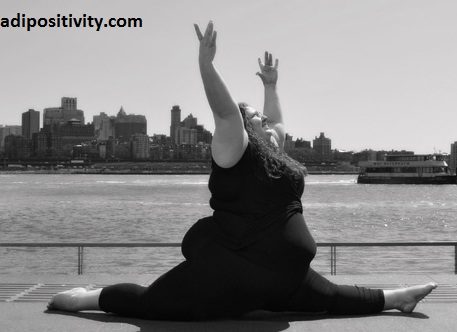
Happy! Happy! Joy! Joy!

I did a stand-up comedy open mic night for the first time ever tonight.  It’s been a long time coming.  For years in my former life I used to give talks about business systems and people would say “have you ever thought of being a stand-up comedian?”  The same thing happens at the talks that I give on self-esteem and body image.  The reason that I’ve resisted up to this point is my fear that I am only “situationally funny”, not just stand-up-and-be-funny.  Also, if I’m talking about business systems or self-esteem and people don’t think I’m funny, I’m still an expert at business systems and self-esteem.  If I’m doing stand up and I’m not funny then I’m just not funny – I can’t exactly pivot to how to create a prospect follow-up system or how to love your body more in three steps.

But I did it.  I jumped off a cliff.

I’m a collector and teller of stories – my own and other people’s.  I like to think that my stories are endlessly fascinating and that everyone wants to hear them.  That’s not necessarily the case but I like to think it is.  I used to think that I was a “one-upper”, someone who always had to tell a story to one-up what someone else had said.  It turns out that’s not the case, I just really like telling stories and so when someone tells me a story that reminds me of one of mine I’m off.  It’s not always a good thing – while people think I’m funny I can dominate a conversation without ever realizing it and I can come off as a one-upper.

So the coolest thing about tonight was that those people had come to that place to hear funny stories.  I didn’t have any concern in the back of my head that I was talking too much or telling too many stories or that someone might perceive me as a one-upper or whatever.  My whole job was to tell stories as well as I could and hope that people thought they were funny.  I told the story of my desperately unfortunate maiden last name, and the one about the time my mom sold me for air-conditioners (You can find that one here…)

And people laughed. I had experienced comics  tell me that I could have a career  in stand-up and several people suggested that I do the “Funniest Person in Austin” competition.  It’s possible that I was that good, it’s possible that they were being nice because it was my first time.  I don’t even care.  I had so much fun – I was an entertainer and the crowd was entertained and nothing makes me happier than that – whether I’m dancing, giving a talk on self-esteem, or – as it turns out- doing stand-up comedy.  So  I’m going to look for more and more opportunities to do and be that in my life.  I’ll be happy and I’ll make a difference.  Woo Hoo!!!

What are you doing to pursue joy?


Jillian Michaels, Skinny Bitch, and My Own Good

Jillian Michaels is the trainer from The Biggest Loser.  She bills herself as “America’s Toughest Trainer”.  I just watched a video called “Jillian Michaels best trainer ever” which someone created and put up on YouTube (no power on this Earth will get me to link to it on this blog).  In it she said (mostly screamed, really) the following at the people she was training:

  • I’m bored with the pathetic story!
  • If you quit on me again, you go home and no one is going to chase you!  No one!
  • You’re not getting it here (pointing to her head) that’s for G*#D#@* sure!
  • Get on the F$#&*%$ treadmill!
  • You’re not acting strong, you’re acting pathetic!
  • Anytime you lay down I want you to think Dead Father, that’s what I think!
  • Get on the treadmill now! (Pounding the treadmill to punctuate each word)
  • Get the F*#& up!

Jillian justifies treating people this way because she says that she is saving their lives.  It’s “for their own good” as we fat people so often hear when someone treats us poorly.  Even if we ignore the fact that no science supports this point of view, it seems to me that it’s more about her feeding her ego and feeling superior than it is about helping people.

I also find it interesting that while she preaches “natural weight loss” through “sweat and hard work”, she is currently the subject of at least four lawsuits against weight loss products that she is paid to endorse including a diet pill whose tag line is “America’s Toughest Trainer Makes Losing Weight Easy”.

There is a book on the New York Times Bestseller List called “Skinny Bitch”.  The marketing quote is:  If you can’t take one more day of self-loathing, you’re ready to hear the truth: You cannot keep shoveling the same crap into your mouth every day and expect to lose weight.

One of my roughly two million problems with this is that the marketing blurb assumes that:

  1. The food someone is eating is the cause of their current weight
  2. Weight loss will cure self-loathing
  3. This information that they are giving is true and will work (Spoiler: they are pushing vegetarianism)

Based on the best science available, there is only a miniscule chance that these assumptions are correct.

But that’s not my biggest problem.  My biggest problem occurs on the “Praise” page of the website:

“What makes this diet easy to swallow is the book’s tough-love attitude — part best-friend counsel, part drill-sergeant abuse and a dash of sailor mouth, wrapped in a pretty chick-lit package.” — iVillage, Diet & Fitness

Wait…did you just say that abuse makes the diet easy? Are you freaking kidding me right now?  Gosh, what other “medicine” could abuse help go down? Maybe we should start water boarding people who want to quit smoking and haven’t succeeded. Apparently as long as it’s in a “pretty chick-lit package” we’re all good.

You. Cannot. Be. Serious.  Abuse doesn’t make the diet easy, abuse makes the diet ABUSIVE.  Fat people are not in need of abuse.  Nobody deserves abuse.  Ever.

“This book is an absolutely hilarious read because the authors treat you like they know you well. They yell at you, they insult you and they call you some very nasty names. But since they are giving out their strongly-held beliefs and advice on living a healthy lifestyle — and you know in your heart they’re right — it is refreshingly in-your-face funny.”  — Cathy Mathias, Florida Today

Ummm, F*$# a bunch of that.  Being yelled at, insulted, and called very nasty names isn’t “hilarious” and “refreshing”. It’s abuse.  See my previous comment.

This seems like just another situation where someone’s ego and sense of superiority has run amok all over fat people “for our own good”

I state my strongly-held beliefs and advice on living a healthy lifestyle all the time, and I’ve never had to insult my readers or call them nasty names to get it done.  That’s because I think that health includes mental health, not just physical.  Abused people have to do a lot of work to regain their mental health, and some people never do.  Since there is no reason to abuse us in the first place, there is no reason for us to have to work very hard to regain our mental health, or risk never getting it back.

The domestic abuse project defines abuse as a systematic pattern of behaviors in a relationship that are used to gain and/or maintain control and power over another.

More specifically they go on to say:

Emotional abuse includes:

  • cursing, swearing and/or screaming at you
  • attacks on self-esteem and/or insults to your person (name-calling, put-downs, ridicule)
  • controlling and/or limiting your behavior
  • using the difference in physical size to intimidate you
  • criticizing your thoughts, feelings, opinions, beliefs and actions
  • telling you that you are “sick” and need therapy

Sound familiar?

I submit that being abused is NEVER for someone’s “own good”.  I suggest that if you want to hire someone to help you be healthier, change the size and shape of your body or whatever, you look for someone who doesn’t think that the way to do that is to scream obscenities at you and treat you like crap.  If that’s what you want then of course it’s your choice, but I hope that you are certain that you deserve better than that.

If you don’t have standards for how people treat you, I suggest that now might be a dandy time to create them (see this post for a step by step approach to creating realistic boundaries in your life).  If your standards for how you are treated don’t include “nobody is allowed to abuse me, insult me, scream at me, or call me nasty names under the guise of helping me” that’s absolutely your choice, but I would humbly suggest that you reconsider.

Pretending to Be Healthy?

Michele left a great comment over on my blog about The Self in Self-Esteem.  She asked “From this exchange it seems to me there is a strong element of “faith” to self-esteem: either you believe you are marvellous or you don’t. OR can you act/ proceed as if you believe it, and maybe it will come?”

My answer is that yes, “acting as if” can be a fantastic strategy for working on your intrinsic self-esteem (and for your health, which I’ll talk about in just a couple more paragraphs)  especially if you are having some trouble getting to the “I’m awesome just because I am” place.

I think it’s an extremely valuable exercise to imagine how your life might be different if you had the self-esteem and body image that you want.  And I would suggest considering how it would be different from your perspective, not from other people’s.  If you are hoping that a change in you will result in other people changing their behavior (ie:  My mom will be nice to me; attractive men/women will be fighting over me etc.) you’re going in the wrong direction.  This is about how you will feel, act, and react differently- not about controlling the behavior of others.

Take some time and really think about ways that you think your self-esteem might be holding you back.  How would you act differently in specific situations if you had high self-esteem?  If you have trouble picturing yourself with high self-esteem, ask your self how someone with high self-esteem would act.

Then start to act in situations the way that you would if you had the level of self-esteem that you wanted. Maybe try using a little saying like “I a person with high self-esteem”, of whatever makes sense to you.  Just say it throughout the day and picture what that would look like. A little dorky?  Maybe…but it couldn’t hurt, might help.

You can do the same thing with your health – to me that’s really what Health at Every Size is.  So many weight loss programs suggest that you do something extreme to lose weight (eat reconstituted soy protein most of the time, drastically cut calories, cut out an entire food group) and then once you’ve lost the weight they put you on what they call “maintenance”.  The reason that diets have a “maintenance” phase is that it’s not healthy to eat that way over an extended period of time.  My question is, if it’s not healthy to eat that way long term, why would I want to do it at all?  So many diets claim “this isn’t a diet, it’s a way of life” .  That’s true, but unfortunately according to the science the way of life that they are selling is:  Lose weight, gain it back during “maintenance”, feel like a failure, get back on the extreme phase of the diet, lather, rinse, repeat.

Health at Every Size suggests that we just choose behaviors that we would choose if we were healthy – eat nourishing food most of the time, enjoy the food you eat the rest of the time, move your body in ways that you enjoy.  Those healthy behaviors have the best chance of leading to a healthy body and you know that they are healthy because you can do them long term.  Healthy behaviors do not require a “maintenance phase”.

What if you just act like you were already have the health that you want right now – what things would you do differently?  Would you eat a little better?  Move a little more?

It doesn’t have to be drastic.  You do not have to be in the gym for hours a day every day, or restrict your food to be more healthy.  What if you did movement you enjoy (dance , garden, yoga, tai chi etc.) for about 30 minutes most days?  If you get busy and can’t get to it one day, don’t bother feeling guilty – since guilt won’t substitute for movement now you’re just taking a situation that’s no big deal and making a thing out of it.  Consciously choose that you’re not going to move today and then tomorrow, make a choice about moving tomorrow. The same with food.  Eat food that nourishes you most of the time.  If you’re going to eat something that you like but that isn’t so nourishing – relish it, enjoy it with no guilt.  Being guilty about eating a food doesn’t do anything positive for you so what’s the freaking point?

Seriously, if you’ve been stuck on the diet roller coaster, give this a try.  You may be very happy with the results.  If you want more information, check out Dr. Linda Bacon’s site at http://haescommunity.org/ and check out Intuitive Eating (note, I’m not affiliated with either site, nobody pays me to recommend their stuff.  I don’t know if that’s good or bad, but it’s what’s happening right now 🙂

Get good at acting as if and I bet soon it will be so.

Surgeon General Promotes Health at Every Size!…sort of

There’s been some buzz in the fatosphere these last couple of days about a statement by Dr. Regina Benjamin, the United States Surgeon General, from about a year ago (video below) that is mostly in alignment with the principles of Health at Every Size.  She says, in part:

“…The good news is we can be healthy and fit at any size or any weight.  As America’s  family doctor I want to change the conversation from a negative one about obesity and illness to a positive one about being healthy and fit.   So let’s start with making healthy choices.  Eat nutritious foods, exercise regularly, and have fun doing it.”

I love that part.  I love that it reflects the best information that we have from scientific studies. I love that it reflects a shift from a guilt/shame/fear mentality to a paradigm where people can choose to take good care of themselves because they deserve good care and look for ways to do that that they enjoy.  I think that people take better care of things they love than of things they hate so I like that this is going in that direction, I’d love for this to trickle down to Michelle  Obama and her campaign of good intentions.

But there’s a little problem. Dr. Benjamin prefaces this statement with an introduction in which she says that obesity and being overweight “result in”  high levels of diabetes and other chronic illnesses.

First, this does not reflect the scientific information that we have.  Unless there’s a study I’ve missed, no causal relationship has ever been proven between weight and disease, only correlational links have been shown.  That means that we can show that they happen at the same time, but not that one causes the other.

If we just have correlational evidence it means that it’s possible that being overweight causes disease (but we haven’t proven that in a lot of tries), or it’s possible that the diseases cause people to be overweight, or it’s possible that they are both caused by a third factor (more and more scientists are hypothesizing that it’s stress), or that they are unrelated.  If August had the most violent crimes of any month and the most ice cream eaten of any month, you wouldn’t assume that one was caused by the other.  Based on all the science I’ve seen, it’s no more likely that being overweight causes health problems.

I think the larger problem is that it seems contradictory to what she said in the first half of the video.  If we can be healthy at any weight or size then how is it possible these diseases are the “result” of being overweight or obese?

According to the American Diabetes Association website:

“Myth: If you are overweight or obese, you will eventually develop type 2 diabetes.

Fact:  Being overweight is a risk factor for developing this disease, but other risk factors such as family history, ethnicity and age also play a role. Unfortunately, too many people disregard the other risk factors for diabetes and think that weight is the only risk factor for type 2 diabetes.  Most overweight people never develop type 2 diabetes, and many people with type 2 diabetes are at a normal weight or only moderately overweight.”

Still, I’m extremely happy that the Surgeon General of the United States wants to change the conversation, I’m certainly all about rolling up my sleeves and helping!

Here is the video as promised:

Ob*sity, Stigma, and Health. Oh My!

It seems like I meet a lot of people who don’t like themselves very much, who don’t like their bodies, who feel guilty about their weight.

Recently a couple of small studies have come out showing that in populations where there is no stigma around being fat, fat people do not have negative health outcomes.  The studies I’ve seen are too small to be statistically significant so they don’t prove anything.  But they raise an interesting question – is it possible that being under constant stress, receiving hundreds of thousands of negative messages about our bodies each year, and continuously trying and failing at dieting  could cause the negative health outcomes that are currently correlated with obesity?

In 2008 a study  looked at data for 170,577 people.  The study found that the more dissatisfied a person was with his or her weight, the more days that person indicated were “bad health days”.  Dr. Peter Muennig of Columbia University in New York City was the lead author on that paper.  He said “The obesity ‘epidemic’ might have a lot more to do with our collective preoccupation with obesity than obesity itself.  We still need to focus on healthy [eating] and [movement] as public health officials, but we need to take fatness out of the equation. Were we to stop looking at body fat as a problem, the problem may well disappear.” (emphasis added, words in brackets substitute for trigger words)

The science is all interesting but here’s my real question.  Regardless of what is true about obesity and health…  Regardless of how you feel about your current state of health…

What good does self-hatred do?

This question is neither general nor rhetorical.  I’m asking seriously:  How is disliking or hating yourself or your body helping you out?

It’s certainly an option and within your rights to dislike yourself and focus on what you don’t like about your body, to feel guilt, shame and fear about your body, your choices where health is concerned, really about anything in your life.  I’m just wondering if you feel that it’s going to help,  if you just enjoy feeling that way (and it’s cool if you do, absolutely your choice.), or if you’re just not sure how to feel any other way?

If you’re not having fun, then my next question is:  Who is in charge of how you feel about yourself?

I’m thinking it’s you – for all the reasons I listed in this post about personal responsibility.

If you are stuck in a place of body and/or self hatred, you could decide to love your body and yourself.  That doesn’t mean that it will magically happen in the next two seconds. But you could decide that no matter what it takes you are going to learn to love yourself as you are  – not 50lbs from now, not after you can run a 10k, as you are.  You deserve to love yourself and your body, no matter what your circumstances.  You and your body are totally worthy of love.

And I don’t mean some hedge-your-bets “I’m going to endeavor to try to learn to kind of accept myself even though my thighs are too big” thing.  I mean you decide that you are going to love yourself.  It may not be easy, but if you’ve already determined that self-hatred isn’t giving you the results you want, then maybe it’s time to try something radically different, even if it’s hard to do.

Once you make that decision, start looking for a path that will take you in that direction.  (Check out Love your Body More in Three Simple Steps and this post on setting boundaries for how you want to be treated for more concrete techniques).

You could do this even if you want to get more healthy, or change the size and shape of your body, or get a boob job, or whatever.  Loving yourself doesn’t mean that there aren’t different choices that you want to make about your behaviors.  But if you don’t learn to love yourself first, then based on the studies I referenced above, you could be making it that much harder to be able to get the things that you want.  Once you get to a place of loving yourself and believing that you are worthy of love and respect, in my experience it becomes much easier to make decisions that support being who you want to be.  People take better care of things they love than things they hate, and I believe that includes ourselves and our bodies.

Side Effects May Include: Weight Loss?

Remember the movie “Jerry Maguire” where everyone kept yelling SHOW ME THE MONEY!!!!!!  It’s inspiring me to a similar reaction.

If you want to make recommendations about my health and weight, you’re going to have to SHOW ME THE RESEARCH.  I want to see a statistically significant sample size, properly controlled variables, and peer reviewed proof of long-term efficacy before anyone gets to discuss my body or my health with me again. I’m tired of my side of the conversation being well researched just to be met with an eye roll and an “everybody knows” response.

There was a time when “everybody knew” the Sun revolved around the Earth.  Since “everybody knew” that, there was no need to prove or defend it with hard facts, and any attempts to disprove it through science were met with scorn – or worse- just ask Galileo.

Recently the Nutrition Journal published a review of studies used to prove that dieting works called “Validity of claims made in weight management research: a narrative review of dietetic articles”.  Here are some of the findings:

  • [studies included] claims of non-specific ‘health benefits’ which are not substantiated
  • It appears that beliefs about weight and health acquire a truth status so that they circulate as intuitively appealing ‘facts’, immune from scrutiny and become used, and accepted by editors, without supporting references
  • Dietetic literature on weight management fails to meet the standards of evidence based medicine.
  • Research in the field is characterized by speculative claims that fail to accurately represent the available data.

It is amazing to me how many studies cite an extremely low success rate (between .17% and 5%) but then assert in their conclusions that it’s still a good idea to set a weight loss goal and use the method that they just proved does not work.

This leads to a situation in which everyone from doctors to personal trainers to random strangers feel free to tell us fat people that we need to lose weight. “Everybody knows” that we are not healthy.  “Everybody knows” that if we would just eat less and exercise more we would lose weight.  “Everybody knows” it’s just a matter of willpower.

In truth, study after study has found that those things are not true.  Yet doctors keep prescribing the same things and blaming 99.83% of people for not trying hard enough. Can you imagine if Viagra only worked 5% of the time and we blamed 95% of the guys for just not trying?  It’s completely ridiculous.  But when I point this out people roll their eyes and say “everybody knows” that you can lose weight if you really try.

The best research that I am seeing says that making your goal healthy behaviors (instead of weight loss) has the best chance of producing a healthy body.  Unbelievably to me, the phrase “a goal of healthy behaviors have the best chance of producing a healthy body ” is controversial.  What the hell?

Instead we are sold the idea that eating reconstituted soy protein shakes, pudding, and bars 5 times a day will lead to a healthy body; or that restricting calories to a level that is consistent with someone suffering from Anorexia will create a healthy body. (For more about the insanity of doing unhealthy things to get “healthy” check out  “That Does Not Make Sense“).

So if you want to talk to me about my health and weight, either show me your research or shut up.  There are a lot of things in this blog that are just my opinion.  There are some things that aren’t.  This is one of those.  I went to school for this.  I read full studies, not just the abstracts. I look for factors including sample size, variables, controls, and drop-out rates.  I compare the “conclusions” section with the actual data that was collected.

That’s why when someone sees a study that concludes  “Weight loss was achieved by all compliant participants”  they can be mislead into believing that the diet was successful.  What I know is that 84% of participants dropped out, and while the other 16% did lose weight, the average weight loss was less than 2 pounds over two months and all but .17% of them gained it back by the end of the study.

If someone wants to let poorly conducted research with unsupported conclusions dictate how they live  life that’s entirely within their rights.  They’re going to have to do a lot better to convince me.

So let me channel my inner Galileo for a paragraph for two:

Based on the science, long-term weight loss is not reliably achievable by any means tested and therefore recommending it is unethical.  At best doctors should be saying, “there’s a chance you might be healthier if you were thinner but we can’t prove that, and we have no idea how you can get thinner anyway since nothing we’ve tried so far works.”

Based on the science, weight loss is nothing more than a possible (improbable, nearly impossible in the long term) side effect of healthy behaviors.  Of all options, healthy behaviors seem to have the best chance of leading to a healthy body, whether or not they lead to a thin body.

Since nobody knows what behaviors (if any) could reliably lead to a thin body it would be nice if people stopped lying to us and saying that they do.  I doubt that they will (because it’s quite lucrative) so we might want to consider no longer believing them until they show us to properly controlled, statistically significant, peer reviewed proof of long-term success. “Everybody” can “know” whatever they want but at the end of the day the Earth revolves around the Sun and there is no changing that by rolling your eyes and claiming otherwise.

Read the full nutrition review at http://www.nutritionj.com/content/9/1/30

One Fat Speaker, Two Odd Conversations

I give talks about self-esteem and body image.  I’ve given three in the past couple of weeks.  In the talks I give a little bit of my history with eating disorders, cycle dieting and finally finding health and happiness with the Behavior Centered Health/Health at Every Size model (where healthy behaviors and not a specific weight or size are the goal).  I talk to groups for anywhere from 20 minutes to a few hours.  At the end there are two conversations that almost always happen.

Conversation 1

This conversation is always interesting to me.  Someone will say to me:  “Gosh I wish I had your [self-esteem, body image, health, confidence etc.]  but I have trouble with [insert issue here].  As I’ve typically dealt with this issue before I will usually be able to say “Oh, I dealt with that and [insert solutions] helped me work through it.”  Then they will say, without hesitation, “That won’t work.”.

Ok, look.  First of all I always clarify that my methods are just my methods, other people have other methods.  What I do may not work for everyone.  However,  if I find myself wanting  a state of being that someone else has achieved and they tell me how they got it, it would not surprise me to find that it didn’t fit with what I thought would work. Mostly because if what I expected to work actually did, I wouldn’t have the problem in the first place. So I try to be open to the possibility that maybe the thing they are suggesting is worth a try.  If you don’t like where you are, you might consider trying something that doesn’t seem natural to you. If it doesn’t work you can always try something else. Your mileage may vary, but if you aren’t attempting to drive somewhere, then it might be time to learn to be at peace with your parking spot.

People ask me a lot about diet – what do I think about a vegetarian diet, Atkins, caveman, mediterranean.  What I always say is this:  Try it.  If you feel better do more of it, if you feel worse, try something else.  It has been my experience that my body knows what it needs, and that if I pay attention to it, I can learn to discern that information.  Unfortunately before I figured this out and learned to communicate with my body, I spent most of my life  with my fingers in my ears yelling “LALALALALALALA” and only pausing to tell my body what it was getting while actively ignoring the signals it was sending to me as to what it wanted.  That was not a good plan.  I like the book Intuitive Eating as a guide on this journey.  There is a bit of weight loss talk  which might be triggering for some, but if  you’re at a place of no longer feeling that you can be trusted to make food decisions for yourself I definitely recommend it.  (They don’t pay me to endorse it, I seriously doubt they even know who I am.)

Conversation 2

The second conversation is more abrasive to me.  Despite my standing in front of the group and

  • talking about my journey
  • explaining behavior centered health
  • explaining my personal health plan
  • revealing the fantastic health outcomes I’m experiencing
  • explaining that  my goal is to give people an option not tell them how to live
  • Acknowledging that I respect everyone’s choices as I expect mine to be respected

at the end of my presentation some whackadoodle will attempt to sell me their weight loss product.  Usually under the guise of the VFHT (Vague Future Health Threat) which always sounds something like “With your weight I’m surprised to hear that you are healthy now, but it won’t last. You’re going to have problems later”.  Or they’ll tell me that they have “vital information about my health” and then give me information gleaned from diet commercials as if I’ve somehow arrived at this stage in my life without ever having heard the claims that are made about the correlation between fat and disease.  This is often followed by them telling me their story of how weight loss changed their life and therefore will change mine.

This completely pisses me off.  First they admit that they were unable to accurately assess my current health, then they assert that I should allow them to put me in fear about my future health and buy stuff from them to solve a problem which does not currently exist. I give this a couple points for guts but none for style.

I do not discount anyone’s experience.  If someone had a goal of changing the size and shape of their body and they succeeded, I’ll be the first one throwing confetti. If they had health problems that were solved through a change in eating and/or movement that also resulted in them losing weight, I think that’s fantastic.  I’ve said five hundred million times that I am not for or against weight loss.  (Wait for it…despite my saying this clearly for the 5oo,000,001 time, someone will probably reply to this post and accuse me of hating  on people who lose weight.)

My option is about not depending on the shape and size of your body to determine your self-worth, and having quick access to true and correct information about the efficacy and likely health impacts of any path that you take for your health, wellness, weight loss etc. goals.

It’s not that I don’t think that most of these people come from a place of good intention, it’s just that I think that the inability of these people to understand that their experience is not everyone’s experience reveals a lack of emotional intelligence and maturity.  It’s like when a little kid covers his eyes and assumes that you can’t see.   If someone has found something that works for them and they want to shout that option from the rooftops to help others know it’s out there then I’m all for it.  If they want to try to get us to buy their stuff through the use of  guilt, shame, fear and unsolicited, unfounded random threats about our health, I have a problem with that and I’m going to say so.

If someone says that they are happy on their weight loss program I would never presume to tell them that they are wrong and so they should choose Health at Every Size instead.  It would be completely rude and inappropriate.  Not.  Its.  Business.

If we’re not where we want to be then we can either make peace with it, try something else, or wallow in our misery.  All three are valid choices.  They are our individual choices.  If you want to be somewhere other than where you are when it comes to your self-esteem and body image,  then may I  suggest that you’re probably going to have to do some things differently than what you would normally do.  Do some research, try some stuff.  You can always go back.  It will always be your choice.

And please, for the love of all that’s holy, don’t try to sell me your weight loss solution.  Thank you. Your friend, Ragen.

Fat People and Personal Responsibility

I joined a gang – a blog gang.  We are all posting on the same day about the same subject.  You can find the links to the rest of my gang’s (I love saying that) posts at the end. This time our topic is Personal Responsibility. If you know me or read my blog, you know that this is a topic that is near and dear to my heart.  Let me just dive right in.

To me personal responsibility is owning that while I can’t always control my circumstances, I can always control my reactions to them and how I allow them to affect me going forward.  Thus I may not be able to control if someone breaks into my house, but once the break-in is over I choose to take responsibility for how I react to it and how I allow it to affect me in the future. Personal Responsibility doesn’t mean that I think that I can do everything alone.  It means that I take responsibility for asking for help when I need it.  If I find that having my house broken into has left me feeling unsafe, then I take responsibility for feeling that way and, if I want to feel differently, I take responsibility for figuring out what it will take (alarm system, therapy, starting a neighborhood watch etc.) to feel the way that I want to feel, and then making that happen.  That doesn’t mean that what the thief did was ok, or that they shouldn’t be punished – it wasn’t and they should; but that’s a separate thing from how I choose to react and be affected in my life.

To be clear, this is a conscious choice.  I could always just feel unsafe in my home and blame the thief for making me feel that way. That’s a perfectly viable life choice.  If my goal is to justify why I live in fear so that other people will blame someone else and not me for my situation, then it seems like that kind of attitude would be just what I need.   If my goal is to live in my house without fear, I’m just not sure how blaming someone else for the way I reacted to my circumstances and throwing up my hands will get me there.

If I’m not responsible for how my circumstances have affected me, then who the hell is?  And more to the point, how can I change my circumstances?  Do I just have to hope that a group of awesome people shows up at my house to protect me and make me feel safe again? So, what about fat people?  One of the things I hear a lot is that obesity is caused by a “lack of personal responsibility”.  People have said that in comments on this blog. But I don’t think that people really mean that I don’t take personal responsibility. If they read the blog they are well aware that I take complete responsibility for my health and well being, I just don’t happen to buy into the idea that I have to be thin to be healthy. I’ve done tons of research, drawn conclusions, created a strategy, implemented it in my life, and had fantastic outcomes in terms of my health (mental and physical), self-esteem, and body image, and now I offer the option that worked for me to other people.

I think that what people mean to say is that my idea of health doesn’t match theirs and so their definition of personal responsibility is that I am personally responsible for doing what is necessary to make them happy with who I am and how I look.  That doesn’t work for me. I am not the boss of anyone else’s underpants – I get to make choices for me, you get to make choices for you.  The thing that makes being fat different is that people feel that by looking at me they can ascertain that I’ve made “bad choices”  and not been “personally responsible” and therefore they feel that they have right to judge me and say rude, cruel and accusatory things to me about my health and its impact on our society.  Since their guesses are grossly erroneous, I suggest that their assumption is flawed.  You cannot look at someone and tell their level of health, or how much personal responsibility they are taking for it.  Even if you could, it’s absolutely not your business if someone is making healthy choices for themselves – that’s why it’s called personal responsibility.  I can’t stop people from smoking or drinking or being bad drivers or crossing the street without looking or a million other things that  may have to be paid for with my tax dollars.  That’s just life.

I see this blog as an exercise in personal responsibility.  Personal responsibility means that I speak my truth honestly and authentically, or I don’t speak at all.  It also means that I understand that it’s MY truth, not everyone’s truth, and that I could be wrong and I’m responsible for that, too.  I seem to have something that a lot of people want (high self-esteem, great health, great body image, great life), it wasn’t always this way and so I share the things that got me here in case it’s helpful to someone.  The only goal of my sharing is to give  people an option and then respect whatever they choose.  To me that’s true personal responsibility and I hope that it catches on.