Does the Obesity Gene Matter?

According to a story from Wales Online  [trigger warning – classically offensive headless fatty picture]:

The discovery of genes explicitly linked to obesity, by various teams of scientists around the world, raise the spectre that some people are genetically predisposed to be overweight.

Indeed, for those who carry an obesity gene – or a mutation in a particular gene – it could mean that even the strictest and healthiest diets will fail to prevent them gaining weight.

I’m not even delving into the science for reasons that will become clear in a minute.  The title of the piece asks “Should we change the way we think about fat people with the discovery of a fat gene”?

Sociologist Shirlene Badger states

“But when families receive this, there are no real treatment options for them and the diagnosis is very difficult to take anywhere in terms of an explanation in the public arena.

There have even been problems when families have taken that diagnosis back to their local GP because obesity is still seen as input versus output.”

First, why are doctors so unwilling to let go of the belief that our weight is a factor of our current behaviors, a calories in/calories out equation and nothing more?  I think it’s shameful that the very people who are the most trained to understand the complexity of the human body still believe that when it comes to body size we’re no more complicated than a lawnmower. They ignore evidence of the multi-dimensionality of health and the abysmal success rate of dieting and they just keep prescribing weight loss, blaming the fatties when it doesn’t work. Real scientists admit that they were wrong and course correct based on better information.

But I don’t think that the biggest problem is that the prescription for weight loss doesn’t work.  I think that the real problem is that no prescription is necessary. We need to stop treating body size like it’s a diagnosis when it may just be an expression of human diversity.

In the article they talk about trying to develop a drug to “fix” the obesity gene.  What for?  There is no proof that the gene causes anything other than a big body.  People are taller than ever before but we’re not trying to make them shorter.  Some people have big feet but we’re not looking for a drug to make those feet short and narrow. Blond and red hair are a minority but we’re not trying to remove them from the gene pool.

Body size is not a health problem, and so it doesn’t need to be “solved”. Health problems have health diagnoses and  health treatment protocols so there’s just no need to prescribe a random and unlikely change of body size as Hail Mary pass for health.

Badger says that “In some circumstances it [a genetic diagnosis] does relieve the sense of stigma and the shame associated with obesity, but in other senses it can be difficult because of the stigma surrounding obesity in society.”

Ok, you know what’s not a cure for social stigma?  A genetic diagnosis. You know what else isn’t a cure for social stigma?  Weight loss. There is only one cure for social stigma and that’s ending social stigma.

You do not get to stigmatize me because I will not look how you want me to look,  act how you want me to act, or provide you with an explanation for myself that you find satisfactory.  Are you freaking kidding me?  That is not how it works. You do not get to stigmatize me.  For any reason.  If you try then I will fight you to my last breath.  I do not owe you a reason or an explanation for why you should treat me with basic human respect. Just do it.

I personally do not care about the obesity gene.  It does not matter that my body is fat.  It does not matter why my body is fat.  It is my body and none of your damn business.
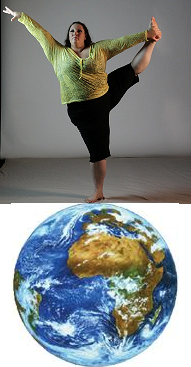
DancesWithFat World Tour!

I thought about it, I hinted at it, now I’m actually doing it!

I want to take this show on the road – spread the body appreciation, meet awesome people, have fantastic adventures. (Fair warning:  the rest of today’s blog is going to be about this.  I’ll be back to my regularly scheduled rambling thoughts tomorrow…)

I’m going to do the first leg of the tour in the US to coincide with premieres of America the Beautiful II – The Thin Commandments.  I am in the film and it is being release by Warner Brothers in October and November.  I’m super excited about giving talks, teaching dance classes, doing workshops with other people, and participating in collaborations and community events (like the moth-type events we were talking about in comments a few days ago), whatever brings people together and supports them on their journey!

If you’re interested in supporting this or getting involved, there are lots of ways:

Tour Stops!

If you want me come to your town/group/university etc., just let me know (you can comment below or e-mail me with your name and your city) It doesn’t matter if you have a budget or a plan at this point, or if you want to put on an event or just come to one…it’s just important that you are interested and we can go from there. (If you want to see more about the speaking topics and types of classes I do you can check that out here)

Because of film premieres and dance competitions I already know some of the stops for sure. The list is below –  if you want to get something going in those cities let me know right away (if your city isn’t listed, never fear, just comment or e-mail and we’ll see about getting it added!)

First Leg:

  • New York City
  • Los Angeles
  • Austin
  • Houston
  • San Francisco/Oakland
  • Panama City Beach, Florida
  • Atlanta
  • Dallas
  • Portland
  • Seattle
  • Ventura
  • Las Vegas
  • Orlando

Second Leg

Still being scheduled.  Currently looking at Australia, the Netherlands, Norway, and the UK as well as stops in the states in Ohio, Pennsylvania, Tucson and more.  E-mail me to add a stop in your city!

Connect!

You can be kept updated (and make me look popular to potential speaking gigs) by:

Subscribing to the blog at the top right hand corner of this page

Subscribing to the Newsletter

Following me on Twitter

Friending me on Facebook

Moolah!

Airfare, hotels, and then for the upcoming book there’s editing and self-publishing.  It all adds up!  I will not be monetizing the blog (I actually pay to NOT have ads on this blog because they’re always about weight loss and it’s super annoying.)  I will be doing some fun projects to help fund the tour. You’ll be able to find them on the Support the World Tour page!

This has come quite a long way since I was writing a blog that was read by six people.  Thanks for reading, commenting, and being awesome inspirations, I hope to see you soon!

Fat and the Fear of It

I talk a lot about how using body size as a proxy for health does a disservice not just to fat people but also to thin people who get the message that as long as they are thin they are healthy regardless of their behaviors.  I was thinking today about the similar disservice that fat stigma does to the entire population.

Being fat is an interesting experience because it is a highly stigmatized group who are thought to be able to move in and out of that group at will. (I don’t think that the research shows that at all, but I find that it’s the commonly held belief.)

Because of this, there is a general idea that the cure for social stigma directed at fat people is for those people to stop being fat.  In other words what we’re told is “Stop making people want to stigmatize you so much!”

Among fat people this this creates a couple of categories.  If we publicly agree that we deserve to be stigmatized for being fat, and we’re trying to “do something about it” in the form of attempting weight loss (aka being a “good fatty”) we can gain some provisional acceptance from the stigmatizing group.  If we refuse to buy into a thin=worthy model and refuse to attempt to conform and make our picture match someone else’s frame (aka being a “bad fatty”) then many people feel that we deserve all the hate and vitriol that they can spit at us.

We get 386,170 negative messages about our bodies a year. We are told that we can’t be attractive, sexy, smart, loved, or healthy until we are thin.  This is obviously wrong and we deserve to be treated better.

But there is one group who are affected by these things who don’t often get attention:  They are the people who are thin but spend their lives obsessed with not getting fat. They see what happens to us fatties and they don’t want it to happen to them. Some have disordered eating. Some are fixated on exercise.  Some weigh themselves every day in constant terror of being fat. Some spend their lives on diets trying to lose those “stubborn final 10 pounds”. Some miss out on experiences that they would have loved to have because they are afraid that it will make them fat or because they can never skip the gym.  Some lose their lives on the operating table getting fat sucked out of their asses.  I’ve heard that 8 out of 10 women and 6 out of 10 men are unhappy with their bodies. Women start dieting earlier (4 years old!) and stop later (or never).

So ending all the body shaming and body stigma isn’t just about making fat people’s lives better (although that alone is absolutely a worthy goal), it’s about making everyone’s lives better.  Imagine a world where we could all approach our relationships with our bodies purely from a place of care and appreciation.  A world where nobody hates their thighs, where bodies come in all shapes and sizes and that’s just peachy.  A world where people can make choices about their health rather than making choices based on the terror of facing massive social stigma.

We all deserve to live in that world. And we can all do things, right this minute to get us there.  Some example to get us started:

1.  Stop body snarking.  All of it. Right now.  There is just no reason in the world for you to comment negatively on someone else’s body.  Get your self-esteem elsewhere (how about intrinsically?)

2.  Interrupt body snarking and fat stigma whenever you hear and see them – whether it’s in your own mind or in public about your body or someone else’s.

3.  Consider approaching your body from a place of care and appreciation.

4. Consider spending the money that you would spend on diet programs on other self-care…get some massages, take classes that you’ve always wanted to take, buy a bike, hire a chef to prepare delicious foods that will nurture your body, take a trip to a spa, buy whole foods, whatever makes your body feel amazing.

5. Understand that almost everyone in our society is hurting because of the unceasing body shame and stigma. Even that person who you might think has “everything” – the perfect body, the perfect face –  may be living his or her life in terror of losing that.  Look for ways to support other people and lift them up. Today at the bank I saw a woman with beautiful long, curly silver hair (exactly the kind of hair I plan to have someday).  I told her that I thought her hair was awesome and she started crying.  CRYING. At. The. Bank.  She hugged me and told me that her friends said that you can’t have long gray hair and that she should cut it.  What the eff people?  We can do better.

6.  Rock my official shirt.  Oh yeah, I totally went there.  A few posts ago some readers asked me when I was going to have a DancesWithFat shirt they could wear. Thanks to lovely graphic design by Cristy C, I now have one. This is the first item that will help fund the upcoming Dances with Fat World Tour! Click on the image below and it can be yours.

Official Body Positive Dance Shirt shirt

Public Health is NOT Public Thinness

I gave a talk today to the students at the Texas A&M School of Rural Public Health (They have a great blog that you can check out). They were awesome – attentive, open-minded and they asked excellent questions.  One of my favorite questions was a woman who asked what I thought was the number one most important change that could be made in public health.

My answer was that we need to take weight out of the equation and make public health about public health, not public thinness.  Right now the idea of “eradicating obesity” is a major part of public health effort and I think that every penny we are spending on that is a waste of money. So what would I spend money on? I’m glad that you asked…

Have you heard of “Food Deserts”?  These are areas where there is a lack of affordable fruits, vegetables, whole grains.   You know that money that we’re putting into commercials that talk about how many calories a day breastfeeding burns and how it will stop your kid from being fat?  How about we spend some of that money making sure that moms, and everyone else, have access to affordable healthy foods.

There are people who don’t have safe access to movement options that they enjoy.  Even if they like jogging some people can’t do it safely in their neighborhoods.  Some people would love to swim but they don’t have access to a pool.  Some would love to dance but don’t have access to classes. Remember those horrible fat kid-shaming billboards from Georgia?  What if they used those millions of dollars to build some non-profit community fitness centers and help existing community fitness centers take sliding scale payments.  All the money the Ad Council spends on OMGDeathFatIsComingForYou ads?  Let’s spend that letting people know about those fitness centers and how they are fiercely anti-shame and all about health for people of all sizes.

You know every damn penny that we are spending having a war on fat kids?  How about we re-purpose that money to be for healthy healthy kids of all sizes.  Gym classes with all kinds of options  -the end of dodgeball as we know it – some kids can walk around the track, some can swim, some can dance, some can play computer games that require them to move, whatever will help them create a lasting love of moving their bodies or at last keep them from just hating the crap out of exercise. How about some school lunch offerings that are nourishing, appealing and affordable?

All those grants that we are spending for researchers to keep trying to figure out how to make us all fit the same narrow height/weight proportion?  Let’s re-purpose that money for research to make us healthier.  Let’s train doctors how to work appropriately with people of size – from a place of respect – treating health issues with health interventions. Let’s cure some form of cancer.  Let’s do SOMETHING a little more worthy of our time and money than ignoring the diversity of the human experience and trying to make everyone fit the same very narrow ratio of height and weight.

And it’s not just money.  Every second that we spend talking about the war on obesity, body shaming, body snarking, acting like someone else’s body size is our business, or confusing body size with diagnosis or health… What if we re-purposed that time to doing, oh I don’t know, anything else? I don’t think that people hate themselves healthy, because I don’t think that people take good care of things that they hate.  If we would back the hell off so that people weren’t obsessed with not being fat anymore, or not getting fat, or hating parts of their bodies, then people would have an opportunity to realize how amazing their bodies are, appreciate them and then care for them in their own way without constant stigma or constant threat of stigma.

I think any public health intervention that leads people to hate their bodies is a bad intervention.  I think that making everyone the same size is not the same as making everyone healthy. I do not believe that getting rid of fat people is a goal worthy of any time or money.  I think that giving people access to healthy foods, safe movement options that they enjoy, and love for their bodies are goals worthy of all the time, energy and money that we can possibly spend on them.  I have great hopes for the students of the Texas A&M School for Rural Public Health and for society in general that we will get past the scapegoating and stigmatizing of people of size and get onto the business of giving people access to a variety of options and then respecting their choices.

How to Introduce People to SA/HAES

Reader Sabrina submitted the following question:

I know that you sometimes take questions from readers — I wonder what you think about how to introduce people to Size Acceptance (SA) and Health at Every Size (r) (HAES). There are [some people] who I think could really benefit from reading blogs like yours, and books on the topic. But I don’t know how to do it without being hurtful.

It’s a really good question.  Obviously this can be a sensitive subject and, at least for now, it may be an entirely new concept for the person to whom you are introducing it.  If you read this blog very often, you already know that I’m not into telling people what to do .  My approach (and recommendation) is always to couch it as something that I do, rather than something that someone else should do.  This post talks about how I specifically explain HAES so today I’ll talk more about how you might broach the subject.

Casual Exposure

We live in the age of Facebook and Twitter, and along with 400 comments you don’t care about on the post that you accidentally “liked”, it also allows us to offer our list of followers exposure to a new topic with relatively low risk.  Start posting blogs that you like about SA/HAES, or updates talking about how you are practicing it in your life or the how much you like it etc.

Work it In

When other people are talking about their diets, or participating in a rousing game of body hate, you can bring up your SA/HAES practice.  Remember that your choice is just as valid as anyone else’s choice – telling people what you are doing does not obligate you to seek their approval.  I recommend having a quick definition like”I practice Health at Every Size – so I focus on healthy behaviors rather than a number on a scale.”  You can answer questions if you want but remember that you aren’t required to “defend” your choices.

Bring it Up

You can also bring  it up in conversation. This works especially well if you are setting boundaries/asking for support.  For example “I’ve decided to practice Health at Every Size.  For me that means that I’ll be focusing on what I decide are healthy habits and not on a number on the scale, weight loss, or what other people think I should do with my body.  I would love your support in this but if you aren’t willing to support me then it is important that you respect my choice”.  Obviously you’ll want to modify the words for yourself but that’s the idea.

I really can’t stress enough how much more of a powerful position I’ve found myself in if I simply explain rather than trying to convince, persuade, defend or seek approval.

I am Not a Special Population

Reader Elizabeth sent me this gem.  It hit home because I used to be an AFAA Certified Fitness Professional and I was just thinking about renewing my certification.

AFAA would like to invite you to attend A Taste of… Biggest Loser® Live Training (Live Online Workshop)

Already my alarm bells are going off.  The invincible ego of Jillian Michaels, the physical and emotional abuse of fat people under the bs guise of “saving their lives”.  This does not bode well.

What is it?
This one-day, live online workshop is designed to provide fitness professionals with an introduction to the knowledge, tools, and fundamental skills necessary to successfully work with larger-sized, overweight and obese participants.

I was not aware that a fitness professional working with me would be required to possess special knowledge, tools and fundamental skills just because of my body size.  Also, I sort of thought that the point of fundamental skills was that they are, well… fundamental, so ostensibly someone who is already a Fitness Professional would have a working knowledge of those skills.

In addition, the workshop will introduce AFAA’s signature Complete 10™ Workout which is a key component of The Biggest Loser® Pro program*.  This signature workout series is comprised of highly effective training routines that fuse high-intensity interval training, compound/functional resistance exercises, core strengthening and stretching/deep breathing into 10-minute, power-packed workouts.

The Biggest Loser is built around the contestants working out 5 or more hours a day.  What does a series of 10 minute workouts have to do with The Biggest Loser?  Are we maybe just smearing ugly lipstick on a pig here?

Program highlights include:
Information, review and discussion of the obesity health crisis

Oh dear god, I can’t even imagine the misinformation-palooza that this will become.

Review of AFAA’s Exercise Standards and Guidelines for the larger-sized participant

Because not only can you tell how healthy someone is by their body size, you can also tell their level of physical fitness.  No wait, that’s not true at all.

Realities and challenges of working with this special population

Oh what in fat hell… I could not be more offended by this statement. There are realities and challenges for working with me? I guess if you consider the fact that I am happy with my body and demand respect a challenge then a case could be made – but you’d better make it quick because I’m out the door to find another fitness professional. And “special population”…really?  If I’m a “special population” it’s because I’m an athlete, not because of the size of my body.

I taught group exercise from step to spinning to boot camp for six years in big name National gyms and  I can tell you that as a fitness professional it is absolutely part of your job to be able to create and modify workouts to suit the people you teach.  I can also assure you that no fitness professional worth their salt does that by looking at the size of someone’s body and taking their best guess.  That 250 pound woman could be an athlete in great shape and the 110 pound woman could be dealing with osteoporosis. That’s why you’re supposed to ask intelligent questions.

Lest you think I am anti-exercise let me assure you that’s not true at all.  I am, in fact, a great fan of exercise.  I think it’s extremely important for people to have access to safe movement options that they enjoy, taught by fitness professionals who can meet their needs.  I just seriously doubt that the people who put a group of starving fatties in a room full of cupcakes to test their willpower are the ones to get it done.  If you’re new to exercise or looking for some cool professionals I would highly suggest that you check out Jeanette DePatie  author of The Fat Chick Works Out, Abby Lentz creator of Heavy Weight Yoga, and Anna Guest Jelley, creator of Curvy Yoga. (If you know of someone I’m missing by all means make a comment! No, none of these people pay me to talk about them – I just think they are awesome.)

Regardless of who you choose, your fitness professional should always:

  • Ask you about your goals and train to them (they should not make assumptions or hijack your agenda)
  • Know how to modify their class, program etc. to suit your needs, or be honest that they don’t
  • Respect your path to health, your choices, and your body
  • Leave you feeling great about yourself and your body

Anything less and I would say it’s time to think about hitting the road and finding a better instructor.  Now I’m off to find another organization to certify me because I suddenly find myself disinclined to give AFAA any of my big fat special population money.

Three Big Fat Dresses

A reader pointed out this this article today [major trigger warning – article is bad, comments are worse] http://shine.yahoo.com/channel/health/is-overweight-the-new-normal-weight-2545505, including the quote “In our country where the majority of individuals need to lose weight, it’s become too easy to live large, making it harder to motivate people to take steps to shed pounds. Vanity-sized apparel; Lycra (read: stretchy) clothing; larger plates, bowls, glasses and utensils; wider seats in cars and movie theaters; and bigger portions are all examples of ways the environment has changed to make it more comfy being overweight.”

There are plenty of idiotic things about this article. Confusing the concepts of clothes that fit us with larger plates, bowls and glasses strikes me as particularly assinine. Never mind the fact that we live in a society where we are constantly stigmatized, at least I can get a drink in a big ass glass.

Apparently, Julie thinks that since constant shame and stigma  aren’t working, we need to go one step further.  If we were just confined to our houses – too big to fit in cars or movie theaters, unable to find clothing that fits, we’d all be thin.  Riiiiiiiight..

A package arrived for me this morning.  In it were three stunning dresses from Igigi by Yulia Raquel. They are dressing me for the America the Beautiful 2- The Thin Commandments premieres in NYC, LA and Austin. 

First I have to take a minute to get over how crazy it is that I just typed that, about my life.

Ok I’m done (but they are absolutely gorgeous, I’m just sayin’)  I tried on the dresses and they fit perfectly.  And as a calm came over me I was realized the massive folly of my previous relationship with dress clothes:

Like a lot of fat people I know, I spent a lot of years either buying clothes that were too small, with the intention of losing weight before I had to wear them, or not buying clothes because I was going to lose weight and I was told that it would only encourage me to be fat if I bought myself nice clothes in my current size.

Trying on those beautiful dresses that fit me right now reminded me of something important.  My previous relationship (and Julie’s opinion of fat people and) clothes was BULLSHIT! Pure unadulterated bullshit.

When I bought special occasion clothes that were too small it meant that instead of eagerly anticipating the event I spent a ton of time stressing about whether or not the dress was going to fit. Eating a dangerously small amount, running on treadmills for hours with no thought about my health (mental or physical), just panicking about having a dress that would fit at the event.  At the event I was often busy trying to suck in parts of me that, based on human physiology, cannot be sucked in. Too preoccupied with my ill-fitting dress to enjoy the event. Miserable. And dumb.

And the idea that I shouldn’t have nice clothes in my every day wardrobe also doesn’t make any sense to me.  I seriously doubt that feeling frumpy, uncomfortable and unattractive in one’s clothes will inspire them to take great care of themselves.  I absolutely disagree with the idea that people hate themselves healthy or thin.  I can say for sure that it never worked for me.

I’m not talking about what other people think of your clothes.  We’ve already discussed the “true purpose” of clothes. What I’m talking about is owning clothes that you like to wear, that you are comfortable in.

Which brings me to another point – when I hear that 60% of women are “overweight” or “obese” I always wonder – What the hell are they all wearing?  Maybe Julie thinks that the world is over-run with *gasp* “stretchy” clothing that accommodates fat people but if so then I’d like to see her research material.

I think it’s ridiculous that people like Julie as so terrified of people having an opportunity to live a happy life regardless of their size.  I’m willing to be that as fat stigma goes down, our health would actually go up.  (I’m backed up by research a study from Purdue by Schafer and Ferraro who found that people who reported weight discrimination “were the individuals who had the sharpest decline over time in their functional abilities.” ) So, if you can find some, I invite you to experience the joy of buying clothes that fit and that you like right this minute. Regardless of what you want to do with your body, I recommend that you consider that any path will be easier with a firm base of appreciation for your body – and consider that appreciating your body might include making it comfortable.

What if I Get Sick?

I talk about the fact that my metabolic health indicators are all really good and so I get asked a lot “What if you get diabetes/heart disease/sick?” This is known as the Role Model Problem – the idea that if we hold someone up as a “role model” – proof that fat people can be healthy – then if that person gets sick it’s proof that fat people can’t be healthy.

The truth is that neither statement is true.  The fact that I am healthy is not proof that all fat people can be healthy.  If I were to get every obesity related disease tomorrow it would not be proof that no fat people can be healthy.  There are healthy and unhealthy people of every size.

The problem as I see it is that in our culture we’ve completed confused the concepts of weight and health. Somehow we’ve forgotten that body size is NOT a diagnosis.

There are exactly two things that you can tell from the size of someone’s body:

  1. What size they are.
  2. What your own prejudices and preconceived notions about that size are.

Health is multi-dimensional and not all facets are within our control: current behaviors, past behaviors, environment, stress, genetics, and access – including access to nourishing foods, movement options that are safe and enjoyable, and good health care which we know can be an issue for fat people.

Our numbers aren’t entirely the result of our behavior, in some cases they are primarily the result of factors outside of our control. We know that marathoners can drop dead of heart attacks.  Again – there are healthy and unhealthy people of every shape and size.

To answer the question, if I were to have a health issue then I would treat it from a health perspective. Somewhat unbelievably to me, that would likely be a controversial choice.  Consider this:

Typically if a 120 pound woman goes to the doctor with high blood sugar, she is given health interventions that are known to control blood sugar, then in subsequent visits her blood sugar will be measured to test the efficacy of the treatment.  The treatments that she is given will be proven effective before they are prescribed to her and if they fail her case will be re-evaluated and new interventions prescribed.

If a 300 pound woman goes to the doctor with high blood sugar, she is told to lose weight, and in subsequent visits her weight will be measured to determine her success.  Based on all available research this treatment fails 95% of the time.  If the treatment fails she will be blamed for not doing it right and assigned the same treatment again.

How does that make sense?  Why is a thin person given interventions that are related to their health problems, but a fat person is given interventions related to their size?  If a thin person can have diabetes then being thin can’t be the cure. Confusing weight and health does a disservice to everyone.

So if I get sick I’ll look for interventions that have a likelihood of making me well.  But for now, thin people aren’t required to prove that they will never get sick in order to celebrate their current good health and I won’t live by a double standard.  I’m 34, fat and healthy.  Yay!  Someday I will be dead.  In between I’ll do the best I can with my circumstances and my body.

But Wouldn’t Your Life Be Easier If You Were Thin?

I’m back from my trip to Los Angeles, it was amazing.  I got to meet a new friend (Hi Julianne!)  I also got to spend time with the awesome Jeanette DePatie (aka The Fat Chick and if you don’t know her you should totally check her out!) I walked on the beach and played in the water.  I now have some pretty severe beach envy.

I spent an afternoon with the always fun Darryl Roberts finishing up the filming for my part in his new movie – America the Beautiful II – The Thin Commandments. As part of that we climbed the famous Santa Monica Stairs.  This was made extra interesting because I was wearing a dress and some slip on shoes.  (This isn’t me in the picture, as soon as I have a picture I’ll be posting it):

This is only part of the stairs. Yes they are this steep.  I told Darryl that if this part doesn’t appear in the film I will have to hurt him.

I am a huge fan of Darryl’s work and I’m super excited about this film and the number of people who are going to be exposed to the idea of Health at Every Size because of it.

The trip was topped off by a talk at USC for their Love Your Body Week which was great fun and made me even more excited about the possibility of a Dances with Fat World Tour!

Now to the meat of the topic today.  One question that came up a bunch of times this weekend was “But wouldn’t your life be easier if you were thin?”

First, I really reject this question on it’s face.  There are a lot of things that might make my life easier – if I were taller some things would be easier (reaching stuff) but some things would be more difficult (standing up on a plane).  There are plenty of ways that I could change that would make my life easier but that doesn’t mean I should make those changes.  They may or may not be possible, easier doesn’t necessarily mean better, and there are typically trade-offs. For example, there is a freedom that comes from living completely outside the cultural beauty norm that I really enjoy.

But for the sake of argument, let’s assume that the answer is “yes” – that my life would be easier if I did not have to live under the constant stigma that comes from not conforming (or trying to conform) to the social stereotype of beauty.  This is still highly problematic:

First, even if being thin would make my life easier, nobody has any proven method to get it done.  Currently the best that science can offer me is a 5% chance for success and a 95% chance of failure including ending up heavier and less healthy than when I started.  I’m going to pass on that.

But it goes beyond that for me.  Even if it was proven possible, the cure for social stigma is NOT  for the stigmatized group to change and gain provisional acceptance. To me respect for all sizes is absolutely a civil rights issue.  As a fat woman there are two layers to this.  The first is my realization that I’m never going to be thin.  I don’t believe that’s a choice for me – just a matter of facing reality. The second is the decision to stop trying to be thin. That is a choice and a difficult one because it takes me out of the “Good Fatty” category (people who are trying to be thin and therefore get some modicum of approval from the stigmatizing group), and puts me firmly in the “Bad Fatty” category- someone who opts out of the diet culture completely and so is subjected to the full vitriol of the stigmatizing group.  So although my life might be easier if I were thin, or if I were at least seen as trying to be thin, I’m not interested.

Because where does it end?  If someone else gets to tell me what my body should look like, what else do they get to decide for me?  What other power do I have to give away?  I got a fortune in a cookie once that said “The person who trims themself to suit everyone soon whittles away to nothing.”  I think that if I want social change (and I do) then the first step is to stand up and say

No. I won’t do what you want me to do just to gain your begrudging, conditional respect and humane treatment, that I will only enjoy until you want me to change myself again to suit you. I will demand my civil rights now, as I am, and if you don’t give them to me then I will fight for them.

And you don’t want to mess with me because I can climb a whole bunch of stairs in a dress.

Hot Hottie Manifesto

Why yes, I did glue all 4,000 (no seriously, 4,000) rhinestones to this bra myself.

Tomorrow I’ll be on my way to Los Angeles.  We’re wrapping up filming of my part of America the Beautiful II – The Thin Commandments (The trailer is at the bottom of this post, I’m the one dancing),  and I’m giving a talk at the University of Southern California about options for health, happiness and self-esteem. In thinking about giving that talk I was reflecting on how I got to where I am when I remembered this:

I posted this to my LiveJournal on 10/12/2005 (the day after my birthday, making this the best birthday present I’ve ever given myself). At the time I had just quit a weight loss program and, in trying to get me to stay, and employee had asked me “Aren’t you tired of hating your body?” I realized that I was tired of hating my body and so I went to see a counselor for some help. This is the day that my destination became clear.  I didn’t know that path yet (it turns out that the Health at Every Size (r) method is what worked for me) but on 10/12/2005 I realized that who I was, was who I wanted to be. The post was titled “Hot Hottie Manifesto” and here is is:

_________________________________________________________________________________________________

I had the most amazing life experience today. For a long time I’ve been struggling with issues surrounding my inability to lose weight. I started working with a new counselor and I was lamenting about my problems and suggesting reasons why I was holding onto extra weight etc. She looked at me almost quizzically for a few seconds and then said “Truth – do you love your body?” And the answer was right there. Yes, I do. I totally love my body.  In that one moment it was  clear – the shame issues that I’ve been dealing with are about loving my body when other people think that I should be ashamed of it or trying to change it or that I must be unhealthy.  They have nothing to do with the way that I actually feel about by body.

So, a bit shocked, I told her that yes, I totally love my body. She said that she was surprised that I thought I had issues with my weight because her sense of me immediately upon meeting me was that I love my body in a way that few people are ever able to. I can’t describe how delightfully happy I am about this. I’m not sure where I’ll go from here but this is what I know a few things.

Truth:
I fucking LOVE my body.  My body is amazing. I would totally shag me. There is nothing conceited about this and I hope someday I can help other people feel this way about their bodies.

Truth:
I am badass dancer in the exact body that I’m in. End of story.

Truth:
The whole dieting, trying to lose weight thing is over. I’m going to support my body on its path.

Truth:
I’ll not be having anymore discussions with my dance coach or anybody else about changing my weight or size.

Truth:
I have been taking on other people’s issues about weight as if they were mine. I won’t be doing that anymore.

___________________________________________________________________________________________________

So that’s it.  My big epiphany day and thanks to LiveJournal I can remember exactly how I was feeling.  I think it’s the most important thing that I’ve ever done for my health and my quality of life – it’s the day I opted out of the story that the diet industry was telling me and opted into a decision to find a way to acknowledge my amazing body and find a path that supported it, instead of punishing it and hating it. I was a difficult road to get here and some days the path is still rocky but I would not change it for anything and I will never go back.

Here’s the premiere for the documentary (trigger warning – there is eating disorder talk and pictures as well as some non fat-friendly speech).