Even if Weight Loss Would Solve it All

BullshitWeight loss is touted as a miracle cure.  We’re promised that it will make us healthier, happier, more attractive  – that the life of our dreams is just a diet away. We are told that being fat is the cause for everything bad in our lives – single and want to be in a relationship?  It’s because you’re fat.  Have mobility problems?  It’s because you’re fat.  Have diabetes?  It’s because you’re fat.  Hit by a truck?  It’s because you’re fat.  Abducted by aliens?  It’s because you’re fat.

For today let’s put aside the fact that there are people of all sizes dealing with health challenges, unwanted singleness, diabetes, auto accidents and alien abduction.  Let’s set aside that there isn’t a single study of people who have lost weight long term showing that they were healthier for it.  Let’s not even get into a discussion about alien abduction (it’s beyond the scope of this blog).

Even if becoming thin would solve every single problem in every single fat person’s life, the truth is it doesn’t matter.  Because we don’t know how to get it done. The belief that we know how to help people lose weight and that weight loss leads to greater health is the Galileo issue of our time -widely believed, fervently defended, and unsupported by the evidence.

Let’s talk about what would define successful weight loss.  If we are going to buy into the idea of “healthy weight,” “overweight and “obese” categories (and this may be the only time on this blog that I suggest doing that) then successful weight loss would have to move someone at least one category lower than they are to make them more healthy, and preferably into the “healthy weight” category, otherwise their risk – based on this system of categories- doesn’t really change.

We are nowhere even close to knowing how to do that.  In studies of long term weight loss the vast majority of participants regain all of their weight long term, and many regain more than they lost.  Many never lose enough weight to change categories.

The Nutrition Journal published a review of studies used to prove that dieting works called “Validity of claims made in weight management research: a narrative review of dietetic articles”.  Here are some of the findings:

  • [studies included] claims of non-specific ‘health benefits’ which are not substantiated
  • It appears that beliefs about weight and health acquire a truth status so that they circulate as intuitively appealing ‘facts’, immune from scrutiny and become used, and accepted by editors, without supporting references
  • Dietetic literature on weight management fails to meet the standards of evidence based medicine.
  • Research in the field is characterized by speculative claims that fail to accurately represent the available data.

This information is even more fleshed out in the same journal in the piece “Weight Science:  Evaluating the Evidence for a Paradigm Shift.”

When I first started reading weight loss literature, it was amazing to me how many studies cite an extremely low success rate (between .17% and 5%) but then assert in their conclusions that it’s still a good idea to set a weight loss goal and use the method that they just showed almost never works.

Weight Watchers own numbers show that the average person maintains a 5 pound weight loss after 2 years (a feat I feel could be accomplished by regular exfoliation and without paying a small fortune to Weight Watchers.)  Representatives from WW once said that they wouldn’t do longer term studies because it would be too depressing for their clients.

Weight loss is the snake oil of our time – promised to “cure what ails ya”, no matter what that is, when in truth there is basically no more research to support weight loss than there is to promote good old fashioned snake oil. There isn’t a study that shows that weight loss is possible for the majority of people, and there isn’t a study that shows that if it was successful it would make people healthier.  This entire thing is based on everybody knows.

Almost everyone who attempts weight loss fails.  Yet doctors keep prescribing the same things and blaming more than 95% of people for not trying hard enough or not doing it right. Can you imagine if Viagra only worked 5% of the time and we blamed 95% of the guys for just not trying hard enough?  It’s completely ridiculous.  But when I point this out people roll their eyes and say “everybody knows” that you can lose weight if you really try.

Let me say it again – even if weight loss would solve every problem, it doesn’t matter because we don’t know how to get it done and my opinion, based on the research that exists, is that it is a massive waste of time, money, and resources to keep suggesting, marketing, prescribing, and pursuing weight loss.  (Especially when there is good evidence that there are other ways to pursue health if that’s a priority.)  If people want to keep researching weight loss methods that’s fine, it’s also fine if they want to keep researching ways to help people fly like superman, but I certainly won’t be dieting or jumping off my roof and flapping my arms at least until someone has figured out that it’s possible.  For now losing weight to get healthier is doing something that nobody has proven is possible for a reason that nobody has proven is valid.

Talking to Your Doctor

There are two spots available for the online class “How to Talk to Your Doctor – Be Your Own Medical Advocate” class on Monday the 28th from 3-5pm Pacific. You can register at http://tinyurl.com/medicaladvocate or get more information at https://danceswithfat.wordpress.com/workshop-talking-to-your-healthcare-provider/ (The paypal button is inventory controlled so it won’t let you register unless there are spots available.)

Like my blog?  Here’s more of my stuff!

The Book:  Fat: The Owner’s Manual  The E-Book is Name Your Own Price! Click here for details

Become a member: For just ten bucks a month you can keep this blog ad-free, support the activism work I do, and get deals from cool businesses Click here for details

Interviews with Amazing Activists!!  Help Activists tell our movement’s history in their own words.  Support In Our Own Words:  A Fat Activist History Project!

Dance Classes:  Buy the Dance Class DVDs or download individual classes – Every Body Dance Now! Click here for details 

If my selling things on the blog makes you uncomfortable, you might want to check out this post.  Thanks for reading! ~Ragen
Imagine If It Was Really About Health

Ask QuestionsI was pondering today what might happen if everybody who said that they cared about health (and not just about body size) really did care about health (and not just body size)? Health is multifaceted and not entirely within our control, the definition can be completely arbitrary and nobody is obligated to prioritize health, and it is definitely not a barometer of worthiness.  But since there is a virtually inescapable national dialog around the subject, there are some things that I wonder about it.

What if we stopped conflating the two separate concepts of weight (and the body size that a culture happens to value aesthetically) and health (the way that bodies actually work in terms of metabolic health, strength, stamina and flexibility that is complicated and not entirely within our control)?  What if the conversation about health was actually about public health and not public thinness?

How would the $60,000,000,000 we currently pay to the diet industry every year be used?  Sustainable organic farming that could bring down the price of organic food?  Parks and playgrounds that will allow kids to have safe places to play and move? Programs to make food and safe movement options available and affordable?

Would fat people who go to their doctors with a health issue actually be treated for that health issue instead of getting diagnosed as “fat” and prescribed a smaller body? Would we never again have someone’s life and health endangered because their doctor diagnosed them as fat instead of properly diagnosing and treating their real health issue?

Would scientists and the government spend their time and our money studying what things could make us healthier instead of spending all of their time and money (and the diet industry’s money) trying to make us all smaller?

Would fat people be healthier simply by virtue of not living in a society where we are constantly stigmatized?

What would the people who are obsessed with leaving me hate comments do with all of their new-found free time?

Would people still sign up for a contest giving away a surgery with a less than 20% success rate and a massive negative side effect rate that  includes death?

How would the world, and our relationships be different if the 8 out of 10 women who are currently dissatisfied with their bodies actually liked themselves?

What would happen if fat people were seen as people who live in large bodies, and weren’t assumed to be lazy, unhealthy, unattractive etc?  Would we stop missing out on hiring really smart, really capable people who are currently not hired simply because of the bigotry that exists around our body size?

What truths would we learn about health options for fat people if doctors and scientists studied healthy fat people instead of just calling them an anomaly or a paradox, or telling us that no matter how healthy we are – it won’t last?

Would eating disorders among kids under twelve be up 119% in the last decade if we didn’t have “war on fat kids” and if kids didn’t start yo-yo dieting as early as age 8?

Would we learn to celebrate the diversity of body sizes the same way that we celebrate the rest of the diversity in nature?

I don’t know the answers, but I’d damn sure like to find out…

Like my blog?  Here’s more of my stuff!

The Book:  Fat: The Owner’s Manual  The E-Book is Name Your Own Price! Click here for details

Become a member: For just ten bucks a month you can keep this blog ad-free, support the activism work I do, and get deals from cool businesses Click here for details

Interviews with Amazing Activists!!  Help Activists tell our movement’s history in their own words.  Support In Our Own Words:  A Fat Activist History Project!

Dance Classes:  Buy the Dance Class DVDs or download individual classes – Every Body Dance Now! Click here for details 

If my selling things on the blog makes you uncomfortable, you might want to check out this post.  Thanks for reading! ~Ragen

Bullying For Our Own Good

credible hulkI was in a documentary called America the Beautiful 2 – The Thin Commandments (now available on Netflix.)  The director, Darryl Roberts, asked me for my thoughts on an e-mail he had received from someone who watched the film.  I think that it illustrates a lot of common misconceptions about fat people.  Darryl agreed to let me blog about it, of course keeping the author anonymous.  I’ve split the email up to answer.  It contains some highly triggering language, you can skip the indented sections if you just want to read just my commentary.  Of course I can’t answer for everyone in the film, or all fat people, or anyone other than myself, but here are my thoughts:

I was teased mercilessly at school. You can say that a more accepting society wouldn’t tease me, so this wouldn’t be a problem, but consider this: the reason that people tease, pick on, make fun of people that are different (and always have across cultures), is to help stop the behavior that makes the person different, and bring him/her more in line with societal norms. While obviously there are less mean spirited ways to help people fit in, in the end, the desire not to be teased motivated me very much to lose weight.

There’s a word for this behavior and that word is bullying and it’s not ok.  While the desire not to be teased motivated you to want to lose weight and you were lucky enough to be able to succeed in solving social stigma by giving your bullies what they wanted, consider this:  some kids can’t change, some don’t want to, and none should be forced to comply with their bullies demands in order to live life without merciless teasing.  Kids are different, that’s a good thing, and the notion that bullies are just helping out kids who don’t conform is desperately misguided. Consider this:  you were able to solve your bullying problem by giving the bullies what they wanted. Some bullied kids commit suicide.

Not to mention, we don’t know how to make fat kids thin and the experiments that are being tried are failing miserably. Instead of leading to thinner kids or healthier kids (two different things by the way) they are leading to eating disorders.

Research from the University of Minnesota found that: None of the behaviors being used by adolescents for weight-control purposes predicted weight loss…Of greater concern were the negative outcomes associated with dieting and the use of unhealthful weight-control behaviors, including significant weight gain.

The American Academy of Pediatrics reported that hospitalizations of children younger than 12 years for eating disorders rose by 119% from 1999 to 2006. There was a 15% increase in hospitalizations for eating disorders in all ages across the same time period.

A new study is looking at the effects of “school based healthy-living programs.” that were implemented without research about effectiveness or inadvertent harmful effects. This study found that these programs are actually triggering eating disorders in kids.

A second motivator for me was that I loved sports. I could never run as fast, jump as high, or play with the same endurance as the other kids because of the extra weight I carried.

The pillars of athletics are strength, stamina, flexibility, and technique which can be worked on by kids (and adults) of all sizes. We all have different athletic potential, there are plenty of unathletic thin people so being thin is not a guarantee of athletic performance.  There are over 2,000 members of the Fit Fatties Forum pursuing athletics at every level from just for fun to professional.  Considering that most weight loss attempts end up in the person being heavier than when they started, perhaps the best thing that we could do for all athletes is to encourage them to work on athleticism rather than body size.

Mostly though, the hardest part of being overweight for me was the lack of interest from the opposite sex. Undeniably, every society throughout history has evaluated the worth of partners based on looks, and humans are not alone in this (think peacock’s feathers). While a ripped physique may be tough to attain, it is not nearly as insane as the tiny bound feet found attractive by past Asian cultures, or the stretched necks and earlobes of the Masai in Africa. In fact, it could be argued that today’s beauty ideals are indeed the healthiest ever held.

When you talk about “today’s” beauty ideals, you are discussing the beauty ideals of a very specific group of people – there are places around the world with very different ideals.

Considering this culture’s increase in eating disorders, and the amount of money spent on the beauty, cosmetic surgery, and diet industries, it could also be argued that today’s beauty ideals are seriously unhealthy – based on a Photo Shop perfection that isn’t even attainable by the people in the pictures we’re trying to emulate. It’s also worth pointing out that the ability to attain a ripped body by various definitions is highly tied to genetics and also to socioeconomic status (having the time and resources to make a ripped body a priority over, say, working a third job to pay the electric bill) as well be willing to have a partner who only wants someone who fits into a very narrow stereotype of beauty. People are allowed to do all of those things but it’s not the only option.

I like that those who date me have shown the ability to perceive beauty beyond the stereotype that has been spoon fed to them by industries that profit from people’s desperation to fit in.  I also don’t live in constant fear that time or circumstance will change the superficial, causing my partner to go looking for the stereotype that I no longer am.  My friends who do fit the beauty stereotype constantly tell me about their frustration with being approached because they meet someone’s shallow beauty ideals with little care about the amazing women and men they are so I know that, at least for some, it’s not all rainbows and fuzzy bunnies on the lower end of the BMI scale.

I agree wholeheartedly that BMI is a ridiculous measure of health. Obviously it doesn’t adjust for skeletal muscle mass percentage compared to body fat percentage. Clearly the school in your film did not explain BMI clearly, because the students had no idea how it worked (being tall does not make you overweight, nor do you have to divide anything to calculate BMI). As much as we all hate calipers, I feel very strongly that body fat percentage does give you a much better indicator of health.

You’ve been misinformed. The formula for BMI is: weight in pounds times 703 DIVIDED BY height in inches squared.  The BMI calculation is also skewed against tall people because typically mass will increase with the cube of the linear dimension, but – as you can see from the formula – BMI uses the square which will skew to higher BMI’s for those who are tall.

As for body fat percentage, you are welcome to feel strongly about whatever you want, but there is plenty of research supporting behavior as a predictor of future health.  And once again, even if body fat was the best measurement, there isn’t a single study where even a majority of participants were able to maintain significant weight loss over time so if you think body fat is bad, then suggestion intentional weight loss attempts is statistically the worst thing that you could suggest.

Excess fat leads to all sorts of problems. While you can easily point to myriad professional athletes with high BMIs, you will be much harder pressed to find those with above average body fat (sumos and offensive lineman withstanding). Carrying excessive body fat slows you down.

I’m not sure that we should be using professional athletes as our models for health -many of them actually put their long term health in danger to pursue their sport.  If you want to focus on health, there’s good research that shows that those who do 30 minutes of movement 5 times a week get tremendous health benefits at any size. Consider that, if we choose to prioritize health, healthy behaviors are our best chance for a healthy body – though of course there are no guarantees.

As you carry more and more body fat, life gets harder and harder. It’s harder to go places. It’s harder to find comfortable clothes. It’s harder to clean yourself properly. It’s harder to play with your kids. It’s harder to get up off of the couch. Everything is harder.

There are people at all sizes who have good mobility and people at all sizes who have poor mobility for all kinds of reasons, none of which are a barometer of worthiness by the way.  As a fat person who has been both fat and thin I can tell you that bullying and stereotyping make my life much more difficult than extra weight does.  Not to mention that even if being thinner would make things easier we don’t know how to get that done.

Though some people are able to maintain weight loss long term they are statistical anomalies, the vast majority of people who attempt weight loss fail in the long term.  My life would be way easier if I could fly but I’m not going to jump off my roof and flap my arms really hard – and the chances of flying are only about 5% less than the chances of long term weight loss.

Multiple recent studies from highly credible sources have come out showing that underweight people (who eat extremely restrictive diets) may actually live longer than those with what we consider to be healthy weights.

Cite your sources please.  There is research that suggest that people who are in the “overweight” category actually outlive those in the normal weight category so obviously there isn’t scientific consensus on this.

For me, the real question is this: at what point does quality of life trump quantity of life? If you love eating more than you love playing with your kids, then perhaps morbid obesity leads to greater happiness for you. I think that most people would find the opposite to be true.

You’ve drawn a ridiculous false dichotomy here, relying completely on the stereotypes.  There are thin people who eat tons of food and don’t gain weight and there are fat people who eat a moderate amount of food and stay fat.  Body size is a matter of genetics, behaviors, and the effects of past behaviors (with past dieting predicting a higher body weight since most weight loss attempts end in weight gain.) It’s complicated and not entirely within our control.

The joy of eating is a very small joy compared to other joys for me. I have more fun riding my bike, competing in soccer and hockey, reading a good book, or spending time with my friends and family than I ever have eating.

That’s absolutely your choice to make. Plenty of fat people make the same choice. This is also not an either/or.  People can, and do, enjoy food and do all of the things that you mentioned.

Food should be viewed as fuel for life. You can put low quality fuel in a rental car because you are only going to have it for a few days, but your body is kept for life. For this reason, I choose to feed my body a healthy amount of high quality fuel to keep it running smoothly.

You are breaking the underpants rule.  You get to decide what you believe but you do not get to tell anyone else how to live or what food should be for in their lives. The belief that someone’s body size can tell you the quality of food that they eat is a myth.

I fear that half the message of your documentary was right. People can certainly yo-yo diet. Kids are teased because of being overweight. BMI is not a good enough metric for determining health. That said, I do not think that happiness comes from loving yourself as you are, and forgiving your shortcomings. Love yourself, certainly, but work on your weaknesses! Make yourself the kindest, happiest, healthiest, best person you can be!

You are welcome to view your body as a shortcoming or weakness, but nobody else is obligated to view their bodies that way.  My body is awesome and I’m not going to trash it just because it doesn’t meet some stereotype of beauty.  You are welcome to attempt to make yourself into whatever you want but it’s not your job to tell other people what to make themselves into, nor is it your job to dictate what defines happiest, healthiest, or best for others, or that they should strive for that.

Though I cannot agree completely with your message, I enjoyed the movie very much.

Cool

PS. I am not sure which character was more sad, the extremely fit real estate agent who obsessed over her weight, or the dancer that ate 10,000 calories a day. Both are pretty extreme examples of eating disorders, and neither seem healthy to me.

How sweet of you to mention me specifically.  I met the Real Estate Agent at several of the premieres, she seemed like an awesome person.  The second time I met her we laughed at how people do what you are doing here. I am curious where you got the idea that I ate 10,000 calories a day, or how you feel comfortable diagnosing either of us with an eating disorder.  It seems to me that you may suffer from an over-exaggerated sense of self-importance, but that’s just my guess, I could be wrong.

In general it seems that this person has fallen prey to the Galileo issue of our time – the idea that “everybody knows” that  a cursory glance at someone tells you everything that you need to know about their health and habits, and no amount of evidence can change their minds.  The truth is that there are people of vastly different weights with the same eating and exercise habits and people of the same weight with very different eating and exercise habits.  Body size and health are complicated, multifaceted and not entirely within our control.  When you make guesses about people based on the way that they look, that’s stereotyping.  When you attach judgments to those guesses, that’s bigotry.  To paraphrase the brilliant Marilyn Wann, the only things you can tell from someone’s body size are the size of their body, and your prejudices about bodies that size.

Like my blog?  Here’s more of my stuff!

The Book:  Fat: The Owner’s Manual  The E-Book is Name Your Own Price! Click here for details

Become a member: For just ten bucks a month you can keep this blog ad-free, support the activism work I do, and get deals from cool businesses Click here for details

Interviews with Amazing Activists!!  Help Activists tell our movement’s history in their own words.  Support In Our Own Words:  A Fat Activist History Project!

Dance Classes:  Buy the Dance Class DVDs or download individual classes – Every Body Dance Now! Click here for details 

If my selling things on the blog makes you uncomfortable, you might want to check out this post.  Thanks for reading! ~Ragen

Both Sides Now

Ask QuestionsI am often struck by a particular issue in public health messaging wherein there are two sides of an issue but we ignore one of them in order to reinforce cultural stereotypes about health and weight.

For example, almost everyone knows someone who eats a ton of food and never gains weight. Although that person may be treated poorly (which isn’t cool at all) we tend to accept that this is a phenomenon that can happen.  Yet if a fat person says that they eat a reasonable amount of food but don’t lose weight everyone starts yelling “THERMODYNAMICS!  YOU ARE A BIG FAT LYING LIAR!”  If we accept that some people eat a lot of stay thin, then we have to accept that some people eat a little and stay fat.  Of course how much someone eats, why they eat it, and what size they are is nobody’s business but the fact that society only accepts one side of this equation is very troubling.

Another dangerous example is the belief that the only way to increase mobility is to lose weight.  We believe that people will move better with less weight and the same amount or less muscle (because muscle may well be lost in the weight loss process,) but we don’t accept that people can move better at the same weight with more muscle.  Considering that the vast majority of people who attempt intentional weight loss end up fatter, this is highly problematic since the most common outcome of the mobility intervention is most likely to have the exact opposite of the intended effect.

Peter Muennig’s work from Columbia found that “Obese persons experience a high degree of stress, and this stress plausibly explains a portion of the BMI-health association. Thus, the obesity epidemic may, in part, be driven by social constructs surrounding body image norms.”  He also found that “The difference between actual and desired body weight was a stronger predictor than was body mass index (BMI) of mental and physical health.”

But those of us who suggest that liking and appreciating our bodies is the first step to health (knowing that health is not entirely within our control, not a barometer for worthiness, and not up for public discussion), and that public health interventions that shame and stigmatize fat people may actually harm us, are shouted down by people who insist that shaming and stigmatizing fat people – convincing us to hate ourselves – is not only necessary, but laudable.

Currently our public health interventions are based on shaming and stigmatizing fat people, making fat people’s bodies the public’s business, and equating body size with health.  This isn’t working, largely because shaming and stigmatizing fat people tends to work and so we believe that our bodies are not worthy of care, and because weight and health are two different things.

On the other side are Size Acceptance and Health at Every Size which insist that basic human respect and the rights to life, liberty and the pursuit of happiness are, in fact, inalienable and not size, health, or healthy habit dependent.  They also suggest that liking and appreciating ourselves gives us the best platform for making decisions about health and self-care, and that, if health is a priority for us, healthy habits are our best chance for our healthiest body (though of course there are no guarantees.)  I’ve looked, and lived, at both sides and now and I am so happy that I did.  This side is better by leagues and I’ll never go back.

Like my blog?  Here’s more of my stuff!

The Book:  Fat: The Owner’s Manual  The E-Book is Name Your Own Price! Click here for details

Become a member: For just ten bucks a month you can keep this blog ad-free, support the activism work I do, and get deals from cool businesses Click here for details

Interviews with Amazing Activists!!  Help Activists tell our movement’s history in their own words.  Support In Our Own Words:  A Fat Activist History Project!

Dance Classes:  Buy the Dance Class DVDs or download individual classes – Every Body Dance Now! Click here for details 

If my selling things on the blog makes you uncomfortable, you might want to check out this post.  Thanks for reading! ~Ragen

Michelle Obama’s Repeated Mistake

social-changeLast year when I found out that Michelle Obama was going on The Biggest Loser, I wrote an article with Darryl Roberts talking about what an absolutely horrible idea it was and why.  Unfortunately it didn’t get the job done because Michelle Obama is planning to appear on the show again this year.  The article we wrote is below if you want to read it, right now though you can help the campaign to stop the First Lady from going to TBL and hopefully start a dialog about why this culture that she is perpetuating is so dangerous. Here are some activism opportunities:

Sign the petition:  http://www.change.org/petitions/first-lady-michelle-obama-please-do-not-appear-on-the-biggest-loser-and-instead-engage-with-the-advocacy-communities-specializing-in-weight-stigma

Utilize these Pinterest memes  http://www.pinterest.com/bingebehavior/biggest-loser-and-weight-stigma/ 

Spread the petition and memes using your own social media.

Do other awesome things and let us know about them in the comments.

Here is the article we wrote last year:

When I heard that Michelle Obama was going on The Biggest Loser to congratulate the participants on being role models I knew that I had to do something.  So I e-mailed my friend Darryl Roberts, filmmaker of America the Beautiful 2: The Thin Commandments. We wrote a well-researched article pointing out the problems with Mrs. Obama endorsing the contestants as role models.  That article is below.

It wasn’t meant for this blog, but it’s now been turned down by three major media outlets.  Not because they disagreed with us, in fact all three said that they agreed with the article.  It was denied in all three cases because the White House wouldn’t like it, they were worried about damaging their working relationship with the White House, and because it it made the First Lady “look bad and out of touch.”  That confused me since I think the problem is that the First Lady IS out of touch, not that I’m pointing it out. And why does the media believe that, in America, we should be scared to question our government?

So I’m using my little forum here to get this out.  But before I do, I want to make an invitation:  Michelle Obama – have lunch with me.  I believe that you are a good person and that your intentions to improve kids’ health are good, and I don’t believe that you intend for the media to be too scared to publish pieces that are critical of you.  I’m a champion athlete, a trained researcher, and a real live fat woman and I think that a good place to start is for us to have a conversation.  Tell me where and when you’d like to have lunch and I’m buying. In the meantime, here’s the piece that the media was too scared to publish:

Michelle Obama’s “Biggest” Mistake

By Darryl Roberts and Ragen Chastain

I have had the opportunity to get to know Health at Every Size proponent Ragen Chastain after interviewing her for my documentary America the Beautiful 2: The Thin Commandments.  I was coming home from a screening of the movie when I received an email from Ragen alerting me to the fact that our first lady Michelle Obama was going on The Biggest Loser to proclaim the contestants as role models.

I will admit that initially I didn’t quite believe this. “The Biggest Loser,” is a show that’s exploits a very dangerous aspect of American life, the unhealthy ways in which we attempt to lose weight. Surely the First Lady had to know this. But it turned out to be true and, knowing what we know about health and weight, Ragen and I decided that we had to respond.

Mrs. Obama, we know you love our youth as much as we all do and that you want to see them healthy, but we would ask you why you chose a game show like The Biggest Loser as a platform to promote “getting healthy.” and why you continue to push weight loss even though it doesn’t meet the criteria of evidence based medicine.

Have you vetted what happens to some the contestants one of two years after the show?

The New York Times did some digging and this is what they found:

“The Biggest Loser has produced some amazing results for its obese contestants, but at what cost? Many see the pounds come right back, and it’s likely because they engage in dangerous, damaging behavior in the first place in order to win the weight-loss reality show, the New York Times has learned. Season one’s winner, who’s almost back to his original weight of 330 pounds, dehydrated himself to the point of urinating blood. “I’m just waiting for the first person to have a heart attack,” says a doctor.

This season’s first episode resulted in two hospitalizations, which is scary given the content of a release form obtained by the Times. It reads: “No warranty, representation or guarantee has been made as to the qualifications or credentials of the medical professionals [on the show].”

Shockingly, contestants who talk about being completely inactive sometimes for years have to attest that they are “in excellent physical health”. And while the Times got some tidbits — contestants apparently work out in as much clothing as possible when the cameras are off — few were willing to talk. After the paper started digging around, former contestants were emailed a reminder of the serious consequences that come with unauthorized interviews: fines of $100,000 to $1 million.”

A lot of our youth actually start off exercising and eating better. But when they don’t see the “desired result” on the scale, they stop because they mistakenly think that if their healthy habits don’t lead to weight loss then they can’t lead to health.

From my travels with the film and Ragen’s work as an expert speaker on Health at Every Size, we can produce health professionals from Harvard, Princeton, Michigan State, the University of Denver, UCLA, etc. who will tell you exactly what we’re telling you.

What do you think of Michelle Obama going on Biggest Loser to congratulate participants on being good examples of health?

RAGEN:  This is an illustration of good intentions gone horribly awry.  Calling these contestants good examples of health and fitness is deeply problematic.  There are already firsthand accounts of Biggest Loser contestants being encouraged to engage in incredibly unhealthy behaviors, including working out against doctor’s orders and manipulating their weight through dehydration

According to an interview with Golda Poretsky (http://www.bodylovewellness.com/2010/06/09/kai-hibbard-biggest-loser-finalist-part-1-of-3/) with former contestant Kai Hibbard:

“They start teaching you that because you are overweight you are sub-human …There was a registered dietician that was supposed to be helping … but every time she tried to give us advice … the crew or production would step in and tell us that we were not to listen to anybody except our trainers.  The doctors had ordered us to take [a solution to re-balance our electrolytes] and the trainers were like, “Throw it out, right now.”  So I got to a point where I was only eating about 1,000 calories a day and I was working out between five and eight hours a day …   And my hair started to fall out.  I was covered in bruises.  I had dark circles under my eyes … My period stopped altogether and I was only sleeping three hours a night.  I tried to tell the TV show about it and I was told, “Save it for the camera.”

Exactly what’s wrong with the “lose weight” to be healthy approach?

RAGEN: Teaching kids about healthy eating and helping them develop a lifelong love of movement are excellent intentions.  Focusing on the weight of kids in order to do that is simply horrible execution.

The National Institutes of Health (NIH) stated recently that a program that shames kids carries  “a great risk of increasing stigma for those children who are overweight or obese which, in turn, can reinforce unhealthy behaviors (e.g., overeating),” and also said:

“Studies suggest that overweight children who are teased about their appearance are more likely to binge-eat or use unhealthy weight-control practices, and weight-based victimization has been correlated with lower levels of physical activity. Not surprisingly, stigmatization of obese individuals, particularly adolescents, poses risks to their psychological health.”

Hospitalizations for eating disorders in children younger than 12 years old rose by 119% from 1999 to 2006 according to a report issued by the American Academy of Pediatrics (AAP) published in the journal Pediatrics.

It’s not just that focusing on kid’s weight might hurt them, it’s also that it doesn’t help.  According to research from the University of Minnesota “None of the behaviors being used by adolescents (in 1999) for weight-control purposes predicted weight loss[in 2006]…Of greater concern were the negative outcomes associated with dieting and the use of unhealthful weight-control behaviors, including significant weight gain.”

Meanwhile there is not a single study that shows that weight loss works for more than a small fraction (about 5 percent) of people.  The cold hard truth is that there is absolutely no evidence that supports the idea that the majority of fat people can become thin through diet and exercise.

Is There a Solution?

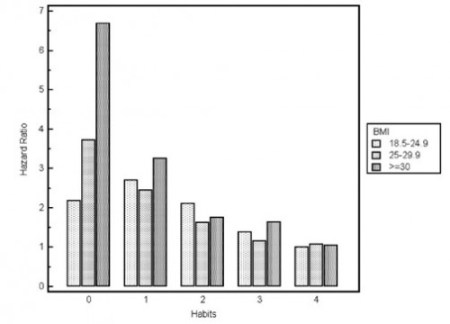
RAGEN:  Absolutely.  The fact that I’m a healthy fat athlete isn’t a surprise or a paradox, there are lots of us.  A great deal of evidence (Matheson et. al., Wei et. al, the Cooper Institute etc.) points to the conclusion that healthy habits make healthy bodies in a wide variety of sizes.

Matheson et. al. People who participated in four healthy habits had essentially the same hazard ratio regardless of their weight. Obese people who participated in four healthy habits had a dramatically lower hazard ratio than thin people who did not participate in healthy habits.

The worst thing is that all this focus on the weight of individuals is distracting us from the systemic issue of lack of access.  Many people do not have access to the healthy foods that they would choose to eat -including foods that are not genetically modified or full of hormones or government subsidized high fructose corn syrup.  Many people do not have access to safe movement options that they enjoy, or to affordable evidence-based health care.  But as long as we focus on little Johnny’s BMI, we don’t have to address the real problems here and we can just keep shaming and blaming fat kids and adults and misinforming them and everyone else about the odds of becoming permanently thin.

We admire Michelle Obama and we believe that she is a strong woman.  In fact, we believe that she is strong enough to step up to a microphone and say “I truly believed that I was doing the best thing for kids’ health.  I now realize that I was wrong, and I am going to lead the charge in fixing it.  We are going to start focusing on supporting the development of healthy behaviors, and access to healthy safe movement options, and affordable evidence-based healthcare for kids of all sizes, and we are going to stop focusing on the weight of any kids at all.”

We look forward to seeing it.

++++++

So that’s the article that was “too controversial” for three major media outlets.  I’ll end the way I started.  Mrs. Obama, I’d like to take you to lunch.  No need to spend government money – I’ll come to Washington DC at my own expense, we’ll go to lunch and I’m buying.  I think that we both believe in giving our citizens the opportunity to achieve their health goals and I think that if you are trying to eradicate obese people, it is worth talking to one and seeing if we can learn from each other.  What do you say?

Like my blog?  Here’s more of my stuff!

The Book:  Fat: The Owner’s Manual  The E-Book is Name Your Own Price! Click here for details

Become a member: For just ten bucks a month you can keep this blog ad-free, support the activism work I do, and get deals from cool businesses Click here for details

Interviews with Amazing Activists!!  Help Activists tell our movement’s history in their own words.  Support In Our Own Words:  A Fat Activist History Project!

Dance Classes:  Buy the Dance Class DVDs or download individual classes – Every Body Dance Now! Click here for details 

If my selling things on the blog makes you uncomfortable, you might want to check out this post.  Thanks for reading! ~Ragen

Worth Looking At

IMG_9103 - Copy
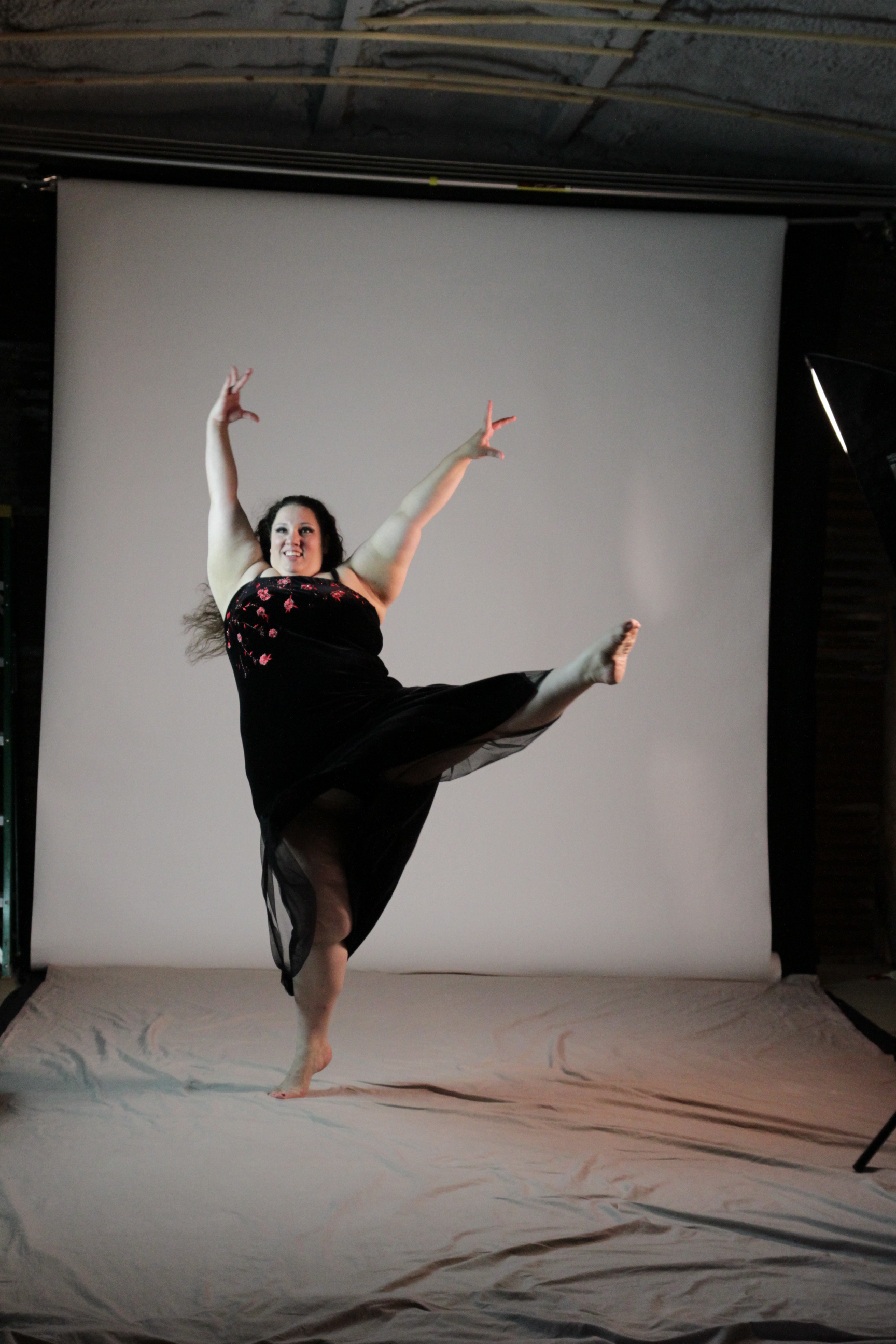
A judge once told me that she “couldn’t stand to look at me” in this costume and that I had “no business wearing spaghetti straps.”

I did a post a couple of days ago about seeing the Cirque du Soleil show “Zumanity” and noticing that, in a show of people who are nearly naked, the only two fat women in the show were also the only performers wearing full body stockings (long pants, long sleeved) all the time.  I got a lot of interesting reactions to the piece that I wanted to talk about.

A very common response was asking if perhaps the women (who are known as The Botero Sisters) might prefer to be covered by a full body stocking, and isn’t that their right?

As women of course it’s their right, but I don’t think it makes this any less important to discuss.  If this is the case, then I have a couple of questions.  First, would such a request would have been honored if it were made by one of the thin performers, or would they have been told that they were signing up for a show where being scantily clad was part of the job? Also, while it’s their right to make the choice, I think it’s worth examining if choices like that are driven by a society that says that a thin naked body is sexy and a fat naked body must be covered or contained to be seen.

Some people wondered if the costuming was made to help them with their performance but other people who did the exact same thing that they did wore far less clothing so I don’t feel that’s it.  (In fact, now that I know their background and how talented they are, I feel that they are vastly under-utilized in the show.)

Another response suggested that perhaps Cirque did a study and found that people found them more sexy with the body stockings.  If that is the case, then I would have to ask again if that is driven by the rampant fat hatred in society and if “giving the people what they want” is worth reinforcing and contributing to the stigma and shame that are heaped on fat people by society – especially in a show like this that is supposed to be about breaking boundaries.  As I said in my original piece, I applaud the step forward of having these women in the show, and I think it’s worth talking about what the next step is.

I think I wasn’t clear enough in my first piece so let me be clear now that I’m not suggesting that we judge these women – or other fat performers – for the choices they  make when it comes to costuming.  As a fat dancer who has both competed and is in a fat cabaret company, I can absolutely understand how hard it is to make costume choices and the criticism that can be leveled by anyone and everyone about anything and everything. I am not suggesting that we should run around criticizing fat performers for their costume choices.

What I am suggesting is that we critically examine the culture that leads to those choices.  What I am suggesting is that we recognize when something might be driven by that culture – when fat people have a different experience than thin people because of the way fat people are viewed and treated in the culture.  What I am suggesting is that, like fat people in all manner of clothes and lack thereof, those things are worth looking at.

Like the blog?  Here’s more of my stuff!

The Book:  Fat: The Owner’s Manual  The E-Book is Name Your Own Price! Click here for details

Become a member: For just ten bucks a month you can keep this blog ad-free, support the activism work I do, and get deals from cool businesses Click here for details

Interviews with Amazing Activists!!  Help Activists tell our movement’s history in their own words.  Support In Our Own Words:  A Fat Activist History Project!

Dance Classes:  Buy the Dance Class DVDs or download individual classes – Every Body Dance Now! Click here for details 

If my selling things on the blog makes you uncomfortable, you might want to check out this post.  Thanks for reading! ~Ragen

Fat In Person

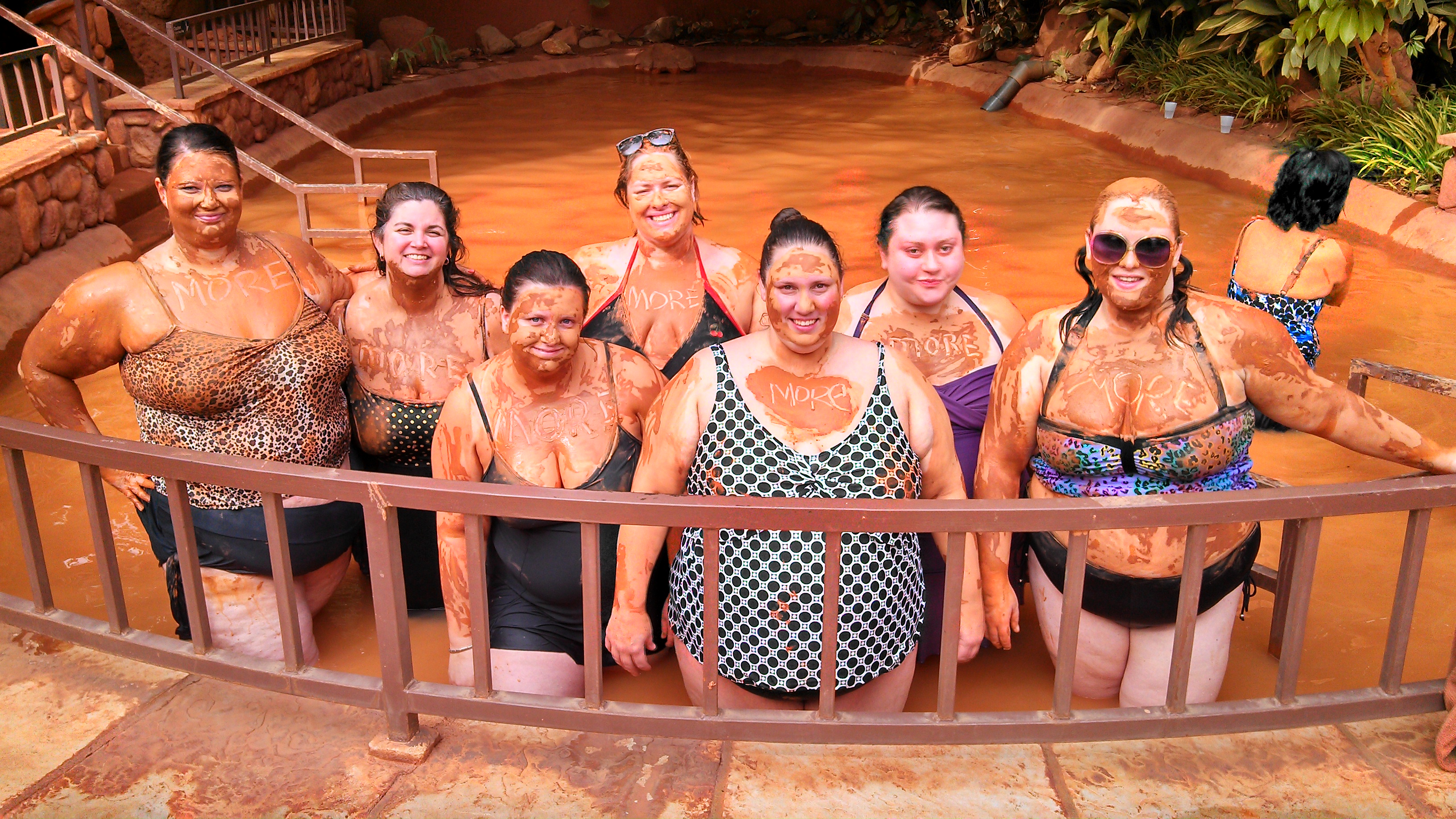
I got nature on me for the sake of this picture!  Spa Day with More Cabaret
The lovely ladies of More Cabaret Fatting it Up at the Day Spa! (I got nature on me for this picture!)

I’m sitting in a hotel room in Las Vegas, and I’m thinking about how one really important form of activism is just being fat in public.  In the past few days I’ve had a lot of chances.  The Size Diversity Task Force retreat is now over, but we had an amazing four days.  There were people I spend a lot of time with, people I’ve met a couple times, and people I only know from online.  We had laughing and crying, activities from a fatshion show to fataoke, we had fancy dinner and un-fancy brunch, we had an ongoing moving scooter brigade, we had participants from Florida to California, we had a blast.

I absolutely love fat community on the internet – it’s given me the opportunity to learn about Fat Acceptance, to have this blog and all of the awesome comments and community that happen here thanks to my kick ass readers, and it’s given me the opportunity to make friends all around the world.  For people I know in rural areas, or urban areas where there isn’t strong community, online fat acceptance community has been an absolute lifeline.

While I love online community, there’s something really special about fat community in person.  Whether it was walking with a fat mob down Freemont street to dinner, or hanging out in the hotel suite and talking about the activism projects that we want to do, or just hanging out, there’s something very cool and empowering about being around fellow fatties and thin allies and thin fat activists in person.  There’s something amazing about the physicality of it, and about being able to talk about experiences that we have, there’s something empowering about hearing someone make a dinner reservation saying “There are 20 of us and we’re all really fat so make sure we have some space and armless chairs.” There’s definitely something magical about dancing around the room to wild applause while people cheer you on, and something uplifting about supporting someone who has just stood up to a fat bully.  Plus it’s just a really amazing experience to hang out and have fun with people who aren’t judging you for your size.

What I’m saying here is that if you aren’t involved in fat community in person, I would highly suggest giving it a try if it is available to you.   There are lots of options.  There are local groups – check Meetup and Facebook for local groups in your area, or consider starting your own.  You could start your own group around something that you like (fat friendly knitting group, fat friendly walking group, fat friendly dinner and a movie night), you could start a local group of the Size Diversity Task Force, or start your own thing. There are retreats and conferences.  The SDTF retreat is over for now, but Abundia is coming up in November (and there’s still time to get the hotel discount!)

If you want help with doing any of this, e-mail me at ragen at danceswithfat.org and I’ll be happy to help! For now I want to say thank you to the amazing group of people who let me hang out with them in Vegas this week and sent me back home refreshed, reinvigorated and really excited about what’s to come (*cough* Guinness Record Paper Mache Sculpture made from diet books *cough*)

If you have awesome experiences with being fat in person, or ideas for those who are looking for some in-person community, it would be super extra awesome if you left them in the comments!

Like my blog?  Here’s more of my stuff!

The Book:  Fat: The Owner’s Manual  The E-Book is Name Your Own Price! Click here for details

Become a member: For just ten bucks a month you can keep this blog ad-free, support the activism work I do, and get deals from cool businesses Click here for details

Interviews with Amazing Activists!!  Help Activists tell our movement’s history in their own words.  Support In Our Own Words:  A Fat Activist History Project!

Dance Classes:  Buy the Dance Class DVDs or download individual classes – Every Body Dance Now! Click here for details 

If my selling things on the blog makes you uncomfortable, you might want to check out this post.  Thanks for reading! ~Ragen

Flawsome?

enoughI just watched an episode of America’s Next Top Model that had a photoshoot themed around being “Flawsome.” The idea here is that you have a flaw that you rock, thereby making it awesome.

Flaws included a widow’s peak, tooth gap, skinny legs, big hips, big eyes, a mole, and a big forehead.  Each shoot included model Shaun Ross who is an actor, model and dancer who identifies as an Albino of African descent.

The thing that’s really flawed is the idea that there is one right way to look and everything else is a flaw.  This idea is racist, sizeist, and ableist just for a start.  It seems to me that this is one of those situations where the majority of people who are participating in the situation are being hurt by it and yet we keep perpetuating it with our time, money, and energy.  “Rocking our “flaws” is one option.  Another option would be to fervently declare that we don’t have flaws.  That our foreheads, eyes, hips and everything else are fine as they are.

What if there is no such thing as flawed bodies?  What if there are only variations?  Different shapes, different sizes, different abilities, but all perfect as they are.  What if, instead of reading another article about clothing that hides those “problem areas”, we realized that our bodies don’t have any problem areas? What would be different if, instead of suggesting that other people (or that we) aren’t beautiful, we realized that the problem is that we’ve been taught to see flaws instead of to see beauty.  What if we took it upon ourselves to change that.   What if we looked for beauty in every single person we saw.  No more flaws, no more problem areas, no more body snarking, no more “can you believe she’s wearing that“.  What if every time you looked at someone else, every time you looked in the mirror, you found something beautiful.  Imagine how we can change the world.  Now consider not just imagining, but doing it!

Like this blog? Consider supporting my work with a donation or by  becoming a member! For ten bucks a month you can support size diversity activism, help keep the blog ad free, and get deals from size positive businesses as a thank you. I get paid for some of my speaking and writing (and do both on a sliding scale to keep it affordable), but a lot of the work I do (like answering hundreds of request for help and support every day) isn’t paid so member support makes it possible ( THANK YOU to my members, I couldn’t do this without you and I really can’t tell you how much I appreciate your support!)   Click here for details

Here’s more cool stuff:

My Book:  Fat:  The Owner’s Manual  The E-Book is Name Your Own Price! Click here for details

Dance Classes:  Buy the Dance Class DVDs or download individual classes – Every Body Dance Now! Click here for details 

If you are uncomfortable with my selling things on this site, you are invited to check out this post


Oh the Zumanity

I’m in Las Vegas where Julianne has taken me to celebrate my birthday. Tonight she took me to see the Cirque du Soleil show Zumanity.  It’s Cirque’s 18 and up show built around an exploration of human sexuality.  There were a lot of really good things in the show, including a celebration of women of many different shapes and sizes. There are two fat women included in the show.  Billed as the Botero sisters they have a lot of crowd interaction and are included in a dance number and in other small roles.

While I was very happy to see two fat women in the show, I was dismayed that, unlike any of the other performers, they wore full body stockings (covering their entire body including legs and long sleeves) under their costumes. (EDIT:  Based on my understanding of how Cirque works, the costumes were chosen by the company and not by women – if they want to wear these body stockings that would certainly be their choice, I know many fat belly dancers who choose to wear the stockings which is, of course, totally cool.)

It’s progress for sure to have two fat women as performers wearing thong bikinis and I celebrate that progress.  Having read a bit about the two sisters they seem to be both talented and body positive.  But I am surprised that a show that thinks its audience is ready for [spoilers] women having orgasms while tied up and choking themselves, a drag queen propositioning an elderly couple for three-way sex, and a rotating “lazy susan” orgy doesn’t think its audience is ready for a fat body that isn’t wrapped in a nylon stocking.

I think that says something about the tremendously oppressive nature of fat bigotry in this culture.  I also think it’s time for Cirque’s exploration to start a new expedition – no body stocking required. Perhaps the world will follow.

Do you get stressed about going to the doctor’s office? 

At the request of a number of blog readers, I’ve created a workshop designed to help people communicate effectively with their doctors – including things to say when the doctor diagnosis you as fat and prescribes weight loss,  the research that supports a Health at Every Size Approach, and even optional role playing and Q&A.  Get all the details here! Registration deadline is October 11.

Like my blog?  Here’s more of my stuff!

The Book:  Fat: The Owner’s Manual  The E-Book is Name Your Own Price! Click here for details

Become a member: For just ten bucks a month you can keep this blog ad-free, support the activism work I do, and get deals from cool businesses Click here for details

Interviews with Amazing Activists!!  Help Activists tell our movement’s history in their own words.  Support In Our Own Words:  A Fat Activist History Project!

Dance Classes:  Buy the Dance Class DVDs or download individual classes – Every Body Dance Now! Click here for details 

If my selling things on the blog makes you uncomfortable, you might want to check out this post.  Thanks for reading! ~Ragen

Peaceful Angry Happy

credible hulkReasonably often someone brings up my “anger” in the blog as an issue.  Yesterday a reader named Ame brought it up in a comment and I decided that it’s time to address it:

I’ve read your blog and you are so immensely talented but so very, very angry. You preach like you are at peace with your size but to post blog entry after blog entry that are so filled with anger towards anyone (be they medical or man on the street) that contradicts that being heavy is healthy or a natural state for some, indicates that you are not happy, not at peace with yourself.

Thank you for the kind words.  I don’t know about immensely talented but I am definitely very, very angry – I am, in fact, pissed.  And not just at those who insist that body size and health are the same thing.  Even if health and body size were the same thing it would still not excuse the way that fat people are treated by everyone from the government to strangers that we meet, and I would still be very, very angry. That doesn’t mean that I’m not happy – I’m happy about a great many things, and I’m perfectly capable of holding happiness for some things and anger for others at the same time.

To suggest that my anger with the way I’m treated indicates that I am “not at peace with myself” makes it seem to me that we should stop the logic train because we’ve had a passenger fall off.  I’m at peace with myself – I’m at war with a large part of the world, and not of my choosing.  Perhaps you’ve heard of the “war on obesity?”  That war is against me, and my body. That war tries to convince people (including me) that I, and everyone who looks like me, should be eradicated based on the shaky assumption that it will save society money (as if it’s ok to suggest that a group should be eradicated in order to save society some money.)

Not only am I at peace with myself, I’m at peace with myself despite the fact that I’m being given the message that the way I look is proof that I’m a bad person who deserves shame, stigma and oppression.  It is that peace that makes me want to fight for my body and my rights to life, liberty and the pursuit of happiness which includes the right to exist in a fat body without having the government wage war on me for how I look. It’s my love for my own body that drives the anger.

Let’s try this – Imagine that you have a best friend, and every single day that best friend is bullied, shamed, stigmatized.  If you become angry about the way your friend is treated, it doesn’t mean that you don’t have a good relationship with your friend, it means that you are justifiably angry at their mistreatment.

I spend a lot of time smiling politely and asking people if they wouldn’t mind not oppressing me.  I don’t begrudge that and I don’t apologize for it – it’s effective, it gives people the benefit of the doubt (that perhaps they weren’t aware of the consequences of their actions,) and it’s reasonably pleasant.  That doesn’t mean that I’m not angry at a society that condones the behavior and the social constructs that support the behavior.  That anger is because I love my body, because I’m at peace with myself and I’d like some peace with the outside world.

To try to characterized the anger of people who are oppressed as a sign of deficiency in their relationships with themselves is dangerously dis-empowering – it suggests that to prove that we are happy with ourselves we must not speak out against our mistreatment (not to mention the serious issues with having some obligation to prove anything to anyone about how we feel about ourselves in the first place.) That’s flat out wrong – it’s way out of line, and, perhaps not surprisingly, it makes me very, very angry.

Online Workshop to help you deal at the doctors office! This is an online workshop designed give you the skills to communicate effectively with your healthcare provider and becoming your own medical advocate to help you get evidence-based, Health at Every Size based healthcare.  Get all the details here! Registration deadline is October 11.

Like my blog?  Here’s more of my stuff!

The Book:  Fat: The Owner’s Manual  The E-Book is Name Your Own Price! Click here for details

Become a member: For just ten bucks a month you can keep this blog ad-free, support the activism work I do, and get deals from cool businesses Click here for details

Interviews with Amazing Activists!!  Help Activists tell our movement’s history in their own words.  Support In Our Own Words:  A Fat Activist History Project!

Dance Classes:  Buy the Dance Class DVDs or download individual classes – Every Body Dance Now! Click here for details 

If my selling things on the blog makes you uncomfortable, you might want to check out this post.  Thanks for reading! ~Ragen