Armless Chairs – Equal Access Is Not Special Access

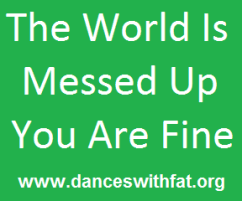
The world is messed up you are fineFar too often people create spaces as if fat people don’t exist.  Reader Chloe wrote to tell me about an experience in which she arrived at the doctor’s office for a checkup for her broken leg (remember that, it will be important in a second) and found that all of their chairs were narrow with arms and didn’t accommodate her. She hobbled over to the front desk and they said that they wanted all the chairs to match so that the office looked nice, and that they didn’t have a “special chair” for her.

So Chloe asked if that was actually more important than the chairs being functional and welcoming to clients of all sizes, and not forcing her to stand on one leg during what she had already been told would be an extended wait.  At that point the staff apologized, went to another office in the complex and borrowed an armless chair, and promised to order one the same day, even asking for her opinion of what might work better – an armless chair, bench, or a love seat?

Asking for accommodations can bring up a lot of emotions – stress, embarrassment, shame, fear, anger, guilt. I think that one massive problem is that we’ve been told that asking for accommodations is asking for some kind of favor or special treatment above and beyond what everyone else gets.

Often those being asked to accommodate us, and sometimes even those asking for accommodations, feel like this is a request for something “special.”  So when someone needs an armless chair, or a seat that accommodates them on a plane, or clothes in a size that fits them, or whatever, there can be a thought that the person is asking for some kind of special treatment.

That’s just not true.  When a fat person asks for furniture that accommodates us or enough room to sit on a plane or plus sizes (or, as I like to call them, sizes) this is not asking for something special – it’s asking for what others already have.  If the other patients at your doctor’s office walk into the office and sit down, but you can’t because the chairs all have arms and don’t work for you, then when you ask for an armless chair you’re not asking for something special – you’re asking for what the other patients already have.

The problem isn’t that you are asking for a chair that works for you, the problem is that your doctor’s office didn’t think to order some armless chairs in the first place.  I believe that people who are designing spaces – especially spaces like public transportation and healthcare – should constantly ask themselves “How can I accommodate everyone who might want this service?”  That includes people with disabilities,people of all sizes/heights, people with cultural and language differences, people who are left handed, everyone they can possibly think of.

Let’s be clear that we aren’t saying “hey, I need this special thing” we’re saying “I’m going to do you the courtesy of asking you for something that you should have already provided but didn’t.” How about instead of saying “damn these people and their ‘special requests’ to be provided with what we’ve already given to the people it’s cheapest and easiest for us to accommodate”  people start asking “How can we become radically hospitable? Who can we better accommodate?”

When a fat person says “I need a seat on the plane that I can fit into” or “I need a chair that works for me” or “I want some clothes that fit” they aren’t saying “I need something special” they’re pointing to the person beside them who can walk onto the plane and fit into a seat, sit easily in the chairs provided, and shop at more than 3 online stores, and saying “I’ll have what she’s having.” Equal access is not special access, equal treatment is not special treatment, and the only people who should feel embarrassed when we have to ask for accommodations are the companies who didn’t provide it in the first place.

Like this blog?  Here’s more cool stuff:

Like my work?  Want to help me keep doing it? Become a Member! For ten bucks a month you can support size diversity activism, help keep the blog ad free, and get deals from size positive businesses as a thank you.  Click here for details

Book and Dance Class Sale!  I’m on a journey to complete an IRONMAN triathlon, and I’m having a sale on all my books, DVDs, and digital downloads to help pay for it. You get books and dance classes, I get spandex clothes and bike parts. Everybody wins! If you want, you can check it out here!

Book Me!  I’d love to speak to your organization. You can get more information here or just e-mail me at ragen at danceswithfat dot org!


What To Do When A Kid Is Fat Shaming Themselves

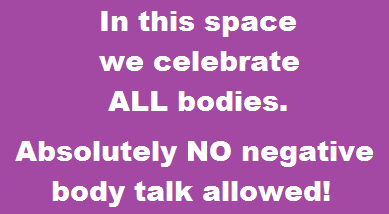
NO Negative Body TalkI’ve talked in other posts about how to to help a kid who is being fat shamed.  But perhaps even more heartbreaking is when you hear a kid fat shaming themselves. Reader Lindsey sent me the following:

Last night at Target my daughter wanted a new swimsuit. She wanted a 2-piece but had a certain look in mind. I told her we should try them on to make sure they fit how she wanted and if it was comfortable. We headed out to the dressing room and on the way, she says in passing, my middle is my thickest part and all of the girls I see on tv and magazines are thin. Right away my heart was crushed. I told her she didn’t have to wear something she didn’t want to and everyone has different bodies. She came out of the dressing room in a bikini and was holding her tummy in. I said, don’t hold your tummy in, you look great! How does the suit feel? She decided she liked it but still tried on another suit which was a tankini. She liked that one too. I asked which she was more comfortable in and she said she liked both the same. I asked her if someone teased her or said something stupid to her would she feel bad and not want the bikini anymore. She said she doesn’t listen or care what others say. THIS, warmed my heart. We ended up purchasing both in case one day she wanted more or less coverage. I HATE that my 9 yr old little girl thinks about this. I HATE my 9 yr old little girl has to be reminded of this in the media and everywhere else on a daily basis. Do you have any tips to handle situations like this or books that are about positive body image etc? Thank you so much for reading and for your time.

I’m so sorry that this little girl has to live in a thin-obsessed world without  diverse representation in the media, but I’m also glad that she is in a place where she doesn’t have to care what people thinks, and that she has a mother who is on top of this.  For far too many kids this isn’t the case (with the average girl going on her first, but certainly not last, diet at age 8.) So how can we support kids who have internalized our cultures thin obsession and turned it in on themselves?

We can start by modeling.  One of the difficult things about our culture is that today’s parents (and especially mothers) were raised to hate ourselves. So we have parents who have issues with body image and self-esteem trying to raise kids who don’t have those same issues, in the same culture that created those issues in the first place.  That’s really difficult.  So consider working on your own body image and self-esteem, and in the meantime be mindful of what you say in front of kids. Kids believe what you do more than what you say, so if you spend a bunch of time engaged in negative talk about your own body, and then tell your kid that their body is beautiful just as it is, they’re more likely to believe the messages they are getting from the former than the latter.

We can also have conversations about this early and often.  We can start to inoculate kids against a culture that profits from their body hatred by pointing it out early and often. Talk to them about the ways that companies create marketing specifically to make them feel badly about themselves so that they buy their products, ask them if they think it’s ok.  Ask them what they think they can do about it.  Encourage them to start a “Body Positivity Club” at their school (or maybe a book club with body positive books) Throw an “I Love My Body” party for your kid and their friends.

Be honest – explain the concepts of oppression, and privilege and activism in an age-appropriate way. Yes, in our society people who look a certain way may be treated better, and if you think that’s wrong you can fight to end it.  You can also talk about weight and health – explain that there are some people who may want the best for them, but they are unfortunately ill-informed about the truth about the diversity of body sizes that exist and how health works (maybe start with the story of Galileo.) You can also bridge this lesson to talk about other types of oppression – racism, ageism, ableism, homophobia, transphobia, classism et al,  areas where they have privilege and how they can use that privilege to help (age-appropriate intersectionality FTW!)

Teach kids to be grateful for what their body does, not just how it looks.  Challenging the standards of beauty is a good thing to do, but you can help kids by helping them have gratitude for what their bodies do.  You can teach them to think of their bodies as friends, and then if they talk badly about their body (or if others do) you can ask them if they would talk about (or allow someone to talk about) their friends like that.

Consider creating spaces that are specifically body positive – with no negative body talk allowed.  Maybe it’s the dinner table, or when you’re talking before bedtime.  Consider creating a mantra that you use when you are watching tv or movies (or driving by billboards, or flipping through magazines) to help kids deal with the ceaseless messages of body hate that they get.  Maybe it’s something like “My body is awesome just as it is” or maybe it’s “Nobody talks bad about my body.”

Remember that you’re going to have to reinforce this lesson a lot because the diet and beauty industries aim for quantity – trying to get to our kids as early and often as possible to make them loyal body haters/customers for life.

If you have other ideas I would love for you to leave them in the comments!

Body Love Obstacle Course – Last day to register!

I am so excited about this! The BLOC is a 10-week, proven, step-by-step program that will give you the coaching from nine amazing experts, the tools, and the community you need to create a rock solid foundation of self-esteem and body love, and teach you the strategies and skills you’ll need to leverage that to create the life you’ve always wanted no matter what obstacles the world puts in your way.

Our relationships with our bodies don’t happen in a vacuum, so just learning to see our beauty or love our bodies isn’t enough.  On our journey to body love and amazing lives, the world throws obstacles in our way – obstacles that aren’t our fault, but become our problem. We’ll teach you practical, realistic, proven strategies to go above, around, and through the obstacles that the world puts in front of you, to get to the life you’ve always wanted.

Get all the details and register at www.bodyloveobstaclecourse.com

Like this blog?  Here’s more cool stuff:

Like my work?  Want to help me keep doing it? Become a Member! For ten bucks a month you can support size diversity activism, help keep the blog ad free, and get deals from size positive businesses as a thank you.  Click here for details

Book and Dance Class Sale!  I’m on a journey to complete an IRONMAN triathlon, and I’m having a sale on all my books, DVDs, and digital downloads to help pay for it. You get books and dance classes, I get spandex clothes and bike parts. Everybody wins! If you want, you can check it out here!

Book Me!  I’d love to speak to your organization. You can get more information here or just e-mail me at ragen at danceswithfat dot org!


11 Reasons Why I Focus On Health and Not Weight

Success and DietsI got the following e-mail today:

This whole Health at Every Size thing is nothing more than fat people justifying being fat and being too lazy to diet. It simply makes no sense in any other context.

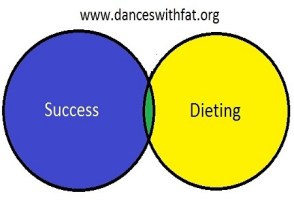
Setting aside the fact that my body needs no justification,  I came to a Health at Every Size practice based on the evidence.  This person is confused – based on the research dieting is the thing that makes no sense.

Before we get too far into this, just a reminder of the usual disclaimers:  health is not an obligation, barometer of worthiness, entirely within our control, guaranteed under any circumstances, and not anybody else’s business unless we ask them. The right to be treated with basic human respect is not size, health, or “healthy habit” dependent by any definition thereof. Fat people have the right to exist in fat bodies without shame stigma, bullying and oppression and it doesn’t matter why we’re fat, what being fat means, or if we could (or want to) be thin. Fat people’s health is not your business unless they ask you to make it your business. Anyone wishing to make a hand-wringing “But my tax dollars blah blah blah” argument can head over to this post.

But since they asked, here are 11 reasons why I think a focus on health rather than weight makes way more sense for my personal health goals:

1.  Simple Observation

We know that there are healthy fat people an unhealthy thin people so weight=health does not hold up to simple observation.

2.  Thin people get all the health issues that are correlated with fatness

And since thin people get all of these health issues, then being thin is neither a sure cure nor a certain preventative. Further, since we treat thin people for these health issues  we have treatment protocols that do not involve weight loss.  Those same protocols could be used on fat people who have these health issues – so that we are treating the actual health issue and not just trying to change someone’s body size and hoping that health comes along for the ride.

3.  Correlation does not equal causation

Just because a disease is correlated with being fat does not mean that it is caused by being fat.  In some cases, sleep apnea for example, a condition is thought to cause weight gain, leading to a chicken and the egg problem. By focusing on the health problem instead of the weight we avoid this issue altogether.

4. Confirmation Bias

We seek evidence that confirms our existing beliefs.  For example doctors test fat people earlier and more often for health issues thought to be correlated with being fat, thin people who have the symptoms of diseases that are correlated with being fat are often ignored because the doctors assume that thin people are “safe” from these diseases.  If you have two groups and you test one earlier and more often for a set of health problems, and subsequently ignore the symptoms of those health problems in the second group, of course the first group is likely to have a higher diagnosis rate.

5.  Third Factor

One of the reasons that correlation does not imply causation is because the two things could both be caused by a third factor.  It’s entirely possible that a third factor is responsible for both body size and health issues, in which case weight loss attempts will do nothing to address the problem and may even exacerbate it.

6.  The Wrong Measurements

When people set weight loss as a goal, they are typically assuming that along with that weight loss they’ll get a host of metabolic health benefits: good cholesterol, blood pressure, triglyceride and blood glucose numbers etc.  So when, like 95% of people, they fail at weight loss they assume that they failed at all of the health outcomes as well.  But studies show that this isn’t the case.  Had they measured their metabolic health rather than their weight they are likely to have seen health increases, even without weight loss.

7.  Confusing the standard of beauty with health

As a culture we tend to have a single standard of beauty (which is a whole other problem).  Unfortunately it is all too easy to assume that this single standard of beauty is also the single standard of health. That is simply not true.

8. Human Diversity

We accept a huge amount of human diversity.  Large variations in shapes and sizes of feet, hands, and noses, heights, hair colors etc. are all considered normal.  And yet we expect healthy bodies to conform to a narrow height weight ratio or we consider them “abnormal” or “unhealthy”

9.  The Dieting Effect

In studies dieting (particularly dieting young and/or repeatedly) predicts weight gain.  So even if I bought into the idea that “fat” is “bad,”  dieting is the last thing that I would do since the most likely outcome is that I would end up more fat than when I started (which was certainly my personal experience of dieting.)

10. The Unlikelihood of Weight Loss

In studies since 1959 weight loss has shown a success rate of only a tiny minority.  Doctors are prescribing a intervention that almost never works (and has the opposite of the intended effect the majority of the time) to 60% of Americans. The diet industry makes 60 Billion dollars a year taking credit for their successes, and blaming their clients for their failures.

11.  The likelihood of increased health

We know that health is multi-dimensional and not entirely within our control.  That said, studies show that most people will get a health benefit from participating in healthy behaviors (movement, getting enough sleep, having a strong social network, getting enough food etc.).  Studies also show that most of these people will not experience significant long term weight loss but, again, will increase their odds for health.

12:  Bonus Reason: 

This whole thing is based on the (completely untested) hypothesis that if you make fat people look like thin people, they will have the same health outcomes.  For now, I’ll set aside the fact that when researchers claim to be studying health and body size they are actually study a bunch of things that they rarely talk about or even attempt to control for.

Research found that men with certain baldness patterns have a much higher risk of cardiac incidents.  Additional research found that the baldness and cardiac incidents likely have the same root cause.

Thank goodness the weight loss people weren’t in charge of this or instead of the additional research and actual interventions, we’d have a government-sponsored War on Baldness and a sixty billion dollar industry telling men that they have to  grow their hair back to be healthy and that if they don’t it’s their fault, accompanied by reporters whipping everyone into a frenzy with articles about how much bald men who get heart disease are costing society.

The bottom line here is that, even if a large body is a “risk factor” for health issues, it does not follow that manipulating the size of that body will change health or risk factors, and it may actually make it worse.  Making one group of people look like another group of people to try to duplicate health outcomes is not solid science.

So there you go, 11 reasons (and a bonus reason!) why I choose to focus on health rather than body size manipulation. Your get to make choices for you, and your mileage may vary, but let’s not pretend that dieting is the only choice that “makes sense.”

Body Love Obstacle Course – Registration closes March 1!

I am so excited about this! The BLOC is a 10-week, proven, step-by-step program that will give you the coaching from nine amazing experts, the tools, and the community you need to create a rock solid foundation of self-esteem and body love, and teach you the strategies and skills you’ll need to leverage that to create the life you’ve always wanted no matter what obstacles the world puts in your way.

Our relationships with our bodies don’t happen in a vacuum, so just learning to see our beauty or love our bodies isn’t enough.  On our journey to body love and amazing lives, the world throws obstacles in our way – obstacles that aren’t our fault, but become our problem. We’ll teach you practical, realistic, proven strategies to go above, around, and through the obstacles that the world puts in front of you, to get to the life you’ve always wanted.

Get all the details and register at www.bodyloveobstaclecourse.com

Like this blog?  Here’s more cool stuff:

Like my work?  Want to help me keep doing it? Become a Member! For ten bucks a month you can support size diversity activism, help keep the blog ad free, and get deals from size positive businesses as a thank you.  Click here for details

Book and Dance Class Sale!  I’m on a journey to complete an IRONMAN triathlon, and I’m having a sale on all my books, DVDs, and digital downloads to help pay for it. You get books and dance classes, I get spandex clothes and bike parts. Everybody wins! If you want, you can check it out here!

Book Me!  I’d love to speak to your organization. You can get more information here or just e-mail me at ragen at danceswithfat dot org!


Cheryl Tiegs – Former Model, Current Fat Shamer

What a Load of CrapNearly 500 readers e-mailed and Facebooked me asking for a post about this, so here you go!  For the first time ever, a “plus size model” (or, as I like to call them, models) is on the cover of Sports Illustrated’s Swimsuit Edition.


Now there are any number of issues that one might have with the concept and execution of the Sports Illustrated Swimsuit Issue, I certainly have many,  but for now I’m going to set those aside to talk about this. Ashley Graham, a size 16 model, is on the cover of a magazine that is known for highlighting the most “beautiful” women in the world as dictated by the current stereotype of beauty. And this year, it’s a woman who, while she meets that stereotype in many ways, is definitely larger than the stereotype dictates.

One of the things that can happen when people challenge the stereotype of beauty – even a little bit- is that those who have been benefiting from the former stereotype can get really bent out of shape.  We all live in a culture that tells us that we’ll never be enough, and that suggests that we should try to feel better about ourselves by trying to put others down.

So let’s say that someone derives their self-esteem from – just as a random hypothetical- the fact that they are thin enough to be a Sports Illustrated Cover Model and their belief that it makes them better than other people.  Then let’s say, again hypothetically, that a plus sized woman becomes a Sports Illustrated Cover Model. That can cause a massive issue for someone who thinks that they are valuable because they are thin. It presents a direct challenge their sense of self-esteem and value.  (This is one of the ways that a culture of fat hate and weight bias hurts everyone of every size, by the way.)

Enter Cheryl Tiegs.  Perhaps she is being driven by jealousy, or by what she perceives as an attack on what makes her valuable, or something else. I know that these can certainly be reactions, but of course I have no idea what is going on in her mind. What I do know is that what is coming out of her mouth is fat shaming,  healthism, and pure wrong.  When asked about Ashley’s cover, Cheryl spewed the following:

I don’t like it that we’re talking about full-figured women, because it’s glamorizing them — and your waist should be smaller than 35 [inches]. That’s what Dr. Oz said, and I’m sticking to it. I don’t think it’s healthy.”

To quote Nora Crotty who did a great piece about this for Yahoo! Style  “It should be noted that a 2014 study published by the British Medical Journal found that at least half of television Dr. Mehmet Oz’s medical advice is either without base or entirely wrong.” Waist size is not health, body size and health are two different things.  As far as I’m concerned, there is no reason to believe that Cheryl Tiegs is a psychic doctor.  Also,  Dr. Oz is a sell-out quack, and anyone who quotes him has some serious credibility issues. But that’s not really the point here.

The point is, if you think that only people who meet your definition of “health” should be allowed to be photographed for magazines, then you are a healthist, and an asshole. Period.  Ashley Graham’s health has fuck all to do with this situation.  And Cheryl does not get any bonus points for rehashing all that “promoting fatness”  bullshit. I also think it’s pretty telling that Cheryl thinks that it’s people talking about women that “glamorizes” them.  Ashley Graham is glamorous whether people are talking about her or not.

And the icing on the bigoted bullshit cake?  Cheryl saying that Ashley’s “face is beautiful.” Newsflash Cheryl, telling fat women they “have a pretty face” is the most back of backhanded compliments, so why don’t you skip it and at least have the guts to stand there and be the healthist, weight bigot you are.

It’s unfortunate, but as fat people demand and exercise our right to exist and participate fully in the world, this is the kind of fatphobic, handwringing, healthist bullshit that we’ll have to face.  But we’re going to keep moving forward and things are going to change, and the Cheryl Tiegs of the world will either have to deal with their issues and change with it, or be left to whine about it with the rest of the people desperately clinging to their healthist, sizeist views.

Body Love Obstacle Course – Registration is Now Open!

I am so excited about this! The BLOC is a 10-week, proven, step-by-step program that will give you the coaching from nine amazing experts, the tools, and the community you need to create a rock solid foundation of self-esteem and body love, and teach you the strategies and skills you’ll need to leverage that to create the life you’ve always wanted no matter what obstacles the world puts in your way.

Our relationships with our bodies don’t happen in a vacuum, so just learning to see our beauty or love our bodies isn’t enough.  On our journey to body love and amazing lives, the world throws obstacles in our way – obstacles that aren’t our fault, but become our problem. We’ll teach you practical, realistic, proven strategies to go above, around, and through the obstacles that the world puts in front of you, to get to the life you’ve always wanted.

Get all the details and register at www.bodyloveobstaclecourse.com

Like this blog?  Here’s more cool stuff:

Like my work?  Want to help me keep doing it? Become a Member! For ten bucks a month you can support size diversity activism, help keep the blog ad free, and get deals from size positive businesses as a thank you.  Click here for details

Book and Dance Class Sale!  I’m on a journey to complete an IRONMAN triathlon, and I’m having a sale on all my books, DVDs, and digital downloads to help pay for it. You get books and dance classes, I get spandex clothes and bike parts. Everybody wins! If you want, you can check it out here!

Book Me!  I’d love to speak to your organization. You can get more information here or just e-mail me at ragen at danceswithfat dot org!

Fatphobic Nurse Makes Me Say F*ck Seven Times

Bad Doctor

Tristy Taylor is a super cool woman who I met through fat activism.  I think I was first introduced to her via her video Fat Strong Lady, about being an Olympic-style lifter, we connected through Facebook and through various events. A little over six months ago her husband passed away, unexpectedly, in front of her.  She has been dealing with her grief in a way that I think is incredibly brave, vulnerable, and honest – both asking for the help that she needs and sharing her journey in case it helps others.  She is currently doing a “6 Months of Grief Project” and today’s post – about an overdue trip to the doctor –  caused me to shake with rage and, when I posted it to Facebook, to say FUCK seven times, in all caps:

[From me:] FUCK THIS!! FUCK IT! FUCK IT! FUCK IT! FUCK FATPHOBIA! FUCK HEALTHCARE PRACTITIONERS WHO THINK FATPHOBIA IS THE SAME AS HEALTHCARE. FUCK. IT.

[From Tristy]”So I ask her. “Are you aware that I am suddenly widowed?” She quickly checks her chart. “Oh yes, I see,” she says. “Well, at least this is one good outcome!” she cheerily responds. Again, I stand there, dumbfounded. I can’t even process what she is saying to me. Is she saying that a good thing coming out of my husband dying suddenly before my eyes is that I stopped feeding myself and lost 20 lbs? IS THAT WHAT SHE IS SAYING TO ME?”

You can read the full piece here. The comments that came after on my Facebook post demonstrated what I already know – that this happens far, far too often. Many healthcare practitioners seem to think that weight loss is not only a good thing (despite the lack of evidence that most people will be able to maintain it, or that it will make them healthier in any case,) but then they take it ever further insisting that weight loss by any means is a good thing.  This is not just ridiculous, it can be deadly. Fat people have died because of this type of malpractice – doctors have congratulated fat patients on their weight loss and suggested ways that they could lose even more, ignoring their patients concerns about an actual medical symptom (unexplained changes in body weight,) to celebrate their body becoming closer to the cultural ideal of beauty.

Healthcare practitioners have missed (and in some cases exacerbated) gallbladder disease, pancreatitis, malnutrition and dehydration due to grief, depression and other circumstances, big ass cancerous tumors, eating disorders, and more because of their blatant, dangerous, deadly weight bias.

Healthcare practitioners owe us more than that. They owe us more than a diagnosis of “fat” and a prescription of “weight loss.” They owe us more than celebrating symptoms of deadly illnesses that they would be immediately concerned about if we were thin people. They owe us more than treatment based on bias, stereotypes, and misinformation spread by the diet and weight loss industries. Healthcare practitioners owe us better than “everybody knows.” They owe us more than a “choice” of pills that can kill us or the amputation of our perfectly functioning stomachs.  They have an ethical obligation to provide us with evidence-based medicine and informed consent, and far too many healthcare practitioners are failing, and far too many other healthcare practitioners are too busy getting defensive rather than demanding better education for, and better behavior from, their colleagues.

Fat bias hurts, fat bias kills, and fat bias makes everything worse, including the horror of becoming a widow.  I asked Tristy for permission to share this and she agreed. I asked her if she would prefer that I share it anonymously because, unfortunately, people and blogs I highlight here often become the focus on my trolls and, showing the bravery that makes her a hero of mine, she told me to go ahead and link to her work. So I’m asking that if you came here because you hate my work, whether you are from reddit, 4chan or some other forum, please direct your aggression at me and not at a woman who is trying to get through one of the most difficult experiences that can happen to someone. Thank you.

Body Love Obstacle Course – Registration is Now Open!

I am so excited about this! The BLOC is a 10-week, proven, step-by-step program that will give you the coaching from nine amazing experts, the tools, and the community you need to create a rock solid foundation of self-esteem and body love, and teach you the strategies and skills you’ll need to leverage that to create the life you’ve always wanted no matter what obstacles the world puts in your way.

Our relationships with our bodies don’t happen in a vacuum, so just learning to see our beauty or love our bodies isn’t enough.  On our journey to body love and amazing lives, the world throws obstacles in our way – obstacles that aren’t our fault, but become our problem. We’ll teach you practical, realistic, proven strategies to go above, around, and through the obstacles that the world puts in front of you, to get to the life you’ve always wanted.

Get all the details and register at www.bodyloveobstaclecourse.com

Like this blog?  Here’s more cool stuff:

Like my work?  Want to help me keep doing it? Become a Member! For ten bucks a month you can support size diversity activism, help keep the blog ad free, and get deals from size positive businesses as a thank you.  Click here for details

Book and Dance Class Sale!  I’m on a journey to complete an IRONMAN triathlon, and I’m having a sale on all my books, DVDs, and digital downloads to help pay for it. You get books and dance classes, I get spandex clothes and bike parts. Everybody wins! If you want, you can check it out here!

Book Me!  I’d love to speak to your organization. You can get more information here or just e-mail me at ragen at danceswithfat dot org!


Dealing With Bad Body Image Days

CS 4Bad body image days can happen to anyone, any time, no matter where they are in their body love journey.  How we deal with them can help determine whether they are a minor irritation or a major setback.
In our final preview video for the Body Love Obstacle Course, Jeanette DePatie and I talk about an exercise that we use to deal with the days when we aren’t feeling the body love, and I wanted to share it with you here:

Step 1 – Find the Source

Figure out what body love obstacle or obstacles you are dealing with.  Have you been consuming media that is designed to make you feel bad about yourself (fashion magazines, articles online with diet ads attached?)  Or was it triggered by a conversation – maybe your co-workers diet and negative body talk, or a comment from your mom about you “looking older?” Or maybe it’s an illness or limitation that’s causing your relationship with your body to be strained?

Step 2 – Acceptance/Gratitude

Start to get yourself to a better place. Acknowledge and accept that you’re having a hard time with body love today and have compassion for yourself – living in a world that bombards us with messages that we aren’t enough and never will be makes it not that surprising that we would go through rough patches.

Next think of three things – any three things, no matter how small – that you can be grateful for, about your body.  If all you’ve got is blinking, breathing, and heartbeat that’s fine. Just thank your body – really thank it – for whatever things you come up with.  Try saying it out loud. Say it until you mean it.  Then tell  your body that you’re sorry that you’re having a hard time, and that you are trying as hard as you can. Then know for sure that your body has endless patience for this process, it’s not mad, you’ll get through this together and it’s all going to be alright, even if it takes some time. Stay with this step until you’re feeling a bit better.

Step 3: Over, Around, or Through

Now that you’re in a better place (even if just slightly) it’s time to think about how you can get over, around, or through the obstacles that created this situation.  Make you need to take a break from body negative media.  Focus on thanking your body for three things every day (or every hour if necessary!)  Skip lunch with your coworkers, set some boundaries with your mom. Consider trying to re-frame an illness/injury etc. as you and your body against a problem, rather than you against your body.

It’s also absolutely reasonable to get pissed off at the ways that our culture is super screwed up around body image, self-esteem, and body size. Rage at the fact that this shouldn’t be happening. Remind yourself that it’s absolutely not your fault and it’s not fair that it has become your problem.  Then do something that makes you feel good in your body whether that’s drinking a cup of your favorite tea or eating your favorite food, taking a long bath, gardening, sitting in nature, dancing around in your underwear, snuggling on the couch under a blanket, or something else.

Step 4:  See the light at the end of the tunnel

Remember that the funk you are in is temporary, stay the course, and a better body day will be here before you know it.

Body Love Obstacle Course – Registration is Now Open!

I am so excited about this!  The exercise above is from the final preview video for the Body Love Obstacle Course (BLOC.)  The BLOC is a 10-week, proven, step-by-step program that will give you the coaching from nine amazing experts, the tools, and the community you need to create a rock solid foundation of self-esteem and body love, and teach you the strategies and skills you’ll need to leverage that to create the life you’ve always wanted no matter what obstacles the world puts in your way.

Our relationships with our bodies don’t happen in a vacuum, so just learning to see our beauty or love our bodies isn’t enough.  On our journey to body love and amazing lives, the world throws obstacles in our way – obstacles that aren’t our fault, but become our problem. We’ll teach you practical, realistic, proven strategies to go above, around, and through the obstacles that the world puts in front of you, to get to the life you’ve always wanted.

Get all the details register (and get more free exercises like the one above from our free preview videos) at www.bodyloveobstaclecourse.com  Early bird pricing ends at midnight on February 25th.

Like this blog?  Here’s more cool stuff:

Like my work?  Want to help me keep doing it? Become a Member! For ten bucks a month you can support size diversity activism, help keep the blog ad free, and get deals from size positive businesses as a thank you.  Click here for details

Book and Dance Class Sale!  I’m on a journey to complete an IRONMAN triathlon, and I’m having a sale on all my books, DVDs, and digital downloads to help pay for it. You get books and dance classes, I get spandex clothes and bike parts. Everybody wins! If you want, you can check it out here!

Book Me!  I’d love to speak to your organization. You can get more information here or just e-mail me at ragen at danceswithfat dot org!

Apparently Our Necks Are Too Fat Now

You Forgot Your BullshitReader Ana let me know about a YouTube Channel that focuses on hairstyles and has almost 900,000 followers.  In a tutorial about “Hair Hacks Every Girl Should Know”  they suggested to those 900,000 people that they should use make-up to contour the back of their necks to make “slimmer graceful looking Updos!”

Fuck. That.

People are allowed to do whatever they want with their necks and their make-up, but if you feel like there’s no hobby or interest that isn’t safe from body shaming and fatphobia, you’re not wrong and it’s not you.  Our cultural obsession with weight means that it’s big business – not just for the people who lie to us and claim that they can make us thinner, but for all the people who leech off that obsession for profit, clicks, and attention.

That means that we run into body shaming and fat shaming everywhere we turn whether it’s knitting, styling our hair, participating in sports, fashion…people know that talking about weight loss – or just about the illusion of weight loss – will get them the attention.  Plus people are subject to the body shaming, single stereotype of beauty culture and they start to believe that maybe their neck would look “better” if they applied make-up to create the illusion of a different shape.

We do not have to participate in this. We have options:

Option 1:  Boycott/Protest

We can decide that we don’t want to give our time, money and energy to a brand/person/company that body shames us. We can choose to boycott them, we can engage in activism like writing a letter or posting on their social media etc.

Option 2:  Create Our Own

This is how the Fit Fatties Forum was born.  Jeanette and I were tired of trying to participate in fitness forums that were full of weight loss talk and anti-fat talk, so we created a forum for talking about fitness from a weight neutral perspective.  You can use sites like Facebook and meetup.org or start a group in your living room, and remember that you get to make the rules for your space.

Option 3:  Deal With it

Sometimes we might choose to just deal with the body shaming because it’s a product/television show/website etc. that we like.  That’s a totally valid choice, but it can really help to have some mantras ready to deal with the body shaming, as I’ve mentioned before, my mantra is “Hey, that’s bullshit!” but feel free to use what works for you.

Like this blog?  Here’s more cool stuff:

Like my work?  Want to help me keep doing it? Become a Member! For ten bucks a month you can support size diversity activism, help keep the blog ad free, and get deals from size positive businesses as a thank you.  Click here for details

Book and Dance Class Sale!  I’m on a journey to complete an IRONMAN triathlon, and I’m having a sale on all my books, DVDs, and digital downloads to help pay for it. You get books and dance classes, I get spandex clothes and bike parts. Everybody wins! If you want, you can check it out here!

Book Me!  I’d love to speak to your organization. You can get more information here or just e-mail me at ragen at danceswithfat dot org!


Fat and Eating Disorders

IMG_1848[1]
This painting was gift to me from my Best Friend, Kelrick.
It’s National Eating Disorder Awareness Week, and I wanted to talk a little bit about the ways that our culture screws up when it comes to the discussion of body size and eating disorders, because those screw-ups kill people.

The first is when we see “obesity” compared to “eating disorders” as if they are opposites. Our culture has a disturbing tendency to forget that “obesity” is defined as a ratio of weight and height – essentially just about body size – and that eating disorders are a complex combination of physical and mental symptoms.

I saw a study that compared brain circuits of obese women with brain circuits of women with anorexia. This is essentially comparing apples to bowling balls, fat is not the opposite of anorexia nor is it the diagnostic criteria for an eating disorder. Our cultural tendency to conflate weight and health can be deadly when it comes to eating disorders.   Eating disorders happen to people at all sizes.  Unfortunately when a fat person develops an ED that includes food restriction and/or over-exercising they are often encouraged to continue and even step up the behaviors, even if they can get to the point that they are aware that they are sick and are actively asking for help.  Parts of our culture are convinced that thin by any means  is better than fat, and that can lead to people dying.

Some eating disorder diagnoses require very specific criteria which includes weight and that has led to a group of diagnoses known as “FED-NEC” or Feeding or Eating Disorders Not Elsewhere Classified [edited thanks to Duckie’s comment below].  This is important because a fat person who develops an eating disorder can die before becoming “underweight” and so if we assume that someone who is fat can’t suffer from an eating disorder then we make a very grave error. Further, thin people can have trouble getting respect and treatment for Binge Eating Disorder, while people can incorrectly  assume that a fat body is – in and of itself- a diagnosis for BED.

Even professionals are susceptible to these mistakes.  I have taught dance and movement at a number of eating disorder treatment centers.  At one that worked almost exclusively with patients who were very thin and dealing with eating disorders, I happened to come in the day that they got a fat patient, one of the therapists said “I’m glad you’re here, [first name] really needs to exercise.”  I asked her how much exercise she had been doing previous to starting treatment and she responded that she assumed none. I insisted on a work-up.  It turns out that the girl had been overexercising for a long time and, based on her profile, had she not been fat they would have immediately recommended a period without exercise. I’ve also had a Binge Eating Disorder specialist tell me that, in her “vast experience” there was “nobody who got to my size without suffering from BED.”  I pointed out that her experience of people my size involves them coming to her office for treatment for BED.

We all know the adage that if all you have is a hammer then everything looks like a nail.  We also know that when a healthcare professional sees a problem repeatedly in their patients they can inappropriately extrapolate to everyone who looks like their patients (like when Dr. Oz says that every fat person he operates on has heart problems and tries to say that means that all fat people have heart problems.)  Of course in reality one would hope that every person he operates on, fat or thin, has heart problems, otherwise what is he doing cracking their chest? Just like people come to him for heart problems, people come to a BED professional for BED treatment.) But I think this goes deeper.  I think that this is what happens when society tells people incessantly that you can and should make assumptions about what people eat and how much they exercise just by looking at them.

Eating disorders can be deadly so we have to get this right.  Eating disorders happen independent of weight.  There are fat people who have bulimia and anorexia (or, rather, would, if the diagnosis didn’t include weight), there are thin people who have Binge Eating Disorder.  There are very fat people who do not have an eating disorder.  There are very thin people who do not have an  eating disorder.  Calling someone “anorexic” is not a substitute for calling them very thin, and while we’re talking about this how about we just stop making judgments about other people’s body sizes altogether?

I recently wrote a piece for The Emily Project about how the normalization of fat hate can not only influence the development of eating disorders, but can also prevent any chance of a full recovery.  I think that the best thing we can do when it comes to eating disorders, and healthcare in general, is take the focus off of weight and put it on treating people based on what is actually happening – their symptoms and situation, and encouraging people to see their bodies as amazing and worthy of care.


Like this blog?  Here’s more cool stuff:

Like my work?  Want to help me keep doing it? Become a Member! For ten bucks a month you can support size diversity activism, help keep the blog ad free, and get deals from size positive businesses as a thank you.  Click here for details

Book and Dance Class Sale!  I’m on a journey to complete an IRONMAN triathlon, and I’m having a sale on all my books, DVDs, and digital downloads to help pay for it. You get books and dance classes, I get spandex clothes and bike parts. Everybody wins! If you want, you can check it out here!

Book Me!  I’d love to speak to your organization. You can get more information here or just e-mail me at ragen at danceswithfat dot org!

Ify Ufele Stole Fashion Week and My Heart

inspireRegular readers know that I’m not much of a Fatshionista, though I’m happy to fight for other fatties to be able to get their fashion on.  But I saw the story of Egypt “Ify” Ufele and I couldn’t not write about it.
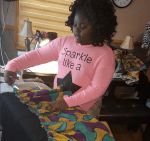
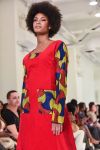
Ify is the creator of chubiiline, a plus size fashion line that is “bringing Africa to America one design at a time.”  Let me let Ify tell you about it:


Vision

Sparking conversations and inspiring the imagination, with a vision that cannot be taught, and must be personally experienced

Experience

Harnessing creativity and perfecting the craft with practical experience.

Philosophy

Ever-advancing my skills and perspective, I’m only as good as my last design.

Uniqueness

Seeing what other designers won’t, capturing what others can’t.

About

I am a 10 year old designer taking the fashion industry by storm.  I consider myself nothing less than a chronicler of the human condition, for better or worse. When you see my designs, I think you’ll agree.

Damn right I agree! And not just because at 10 years old she has a fashion line and I spent the entire day in pajamas (it’s my one day off this week from from IRONMAN training, don’t judge.) The inspiration for her fashion line came from bullying she dealt with in school because of her size, including a student who stabbed her with a pencil. (This is the world that diet culture and the “war on childhood obesity” has wrought. Please resist the urge to act like her success is somehow the “silver lining’ to the bully cloud – there is not a silver lining to bullying, her fashion line should have been able to develop with tons of support and without having to overcome bullying and sizeism.)

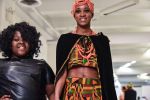
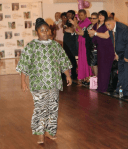
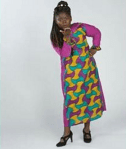
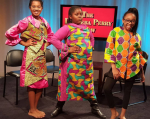
But regardless, Ify got it done, rocking the red carpet at fashion week with her beautiful designs. (Images from Instagram, follow her at @bullychasers)

The Body Love Obstacle Course

The second preview video for the Body Love Obstacle Course is now available – we talk about strategies to deal with negative body messages from the media, and for dealing with people who body shame you “for your own good,” and more!  You can check it out here!

Like this blog?  Here’s more cool stuff:

Like my work?  Want to help me keep doing it? Become a Member! For ten bucks a month you can support size diversity activism, help keep the blog ad free, and get deals from size positive businesses as a thank you.  Click here for details

Book and Dance Class Sale!  I’m on a journey to complete an IRONMAN triathlon, and I’m having a sale on all my books, DVDs, and digital downloads to help pay for it. You get books and dance classes, I get spandex clothes and bike parts. Everybody wins! If you want, you can check it out here!

Book Me!  I’d love to speak to your organization. You can get more information here or just e-mail me at ragen at danceswithfat dot org!


Or Maybe Fat People Aren’t Doing It All Wrong

Talking NonsenseEvery day we are lied to about dieting, weight loss, weight, and health by people who profit from the lies. We are told that anyone who tries hard enough can lose weight and maintain that weight loss.  This despite the fact that there isn’t a single study, anywhere, in which more than a tiny fraction of the subjects were able to do so. Still, anyone who claims to have a method of weight loss that works seems to be able to get airtime, and to get their idea reported in the news as if it’s fact, despite the actual fact that there is simply no evidence to suggest that it will work.

There are obvious issues with this.  The most obvious is that it contributes to a world where governments enthusiastically oppress fat people and try to recruit others to do the same.  It sets fat people up for a life of yo-yo dieting, and putting the lives we want on hold until we get thin, which will never happen, thus ruining our lives and making the weight loss industry money (to the tune of over $60 BILLION a year,) selling a product that they know doesn’t work.

But there are also consequences that are more insidious. With all the weight loss plans out there we are told all kinds of things will lead to weight loss – the gym, “healthy” eating, vegetarian diet, boot camp workouts, vegan diet, crossfit, paleo diet, yoga, pilates, yogilates, intuitive eating, meditation, you name it and I can pretty much guarantee that someone has made diet out of it.

Of course the truth is that fat people participate in all of these things and remain fat, and that there is no reason to believe that any of them will lead to long-term weight loss. (And let me be clear that not everyone who is involved in these things sells them as a diet, but there are people who do.) But such is our trust in the diet industry that instead of using the opportunity to question stereotypes and beliefs about weight loss and body size, people simply claim that fat people must be “doing it wrong.”

If we are fat athletes, we must be doing athletics wrong (because, we’re told, the only “good” outcome of being involved in fitness/movement/athletics is a thin body.)  If we’re fat vegetarians we must be doing that wrong.  If we’re doing a diet but not getting thin we must not be able to properly measure a quarter cup of rice. If we’re meditating but still fat we must be doing meditation wrong.  The belief is that a fat body is evidence that we are doing life wrong. And that’s oppressive, and it’s bullshit. If you did something to get thin and you didn’t get thin (especially if you lost weight and then gained it back) then welcome to the “Almost Everyone Club,” you should know that what happened to you is exactly what we would expect to happen based on all the research that exists.

Fellow fat people, we’re not doing it wrong, we’re just being lied to. There are lots of things that my body is not, but what my body is, is amazing and worthy of respect.

My fat body is not a representation of my failures, sins, or mistakes. My fat body is not an indication of my level of health or fitness, neither of which is anyone else’s business anyway. My fat body is not up for public discussion, debate or judgment. My fat body is not a signal that I need help or input to make decisions about my health or life.  My fat body is the constant companion that helps me do every single thing that I do every second of every day and it deserves respect and admiration.

I will wield my beautiful fat body like a weapon.  I will love it, I will care for it, I will move it, I will show it in public, and I will viciously defend my body against anyone who seeks to classify it as anything but amazing.

The Body Love Obstacle Course

This is something I’m super excited about.  Jeanette DePatie and I (along with some amazing people who we will announce soon!) have been working on a new program called The Body Love Obstacle Course (BLOC.)  It’s about how every aspect of our lives is affected by the way we feel about our bodies, and how we can use that fact to create the careers, relationships, and lives we want, and handle the obstacles that the world puts in our way. As a preview we’ve released a free video that includes some information about the BLOC as well as an exercise to help you get more body love right now! You can check it out here!

Like this blog?  Here’s more cool stuff:

Like my work?  Want to help me keep doing it? Become a Member! For ten bucks a month you can support size diversity activism, help keep the blog ad free, and get deals from size positive businesses as a thank you.  Click here for details

Book and Dance Class Sale!  I’m on a journey to complete an IRONMAN triathlon, and I’m having a sale on all my books, DVDs, and digital downloads to help pay for it. You get books and dance classes, I get spandex clothes and bike parts. Everybody wins! If you want, you can check it out here!

Book Me!  I’d love to speak to your organization. You can get more information here or just e-mail me at ragen at danceswithfat dot org!