Activism Win at Penn State

fight backStarting in November, Penn State faculty and their university health care covered spouses and domestic partners were scheduled to be required to complete an online wellness profile (including questions like “do you plan to become pregnant in the next year” and “how often do you have arguments with your spouse”), a physical exam, and a biometric screening, including a full lipid profile and glucose, body mass index and waist circumference measurements in mobile units deployed by the University’s health insurance company.

If employees didn’t “volunteer” to do these things they would be punished with a $1,200.00 a year insurance surcharge.  (My frienda in the military describe this kind of situation as being “volun-told”)

We’ve talked about these programs before, including how they have not been shown to be effective. We’ve also talked about the fact that body size measurements are not health measurements, and that even if they were people are different sizes for different reasons, and we have no idea how to change them long term which makes changing body size an ineffective healthcare intervention.  The difference with this situation is that the employees reacted with a ferocity that warms my fat activist heart.

One of my favorite reactions was this one.  It is a call for civil disobedience and the first thing I like about it was that it is written by an associate professor without tenure which I think is quite brave.

He states the point beautifully:

While university administrators may be implementing this program with the best of intentions, coercing Penn State employees to undergo medical testing and requiring that they disclose personal medical information to a third-party online database is ethically indefensible. University employees should respond accordingly.

He acknowledges that a full boycott is unrealistic because some faculty members simply can’t afford a $1,200 pay cut (note that the ability to insist upon one’s privacy is reserved for those who can lose $1,200.00 a year.) Not to mention that a boycott would “create an annual two million dollar windfall for the organization’s budget, thus rewarding the administration for inserting itself in our private medical affairs.”

He suggests alternatives that will allow people to participate by the letter of the program but still create an effective protest.  My favorite of his ideas is for participants to get screenings at their regular doctor rather than at the mobile units (which HR assured him was allowed) because, among other reasons, “if ten thousand Penn State employees set up previously unscheduled doctor visits, (particularly if they are scheduled as full check-ups) it will have the effect of frustrating the university’s narrow budgetary objectives, making the cost of implementing these “basic biometric screening” simply unsustainable.”

He also makes an excellent point that such a program would never pass the basic approval process that is required for any academic study at the university that involves humans, because they utilize coercion and do not give participants the right to opt out of questions which they find embarrassing, threatening, or too personal.

This is one of many protests and interventions of the University’s policy, all of which met with the predictable group of people who insisted that there’s no use protesting things like this.

Today Penn State backed down.  They are removing the surcharge for those who don’t participate and Administrators have agreed to work with a faculty and staff task force to study alternatives for implementing the wellness program.

Obviously this is a beginning and not an end to the work to be done around these issues, but I think it’s important to remember that these things can be fought and progress can be made.  Obamacare does a lot of things that I appreciate (like making insurance available to me at all since I currently can’t get it because of my size) but it also allows for these kinds of carrot and stick programs – including the use of body size measurement as health measurements – so I expect we have many more of these fights ahead of us, but if we employ consistent activism and creative civil disobedience, I believe we can win.

Like my blog?  Here’s more of my stuff!

The Book:  Fat:  The Owner’s Manual  The E-Book is Name Your Own Price! Click here for details

Become a member: For just ten bucks a month you can keep this blog ad-free, support the activism work I do, and get deals from cool businesses Click here for details

Interviews with Amazing Activists!!  Help Activists tell our movement’s history in their own words.  Support In Our Own Words:  A Fat Activist History Project!

Dance Classes:  Buy the Dance Class DVDs or download individual classes – Every Body Dance Now! Click here for details 

If my selling things on the blog makes you uncomfortable, you might want to check out this post.  Thanks for reading! ~Ragen

Throwing This Weight Around

Photo by Richard Sabel

Amber Riley (best known as Mercedes from Glee) is on Dancing with the Stars.  I’ve not been a fan of the way that the show has become about dancing for its thin contestants and weight loss for its fat contestants, so I tuned in with some trepidation. I was thrilled to see Amber displaying body pride, with no weight loss talk.  She said that she thinks it will be good for girls her size to see her dancing and “throwing this weight around!”  I agree with her and all of my fingers and toes are crossed that even if she experiences some (likely temporary) weight loss that she stays body positive and weight neutral.

This got me thinking about weight and mobility.  I get lots of e-mails from frustrated fat people whose doctors/personal trainers/family members who watch Dr. Oz and think they are doctors told them that the only way to increase mobility/fitness is by losing weight.  This is patently ridiculous for a couple reasons.  The first, of course, is that they have no idea how to help people lose weight long term – the vast majority of people who diet end up gaining their weight back – and often more than they lost – within 5 years so if body weight is the source of mobility problems, then recommending weight loss is absolutely irresponsible.  The second reason that this is stupid is that the suggestion that body weight=mobility ignores the realities of mathematics, not to mention the fact that there are people with varied mobility and fitness at various sizes.

Let’s start here – mobility is not a measure of value or worth, there should be zero judgment of people based on their mobility.  People have different levels of mobility for different reasons and none of those are anyone else’s business unless the person wants it to be someone’s business.  Not everyone can icrease their mobility and nobody should be pressured to do so.  Everyone should have access to every mobility option including mobility aids from canes to scooters and anything that can help rated for whatever their weight is and there should be no shame or judgment in the use of these mobility aids ever for any reason.   Fitness is not a measure of worth, people who choose movement/fitness as a hobby are no more laudable than people who choose anything else as a hobby.  Fitness by any definition is not an obligation.

If you want to increase mobility/fitness then I would suggest starting with the three pillars – strength, stamina, and flexibility.

Strength:  This one is often overlooked accidentally or intentionally by people who are doling out advice to fatties. Personal trainers are infamous for ignoring this for fat people because they don’t want to “put weight on,” telling us instead to focus on cardio.  I do not know how they can believe one half of the equation (if we lose weight then it will be easier to move at our current strength) but not the other half of the equation (if we gain strength then it will be easier to move at our current weight).

Strength training is the most important part of my fitness program  – it is what allows me to move my body around the way that I do.  I’m very lucky in that I seem to build muscle easily, as with everything, your mileage may vary.  I know that for a lot of fat people strength training has also been psychologically good for them because they excelled at it. As super heavyweight Olympic weight lifter Cheryl Haworth puts it – mass moves mass.  Strength training can include lifting weights, body weight exercises (wall sits, sit to stands from a chair, push ups – including modifications like wall push ups), using resistance bands, and strength work in the pool.

Stamina

There are lots of ways to work on stamina – it’s essentially about elevating your heart rate.  One thing that people who have mobility issues can do is to separate stamina training from strength and flexibility work.  If walking is difficult then trying to walk fast enough and long enough to elevate heart rate could lead to lots of other problems, or be impossible.  Stamina work can be done with the upper body (like using a hand bike while sitting), or sitting down (chair dancing, chair aerobics, sit and be fit etc.),  stationary in the pool (holding onto the side and kicking), moving in the pool (swimming, aqua jogging, water aerobics).  A quick note about water work  – one of the reasons that it can be helpful is that a lot of your body weight is supported by the water.  This is great for people with joint issues, or those starting out on mobility work,  if your goal is mobility out of the water (being able to walk farther etc.) then you’ll want to eventually add work that has you support your own body weight out of the water.

Flexibility

I think that flexibility is really important because it helps with mobility and general body resilience and can be super practical (the importance of being able to wipe with both hands is often underestimated by people who have never injured their primary wiping arm).  There are lots of ways to work on flexibility – from yoga, to martial arts flexibility work, to resistance stretching, pilates etc.  It can also be aided by things like massage, partner stretching etc.  For me flexibility takes the most time, I’m not naturally flexible – it took me a year of working about an hour a day to get my splits – if I wasn’t a dancer I would definitely still work on flexibility but certainly not to that extent.

In general I suggest choosing functional goals (I want to be able to walk to the mailbox, I want to be able to lift my grandkid, I want to be able to touch my toes) or goals that mean something to you (walk x miles, bench press x pounds etc.)  You can start with a baseline (for example how far you can walk now), set a goal based on that (walking 1.5 times/twice that far) devise a plan that will work for your actual life, be flexible with yourself, be compassionate with yourself, and celebrate every small victory like you won the Super Bowl.

I believe that every body is different and they aren’t comparable so, to me, there is really no point in comparing my body to anyone else’s in terms of how it looks or what it can and can’t do. For me it’s about having fun and throwing this weight around.

There are great resources out there for those who want to work on this stuff, here are some I’ve personally experienced and loved (I’m living in terror of forgetting someone here, apologies in advance if I did) – feel free to list others in the comments.

Jeanette DePatie (aka The Fat Chick) is a fat personal trainer who has a book and video on beginner fitness that are fabulous, as well as doing personal training live and by Skype for those who aren’t in the LA area, and doing two beginner level fitness classes a week that she livestreams.  Jeanette is a good friend of mine and I’ve taken class with her and she is fabulous.

Punk Rock Hoops  is run by two rocking sisters (Blythe and Rowan) and their new Chief of Making It Happen Alejandra. They offer classes, teacher certifications, workshops, and the amazing Hottie Hoop Camp.  I took a class from Rowan with my friend Heather and not only was she awesome, encouraging and patient (I got a serious workout from all the squats I did dropping the hoop and picking it up again),  we ended up in hooping.org

Abby Lentz is a fat yoga teacher who has DVDs, live classes and trainer certifications.  Abby is fantastic at using modifications and props to make yoga work for every body (including those who utilize wheelchairs, live predominantly in bed and live with disabilities)  I met Abby when I lived in Austin, I got to take class with her and it was wonderful.

Anna Guest Jelley is a self-described curvy yoga practitioner and instructor who offers resources in the form of books as well as classes live, and online and trainer certifications.  I’ve had the opportunity to meet her online and I’ve taken some of her online classes and loved them.

The Fit Fatties Forum is a place for anyone who wants to talk about movement and fitness from a weight neutral perspective. Jeanette DePatie and I founded it and there is a general forum where people talk about everything from chub rub, to getting out of a movement rut, to finding plus-size activewear. There are groups (like newbies, runners, hoopers, strength athletes etc.) and there are photo and video galleries that are pretty awesome.  It’s totally free to join and use.

Please feel free to add your recommendations in the comments!

Like my blog?  Here’s more of my stuff!

The Book:  Fat:  The Owner’s Manual  The E-Book is Name Your Own Price! Click here for details

Become a member: For just ten bucks a month you can keep this blog ad-free, support the activism work I do, and get deals from cool businesses Click here for details

Interviews with Amazing Activists!!  Help Activists tell our movement’s history in their own words.  Support In Our Own Words:  A Fat Activist History Project!

Dance Classes:  Buy the Dance Class DVDs or download individual classes – Every Body Dance Now! Click here for details 

If my selling things on the blog makes you uncomfortable, you might want to check out this post.  Thanks for reading! ~Ragen

Yes People Are Allowed to Diet

DefendAfter my piece about Holley Mangold going on the biggest loser, in which I voiced my belief that Holley is allowed to chose dieting just like I’m allowed to choose not to diet, I got some push back.  Several people suggested that Holley’s choice to engage in dieting is not equal to a fat activist’s choice not to engage and thus her choice deserves critique that a fat activists does not.  It was suggested that I was wrong to suggest that Holley’s choices should be respected in the same way that I want my choices to be respected – that as an activist I don’t have to respect her choice or defend her right to make it – in fact that I’m hurting the movement by doing so – because she is buying into a system that oppresses me and other fat people.

For me it comes down to this:  I don’t want to base my activism on doing to others the exact same thing that I don’t want done to me, even if I have the right to do so.  I don’t want to make statements about an individual’s choice to diet that could be creating by copying and pasting my hatemail and exchanging the term “Health at Every Size” or “Fat Activism” for the term “dieting” even if there are theories of anti-oppression work that would support my right to do just that.

Insisting that those who chose to diet should be criticized because of the effect of their choice on society seems to me to be insisting that it’s ok to ask people to sacrifice their body autonomy for the greater good, which to me sounds a lot like the people who say that those who choose not to diet should be criticized because of the ramifications of our choice on society  – which is something that I rail against.  I’m not excited that people choose to diet, I don’t celebrate the choice and I’m careful about how I respond to those who are celebrating their weight loss, I simply respect their right to choose as I insist my right to choose be respected.

I think that fat people have the right not to be activists and to make choices that make their lives easier in current society (like being a “good fatty” and attempting weight loss) even if those choices make the lives of fat activists harder. People are also allowed to have different interpretations of the research and pursue weight loss because they believe it’s the best choice for their bodies. What they don’t have the right to do is suggest that all fat people should make that choice, or that those who don’t make that choice should be stigmatized, oppressed – or that we don’t have the right to choose not to diet.

I believe that the fight is first and foremost for civil rights which include respecting body autonomy, which includes defending the right of others to make choices I wouldn’t make for myself. As a fat activist I’m interested in fighting for civil rights which are not up for debate or argument.  As a Health at Every Size practitioner I’m interested in getting information out there and presenting options and counter-arguments but I’m not interested in dictating to others how they should live.

In my opinion, no matter how personally disappointed I am with her choice, attacking Holley for wanting body autonomy only hurts our movement because it’s hypocritical. It’s true that her choice does not happen in a vacuum and that the choice may have a negative effect on the fat activist movement, the fact remains that she is still allowed to make choices for her body, even if the fallout hurts the fat rights movement. (Just like we are allowed to chose Fat Activism, Health at Every Size etc. even though many say that those choices hurt society financially, morally etc.)

I think that if I want to eliminate the biggest loser or fat oppression or diet culture or anything else, I prefer to attack the institutions and social constructs that support them and those who seek to take away our rights through those institutions and constructs, not the individuals trying to navigate those institutions and constructs.  If I’m going to be radical, I want to be radical at the institutional level (like this response to Penn State’s crappy employee health program requirements)  not radical in my insistence that the choices of other individuals shouldn’t be given the same respect as my own choices.  Obviously these are just my beliefs and choices as an activist, other activists can make other choices based on other beliefs and I completely respect that.

Like my blog?  Here’s more of my stuff!

Become a member: For just ten bucks a month you can keep this blog ad-free, support the activism work I do, and get deals from cool businesses Click here for details

Interviews with Amazing Activists!!  Help Activists tell our movement’s history in their own words.  Support In Our Own Words:  A Fat Activist History Project!

The Book:  Fat:  The Owner’s Manual  The E-Book is Name Your Own Price! Click here for details

Dance Classes:  Buy the Dance Class DVDs or download individual classes – Every Body Dance Now! Click here for details 

If my selling things on the blog makes you uncomfortable, you might want to check out this post.  Thanks for reading! ~Ragen
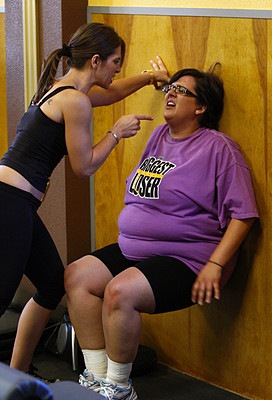
Holley Mangold on The Biggest Loser

Jillian MichaelsSuper Heavyweight Olympic weigh lifter Holley Mangold has signed up for the next season of biggest loser.  I’ve received a lot of e-mails and messages from blog readers asking me how I feel about it.  I had considered Holley a fit fatty role model and even participated in her fundraising for the last Olympics so it was rough for me when I found out that she had chosen to go on the Roman Colosseum Gladiators  the biggest loser.  It took me a while to sort out my feelings but here’s what I’ve got.

Holley is allowed to choose to try to lose weight.  I do not believe that I can be in integrity by demanding the right to practice Size Acceptance and Health at Every Size while simultaneously attempting to limit other people’s choices.  Holley has information and world class coaches available to her and she has made her decision to, in her words, “be the in-shape, smaller girl.”

Holley is allowed to go on the biggest loser.  Whether it’s because she genuinely believes it will help her with her next Olympic bid, or they gave her a bunch of money, or she wants to solve social stigma through weight loss and by bowing to the tremendous social pressure to be thin, or whatever her reasons are, it is absolutely her right to choose to go on the show.

I think that the Biggest Loser is a horrific show that emotionally and physically abuses fat people as entertainment. For a first hand account, I highly recommend Golda Poretsky’s Interview with former contestant Kai Hibbard (“I believe that  . . . most of the contestants, felt like it was okay to treat us like we were subhuman when we were there, that the ends justify the means.  If they were going to make us thin, then it was totally worth it to humiliate us and treat us poorly all the way along.  I just don’t feel that way.”)  But Holley isn’t required to subscribe to my beliefs about the show.

So what it comes down to for me is that Holley Mangold is not a role model for me.  And she’s not required to be, Holley never asked to be my role model, she never agreed to be my role model.  I picked her and, it turns out, I chose poorly – or more specifically, she used to meet my criteria but no longer does.   So now the only question is what to do about it.  Holley’s choice to lend her name to a franchise that I strongly believe serves to stigmatize and oppress me and other fat people leads to my choice to no longer lend my support to Holley.  Like all of my decisions around money and activism, I do my best to support things that support me in return.  Now it’s time to go role model shopping.

Like my blog?  Here’s more of my stuff!

Become a member: For just ten bucks a month you can keep this blog ad-free, support the activism work I do, and get deals from cool businesses Click here for details

Interviews with Amazing Activists!!  Help Activists tell our movement’s history in their own words.  Support In Our Own Words:  A Fat Activist History Project!

The Book:  Fat:  The Owner’s Manual  The E-Book is Name Your Own Price! Click here for details

Dance Classes:  Buy the Dance Class DVDs or download individual classes – Every Body Dance Now! Click here for details 

If my selling things on the blog makes you uncomfortable, you might want to check out this post.  Thanks for reading! ~Ragen
Flattering and Fat Bodies

love-tummyYesterday I wrote about the issue of people who suggest that fat people are responsible for accommodating their size bigotry by wearing what they think we should wear.  You can read the whole post here.  It got a lot of positive reactions and some really strong reactions, both on the blog and around the internet where it got picked up, from people who said things like:

  • What’s wrong with wearing flattering clothes?
  • Why is it wrong to want to look my best?
  • I’m short and I prefer to wear heels because they make my legs look longer.
  • Some clothes look better on some bodies than others, that’s a fact.
  • I like to wear make-up so that my skin looks better and I feel more confident
  • I prefer to hide my rolls.
  • I like to wear shapewear to smooth out my stomach bumps

I said it in the original piece and I’ll say it again – people are allowed to wear what they want for whatever reason they want, including an attempt to get as much societal approval as possible, or to try to get as close as possible to the current stereotype of beauty.

I was not trying to tell people how to live or what to wear.  What I was suggesting was that it might be worth thinking about the social constructs that dictate what is “flattering.” Why do we, as a society, think that certain looks are better on certain bodies? Why is being seen as taller also seen as better (up to a certain point where women are seen as “too tall” and given suggestions on how to not appear less tall.)  Why are long legs “better” than short legs? What’s wrong with rolls and cellulite?  How do racism, sexism, ableism, ageism and homophobia play into our ideas of “flattering.”  Why do we, as a society, value clear skin – even if the make-up we wear to give the appearance of clear skin causes breakouts and ultimately skin damage.  Why does “looking our best” mean working toward being as close as possible to a single stereotype of beauty.

In short, why do we believe that looking our best means spending our time, money, and energy making our bodies look different through what amounts to a series of optical illusions?  Why can’t we learn to perceive beauty in every body instead of trying to make every body fit a single perception of beauty.

Again, I’m not saying it’s wrong to do these things – I’m suggesting we consider the roots of why we do them, and decide if we feel like that’s ok, which is a decision each of us gets to make.  Then what’s important is to be able to make our choices while not trying to push our ideas onto other people, or judge them through our lens.

As I said in my piece “F*ck Flattering” – you get to dress how you want for whatever reason you choose.  You can pick clothes because you like them, because you think they will gain social approval for you, because they highlight your shape, because they disguise your shape, because your significant other likes them, because your mom hates them, because you think they are flattering, because you think they are unflattering, or for any other reason.  It’s your body and they are your clothes and you are the boss of your underpants and also the boss of your regular pants.

Something that we are not often told is that we do have the option to throw off our jacket and give flattering the finger with our arm fat waving unrestricted in our tank tops, our breasts comfortable in a bra that neither lifts nor separates (or no bra at all), our skirt showing every roll of our stomachs, and our leggings showing every dimple of cellulite on our thighs.  We get to choose how we dress our bodies and why, we can choose to wear things that are flattering by some definition of flattering or not.  But no matter what we choose, I think it’s important to remember that we do not owe anybody flattering, and nobody owes it to us.

Like my blog?  Here’s more of my stuff!

Become a member: For just ten bucks a month you can keep this blog ad-free, support the activism work I do, and get deals from cool businesses Click here for details

Interviews with Amazing Activists!!  Help Activists tell our movement’s history in their own words.  Support In Our Own Words:  A Fat Activist History Project!

The Book:  Fat:  The Owner’s Manual  The E-Book is Name Your Own Price! Click here for details

Dance Classes:  Buy the Dance Class DVDs or download individual classes – Every Body Dance Now! Click here for details 

If my selling things on the blog makes you uncomfortable, you might want to check out this post.  Thanks for reading! ~Ragen
When Fat Bodies Just Look Wrong

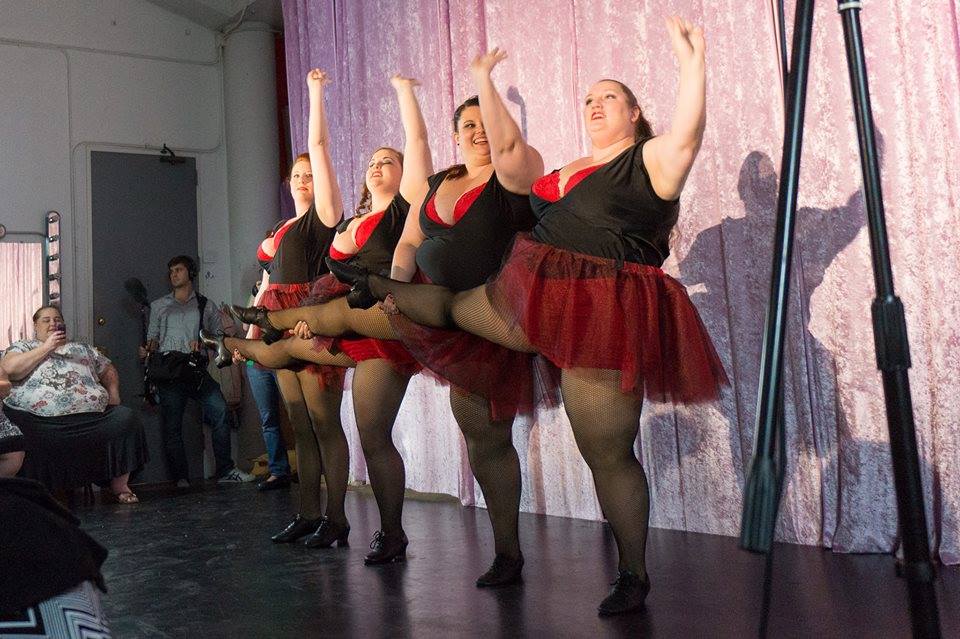
Mama kick line
Gratuitous use of a picture from the More Cabaret show this weekend. Scantily clad fat bodies, hell yeah!

There is a post over on This is Thin Privilege written by a girl who was told that she couldn’t wear the same shorts as a thinner student because she didn’t “present” the same way as the other student.  This highlights a particular kind of fat bigotry wherein fat bodies are judged to look “wrong” doing the same thing that thin bodies do, just because they are fat.

Wrong can take a lot of meanings in this context, one of the first is the idea that they look obscene (remember the Lane Bryant ad that showed about 25% of the skin of a Victoria’s secret ad but was controversial because it was judged look obscene  -obscene here meaning “omg big boobs!”?  Or, as in the example from above, fat bodies are seen as un-presentable, or needing to be more covered/hidden than other bodies.

And how many times have we heard the “fat girl” rules of fashion – black clothes absorb light and hide our shape (aka “slimming”), choose clothes based on their ability to make you look as much like the thin ideal as possible (aka “Flattering“) and that anything else is an affront to everyone who sees us and a moral failing on our part.

This type of situation is often about a bigot asking to be accommodated by a fat person.  The assumption being that if someone doesn’t like fat bodies, doesn’t like looking at fat bodies, doesn’t think that fat bodies should do certain things or dress in certain ways, then the people with those fat bodies have a responsibility – nay, an obligation – to “fix” the situation by doing what the fat hater wants us to do.  As if the solution might not be for them to get the hell over their bigotry, or at least practice the ancient art of looking at something else.

When the teacher told the student that the shorts were inappropriate on her fatter body but not on the thinner body, what he was actually saying was “I’m a size bigot, accommodate me.”  Our society is set up to accommodate fat bigotry in many ways, perhaps the most insidious is convincing fat people to take an active part in it by policing ourselves and other fat people for failing to follow the fat girl rules of dressing.

Fat people are allowed to make clothing choices for any reason they want – including dressing for maximum societal approval, as long as they are only choosing for themselves and not trying to tell other fat people what they should wear (hello Underpants Rule, my old friend.)  My suggestion is not that all fat people dress a certain way, but that we should considering being very conscious as to why we make the choices we make, and what that means. So if we choose to dress for societal approval we are keenly aware of why we are doing it so that we don’t get confused and think that there is anything wrong with our actual bodies – rather than realizing that there is a lot wrong with society and that our bodies are fine.

When it comes to the idea of fat bodies looking “wrong,”  the choices I make about what to wear have been less important than my ability to realize when a bigot is asking me to accommodate them, and the fact that I am under absolutely no obligation to do so. If you struggle with feeling like fat bodies (maybe even including yours) look “wrong” then a big part of the problem may be that the media doesn’t seem to be able to show us with heads and faces, let alone as positive role models.  So I suggest taking some time each day to find pictures of fat bodies and work to increase your skill at perceiving beauty.  Here are some places to start:

The Adipositivity Project (NSFW) by Substantia Jones (I’ve been an Adiposer a couple of times!) She even has an awesome Calendar (I’m Miss May!)

The Fit Fatties Forum has photo and video galleries of people of various sizes doing everything from belly dancing to sword fighting

More of Me to Love has cool things  in their fun stuff section (and they do a monthly deal for my members)

VoluptuArt has amazing pieces to look at and buy.

Jodee Rose’s artwork (NSFW) is phenomenal  Her pinup work and Her portrait work are both amazing and she did the logo for More Cabaret!

I have a gallery on this blog.

More Cabaret has a gallery

Uppity Fatty on Tumblr (NSFW)

Pink by Aerosmith is a really cool video of lots of different bodies and ages.  Possibly NSFW.

Feel free to add your own in the comments.  Go forth and admire some fatties!

Like my blog?  Here’s more of my stuff!

Become a member: For just ten bucks a month you can keep this blog ad-free, support the activism work I do, and get deals from cool businesses Click here for details

Interviews with Amazing Activists!!  Help Activists tell our movement’s history in their own words.  Support In Our Own Words:  A Fat Activist History Project!

The Book:  Fat:  The Owner’s Manual  The E-Book is Name Your Own Price! Click here for details

Dance Classes:  Buy the Dance Class DVDs or download individual classes – Every Body Dance Now! Click here for details 

If my selling things on the blog makes you uncomfortable, you might want to check out this post.  Thanks for reading! ~Ragen

IDEA Fitness Gives Horrible Advice

Photo by Richard Sabel

I am on the mailing list for the IDEA Health and Fitness newsletter.  I think that I got signed up automatically when I renewed by fitness pro certification but I don’t really know. Usually their stuff is just low-level annoying but today’s subject line read “Obese Clients:  Are you Meeting Their Real Needs?”  Covering my eyes with my hand and peering through my fingers I clicked on the link.  (TW – the quotes from the article, which may be triggering for all the reasons you might imagine – are indented.)

It started with a thud

We talked to obese (and formerly obese) consumers—and the fitness pros who work with them—to find out how they feel, what they think of the fitness industry and how we can better help them become healthy and vibrant.

Maybe let’s not start by assuming that fat people are not healthy and vibrant when they walk in the door.  Plenty of people, of all sizes, choose personal training to enhance an existing program.  If my goal is to increase my bench press by 30% and my new trainer’s goal is for me to become vibrant (whatever the hell that means in the fitness world), we’re going to have a problem, though not as big of a problem as we’re going to have if they think that they can ascertain my level of health from my body size.

Few [Fitness professionals] understand the powerlessness experienced by those who are more than 50 pounds overweight,” says Lisa Williams of Lawrenceville, Georgia. “I think it’s difficult for them to realize the self-talk that goes on in an overweight person’s mind [and] that constantly keeps them in a defeated, negative mindset.

What with the who now?  Unless Lisa is psychic, then she is just making assumptions and wild guesses about how everyone who is more than 50 pounds “overweight” feels and why, and that’s just a horrible idea.  First of all, plenty of fat people feel powerful and aren’t constantly in a defeated, negative mindset.  For those who do feel powerless and constantly in a defeated, negative mindset, blaming it on their weight is a convenient if completely fallacious way to shift the blame away from the tremendous amount of shame, stigma and stereotyping that fat people have to deal with – plenty of which is at the hands of the fitness industry and fitness professionals.

Gwenevere Bridge of Asheville, North Carolina…says. “Most [Fitness Professionals} have always been athletic, and their bodies are light and strong. They spend their time either trying to top their own fitness, by tricking out their routines, or just blithely maintaining a [fit] lifestyle, which is where the overweight person would like to go.” Bridge, who is working with a personal trainer, believes fitness professionals should look at obese bodies as “injured” because of “restrictions” caused by excess fat.

It seems like Gwenevere is making the super common mistake of assuming that her  experience being fat is every fat person’s experience.  Fat people’s experiences are as varied as any group that shares a single physical characteristic and a ton of stigma, stereotyping and prejudice.  Gwen’s experience is not so statistically significant as to be extrapolatable to all fat people.  So we can’t assume that all fat people aren’t athletic, aren’t trying to top our own fitness, or aren’t blithely maintaining a fit lifestyle.  Also, while Gwen is allowed to do anything she wants with her body including trying to lose weight and suggesting that people see it as injured, it would be great if she did not recommend that all fat bodies be treated as injured, or assume restrictions due to size.

Manning says being obese is like “starting at the bottom of the mountain.” “You make slow gains and most likely hit obstacles and have a few setbacks,” he says.

Oh holy crap.  Being obese is like having a certain ratio of weight and height as defined (and redifined) by the BMI chart – that is what obese people have in common.   Apparently IDEA doesn’t know it, but there is actually a super secret club for people who make slow gains and most likely hit obstacles and have a few setbacks in the pursuit of fitness goals, it’s called “Everybody Who Pursues Fitness Goals” and they meet in the locker room.

Nobody, of any size, is obligated to pursue fitness at any level for any reason ever.  People who choose fitness as a hobby are no more laudable than people who choose anything else for a hobby.  If you want to pursue fitness and you want to work with a trainer,  then you deserve someone who will work with you on your fitness goals, not try to be a therapist or a psychic, and check their own stereotypes at the door.  If you are interested in talking about fitness from a weight neutral perspective, in a group that would only use the phrase “run to the couch or the cookie” as part of a delightful scavenger hunt, you can check out the Fit Fatties Forum www.fitfatties.org

You can comment on the article here (I certainly did!)

Like my blog?  Here’s more of my stuff!

Become a member: For just ten bucks a month you can keep this blog ad-free, support the activism work I do, and get deals from cool businesses Click here for details

Interviews with Amazing Activists!!  Help Activists tell our movement’s history in their own words.  Support In Our Own Words:  A Fat Activist History Project!

The Book:  Fat:  The Owner’s Manual  The E-Book is Name Your Own Price! Click here for details

Dance Classes:  Buy the Dance Class DVDs or download individual classes – Every Body Dance Now! Click here for details 

If my selling things on the blog makes you uncomfortable, you might want to check out this post.  Thanks for reading! ~Ragen


Aziz Ansari Almost Gets It

Reality and PerceptionAziz Ansari is a comic whose work I really like.  I’ve seen him do stand-up and act on Parks and Recreation and I’m a fan of his.

I am a fan of stand-up comedy in general.  I’ve even done a little myself and though I’m certainly not great at it, I’m thinking about getting better and doing more because I think that comedy can be a place for social justice work, a place to talk about difficult things when people’s defenses are down, and I think that helping people laugh – whether it’s to get a point across or just helping them find the funny for a little while –  is a worthy pursuit.  Because of all that, I have a much wider berth for what is ok in comedy than I would for regular conversations. I’m still not a fan of getting cheap laughs by playing off stereotypes for any group – I like my comedy to be smarter than that (paging Eddie Izzard to the stage please.)

For those reasons I’m not a fan of roasts – I don’t see them having a social conscience or doing anything other than giving those who are roasting an opportunity for cheap laughs at others’ expense.  I find them typically rampant with racism, sexism, homophobia, trans* phobia and fat phobia which I don’t think are hilarious.  Before someone freaks out about freedom of speech, let me be clear that I’m not saying that they shouldn’t be allowed, I’m saying that they’re not my thing.

Apparently comedian Aziz Ansari had enough at Comedy Central’s roast of James Franco.  He used his time to take the other roasters to task for their racist and homophobic jokes based on cheap stereotypes.  Yay!  Then he punctuated his point by making a fat joke based on cheap stereotypes.  What the hell dude?

Aziz got almost all the way there, then he tripped on his own prejudice right at the finish line. This happens sometimes with people – they can see their point of view (“I should be legally able to get a divorce even though my religion says it’s wrong”), but they can’t see the issue if applied to other people (“Gay people should not be legally allowed to get married because my religion says it’s wrong.”)

I think that when you find these disconnections, the first step is often to gently point out what’s happening – sometimes that’s all that’s needed to help someone see the disconnect.  Regardless, I think it’s important to note that it happens and that there’s really no justification for it and any attempt at justification ends up sounding like “But, but, but, I want to get cheap laughs by continuing to pile the stigma, shame and stereotyping onto fat people! *petulant foot stomp*” which is a pretty difficult position to defend from a place of logic. So if people try to rationalize this away and you notice that they end up sounding like idiots, it’s not you – it’s them.

If you want to let Aziz know that it’s no more ok to make jokes based on cheap stereotypes of fat people than it is to make those same jokes about any other group of people, you can communicate with him in the following ways:

You can leave a comment on the Youtube Video 

Tweet Him  @azizansari

Find him on Facebook https://www.facebook.com/azizansari

Find him on Tumblr  http://azizisbored.tumblr.com/

Like my blog?  Here’s more of my stuff!

Become a member: For just ten bucks a month you can keep this blog ad-free, support the activism work I do, and get deals from cool businesses Click here for details

Interviews with Amazing Activists!!  Help Activists tell our movement’s history in their own words.  Support In Our Own Words:  A Fat Activist History Project!

The Book:  Fat:  The Owner’s Manual  The E-Book is Name Your Own Price! Click here for details

Dance Classes:  Buy the Dance Class DVDs or download individual classes – Every Body Dance Now! Click here for details 

If my selling things on the blog makes you uncomfortable, you might want to check out this post.  Thanks for reading! ~Ragen

How to Be a Fat Activism Ally

Dream WorldReader Julie e-mailed me a question that I get a lot  – how can a thin person best be an ally to Fat Activism?  First of all, thank you for asking – I always really appreciate when people ask about this and I want to take my best shot at answering the question.

Let me start by saying that is exactly what it is – my best shot.  I can only give you my opinion about how to be an ally to me as a fat person and fat activist.  Of course the community of fat people is as varied as any community comprised of those who share a single physical characteristic and a ton of stigma and oppression.  Unsurprisingly, that means that we have different ideas about fat activism, we ascribe to different theories of anti-oppression work and different interpretations of those theories, and we have different ideas of the best way to be an ally – and an activist for that matter.

And that’s just fat activists, there are fat people who aren’t interested in fat activism at all, including those who prefer to attempt to solve social stigma through weight loss, or believe that they don’t face stigma for their size which is absolutely their right.  I don’t say this to discourage you, I just want to be up front about the fact that if you want to be an ally it’s a reality.  It’s also not unique to fat activism – it is a situation that faces everyone who wishes to be an ally to oppressed communities. So, to recap, I’m happy to give you my thoughts, but I would also recommend asking other fat activists as well.

I believe that for those thin people who are interested in doing fat activism work there are levels that you can choose based on where you are at personally as well as in any given situation.  They aren’t hard and fast and you can totally skip around but they form a start.

Level 1 – Personal

Start with yourself, consider doing the following:

  • Listen Part 1 – listen to what fat people are saying, read our blogs, come to our talks, ask questions to those who are open to that, seek out diverse opinions – fat people of color, fat queer and trans* people, fat people with disabilities, inbetweenies and super fats etc.
  • Listen Part 2 – avoid making every conversation about fat shaming into a conversation about how thin people experience self hatred/body shaming etc.  Yes, it happens.  Yes, it sucks. Yes it’s wrong and yes it deserves to be talked about, but not in every space where fat issues are talked about.  Part of being an ally is knowing when to make the situation about the group you are being an ally to, and learning ways to empathize other than telling stories about how something like that happened to you.  ( Just so you know, this one is super tough for me in spaces where I’m trying to be an ally.  I’m a storyteller and that’s how I was taught to empathize and I still struggle with it!) Though I think that there is one, I don’t think you even have to believe that there is a contextual difference between thin shaming and fat shaming to understand that the issues of thin people do not have to be addressed in every fat activism space all the time.
  • The world bombards us with stereotypes about fat people, it wouldn’t be surprising if some of them have made their way into your subconscious so no need to freak out with the guilt when it happens.  Just notice when you have “scripts” play about stereotypes of fat people (ie:  you see a fat person at McDonalds and start to think negative things about them) and interrupt those thoughts (ie:  notice how many thin people are also at McDonalds, remind your self that this 20 second moment of someone’s life is not indicative of anything, and isn’t enough information from which to extrapolate, remind yourself that people get to eat whatever they want.) Lather, rinse, repeat.
  • Stop body snarking – stop making negative comments about other bodies, including yours
  • Stop giving attention to body snarking – don’t click on best/worst bodies lists or articles about how stars have gained weight or lost weight and don’t discuss them.  Refuse to participate in conversations about it.  Walk away, or give your opinion of Mylie Cyrus’s performance but don’t compare her body to Lady Gaga’s and point out that it’s not cool.
  • Stop engaging in diet talk  -including food moralizing (good food, bad food, sinful food, guilt-free food etc.) and a “crime and punishment” view of food (I ate a cookie so I have to do x amount of time on the elliptical…)

Level 2 – Your Social Circle

  • Post fat activism things on your social media
  • Bring fat activism up in conversations:  when people are discussing dieting, talk about your Health at Every Size practice, when the subject of weight comes up, bring up things that you have read or heard about in fat activism
  • Interrupt body snarking; It would be my suggestion that you do so gently, I tend to use global statements to help defray defensiveness – something like “I wish we lived in a world where all bodies could be respected” or “I wish we lived in a world where women weren’t encouraged to attack each other” etc.  Something that can start a conversation without saying “I wish you would shut the hell up with your negative body talk!”
  • Make your plans fat friendly:  Does that restaurant have tables with chairs that don’t have arms?  Does that theater have arms that raise?  When you announce the plans, put these things in the announcement subtly so that your fat friends will know, without asking, that it’s a fat friendly environment (ie:  we’ll be going to Jack’s restaurant – we’ll be at the big table in the back with the comfy armless chairs.)
  • Remember that the problem isn’t that your fat friends need these things, the problem is that the business should have planned to accommodate people of all sizes and didn’t.

Level 3 – Your Community and Beyond

  • Insist that everyone should have what you have:  If you can get on a plane and fit comfortably in a seat, ask why everyone doesn’t get that experience. If you can shop at a variety of clothing stores with a variety of styles and price levels, ask why everyone doesn’t have that option.  (This is part of the concept of thin privilege.) Write an e-mail insisting that they start providing the service that you receive to people of all sizes.
  • Join projects – when you see fat activists creating petitions or starting letter writing campaigns add your voice.  Sometimes fat activists get shut down based on the premise that our activism is an attempt to “justify our fat,”  I think the fact that thin fat activists aren’t subjected to that criticism can have real advantages.
  • Put your money where your activism is:  If a venue doesn’t accommodate fat people (doesn’t have chairs without arms, doesn’t have armrests that raise, etc.) don’t spend your money there and tell them why – insist that they fix it. Walk into Lulu Lemon or Abercrombie and Fitch and let them know why they’ve lost you as a customer until they want your fat friends as customers (yes, even though businesses are allowed to choose target demographics.)
  • Speak up against potential fat shaming at work – company “biggest loser” or other weight loss contests, wellness messaging that thin is good, fat is bad etc.
  • Work to create size-based anti-discrimination policies, ordinances, and laws. Work to proactively create spaces that are size friendly at your job, places that you volunteer etc.

So that’s a start, if you have other thoughts on being a thin fat activist, please feel free to add them to the comments. If you are, or want to be, a thin fat activist then thanks, I appreciate it.

Like my blog?  Here’s more of my stuff!

Become a member: For just ten bucks a month you can keep this blog ad-free, support the activism work I do, and get deals from cool businesses Click here for details

Interviews with Amazing Activists!!  Help Activists tell our movement’s history in their own words.  Support In Our Own Words:  A Fat Activist History Project!

The Book:  Fat:  The Owner’s Manual  The E-Book is Name Your Own Price! Click here for details

Dance Classes:  Buy the Dance Class DVDs or download individual classes – Every Body Dance Now! Click here for details 

If my selling things on the blog makes you uncomfortable, you might want to check out this post.  Thanks for reading! ~Ragen

Really Fat People with Health Problems

Things you can tell by looking at a fat personToday I got a comment from a nurse asking some often asked questions about health and fat, specifically for the “super fat” (of which I am one)  You can read the full comment here (it may be triggering, though I feel it was asked very respectfully) but the basic question was -and I’m paraphrasing – what about when very fat people have health problems, surely then obesity is considered a medical problem?

The first thing I want to make clear is that, as Ann mentioned in her comment, there are simply no proven ways to make fat bodies thin. In fact statistically the far and away most common outcome of intentional weight loss attempts is weight gain, so even if one thinks that being fat is a medical problem (and I don’t agree that it is for the reasons that follow) then prescribing dieting is no better than prescribing a cancer treatment that cures cancer a tiny percentage of the time, but the vast majority of time makes the cancer worse.

But I think the real solution is to take weight out of the health discussion and treat the medical issues as the patient wishes (which is to say that people are allowed to make choices for the prioritization of their health and the path they choose to get there including medical care).  If a thin person is dealing with immobility, we treat the immobility.  If a fat person is dealing with immobility, we “treat” the body size.  I think that giving body size interventions for health problems is a major part of the problem. If a person is fat and has mobility issues, then we should treat the mobility issues with options including physical therapy, massage, surgery, mobility aids etc.  If a fat person has diabetes, then we should give that person interventions that are shown to control diabetes (weight loss is not one of them.)

Studies show that, no matter what size someone is healthy habits are still the best way to increase our odds of health (though of course nobody is obligated to do so), and working on fitness goals like strength, stamina and flexibility, at whatever level the person in interested in doing, is still the best way to improve strength, stamina and flexibility.

I think that the medical world would be helped greatly by treating a fat person with a medical issue the same way they treat a thin person with the same issue.  For example, when I was thinner and had knee pain I was given tons of options – physical therapy, medical massage, surgery, crutches etc.  When I was fat and had knee problems I was told to lose weight.  Because of my previous experience with a knee issue I was able to use the same things that had worked when I was thin to solve the issue but had I increased my exercise as the doctor suggested in a bid to lose weight, I would have been almost certain to exacerbated the injury.

In order to give fat people appropriate medical care, there are three main things that the medical establishment needs to do:

First, they must stop confusing body size with a physical or mental health diagnosis.  A doctor cannot tell from someone’s size what their health status is, if they have an eating disorder, or anything other than the size of the fat person’s body, and that doctor’s preconceived notions about people that size.  I believe that healthcare professionals need to be specifically aware of, and manage, their preconceived notions and prejudices.

Second, they must let go of the fantasy of weight loss as a miracle cure all, or as evidence-based medicine at all.  Healthcare practitioners need to stop prescribing weight loss for everything (I’ve been prescribed weight loss for a broken toe, a separated shoulder,and strep throat.) In fact, they need to stop prescribing weight loss at all.

Once we give up the weight loss fantasy, we can start giving actual evidence-based health interventions to fat people. Once we take weight loss off the table, it can open our eyes to other treatment options.

Finally, we must work to end shame and stigma against fat people by the medical establishment and beyond.  If fat people are ashamed of their bodies or shamed for their bodies or health conditions then they are less likely to take care of themselves and more likely to avoid the doctor, and avoid things that can help them (like mobility aids) and that’s definitely detrimental to fat people’s health.

If we take weight out of the health discussion we give ourselves the opportunity to actually, finally, have a health discussion and that’s better for  the health of everyone of every size.

If you’re looking for the evidence I discussed above, just click here and scroll down.

Like my blog?  Here’s more of my stuff!

Become a member: For just ten bucks a month you can keep this blog ad-free, support the activism work I do, and get deals from cool businesses Click here for details

Interviews with Amazing Activists!!  Help Activists tell our movement’s history in their own words.  Support In Our Own Words:  A Fat Activist History Project!

The Book:  Fat:  The Owner’s Manual  The E-Book is Name Your Own Price! Click here for details

Dance Classes:  Buy the Dance Class DVDs or download individual classes – Every Body Dance Now! Click here for details 

If my selling things on the blog makes you uncomfortable, you might want to check out this post.  Thanks for reading! ~Ragen