Big Fat Money

I’ve been meaning to write a post about this for a while, but I’ve put it off for fear that it would make people uncomfortable.  But an e-mail that I got today told me it’s time, so here we go. If you don’t want to talk about money then click away now and I’ll be back to my usual topics and ranting tomorrow.  If you’re coming along for the ride then the e-mail that I got said:

I really like your blog, but I noticed that you have a paid subscription (but I get that I can read the blog for free) and I saw on Facebook that you’re gonna be selling dance classes and a book. I’m not comfortable with that.  I was happy to donate to the Billboard project and I appreciate all of the activism and speaking and writing that you do, and I want to take your dance classes and read your book,  but I don’t think it’s fair to ask me to pay your bills.  It seems like if you got a day job you could offer all of this stuff for free and then everyone could enjoy them.

This isn’t the first e-mail like this I’ve received and I was hearing conversations like this before I even had a blog.  In conversations with a lot of different people who do work in Size Acceptance and Health at Every Size they also get e-mails like that and they get a fair amount of push back when they charge for their work, including being accused of being “money grubbing”. The conversation about money in the HAES community is really awkward and uncomfortable which is one of the reasons that I want to talk about it.

While I certainly don’t feel that anyone is obligated to buy HAES/SA stuff, I do think the idea that people should do a ton of work to produce books, videos, workshops etc. and then give them away or be called “money grubbing” is highly problematic in our movement. One of the reasons  the diet industry is so powerful is that they have 60 Billion dollars a year to play with (I spent thousands on diets over the years, I know I gave Weight Watchers my $12 a week for many, many weeks), so the people who are running those companies can pay their bills and spend all of their time putting together major advertising campaigns, paying for TV, Radio and Billboard time etc.  The Weight Watchers execs do not have to work a day job and then promote dieting in their night and weekend free time.

If, as a movement, we don’t feel that we should financially support people doing work around Size Acceptance and Health at Every Size, then everyone has to find another way to pay the bills, and then try to use their free time to combat a message that is backed by a full-time 60 billion dollar diet industry (not to mention the government and the media). So what I have seen happen is really amazing people get burnt out.  Working a day job also makes it very difficult to speak at Universities and corporations since those talks generally happen during weekdays, or to handle media requests that typically come in on a tight deadline, or to write books and create videos, workshops, curriculum etc. that help people understand and live Size Acceptance and Health at Every Size.

I’m on both sides of this.  As a consumer I try to buy books new and directly from the authors so they get as much money as possible and I look for opportunities to support the activists  I respect, I try to contribute to all the kickstarter projects etc.  I’m happy to help pay for their bills and rent because I want them to have the time and space to keep doing really good work and because I believe that they are good at what they do.

On the other side, as a professional it’s important to me to make my work affordable for as many people as possible.  I work hard on that – the membership n is voluntary, most of my workshops are pay what you can,  and I turned down an offer from a publishing company so that I could sell a pay-what-you-can version of my book to make it affordable to everyone.

Most of the HAES/SA professionals I know have something they offer for free – a blog, an introductory teleclass or session, free resources etc.  We all want to provide something to those who don’t have the ability to pay and we all put a lot of time and effort into them. Most of us also offer scholarships or assistance to people who ask.

I am truly and honestly totally cool with people who read my blog for free and never buy anything from me. My favorite thing as a blogger is to have people read and get something helpful from my work,  and send me an e-mail to let me know and/or share what I write. My goal has always been to create the biggest possible platform to tell people about the HAES and SA message so that people know all of their options, and blogging allows me to reach thousands of people each day which is pretty awesome.

I know a lot of people who do HAES/SA work and I don’t think that any of us are money grubbing, I think we just want to make a living helping people and doing work that we believe matters.   I’ll continue to do the membership because I would rather be supported by readers who get value from the blog  than corporations  (and I live pretty cheaply so if just a few of those thousands of people who read the blog every day think it’s worth supporting financially, then that helps me to be able to do the rest of my work :), and I’ll continue to offer the blog for free and everything else as affordably as possible.

I’m really interested in what y’all think about this whole HAES/SA money thing so feel free to tell me in the comments.

Here’s that stuff for sale that I told you about:

Become a member: For just ten bucks a month you can keep this blog ad-free, support the activism work I do, and get deals from cool businesses Click here for details

Interviews with Amazing Activists!!  Help Activists tell our movement’s history in their own words.  Support In Our Own Words:  A Fat Activist History Project!

The Book:  Fat:  The Owner’s Manual  The E-Book is Name Your Own Price! Click here for details

Dance Classes:  Buy the Dance Class DVDs or download individual classes – Every Body Dance Now! Click here for details

Victory for Fat Employee

We’ve just had what I consider a victory in unlawful firing of a woman for being “severely obese”.  Lisa Harrison was fired for being severely obese, despite being able to perform the essential functions of her job.  Her employer – Family House of Louisiana, a facility that treats  chemically dependent women – will pay $125,000 to settle a disability discrimination suit that was filed by the U.S. Equal Employment Opportunity Commission (EEOC). Sadly Ms. Harrison passed away before the suit was filed.

The court approved the settlement saying “severe obesity may qualify as a disability regardless of whether it is caused by a physiological disorder…neither the EEOC nor the Fifth Circuit have ever required a disabled party to prove the underlying basis of their impairment.”  (It would seem that her employers tried to argue that since her obesity was her own fault – lack of willpower blah blah blah – she should not be protected)

EEOC General Counsel David Lopez said “All people with a disability who are qualified for their position are protected from unlawful discrimination.  Severe obesity is no exception.  It is important for employers to realize that stereotypes, myths, and biases about that condition should not be the basis of employment decisions.”

I’m not super excited about body size being considered a “condition” but I’ll take it.

Jim Sacher (who I could kiss right on the mouth) said “Employers cannot rely on unfounded prejudices and assumptions about the capabilities of severely obese individuals.  Despite performing her job for years, Ms. Harrison was terminated without warning and without any evidence that she could not perform the essential functions of her position.  This case highlights the fact that severely obese people who can do their jobs are every bit as protected by the ADA as people with any other qualifying disability.  Any notion that these individuals are not protected, based on the wrongheaded idea that their condition is self-inflicted, is simply wrong and without legal basis.”

The full press release is here.

I am extremely happy to know that we are making headway in being protected from being fired because we’re fat.  I’m not sure I’m comfortable that it’s under the Americans with Disabilities Act and not employment non-discrimination legislation.  I have some questions:

There are lots of ways that being classified as disabled under the Americans with Disabilities Act can be helpful in a fat phobic culture, in areas including hiring, public transportation, and more.

I don’t know what they consider to be “severe obesity”, but I’m pretty sure I’m it.  At 5’4 and almost 300 pounds I’m as fat as you can get in the BMI Categories – Type 3: Super Obese (which, it turns out, does not come with a cape and a secret identity – but I’m learning to live with disappointment.)  But when it comes to physical ability I’m in the top 5% of Americans in strength, stamina and flexibility.  So what would that mean for me – can I be fired because I’m fat with no ADA recourse?  Or would I be considered “disabled” strictly because of my weight.

I’m not worried about being called “disabled”, I don’t feel that it’s stigmatizing because, just like we come in different sizes, bodies come with different potential and limitations and there should be no shame or judgment in that.  I do worry about offending people – people who deal with disabilities who would justifiably pissed if I claimed to be disabled because of my weight between doing jete leaps and the splits, with no physical limitations.  I can also see the argument that it’s not my actual abilities, but my employer’s perception of me as disabled that offers me the protection.

I’m interested to see where this is going but I think it is extremely good to hear a government agency pointing out the fact that fat people are subject to being judged based on stereotypes, prejudices, myths and biases rather than our actual abilities, and admitting that larger bodies aren’t just the result of lazy people who lack willpower.   That’s a giant step in the right direction.

This blog is supported by its readers rather than corporate ads.  If you feel that you get value out of the blog, can afford it, and want to support my work and activism, please consider a paid subscription or a one-time contribution.  The regular e-mail subscription (available at the top right hand side of this page) is still completely free.   Thanks for reading! ~Ragen

Hate the Fat, Not the Fatty?

Today I want to talk about the people who say:  “We shouldn’t treat fat people badly, but they are unhealthy and we need to help them get thin and prevent other people from becoming fat.”  I understand that the person is trying so I also try, really hard, not to say “Hey, fuck off.”

I’m not going to make the entire health argument today, suffice it to say that the evidence is not nearly so cut and dried as people think when it comes to weight and healthy, and my health is between me and my chosen healthcare providers, not me and anyone who has an internet connection and an opinion.

While I appreciate someone treating me well, what I truly value is people respecting that I am the best witness to my experience. So when I say that my body is fine, that I’m happy with the path to health I’ve chosen, the proper response is “awesome”, not “Well, I don’t think you should be treated badly, but I do want to eradicate everyone who looks like you from the Earth and make sure that there are no more.”

I don’t intend to speak for anyone else, but for me – I am my body.  The actual body that I live in.  Someone either respects my body and my choices, or they don’t.  Loving the thin woman they believe lives inside me is unacceptable to me.  Because I know that there is no thin woman in there – I’m a fat woman who deserves to be treated with basic human respect regardless of what someone believes I could or should look like. I am the best witness to my experience, if someone wants to know about me – they should ask.  They should not guess, or worse, have the audacity to think that they know better than me about me.

When it comes to me, you cannot hate the fat but not the fatty.

This blog is supported by its readers rather than corporate ads.  If you feel that you get value out of the blog, can afford it, and want to support my work and activism, please consider a paid subscription or a one-time contribution.  The regular e-mail subscription (available at the top right hand side of this page) is still completely free.   Thanks for reading! ~Ragen

Been There, Done That Diet

One of the less fun experiences that I have had, being a fatty who talks about practicing Health at Every Size, is that everyone and their mama seems to feel the need to try to figure out why I’m fat.

If I’m drinking a Mountain Dew someone will suggest to me that I cut out sodas.

If I’m eating mashed potatoes someone will suggest that I cut out carbs.

If I’m strength training someone will suggest that I need to do more cardio.

If I’m doing cardio someone will suggest that I need to do more strength training.

They will insist that I need to produce a food log.

And on and on and on.  People are unable to accept the fact that people come in different sizes so they have to find a reason that I’m the size I am.  Perhaps because they want to believe that being fat could never happen to them, or they’ve bought into the theory of calories in/calories out which is predicated upon the belief that the body is as simple as a lawnmower and that base metabolic rate is simple to calculate.

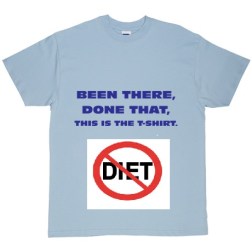
When people do this, they are also making the faulty assumption that I haven’t already tried all of these things and more to lose weight.  I’ve been there, done that diet, and burned the t-shirt because, just like almost everyone who loses weight, I gained it back and struggle to get my weight stable.  Since I started Health at Every Size my weight has been stable for several years and that’s a first for me and I’m quite happy about it.

People look at me and make guesses (typically incorrect) about what I eat, how much I eat, and how much I exercise.  When I talk about it they call me a liar, as if to say that they are a better witness to my experience than I am.  They are not.

It’s nobody’s business what I do for my health and if I tell someone that I am happy with my food and exercise choices then the only thing left for them to say is “cool”.

This blog is supported by its readers rather than corporate ads.  If you feel that you get value out of the blog, can afford it, and want to support my work and activism, please consider a paid subscription or a one-time contribution.  The regular e-mail subscription (available at the top right hand side of this page) is still completely free.   Thanks for reading! ~Ragen

Ask Me Anything Day

We had our first telephone meet-up tonight – it was small but mighty and I now have a much better idea of how to make next month’s meet-up work better for everyone! I’ll post details as soon as I have them.  In the meantime in continuing of our (lack of) theme from tonight’s call, today is an “Ask me anything” day on the blog.  Whether it’s a question about something I’ve blogged about, something in the news, something personal – whatever – I have no hang-ups and no filter so ask me anything as long as you want my honest answer!

~Ragen

This blog is supported by its readers rather than corporate ads.  If you feel that you get value out of the blog, can afford it, and want to support my work and activism, please consider a paid subscription or a one-time contribution.  The regular e-mail subscription (available at the top right-hand side of this page) is still completely free.   Thanks for reading! ~Ragen

Health at Every Size Simplified

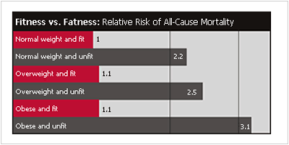
Source: Wei et al. “Relationship Between Low Cardiorespiratory Fitness and Mortality in Normal-Weight, Overweight, and Obese Men.” JAMA. 1999;282: 1547-1553

Health is not simple, and I don’t intend to make it sound like it is.  However, I have had a number of requests from readers to state the case for a Health at Every Size path to health as simply as possible.

First, all the usual disclaimers apply – people get to prioritize their health however they want and they get to choose the path to get there and every choice is valid – even if it’s nothing like what you would choose.  If public health is important to you then I suggest you work for access (to the foods people would choose, movement options they enjoy, and affordable evidence-based healthcare), make choices for yourself, and respect other people’s choices like you want yours respected. Ok, let’s do this:

There is not a shred of evidence that shows that weight loss works long-term for more than a tiny fraction of people, around 5% (and that tiny fraction includes people who only lost a few pounds).  The evidence that fat people can become and remain thin is non-existent.

This is not just because “people go back to their old habits”, it’s because weight loss triggers the body to undergo a number of physiological and psychological changes for the express purpose of regaining weight.

Based on the evidence that exists, being surprised when people go on a diet, lose weight and then gain it back, is like being surprised when pregnant women are given thalidomide and then their babies have birth defects.  In both cases the outcome is exactly what the evidence told us would happen.

Knowing what we know now, saying that anyone who tries hard enough can lose weight is roughly the same as saying that any pregnant women who tries hard enough can take thalidomide but avoid the birth defects. There is nothing in the evidence to back it up.

Even if making me thinner would make me healthier we have literally no idea how to get it done.  Period.

There is evidence that shows that healthy habits give us the best chance for a healthy body (like the study summarized in the graph at the top.)  There is good evidence that fitness (about 30 minutes a day 5 days a week) mitigates almost all of the negative health outcomes that are associated with being overweight.

A Health at Every Size path allows me to focus on healthy habits using the advice of healthcare professionals who I choose along with my own research,  and based on my own prioritization of health and my goals. Based on the existing research, that gives me the best chance of health that exists.

If am wrong about this (and I could be – if you can’t admit that you might be wrong then you are no kind of scientist or critical thinker) then based on my experience with a dieting lifestyle I choose a shorter life lived from a Health at Every Size perspective.

Epilogue:

I do not think that Health at Every Size and Size Acceptance are the same thing. HAES is a health practice and a the beginning of a paradigm shift.  Size Acceptance is a civil rights issue and civil rights are not optional, and should never be put up to a vote.  If someone is stepping on my foot in an elevator I do not have to obtain polling data from the rest of the people in the elevator to justify my asking them to get off my foot.  Civil rights are not a request because they are not someone else’s to give – civil rights are to be demanded, fought for, and protected.

For more information I recommend Linda Bacon’s book Health at Every Size – The Surprising Truth about Your Health, as well as her community resources page where you can sign the HAES Pledge! (And no, I do not get compensated for this endorsement – I just think that Dr. Bacon, her book, and her community resource page are awesome!)

This blog is supported by its readers rather than corporate ads.  If you feel that you get value out of the blog, can afford it, and want to support my work and activism, please consider a paid subscription or a one-time contribution.  The regular e-mail subscription (available at the top right-hand side of this page) is still completely free.   Thanks for reading! ~Ragen

Do Fat Moms Cause Autism?

If you were reading the internet or watching the news yesterday you could not miss the media frenzy around a study that, they say, shows that fat moms may have more autistic children.

There was a lot of hedging in these stories, especially considering how the media often treats these studies like fact, including phrases like “the first study to link the two” and “doesn’t prove” and “appears to create concern”. So I found the study.  And read it.

First,  a quick review of correlation vs. causation. Correlation means that we can tell that two things happen at the same time.  Causation means that we can tell that one thing causes the other.

So if every August there are more murders and more ice cream eaten we cannot say that eating ice cream causes murders.  If there is a rash of murders we cannot say that there is an ice cream epidemic, and we cannot conclude that taking ice cream off the shelves will cut the murder rate.  They could both be caused by a third factor (maybe heat makes people cranky and they either eat ice cream or commit murder) or they could be completely unrelated and the correlation could be a coincidence.  (More thorough explanation is here.)

The problems begin at the beginning – the study is called “Maternal Metabolic Conditions and Risk for Autism and Other Neurodevelopmental Disorders”  It’s not called “The Effect of Obesity on Austism.”

What they actually studied was whether metabolic conditions during pregnancy are associated with autism spectrum disorder, developmental delays, or impairments in specific domains of development in the offspring.

The “metabolic conditions” including diabetes, high blood pressure, and obesity.   There is an issue right there since diabetes and blood pressures are conditions with very specific metabolic indicators, but obesity is simply a ratio of weight and height – obese people have extremely varied metabolic health. There is a danger anytime we make body size a diagnosis.

The study included 1004 children and mothers (517 with Autism spectrum disorder,  172 with developmental delays) and 315 controls).  That is a small sample size and it seems to me that having a few kids with developmental delays besides autism further muddies the waters.  All of the kids are from California which means that if California has state laws about neo-natal care that affect autism then all of the kids in the study would have been exposed to them.    Much of the data is self-reported (which is a notoriously poor way to collect data.) For example, women were asked “At any time before you became pregnant with [index child], were you ever told by a doctor that you had [diabetes, high blood pressure]?”  The accuracy of memory in these situations is not great.

Their conclusion was “Maternal MCs may be broadly associated with neurodevelopmental
problems in children. With obesity rising steadily, these results appear to raise serious public health concerns.”

The first part of their conclusion is a little problematic, and depends on the meaning of the word “may”.  If they mean it might be broadly associated then that’s a fair conclusion.  If they mean it can be broadly associated then that’s a stretch considering  the issues above.  The second half is just weird.  They hedge again by saying “appear to raise” instead of just “raise” which is the right thing since they are ignoring the actual metabolic conditions that they studied and making this conclusion about obesity.

One doctor has already pointed out that women with metabolic conditions tend to be given more ultrasounds and there is a correlation between ultrasounds and autism. There are a lot of other variables here.  We know that doctors treat people of size with less respect and give them less time so perhaps that accounts for the difference.

Because they are only looking at correlation, they don’t have to propose an explanation for why a height/weight ratio (which can have extreme variances in amount of adipose tissue vs. muscle, in height and weight, and in metabolic health markers) might be responsible for a fetal health outcome.   And that’s probably for the best because that would be extremely difficult to do.  You would have to make some extremely broad assumptions about all obese women in terms of habits, body composition etc. For example, if you looked strictly at body fat percentage, some women in the control group would likely have the same, or higher, body fat percentage as the obese moms. If you looked at diet, some women in the control group would likely have the same diet as those in the obese group. Same with amount of physical activity etc.  Body size is not indicative of specific behaviors or specific health markers.

I kind of makes me wonder if the researchers threw obesity into the study, and into the conclusions, to take advantage of a media that is ravenous for the opportunity to engage in fat shaming and perpetuate the myth of an “obesity crisis”.

I think that the way the media handled this is a crime.  They don’t have any proof that being fat leads to autism there is no method of weight loss that works, and fat moms of autistic kids have enough to worry about with the way that society handles autism without every news outlet blaming them for their kids autism when they really have no clue what’s true.

Like the blog?  Here’s more of my stuff:

Interviews with Amazing Activists!!  Help Activists tell our movement’s history in their own words.  Support In Our Own Words:  A Fat Activist History Project!

Become a member: For just ten bucks a month you can keep this blog ad-free, support the activism work I do, and get deals from cool businesses Click here for details

The Book:  Fat:  The Owner’s Manual  The E-Book is Name Your Own Price! Click here for details

Dance Classes:  Buy the Dance Class DVDs or download individual classes – Every Body Dance Now! Click here for details
Not So Funny Fat Girl

A reader wrote to me to tell me about a post  on the Pinterest board for Showtime’s show – The Big C which says:

“You can’t be Fat & Mean.  You can be fat and jolly or you can be a skinny bitch it’s up to you.”

It’s a line from the show delivered by a thin actress to Gabby Sidibe (a fat actress best known for her work in Precious) with this inflection:

“You can’t be fat and mean, Andrea. You can either be fat and jolly, or a skinny bitch. It’s up to you.”

I think it’s one thing for it to be a line on the television show  – it reflects modern culture, and it can be a stepping stone to other conversations, I’m not complaining about that.  I do think it’s something else for them to make it into a sign on their pinterest board for the specific purpose of being re-posted out of context. Regardless, it points out some common mistakes that I think are worth addressing.

There are a couple of issues here. First the “it’s up to you” feeds into the publicly popular but scientifically unsupported idea that fat people can just get thin if we want to.  If you read this blog regularly then you already know that there is not a single solid study that would lead us to believe that any more than about 5% of people will have long-term success at intentional weight loss.

But let’s look deeper into this.  Obviously they aren’t saying that it is impossible to be a fat bitch – though if anyone thinks that, I’ll be happy to disabuse them of that notion.

No, this is about the idea that since being fat is such a massive character flaw, you must make up for it by being funny/jolly/pleasant whatever – that people will put up with a bad personality if you are stereotypically beautiful, but if not then you better smile and tell a self-deprecating joke right quick.  This is also how we are often portrayed in the media – the funny, fat, single friend or “she’s got a great personality” which is to say that we’re not much to look at, but we’ll “make up for it”, as if our bodies require some kind of penance: say two prayers and three self-deprecating fat jokes.

I certainly lived into the funny fat girl stereotype.  Being the first to make the fat jokes was a defense I personally used for a very long time.

This is tricky for me because being funny is part of who I am, I’ve even done stand-up comedy now and again.  Being funny definitely helps me with my activism – it allows me to engage an audience so they can hear my message without feeling that they are being preached at.  It brings down defensiveness, and it makes the times when I am being very serious more impactful.

So I have always been a funny fat girl but some things have changed.  The first is that I am no longer a self-deprecating fat funny girl. When I do open mic stand-up, often I’ll say “You may be wondering – when is she going to start doing those self-deprecating fat jokes we all love?  The answer is never – because my body is awesome”  and then I move on to other material.  If you watched the video I linked to, you know that a lot of my humor is about awkward or embarrassing situations, and my body is neither of those so I don’t make it into a joke.

I also no longer feel obligated to be funny when what I feel is something else:  angry, offended, upset, bitchy, whatever.  I don’t feel like I have to make up for my body by not making waves.  This is another way that fat people are kept down – don’t be angry about the oppression that you face, don’t stand up for yourself – smile and be pleasant and maybe you’ll find a mate who will overlook your body.  That’s just bullshit.  Fat bodies are not flawed, and so do not require apology, or a compensatory personality strategy to make up for them.

So back to the C-word.  If you want to get involved you can leave a comment on their pinterest board (if you are on pinterest), or you can send Showtime a comment through this form.

World Tour Update!

I am teaching a dance workshop with the fabulous Ronda Wood and Jeanette DePatie in LA on Sunday the 22nd.  Details are here!

I took off most of April and May to finish my online dance classes and book, and to move to Los Angeles, but I’m booking the rest of the year and into next year so if you want me to come to your college, or work, or town just e-mail me at ragen at danceswithfat dot org and we can talk about it.  Once the book is out I’ll also have some special book tour announcements to make.

This blog is supported by its readers rather than corporate ads.  If you feel that you get value out of the blog, can afford it, and want to support my work and activism, please consider a paid subscription or a one-time contribution.  The regular e-mail subscription (available at the top right-hand side of this page) is still completely free.   Thanks for reading! ~Ragen

Hospital’s Big Fat Hiring Discrimination

Quiz:  What do we call it when companies refuse to hire someone based on how they look.

Answer:  Discrimination.  Prejudice.  Bigotry.

That’s what you will experience if you are a healthcare professional with a BMI of 35 or higher and you apply for a job at Citizen’s Medical Center in Victoria, Texas.

The hospital feels that employees “should fit with a representational image or specific mental projection of the job of a healthcare professional,” including an appearance “free from distraction” for hospital patients.

So what they are saying is, they only want to hire employes who fulfill whatever stereotypes people may have about health care professionals, as long as they can get away with it legally.

Chief Executive David Brown elucidates:  “The majority of our patients are over 65, and they have expectations that cannot be ignored in terms of personal appearance.  We have the ability as an employer to characterize our process and to have a policy that says what’s best for our business and for our patients.”

Let’s paraphrase “We perceive that our customers are weight bigots and so we choose to be weight bigots as a company.”

For the record, I’m not asking them to ignore the patients expectations, I’m expecting them to educate them that weight and health are two different things, and allow fat employees to give these patients the opportunity to question their stereotypes.

They are using BMI, a simple ratio of weight and height, to determine obesity.  So, if The Rock got his nursing degree and applied to work at Citizen’s Medical, he would be turned down because of his “obesity”.  Using BMI discriminates against tall people and muscular people as well as fat people.

The “good news” according to news reports is that existing employees who are or become obese aren’t getting fired.

Yet.

Only Michigan, and six cities (Santa Cruz & San Francisco California, Madison, WI, Urbana, IL, Washington, DC and Binghamton, NY)  have laws protecting from discrimination based on size.  In Texas, where I live (until I move to LA in a couple of months) this discrimination is perfectly legal.  There is no protection from discrimination based on size, which is why this hospital can say that they don’t want to hire fatties because their patients are prejudiced against them, and that’s a perfectly legal reason.

And that’s fucked up.  Especially since every bit of evidence that exists says that most fat people cannot become thin longterm.  What this supposed healthcare organization is encouraging, whether they know it or not, is that people in Victoria Texas who have developed healthcare skills and want to use them at this hospital have to diet to “make weight” so that they can be hired, knowing that they will gain the weight back and be subject to the dangers of weight cycling (not to mention the dangers of being fired.)

Make no mistake, Citizen’s Medical is blatantly discriminating against people based on whether or not they fit a stereotype of “health” that has been largely created by the diet industry which profits from the illusion that weight and health are the same thing.

When Citizen’s Medical says “We have the ability as an employer to characterize our process and to have a policy that says what’s best for our business and for our patients.”  what they are saying is – we want to provide our patients with employees who fit with our patients stereotypes, whether or not they are the best people for the actual job.

And they know it.  The hospital has stated that its new policy doesn’t show that there was an increased cost for obese employees nor did the policy claim that obese workers could not perform their job at a satisfactory level. Hospital officials stated that the sole reason for the policy is appearance and the image of the hospital.

How far does this go?  What other businesses will take a page from the Citizen’s Medical book and decide that their clients are prejudiced against fat people and so they should just discriminate against us in hiring. This is why I’m a Fat Activist. You know the old saying – you’ve got to stand for something, or you’ll get steamrolled by weight bigots who want to revel in their bigotry – or something like that.

UPDATE:  Our letter writing campaign worked and they have rescinded their discriminatory policy.  Activism works!

Like this blog? Consider supporting my work with a donation or by  becoming a member! For ten bucks a month you can support size diversity activism, help keep the blog ad free, and get deals from size positive businesses as a thank you. I get paid for some of my speaking and writing (and do both on a sliding scale to keep it affordable), but a lot of the work I do (like answering hundreds of request for help and support every day) isn’t paid so member support makes it possible ( THANK YOU to my members, I couldn’t do this without you and I really can’t tell you how much I appreciate your support!)   Click here for details

Here’s more cool stuff:

My Book:  Fat:  The Owner’s Manual  The E-Book is Name Your Own Price! Click here for detail

Dance Classes:  Buy the Dance Class DVDs or download individual classes – Every Body Dance Now! Click here for details 

If you are uncomfortable with my selling things on this site, you are invited to check out this post

Is it True that Most Fat People Don’t Exercise?

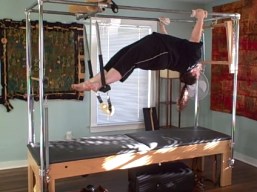
Ragen Chastain 5’4 284 pounds. Trained by Kate Catlow of The Mindful Body Center in Austin, Texas.

Recently at a talk I was giving at Long Island University someone suggested that my exercise habits make me an anomaly among fat people, suggesting that most fat people don’t exercise.

I pointed out to her that my exercise and physical fitness (pressing 1,000 pounds with my legs, doing the splits etc.) make me an anomaly among everyone  -typically I exercise more than anyone, of any size, in any room that I’m in.  It should be clear that I don’t do this for my health- I do it because I’m a dancer (and a dancer who is moving to LA where she intends to work.)  If I just wanted to be healthy I’d do 30 minutes of moderate activity 5 days a week and take up knitting, learn a couple languages, and finish my damn book.

I also want to point out that the idea that most fat people don’t exercise is based on a stereotype and not good evidence.  (The Fit Fatties Forum has only been around a few weeks and we already have almost 550 members talking about fitness from a Health at Every Size perspective.)

Even if we believe  the stereotype, the truth is that it’s kind of amazing that fat people workout at all considering the massive social forces that work against us being physically fit.

First is the lie that if exercising doesn’t make us thin then it’s not making us healthier.  This flies in the face of the actual evidence which shows that exercise will NOT lead to weight loss but does lead to health. The misinformation campaign around health, fitness and weight loss often causes people to give up on exercise when it doesn’t make them thinner.  What they often don’t realize is that it’s making them healthier.

Then there are the challenges we face just getting dressed to exercise.  While my thin friends try to decide between 20 brands of workout wear, what style of sports bra they want to wear, and which kind of advanced sweat wicking fabric they prefer, I’m desperately looking for one pair of workout pants that is wide enough for my ass and not too long for my short legs.  Failing to find some, I often have to have my yoga pants hemmed.  Dude. I don’t really care about looking cute at the gym but I’m not excited about pants that have a cathedral length train.  And a lot of people do care about having cute clothes to wear at the gym and it’s not fair that thin people have that option but fat people don’t.

Next is what we face when we get there.  Tonight two women who were at the gym with me at 3am illustrated almost every “what not to do” that there is.

First, people who assume that if you’re fat you must be new to the gym, or new to working out. Tonight as I started my interval work one of my two new best friends came up to me waving with desperate flailing muppet arms.  I removed my earphones and she said “You’re going to hurt yourself, you don’t have to do it all right away, take it slow when you’re new!”

Next, the assumption that our size dictates what we can do.  I was doing plyometric work (I was jumping on and off a box) and the other woman came over and told me that “jumping is dangerous at your size, you want to be careful.”

Then there is the assumption that we are unhappy with our current bodies, that our goal is weight loss, and that we want to be encouraged in that pursuit.  In my gym next to the weights there is a wall of “success” stories where “success” is weight loss.  I was resting between sets of leg pressing 630 pounds.  The woman who was worried about my interval training showed back up to say “just keep working hard and you’ll be one of those successes on the wall someday.”  As if pushing around more than twice my body weight doesn’t make me a success.

Happily I did not face the worst thing – which is when people are cruel to us at the gym. It happens sometimes – someone will moo at me or say something nasty to their friends within my hearing.

So I have to deal with all of this and I have the benefit of being experienced at the gym – I have a program, I know how the machines work, and I can kick the physical fitness ass of most of the people there and some days I still don’t want to deal with it.  It can seriously suck for a beginner, and even if they don’t have a bad experience the intimidation factor can be off the charts.

There are some things that you can do.  I’ve talked before about how to repair a relationship with exercise and how to make the gym less scary.

There’s another option as well, I’ve been meaning to tell you all about this book for a long time.  I actually got the book before I became friends with the author. Jeanette DePatie is The Fat Chick.  She is a certified fitness professional who created a 12 week program to help people get into exercise. Whether you want to keep working out from home or you want to develop a baseline of fitness to be more comfortable at the gym, her program is awesome.  Jeanette and I have since become very good friends (she is my get shit done soulmate) and she and I started the Fit Fatties Forum together. I highly recommend you check her out at www.TheFatChick.com.  (The fine print:  I paid for my copy of her book and she is not paying me at all for this endorsement.  I just think that she is awesome and her program kicks ass.)

In exercise as in everything, you are the boss of your underpants. You get to decide if exercise is important to you.  If you are trying to decide if it’s worth it, I highly recommend this video.  Regardless of what each individual does, in the end I think that assumption that “fat people don’t exercise” is grossly oversimplified considering the tendency to stereotype fat people, the evidence to the contrary, and the issues that fat people face when  we try to workout.

This blog is supported by its readers rather than corporate ads.  If you feel that you get value out of the blog, can afford it, and want to support my work and activism, please consider a paid subscription or a one-time contribution.  The regular e-mail subscription (available at the top right hand side of this page) is still completely free.   Thanks for reading! ~Ragen